5 Free PlantSnap Alternatives in 2026
PlantSnap is easy to find. The download is free, the interface is clean, and the first few scans work without friction. Then the subscription prompt appears, and for a lot of users, that’s where the search for a free PlantSnap alternative begins.
PlantSnap identifies plants, trees, and mushrooms from photos. It’s a useful app, but access is the issue. Most features sit behind a subscription after the trial period, which makes it less appealing for casual plant owners who just want to name what’s growing in their yard or figure out what’s wrong with a houseplant.
The good news: genuinely free options exist in 2026, and a few of them cover ground PlantSnap doesn’t. Here are five worth trying.
The best free PlantSnap alternatives in 2026 are PlantlyAI (2 free disease diagnoses per day, no account required), Pl@ntNet (84,710 species at zero cost), Google Lens (free and built into most phones), and iNaturalist Seek (free, no account needed). PictureThis is worth considering if you’re open to a subscription with stronger disease detection.
Why People Look for Free PlantSnap Alternatives
Plant identification apps fall into two business models, and knowing which one you’re dealing with saves frustration.
Citizen-science apps are funded by research grants and institutional backing rather than subscriptions. Pl@ntNet is a good example: it’s free because every photo you submit contributes to a botanical research database that institutions are willing to fund. The same logic applies to iNaturalist Seek.
These apps are free structurally; the economics work without charging you.
Commercial apps use a freemium model: free to download, then subscription for full access. PlantSnap, PictureThis, and most others in this category follow this pattern. Some offer a usable free tier; others gate the core feature (identification results) almost immediately.
Plant identification apps in 2026 fall into two models with fundamentally different economics. Citizen-science apps like Pl@ntNet and iNaturalist Seek are free because each photo submitted improves species recognition models and contributes to botanical research databases funded by institutions, not subscriptions. Pl@ntNet covers 84,710 recognized species across 77 plant floras, built from 1.47 billion community-submitted images reviewed by botanical scientists and contributed back to global biodiversity databases. Google Lens handles plant ID as one of hundreds of visual search tasks subsidized by Google’s advertising model, at no cost to users. Commercial alternatives like PlantSnap gate identification results behind a subscription after a brief trial period. PlantlyAI takes a freemium middle path: 2 free disease diagnoses per day, no account required, covering both species identification and full step-by-step treatment plans for sick plants at no ongoing charge for most users.
1. PlantlyAI: Best for Diagnosing Sick Plants
Most plant identification apps tell you what a plant is. PlantlyAI tells you what’s wrong with it.
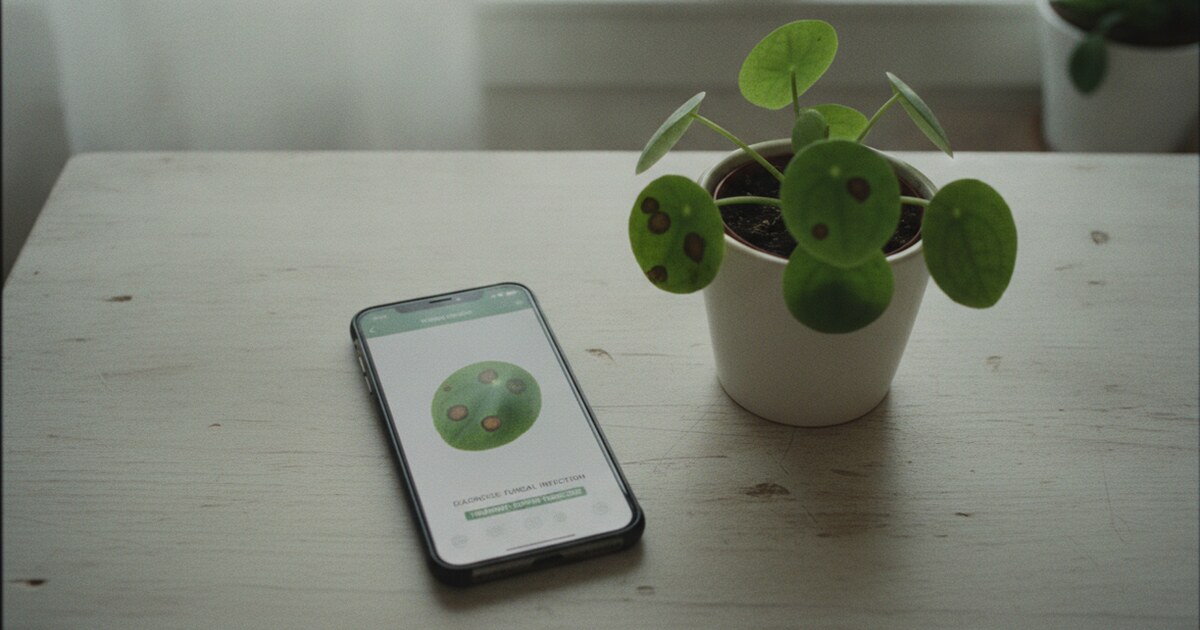
Photograph the affected part: the leaf with brown spots, the stem that’s turned soft and mushy, the yellowing lower leaves. The app returns a diagnosis covering which disease, pest, or stress condition is causing the problem. Each result comes with a step-by-step treatment plan covering organic, biological, and chemical options, so you can choose based on what you have on hand.
PlantlyAI also handles species identification from a photo and includes a searchable plant disease library for researching problems before they appear. It works across houseplants, garden plants, vegetables, trees, and crops.
The free tier gives 2 diagnoses per day with no account required. For most plant owners checking in on a collection, that’s enough. If you’re managing a serious pest outbreak across multiple plants at once, the paid tier removes the daily limit.
Where PlantSnap falls short for sick plants: its core feature is species identification, not problem diagnosis. A species name doesn’t help you fix a plant that’s dropping leaves. PlantlyAI is built around the diagnosis-and-fix workflow that sick-plant searches need.
Available on iOS and Android. Free to start.
For a broader look at disease-focused apps, best free plant disease app: no subscription (2026) covers the main options in that category.
2. Pl@ntNet: Completely Free Species Identification
Pl@ntNet is the most capable completely free plant identification app available in 2026.
Photograph any part of the plant: leaf, flower, fruit, bark, or the whole plant. It matches against a database of 84,710 recognized species across 77 geographical plant floras, built from over 1.47 billion community-submitted and scientifically reviewed images. Each confirmed identification you submit goes back into the research dataset, improving accuracy for future users.
There’s no subscription and no trial that converts to a charge. The service is backed by a consortium of European research institutions rather than user fees, which keeps the economics of staying free stable.
Where Pl@ntNet stops: it identifies species and nothing more. No disease diagnosis, no care reminders, no treatment plans. For the specific job of naming a plant at no cost, it’s the strongest option on this list.
Available on iOS, Android, and via web browser at plantnet.org.
3. Google Lens: Already on Your Phone
Google Lens is built into the Google app on iOS and into the camera on most Android phones. You likely already have it.
Point it at a plant, tap the camera icon, and it returns species matches alongside related search results. For common garden plants, popular houseplants, and trees with distinctive flowers or leaf shapes, the identification is quick and accurate enough for casual use.
Google Lens isn’t a plant-specific tool. It handles text, products, barcodes, and landmarks alongside plant ID, which means it won’t give you structured care information or disease guidance. For quick identification with zero setup, no extra download, and no subscription, it’s the most frictionless option here.
Free. Available on iOS and Android, built into most Android devices.
4. iNaturalist Seek: Best for Garden and Wild Plant ID
iNaturalist Seek is the camera-based identification tool built on the iNaturalist observation network. You can use it without creating an account, which sets it apart from most apps in this space.
Point Seek at a plant and it identifies in real-time as you hold the camera still. The result includes a species name, a confidence level, and links to the full species page for more detail. Observations optionally contribute to biodiversity research databases.
Seek works well for garden plants, wild plants, and native species. It’s particularly strong for outdoor use: hiking, identifying what’s growing along a path, or figuring out what sprouted in a garden bed. Like Pl@ntNet, it handles species identification and stops there. No disease diagnosis, no care schedules.
For a completely free identification app with no account required and solid accuracy on common plants, Seek is one of the most practical picks here.
Free. No account required. Available on iOS and Android.
5. PictureThis: Strong ID, Still a Subscription
PictureThis is worth knowing about even though it’s not free, because it addresses the two most common reasons people move away from PlantSnap: identification accuracy and disease detection.
PictureThis covers a wide range of species and adds disease detection alongside ID. For common visual problems like powdery mildew, spider mites, or yellowing from overwatering, the disease guidance is practical. If your issue with PlantSnap is accuracy or the lack of sick-plant help, PictureThis steps up on both.
The trade-off: it requires a subscription for full access, the same structure as PlantSnap. If you’re leaving PlantSnap specifically to escape recurring charges, PictureThis doesn’t solve that problem.
For a detailed breakdown, Is PictureThis Worth It? covers what you get vs. what it costs. For free alternatives to PictureThis specifically, 7 Free PictureThis Alternatives (2026) lists the main options.
Available on iOS and Android. Free trial available.
The Best Free Setup: PlantlyAI + Pl@ntNet
For anyone who wants a complete free plant toolkit, these two apps together cover both jobs plant owners typically reach for an app to solve.
Pl@ntNet handles species identification. It covers 84,710 species at no cost, which handles most garden plants and houseplants. Point, shoot, get a name.
PlantlyAI handles sick plants. When something goes wrong (spots, wilting, rot, pests), scan the affected area and get a diagnosis plus a treatment plan. Two free scans per day covers most plant owners.
Between the two apps, you cover naming and fixing. Neither charges a subscription for basic use, and neither requires an account to start.
Which Free PlantSnap Alternative Is Right for You
Your plant looks sick or has visible symptoms: PlantlyAI. The disease diagnosis and treatment plans are the specific gap most plant ID apps leave open, and 2 free scans per day costs nothing.
You need to identify species with no subscription: Pl@ntNet for the widest free database, or iNaturalist Seek if you prefer real-time identification with no account.
You want the fastest ID with no extra app: Google Lens. It’s already on most phones and handles common plants well.
You want the strongest accuracy and disease detection and are willing to pay: PictureThis. Better disease support than PlantSnap, still subscription-based.
Most plant owners find that a free species ID app (Pl@ntNet or Google Lens) handles 80% of their naming needs, while PlantlyAI handles the situations that cause real anxiety: the plant that keeps yellowing, the stems that go soft, the spots that keep spreading.
Frequently Asked Questions
What is the best free alternative to PlantSnap?
The best free alternative depends on what you need. For diagnosing a sick plant, PlantlyAI is the strongest option: 2 free diagnoses per day, no account required, with a step-by-step treatment plan per result. For pure species identification at no cost, Pl@ntNet covers 84,710 species across 77 global floras with no paywall. Google Lens is fastest if you don’t want to install another app.
Is Pl@ntNet completely free?
Yes. Pl@ntNet has no subscription and no trial that converts to a charge. It’s backed by a consortium of European research institutions and funded as a citizen-science project rather than through user fees. Every identification you submit contributes to a scientific plant database, which keeps the service free.
Does PlantlyAI work for free?
PlantlyAI offers 2 free diagnoses per day with no account required to start. That covers most plant owners for routine checks. The paid tier removes the daily limit, which matters if you’re treating an outbreak across multiple plants at once. The free tier includes both disease diagnosis and species identification.
Can Google Lens identify plants?
Yes. Google Lens identifies plants from photos and returns a species name for common plants quickly. It works best for plants with distinctive visual features: flowers, unusual leaf shapes, recognizable bark. For rare plants, botanical precision, or disease diagnosis, a dedicated app like Pl@ntNet or PlantlyAI gives more useful results.
Does iNaturalist Seek require an account?
No. iNaturalist Seek works without creating an account, which is one of its main practical advantages. Point the camera at a plant and get a real-time identification without signing up for anything. Optional account creation lets you save observations and contribute to the broader iNaturalist biodiversity database, but it’s not required for basic use.
If one of your plants is showing symptoms you can’t identify (spots, wilting, yellowing, pests), scan it in PlantlyAI. The first 2 diagnoses are free, no account needed, and each result includes a step-by-step treatment plan alongside the diagnosis. Available on iOS and Android.
Not sure what's wrong? Diagnose your plant free
Upload a photo to our free plant disease identifier and get an instant diagnosis.