5 Best PlantNet Alternatives in 2026
Pl@ntNet is one of the most credible plant identification apps available. It’s completely free, built by four major French research institutions, and draws from a database covering 84,710 species and over 1.4 billion community observations. For identifying a wildflower on a hike or confirming a tree species from a leaf photo, the science behind it is hard to match.
The gap shows up when a plant is sick. PlantNet identifies species; it doesn’t diagnose problems or tell you how to fix them. Most people searching for PlantNet alternatives have a houseplant showing symptoms: yellow leaves, brown spots, wilting that won’t stop. They need an app that goes further than a name. These five apps do.
The best PlantNet alternatives in 2026 are PlantlyAI for sick plant diagnosis, PictureThis for all-round identification and care, Seek by iNaturalist for a free no-account option, iNaturalist for citizen science contributions, and Growli for conversational care support. Each fills a specific gap PlantNet leaves open, mainly disease diagnosis and treatment guidance.
Why People Search for PlantNet Alternatives
Pl@ntNet is maintained by CIRAD, INRAE, INRIA, and IRD, four major French public research institutions that have run the platform since 2013. It covers 84,710 species backed by 1.4 billion community observations, operates entirely free with no subscription, and runs on iOS and Android. A 2025 independent comparison found PlantNet among the top performers, correctly identifying 80 to 90 percent of species across a wide range of plant types. The app’s Diseases & Pests module identifies threats to agricultural crops, but it was designed for farmers scanning fields, not for someone diagnosing a sick monstera or figuring out why their basil is drooping. It tells users what a plant is and, for some crops, what disease might be present. Treatment steps, organic versus chemical guidance, and care reminders fall outside PlantNet’s scope. That gap is why most people searching for PlantNet alternatives want apps that go further than a species name.
The practical problem is the workflow. With PlantNet, you photograph a plant, get a name, then search elsewhere for care or treatment guidance. A good PlantNet alternative eliminates that second search by putting diagnosis and guidance in the same app.
5 Best PlantNet Alternatives in 2026
1. PlantlyAI: Best for Diagnosing Sick Plants
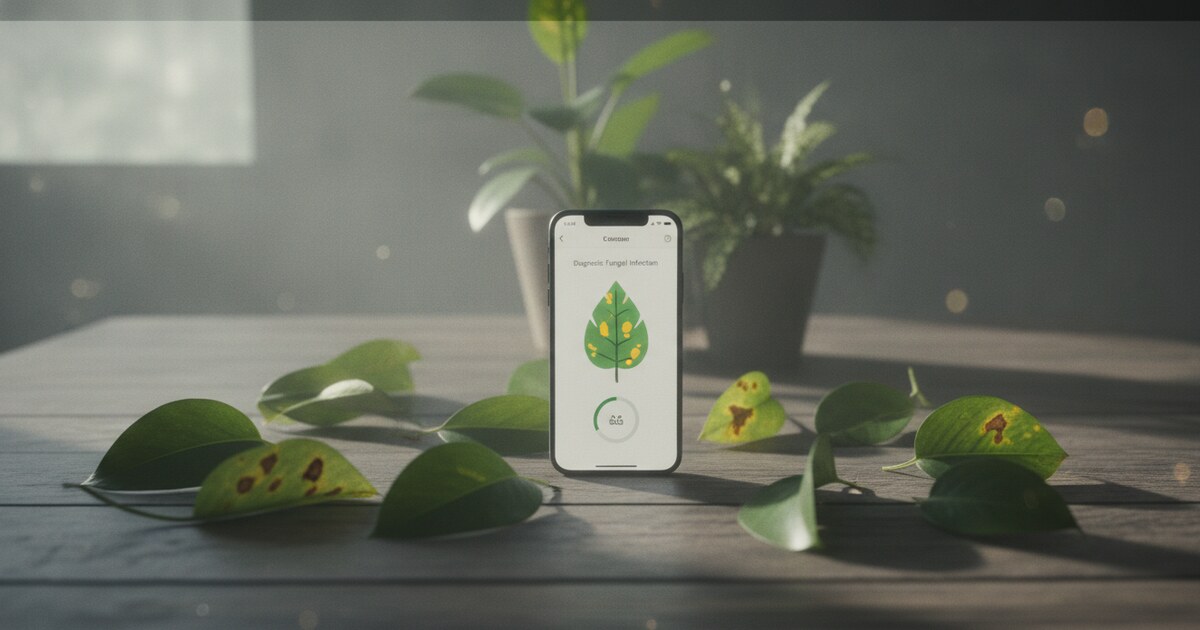
PlantlyAI is built around a specific question: what’s wrong with my plant, and how do I fix it? It’s a disease diagnosis app that also identifies plant species, rather than a species ID app that occasionally notices a problem.
Photo in, diagnosis out. The app analyzes the image and identifies the problem, whether that’s root rot, fungal disease, pest infestation, or nutrient deficiency. Then it gives a step-by-step treatment plan with three tracks: organic remedies, biological controls, and chemical options. You pick the approach that fits your setup.
The free tier gives you 2 diagnoses per day with no account required. It covers houseplants, garden flowers, vegetables, trees, and crops, so it’s useful across a full yard rather than just indoor plants. A searchable disease library is also included if you want to understand a problem before the next scan.
The main gap: PlantlyAI doesn’t include care reminders, watering schedules, or offline access. If you need a plant journal or scheduler, pair it with something else. For the “what’s wrong and how do I fix it” problem that PlantNet leaves unanswered, it’s the most direct tool on this list.
Looking for more free options? This roundup of free apps to diagnose plant problems covers the full field.
2. PictureThis: Best All-Round Plant App
PictureThis has the largest plant catalogue on this list. The app covers over 400,000 species, claims 98% identification accuracy, and has accumulated over 1.1 million App Store ratings. It’s the plant app most people have already heard of.
Disease diagnosis is included. Photograph an unhealthy plant and the app returns a diagnosis with treatment advice. That capability sits alongside care reminders, watering schedules, a built-in light meter, and a 24/7 expert chat feature, making it a more complete platform than any single-purpose identification tool.
The catch is the paywall. Most of those features require a subscription. The annual plan runs $39.99, with shorter-term options from $3.99. There’s a 7-day free trial, but plant care apps need months of use to properly evaluate. Seven days doesn’t cover it.
For a full breakdown of what you actually get before paying, the honest PictureThis review covers exactly what’s behind the paywall and whether it’s worth it.
3. Seek by iNaturalist: Best Free, No-Account Option
Seek is the app most similar to PlantNet in spirit: free, no account needed, privacy-focused, and built on community science. It’s developed by iNaturalist, a nonprofit backed by the California Academy of Sciences and the National Geographic Society.
Point the camera at a plant, animal, or fungus and Seek returns a live species identification. The database covers approximately 80,000 species, updated in 2025 to nearly double its previous range. It’s available on iOS and Android, carries a 4.8/5 App Store rating from over 31,000 reviews, and earns a 4+ age rating because it collects no user data by default.
That last point matters if you’re handing a phone to kids. Seek is genuinely child-safe in a way that most plant apps aren’t.
The trade-off: no disease diagnosis, no care advice, and minimal detail beyond a species name and a brief Wikipedia excerpt. If PlantNet appeals because it’s free and science-backed, Seek is the closest spiritual match. If you need more than a name, it stops short.
4. iNaturalist: Best for Citizen Science
iNaturalist is the platform Seek draws its data from. The app lets you log observations, have identifications reviewed by the global naturalist community, and contribute to biodiversity research used by scientists worldwide.
It’s free, runs on iOS and Android, supports 33 languages, and was built by the same nonprofit behind Seek. You can identify plants from photos, but the real value of iNaturalist is the community layer: other naturalists can confirm, correct, or refine your identification over time, and your observations get added to publicly available scientific databases.
Identification improves as more people engage with an observation, but that’s not instant in the way a PlantNet scan is. And like PlantNet, there’s no disease diagnosis or care guidance. iNaturalist is a nature journal and citizen science tool.
If you photograph a lot of wild plants and want those observations to contribute scientifically, iNaturalist is the strongest app here. For sick houseplants, it’s not the right choice.
5. Growli: Best for Ongoing Plant Care
Growli focuses on what happens after identification: keeping plants alive through reminders, care chat, and symptom diagnosis. The app is free to download, with photo ID and diagnosis features behind a Growli Plus subscription at $44.99 per year, which includes a 7-day trial.
The conversational care model is its main differentiator. Describe your plant’s situation in a chat interface and get responses tailored to your setup. The app also tracks daily care tasks, flags frost alerts, and checks plant safety against ASPCA toxicity data, which is useful in households with cats or dogs.
Growli’s photo identification covers primarily cultivated and houseplants. It has fewer wild species than PlantNet or iNaturalist, which matters if you’re identifying plants in the field. The UK-focused RHS care guidance is also regionally specific in a way that US gardeners may not get full value from.
For keeping a collection of houseplants healthy over time, Growli is the most care-forward app on this list. For diagnosing a specific plant emergency quickly, PlantlyAI is faster.
PlantNet Alternatives at a Glance
| App | Best For | Free Tier | Disease Diagnosis | Treatment Plans |
|---|---|---|---|---|
| PlantlyAI | Diagnosing sick plants | 2 scans/day | Yes | Yes (3 tracks) |
| PictureThis | All-round ID and care | Very limited | Yes | Yes |
| Seek by iNaturalist | Free nature ID | Fully free | No | No |
| iNaturalist | Citizen science | Fully free | No | No |
| Growli | Ongoing care support | Reminders only | Yes (paid) | Chat-based |
How to Choose the Right PlantNet Alternative
The right app depends on why PlantNet isn’t doing the job for you.
Your plant is sick and you need a fix: PlantlyAI. It’s built specifically for diagnosis and delivers a step-by-step treatment plan with organic and chemical options. Two free scans a day, no account needed.
You want the most complete plant app: PictureThis. The species catalogue is the largest here, disease diagnosis is included, and care features are extensive. Factor the subscription cost into the decision before committing.
You loved PlantNet but want more species and no paywall: Seek or iNaturalist. Both are fully free and built on the same community science databases. Neither collects personal data or requires registration.
You want to track and maintain plant health over time: Growli. The care chat and reminder system make it a stronger daily companion than any of the ID-focused apps, provided you’re comfortable with the $44.99 annual plan.
If you’re still undecided on disease-focused apps specifically, the best free plant disease apps guide breaks down the free-tier options in more detail.
Frequently Asked Questions
What’s the main difference between PlantNet and its alternatives? PlantNet identifies plant species accurately using community science, but it doesn’t diagnose plant diseases or provide treatment plans. Most PlantNet alternatives add disease diagnosis, care guidance, or both. Apps like PlantlyAI, PictureThis, and Growli go beyond the species name to tell you what’s wrong and how to fix it.
Is there a completely free PlantNet alternative? Seek by iNaturalist and iNaturalist are both fully free with no subscription required. They cover plant identification well but don’t include disease diagnosis or care advice. PlantlyAI gives 2 free diagnoses per day without an account, which covers most occasional users who need a sick-plant fix.
Can PlantNet diagnose plant diseases? PlantNet has a Diseases & Pests module, but it was built for agricultural crops, not houseplants. It identifies certain crop threats and doesn’t provide treatment plans. For diagnosing problems on a monstera, pothos, or garden tomato, you’ll need an app built specifically for plant health.
Which PlantNet alternative is best for houseplants? PlantlyAI is the most focused option for houseplant diagnosis: it identifies the specific disease or problem from a photo and gives a step-by-step treatment plan. PictureThis is the better choice if you also want ongoing care reminders and watering schedules alongside diagnosis.
Does PictureThis work better than PlantNet? PictureThis covers more species (400,000 versus PlantNet’s 84,710) and adds disease diagnosis and care features. Most of those features sit behind a $39.99 annual subscription. PlantNet is more accurate on wild species and entirely free. For houseplants and sick-plant diagnosis, PictureThis or PlantlyAI are better choices.
PlantNet is excellent at what it does, but “what plant is this?” and “what’s wrong with my plant?” are two different questions. If you’re dealing with a sick plant and need an actual fix, PlantlyAI is free to try with 2 scans a day and no account required. Download PlantlyAI and find out what’s actually wrong with your plant.
Not sure what's wrong? Diagnose your plant free
Upload a photo to our free plant disease identifier and get an instant diagnosis.