Brown Spots on Pothos Leaves: Causes & Fixes
Pothos earns its “beginner’s plant” reputation for good reason, so brown spots on pothos leaves feel like a personal betrayal. One week the vines are glossy and trailing, the next there are dark blotches creeping across the foliage. The good news is that pothos is forgiving, and brown spots almost always trace back to one of six specific causes. The tricky part is that overwatering, sunburn, and bacterial infection can all look vaguely similar from across the room. This guide walks through each cause, how to tell them apart by looking closely at the spot itself, and exactly how to treat and prevent them. Grab the affected leaf and let’s diagnose it.
Most brown spots on pothos come from overwatering and root rot, followed by bacterial or fungal leaf spot, sunburn, cold damage, or simple underwatering. Start by checking the soil moisture and looking at the edge of the spot: a yellow halo points to infection, crispy dry edges point to a watering problem.
Why Does My Pothos Have Brown Spots? The 6 Common Causes
Brown spots are a symptom, not a diagnosis. A pothos can’t tell you whether it’s thirsty or drowning, so the leaf has to. Before you change anything about your routine, look at three things: the soil (bone dry or soggy?), the location of the spots (edges, center, or scattered?), and the border of each spot (dry and crisp, or soft with a yellow ring?).
Here’s a quick reference to match what you’re seeing to a likely cause and a first move.
| Cause | What the spots look like | Quick fix |
|---|---|---|
| Overwatering / root rot | Soft, dark brown, often center-out; yellowing leaves; wet soil | Stop watering, check roots, repot in dry mix |
| Underwatering | Crispy brown edges and tips; papery, dry to the touch | Water thoroughly, then keep evenly moist |
| Bacterial leaf spot | Water-soaked spots with a bright yellow halo; wet appearance | Isolate, remove leaves, cut watering, improve airflow |
| Fungal leaf spot | Brown spots with concentric rings or dark borders; dry | Remove affected leaves, apply fungicide, reduce humidity on leaves |
| Sunburn / scorch | Pale, bleached-to-brown patches on sun-facing side | Move away from direct sun |
| Cold damage | Blackish-brown blotches after a draft or cold window | Move to a warmer spot, away from vents and glass |
How to Identify the Cause of Brown Spots on Pothos
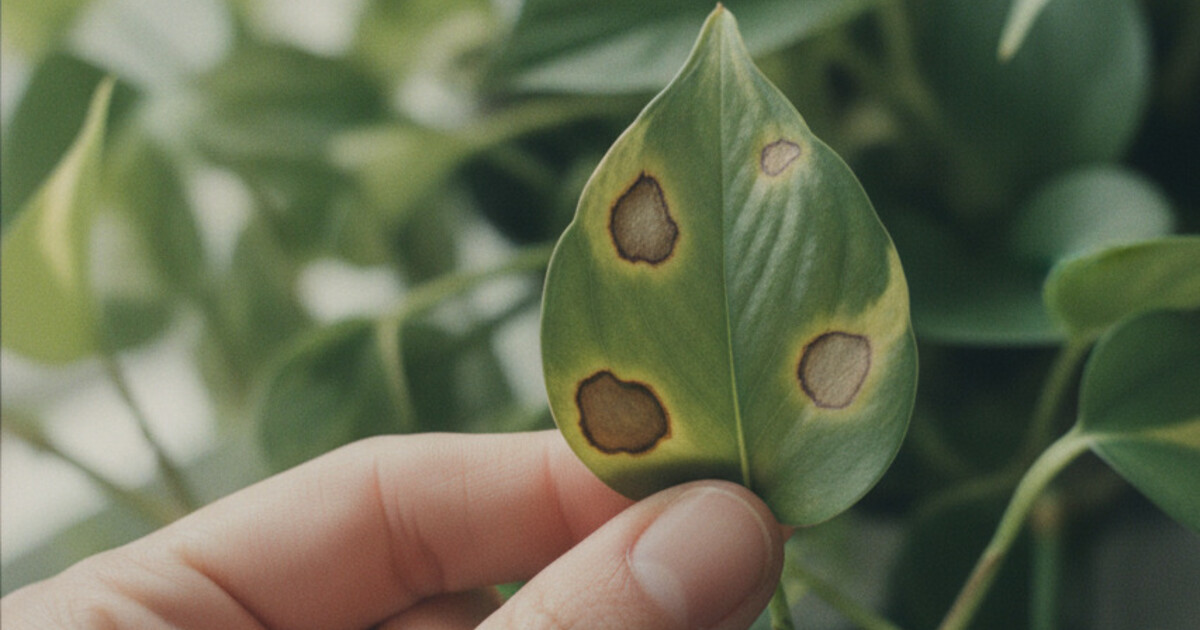
The border of the spot tells you more than the color. Bacterial leaf spot on pothos shows up as small, water-soaked lesions that look wet or greasy even when the leaf is dry, and each spot is ringed by a distinct yellow halo. The spots often start near leaf margins or veins and can merge into larger mushy patches. Fungal leaf spot looks drier and more organized: tan-to-brown circles, sometimes with faint concentric rings or a darker defined edge, and no bright halo. Water-related browning is different again. Overwatering produces soft, dark spots that spread from the leaf center or base while the whole leaf yellows and the soil stays wet. Underwatering produces crispy, papery brown edges that crumble when you touch them. If you can smell a sour, rotten odor from the soil, root rot is likely the real driver behind the leaf damage.
Overwatered Pothos and Root Rot: The Number One Cause
If you’re wondering why your pothos has brown spots and the soil feels wet, overwatering is the prime suspect. An overwatered pothos develops soft brown spots alongside yellowing leaves, limp stems, and sometimes a musty smell from the pot. Pothos roots need oxygen, and constantly soggy soil suffocates them, which leads to root rot and brown, mushy foliage above the soil line.
To confirm, slide the plant out of its pot. Healthy roots are firm and white or light tan. Rotten roots are brown, black, slimy, and pull apart easily. Trim away any mushy roots with clean scissors, let the plant sit out of soggy soil, and repot into fresh, well-draining mix in a pot with a drainage hole. Going forward, water only when the top inch or two of soil is dry. If you’re unsure whether you’re over or under-doing it, this breakdown of overwatered versus underwatered plants shows the differences side by side.
Underwatering, Sunburn, and Cold Damage
Underwatering is the mirror image. When a pothos goes too long without water, the leaf edges and tips turn crispy brown and papery while the soil pulls away from the pot’s sides. Whole leaves may curl or feel thin. The fix is simple: water thoroughly until it drains from the bottom, and aim for evenly moist soil rather than letting it swing between bone-dry and flooded.
Sunburn shows up on pothos leaves that sit in harsh direct sun, especially behind a south-facing window. The spots start as pale, bleached patches on the sun-facing side, then dry to brown. Pothos prefers bright indirect light, so move a scorched plant a few feet back from the glass.
Cold damage looks like sudden dark brown or blackish blotches, often after a plant sits near a drafty window, an air-conditioning vent, or an exterior door in winter. Pothos dislikes anything below about 55°F. Relocate it somewhere stable and warm, and the new growth should come in clean.
Bacterial and Fungal Leaf Spot on Pothos
When brown spots come with a yellow halo and a wet, greasy look, you’re likely dealing with bacterial leaf spot pothos owners dread. It spreads through water splashing from leaf to leaf and thrives in warm, humid, poorly ventilated spots. A fungal pothos leaf spot looks drier, with tan or brown circles and sometimes ring patterns, and it also spreads in stagnant humid air.
Treatment overlaps for both. Isolate the plant from your other houseplants so the infection can’t jump. Remove and discard every affected leaf with sterilized scissors, wiping the blades with rubbing alcohol between cuts. Stop misting and stop overhead watering; water the soil directly instead. Improve airflow around the plant and let the foliage dry out. For stubborn fungal cases, a copper-based fungicide or a neem oil spray helps. Bacterial infections don’t respond to fungicide, so pruning, dry leaves, and good airflow are your main tools there.
How to Treat Brown Spots on Pothos, Step by Step
Knowing how to treat brown spots on pothos comes down to matching the treatment to the cause, then giving the plant stable conditions to recover.
- Diagnose first. Check soil moisture, spot location, and spot borders using the table above.
- Remove badly damaged leaves. Trim any leaf that’s more than roughly half brown, using clean, sterilized scissors.
- Fix the root cause. Repot out of soggy soil for rot, move out of direct sun for scorch, isolate and dry the foliage for infection, water deeply for drought.
- Adjust watering to the finger test. Water only when the top inch of soil is dry, and always empty the drainage tray.
- Stabilize light and temperature. Bright indirect light, away from cold drafts and hot vents.
- Watch new growth. Fresh leaves emerging clean and green mean the fix worked. Existing brown spots won’t turn green again, so judge recovery by what grows next.
How to Prevent Brown Spots on Pothos
Prevention is mostly about consistency. Water on the plant’s schedule, not the calendar, and check the soil with your finger before every watering. Pothos would rather be slightly dry than soggy, so err toward underwatering if you’re unsure.
Keep leaves dry when you water by pouring at the soil line instead of over the foliage, which starves bacterial and fungal spots of the moisture they need to spread. Give the plant bright indirect light, decent airflow, and a stable temperature between about 65°F and 85°F. Wipe dust off the leaves occasionally so the plant can breathe and you can spot early problems. Quarantine any new plant for a couple of weeks before it joins your collection, since infections often arrive on a new purchase.
Should You Cut Off Leaves With Brown Spots?
Yes, in most cases you should remove leaves that are heavily damaged, and it helps the plant more than it hurts. A leaf that’s more than half brown won’t recover, and it drains energy the pothos could spend on new growth. For infections, removing spotted leaves also cuts down the source of spores or bacteria.
If a leaf has only a small brown spot or two, you have a choice. You can trim just the brown portion with clean scissors, leaving a thin margin of dry tissue so you don’t cut into healthy green, or you can leave it and monitor. Never strip more than about a third of the plant’s foliage at once, since pothos still needs leaves to photosynthesize its way back to health. Always sterilize your scissors between cuts, especially when a bacterial or fungal problem is involved.
How PlantlyAI Helps
The hardest step is figuring out which of the six causes you’re actually looking at, because the wrong fix can make things worse. Watering a plant with root rot, or leaving a bacterial infection to spread, both cost you leaves.
PlantlyAI is built for exactly this moment. Snap a photo of the affected pothos leaf and the app’s AI diagnosis reads the visual cues you might miss, like whether that spot has the yellow halo of bacterial leaf spot or the dry rings of a fungal one, then tells you the most likely cause. From there it gives you a step-by-step treatment plan with organic, biological, and chemical options so you can pick the approach you’re comfortable with.
You also get prevention and care tips tailored to pothos, plus a searchable plant disease library if you want to read up on leaf spot before you act. If you’re not even sure the trailing plant on your shelf is a true pothos, PlantlyAI identifies plant and flower species too. It’s free to start with two scans a day and no signup, so you can diagnose today’s problem before it spreads to the rest of the vine. It’s one of several capable free PictureThis alternatives worth trying for plant diagnosis.
Frequently Asked Questions
Should I cut off pothos leaves with brown spots? Remove leaves that are more than about half brown, since they won’t recover and they drain the plant’s energy. For infected plants, pruning spotted leaves also slows the spread. If a leaf has only a tiny spot, you can trim just the brown edge or leave it. Never remove more than a third of the foliage at once, and sterilize your scissors between cuts.
What does an overwatered pothos look like? An overwatered pothos has soft brown spots, yellowing leaves, and limp or mushy stems, usually with wet soil and sometimes a sour smell. The browning often starts from the leaf center or base rather than the edges. Slide the plant out of its pot; brown, slimy roots confirm root rot from too much water.
Can pothos recover from brown spots? Yes, pothos recovers well once you fix the underlying cause. Existing brown spots won’t turn green again, so you judge recovery by the new leaves. If fresh growth comes in clean and green, the plant is bouncing back. Remove the worst-damaged leaves, correct watering, light, or airflow, and be patient through the next growth cycle.
Is it fungus or bacteria? Look at the spot’s border. Bacterial leaf spot appears water-soaked and greasy with a bright yellow halo around each lesion. Fungal leaf spot looks drier, with tan-to-brown circles that sometimes show concentric rings and no halo. Bacterial infections don’t respond to fungicide, so airflow and pruning matter most, while fungal ones can be treated with copper fungicide or neem oil.
Still not sure which cause you’re looking at? Snap a photo of the affected leaf with PlantlyAI at plantidentifierfree.app to get an instant diagnosis and a step-by-step treatment plan matched to your pothos, so you can stop the spots before they take over the vine.
Not sure what's wrong? Diagnose your plant free
Upload a photo to our free plant disease identifier and get an instant diagnosis.