Overwatered vs Underwatered Plant: How to Tell
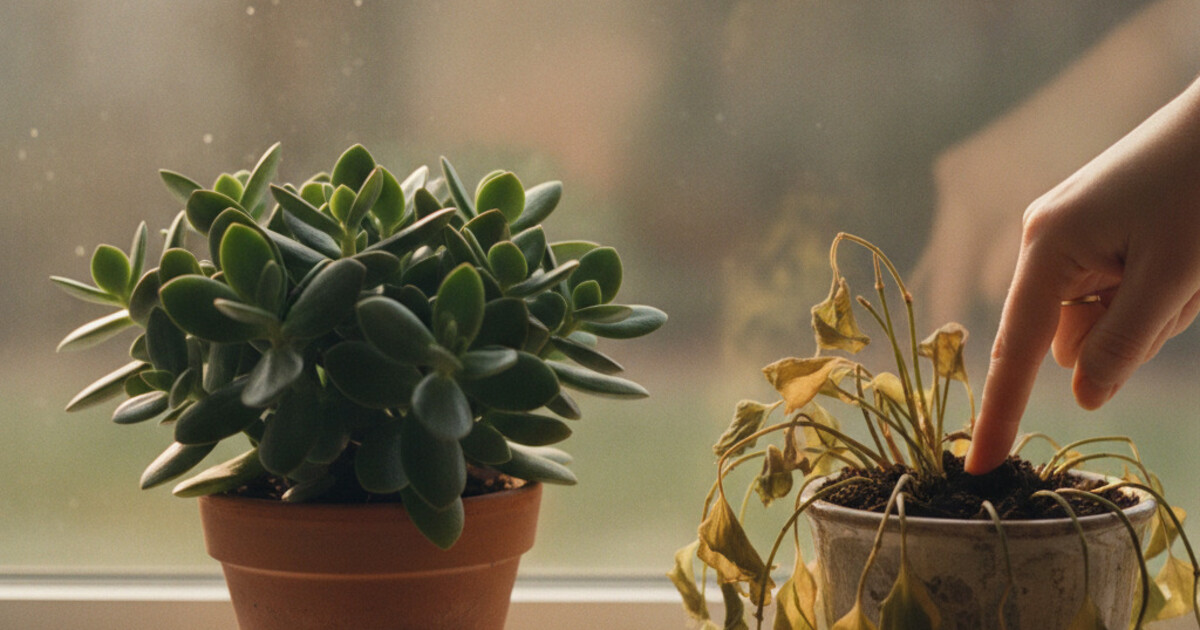
Your plant looks miserable. The leaves droop, a couple have gone yellow, and you’re standing there with a watering can, unsure whether to pour or hold off. Diagnosing an overwatered vs underwatered plant is one of the most common problems in plant care, and it’s genuinely tricky because thirsty plants and drowning plants can look almost identical from across the room. Pour water on a plant that’s already drowning and you can kill it in a week.
This guide walks through the fast tell that sorts it out in under a minute, a side-by-side symptom table, the confusing overlap that trips people up, and exactly how to recover a plant from either mistake.
The quickest way to tell them apart is to check the soil before you look at the leaves. Push a finger two inches into the pot. If it’s soggy, cold, or smells sour, the plant is overwatered. If it’s bone dry and pulling away from the pot’s edge, it’s underwatered. The soil tells the truth; the leaves lie.
How to Tell an Overwatered vs Underwatered Plant Apart Fast
Leaves are unreliable witnesses. Both problems can cause drooping, yellowing, and dropping, so starting your diagnosis at the leaf is how people guess wrong and water a plant that’s already flooded. Start at the root zone instead.
Do the finger test first, then check the pot’s weight, then feel a leaf. These three cues together give you a confident answer within a minute.
Here’s a reliable way to read the signs of overwatering versus thirst. An overwatered plant sits in soil that stays wet for days, and its leaves feel soft, limp, and sometimes translucent or mushy near the base. Yellowing usually starts with the lower, oldest leaves and creeps upward, and the whole plant can wilt even though the pot feels heavy and damp. You may notice a musty or sour smell from the soil, mold on the surface, or fungus gnats hovering. Underwatered plant signs run the opposite direction: the soil is dry and compacted, the pot feels surprisingly light when you lift it, and leaves turn crisp, brown, and papery at the edges and tips before they curl inward. A thirsty plant perks up within hours of a deep drink. A drowning one keeps declining no matter how much you water, because its roots have started to rot and can no longer take anything up.
Overwatered vs Underwatered Plant: Symptom Comparison Table
Put the two side by side and the pattern gets clearer. Feel the leaf and check the soil, then match what you see against this chart.
| Symptom | Overwatered | Underwatered |
|---|---|---|
| Soil feel | Wet, soggy, stays damp for days | Dry, hard, cracked, pulls from pot edge |
| Pot weight | Heavy | Noticeably light |
| Leaf texture | Soft, limp, mushy, sometimes translucent | Crisp, brittle, papery |
| Leaf color | Yellowing from the bottom up | Brown, crispy edges and tips |
| Wilting | Droops while soil is still wet | Droops when soil is bone dry |
| Recovery after watering | No change or gets worse | Perks up within hours |
| Smell | Sour or musty from the soil | Neutral, just dry earth |
| Extra clues | Mold, fungus gnats, soft stem base | Curling leaves, slowed growth, leaf drop |
The two lines that settle most cases are soil moisture and how the leaf feels. Soft and wet points to overwatering. Crispy and dry points to underwatering. If your plant shows specific discoloration rather than general yellowing, like defined dark patches, that can be a separate issue worth checking in a guide on brown spots on pothos leaves before you blame watering at all.
Why Yellow Leaves and Wilting Confuse Everyone
Here’s the trap. Yellow leaves and drooping stems show up in both conditions, so those two symptoms alone tell you nothing. That’s why so many people misdiagnose and water a plant to death while trying to save it.
The reason both problems produce the same wilt comes down to roots. A thirsty plant wilts because there’s no water for the roots to pull up. An overwatered plant wilts because its roots are suffocating in waterlogged soil and rotting, so even in a wet pot they can’t move water into the leaves. Same droop, opposite cause.
Yellowing works similarly. Roots deprived of oxygen can’t take up nutrients, so leaves fade. Roots starved of water shut down too. The tiebreaker is always the soil and the leaf texture, never the color by itself. When you catch yourself about to water based on a yellow leaf, stop and stick your finger in the pot first.
Fixing an Overwatered Plant and Reversing Root Rot
Overwatered plant recovery starts with stopping water immediately and moving the plant somewhere brighter with good airflow so the soil can dry. Don’t fertilize; damaged roots can’t handle it and you’ll burn them.
If the plant is badly waterlogged or you smell rot, take it out of the pot and look at the roots. Healthy roots are firm and pale. Roots hit by root rot are brown or black, slimy, and fall apart between your fingers. Trim every mushy root off with clean scissors, rinse away the old soggy soil, and repot into fresh, well-draining mix in a pot with drainage holes.
A few rules that prevent a repeat:
- Water only when the top two inches of soil are dry.
- Empty the saucer so the pot never sits in standing water.
- Use a pot with drainage holes, always.
Recovery takes patience. A plant that lost half its roots needs a few weeks to grow new ones, and it may drop some leaves along the way. That’s normal. New firm growth at the center is your sign it’s turning the corner.
Reviving an Underwatered Plant
A thirsty plant is usually the easier fix, and it often bounces back the same day. If the soil has gone bone dry and water runs straight through the pot without soaking in, a quick splash from the top won’t reach the roots.
Bottom-water it instead. Set the pot in a sink or tray filled with a few inches of water and leave it for thirty to forty-five minutes so the soil soaks moisture up from below. The dry soil rehydrates evenly and the roots finally get a drink. Then let the excess drain fully before putting the plant back.
Most underwatered plants perk up within a few hours to a day. Trim off any fully brown, crispy leaves, since those won’t recover, and keep the plant out of harsh direct sun while it rehydrates. Going forward, check the soil every few days rather than waiting for the plant to wilt as its reminder. If you tend to forget, moving the plant somewhere you pass daily helps more than any rigid schedule.
How PlantlyAI Helps You Diagnose It
Sometimes the soil test still leaves you unsure, especially when overwatering and a pest or fungus are happening at the same time. That’s where a second opinion helps.
PlantlyAI is an AI plant-diagnosis app. You snap a photo of the struggling plant, and it identifies what’s actually wrong, whether that’s overwatering, root rot, underwatering, a nutrient issue, or a specific pest or disease. Instead of guessing from a yellow leaf, you get a read on the real cause.
From there it gives you a step-by-step treatment plan with organic, biological, or chemical options, so you know what to do next rather than just what’s wrong. It also identifies plant species, which matters because watering needs vary a lot between a succulent and a fern. There’s a searchable disease library if you’d rather look things up, and you get two free scans a day with no signup to start.
If you’re comparing plant tools, this roundup of free PictureThis alternatives covers how diagnosis apps differ from plain plant-ID apps.
Frequently Asked Questions
Can an overwatered plant recover? Yes, if you catch it before rot spreads through the whole root system. Stop watering, let the soil dry out, and if roots are mushy, trim the rotten ones and repot in fresh, well-draining soil. Recovery takes a few weeks, and the plant may drop some leaves. New firm growth means it’s coming back.
Do yellow leaves mean too much or too little water? Yellow leaves can mean either, which is why color alone won’t tell you. Check the soil and leaf texture instead. Yellowing with soft leaves and wet soil points to overwatering. Yellowing with crispy edges and dry soil points to underwatering. The soil is your tiebreaker, every time.
How do I know if I’m overwatering or underwatering? Push a finger two inches into the soil. Wet, soggy, or sour-smelling means overwatered. Dry and hard means underwatered. Back it up by lifting the pot: heavy means too much water, light means too little. Soft leaves signal overwatering; crispy, brittle leaves signal thirst.
Should I remove damaged leaves? Remove leaves that are fully brown, crispy, or mushy, since they won’t turn green again and can invite mold or pests. Leave partly yellow leaves alone if they still have green, because the plant may still pull nutrients from them. Never strip more than about a third of the foliage at once.
Still not sure which way your plant is struggling? Snap a photo with PlantlyAI at plantidentifierfree.app and get a diagnosis plus a step-by-step fix in seconds, before another round of guessing costs you the plant.
Not sure what's wrong? Diagnose your plant free
Upload a photo to our free plant disease identifier and get an instant diagnosis.