Septoria Leaf Spot Treatment: Signs & Fixes
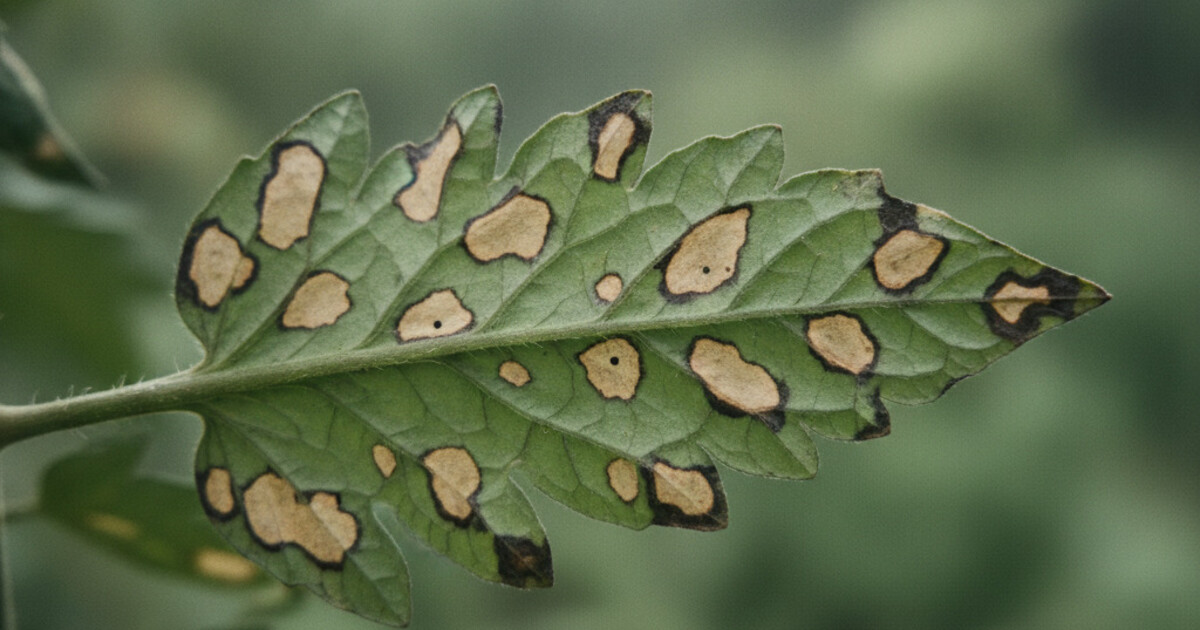
Septoria leaf spot starts quietly. A few small, water-soaked circles appear on the lower leaves of your tomato plant, easy to dismiss as minor splash damage or a rough patch from handling. Two weeks later, those leaves are yellowing off the plant, and the spots have climbed halfway up. This disease moves fast once it gets established.
Septoria lycopersici is a fungal pathogen that targets tomatoes, peppers, and other Solanaceae family plants. It thrives in warm, humid conditions and spreads every time rain or irrigation water hits infected tissue and splashes spores onto healthy leaves above. The earlier you catch it and act on it, the less damage it does to your harvest.
Quick answer: Septoria leaf spot treatment starts with removing all infected leaves and disposing of them away from the garden. Apply a copper-based fungicide or chlorothalonil every 7-10 days during wet weather. Keep water off the foliage, mulch the soil to stop splash spread, and don’t compost infected material. Caught early, most plants recover and continue producing.
What Septoria Leaf Spot Looks Like
The spots appear first on the lowest, oldest leaves. Each spot is roughly circular, about 1/4 inch (6 mm) across, with a water-soaked or yellow margin at first. Within a few days the center turns tan or grayish-white, and a dark brown ring forms around the edge.
Septoria lycopersici is the fungal species responsible for this disease on tomatoes. It belongs to the Ascomycota division, and each spot it produces contains a diagnostic detail: tiny black dots in the tan center called pycnidia, the fungal fruiting bodies where new spores form. Pycnidia measure roughly 75-125 micrometers in diameter and appear as small dark specks that don’t rub off when touched. Spots appear on the lower leaves first and work upward; the fungus prefers 60-80°F (15-27°C) with at least 6 consecutive hours of leaf wetness. Under those conditions, rain or overhead irrigation ejects conidia (asexual spores) from pycnidia and carries them up to 3 feet to healthy tissue. A susceptible plant in a wet summer can lose its entire lower canopy in 2-3 weeks. Septoria also affects peppers, eggplant, and potatoes, all Solanaceae family members. The pathogen overwinters in infected crop debris and solanaceous weeds like black nightshade and ground cherry; it does not survive in seeds.
As infections progress, the leaves around each spot turn yellow, then brown, and drop. Severe defoliation weakens the plant and exposes fruit to sunscald. The disease doesn’t infect fruit directly, but a stripped plant produces fewer fruits overall.
A few diseases look similar, and treating for the wrong one wastes time. Early blight (Alternaria solani) produces larger, irregular spots with concentric rings forming a target pattern. Bacterial speck makes smaller, more angular spots surrounded by a bright yellow halo. Septoria spots are circular, consistently small, and show those tiny black pycnidia in the center — that’s the clearest identifying feature. If you’re not sure which disease you’re looking at, photograph the damaged leaf in a plant disease diagnosis app before you spray; the treatment approach shifts depending on the pathogen.
What Causes Septoria Leaf Spot to Spread
Two things feed a septoria outbreak: moisture on leaves and infected plant material nearby.
The fungus overwinters as mycelium and pycnidia in dead tomato stems, leaves, and solanaceous weeds in the garden. In spring, warm temperatures and rain reactivate the spores. Water splash is the dominant route: rain hitting infected debris, or overhead irrigation contacting infected lower leaves, ejects conidia upward and outward to healthy tissue. Working around wet plants and sharing tools between plants moves spores too, but water is the main driver.
Dense planting makes things worse. Plants grown close together trap humidity and keep leaves wet longer after rain or watering. Indeterminate tomatoes with heavy foliage trained without airflow stay wet inside the canopy for hours longer than spaced, pruned plants.
Once a leaf is infected, the cycle completes in 10-14 days: spores land, germinate, penetrate leaf tissue, and produce new pycnidia ready with fresh conidia. Each infected leaf becomes a spore source for dozens of leaves nearby. Removing infected leaves early has a direct effect on how fast the disease climbs the plant.
Septoria Leaf Spot Treatment: Step-by-Step
Act as soon as you see the first spots. Waiting even a week in wet weather lets the fungus complete another generation and spread to more leaves.
Step 1: Remove all infected leaves. Start at the base and pull every leaf showing spots, yellowing, or browning. Put them in a sealed bag and throw them in the trash. Don’t compost them; septoria survives in compost that doesn’t reach sustained high temperatures. Wash your hands and any tools before moving to the next plant.
Step 2: Apply a copper-based fungicide. Copper octanoate (sold under names like Bonide Copper Fungicide) and Bordeaux mixture (copper sulfate combined with lime) are the main organic options. Spray the entire plant, covering all leaf surfaces and stems. Copper acts as a protectant: it stops spore germination on treated tissue but won’t cure tissue that’s already infected. Removing the infected leaves first is what makes the copper spray effective.
Step 3: Follow a 7-10 day spray schedule. Fungicide treatments protect healthy tissue; they don’t kill the fungus inside infected leaves. Repeat every 7-10 days, or immediately after heavy rain washes off the previous coat. Continue as long as wet weather persists or new infections keep appearing.
For more severe infections: Chlorothalonil (sold as Daconil) is a broad-spectrum synthetic fungicide that performs well against septoria. Mancozeb is another synthetic option often used preventively early in the season. Follow label rates and pre-harvest intervals; both have restrictions on how close to harvest you can apply.
Step 4: Mulch under the plants. A 2-3 inch layer of straw, wood chip, or plastic mulch below the plant creates a barrier between infected soil and the leaves above. Rainwater hits the mulch instead of bare soil and doesn’t splash spores onto lower foliage. Mulching alone won’t stop a running infection, but it slows the initial jump from soil debris to plant tissue significantly.
Step 5: Switch to drip irrigation or base watering. Every minute of leaf wetness extends the window for spore germination. Overhead watering and driving rain both contribute; you can’t control rain, but you can eliminate the overhead watering. Drip lines or hand-watering at the base keep foliage dry and cut the infection cycle short.
How to Prevent Septoria Leaf Spot From Returning
Once you’ve seen septoria in a garden bed, assume the pathogen is in that soil and plan for it every season.
Crop rotation is the most effective prevention. Move tomatoes, peppers, eggplant, and potatoes to a different bed every 2-3 years. Septoria survives in plant debris, and rotating away from the host family starves it before you plant again in that spot. A 3-year rotation is more reliable than 2 in gardens where debris is hard to remove completely.
Clear plant debris at the end of the season. Pull out all tomato stems, leaves, and roots after the last harvest. Till or turn the bed to bury surface debris that could harbor overwintering spores. A clean bed in fall reduces the spore load the following spring by a meaningful margin.
Choose resistant varieties. Several tomato varieties carry measurable septoria resistance, including Celebrity, Jetstar, and Supersonic. Resistant varieties don’t get full immunity; they get infected later and more slowly. In a wet summer, that delay is often the difference between a productive harvest and a defoliated plant. The seed catalog description lists septoria resistance as “LS” (leaf spot) when present.
Space plants for airflow. Indeterminate tomatoes need at least 24-36 inches between plants. Staking or caging to keep growth vertical, and pruning suckers along with lower foliage that touches the soil, removes both spore sources and the splash zones where early infections start. A free plant disease app can help you monitor plants through the season and catch new infections before they spread further.
How PlantlyAI Helps Identify Leaf Spot Diseases
The challenge with septoria is that several fungal and bacterial diseases produce similar-looking spots, and the right treatment depends on which one you’re dealing with. Septoria responds well to copper fungicides and chlorothalonil. Early blight responds better to chlorothalonil but not to copper alone. Treating for the wrong disease delays recovery.
PlantlyAI diagnoses plant diseases from a single photo. Take a clear shot of the affected leaf and the app identifies whether you’re looking at septoria, early blight, bacterial speck, or another cause. It returns a step-by-step treatment plan with organic, biological, and chemical options, so you can match the response to how you manage your garden.
The app works across vegetables, houseplants, garden flowers, and crops. You get 2 free diagnoses per day with no account needed. If you’re seeing spots on your tomato leaves and want a confirmed answer before you spray, photograph the damage in PlantlyAI on iOS or Android and start treatment with the right product.
Frequently Asked Questions
Can septoria leaf spot kill a tomato plant? Septoria leaf spot won’t kill a plant outright, but severe untreated infections can strip the lower and middle canopy completely. A heavily defoliated plant produces fewer fruits, and exposed tomatoes are vulnerable to sunscald. Most plants survive if you catch the disease early and remove infected leaves consistently. Late-season plants close to harvest often keep producing even with significant lower-leaf infection, as long as the upper canopy stays relatively intact.
Is septoria leaf spot the same as early blight? No. Both are fungal diseases that cause spots on tomato leaves, but they’re different pathogens. Septoria spots are small (about 1/4 inch), circular, with a tan center and dark border, and show tiny black pycnidia in the center. Early blight (Alternaria solani) produces larger, irregular spots with concentric rings in a target pattern and tends to be worse in warmer, drier conditions. Septoria is more common in cool, wet summers. The pycnidia in the spot center are the fastest way to tell them apart.
Does septoria leaf spot spread to other vegetables? Septoria lycopersici primarily affects plants in the Solanaceae family: tomatoes, peppers, eggplant, and potatoes. It doesn’t cross to cucumbers, squash, beans, or unrelated crops. If you’re growing multiple Solanaceae crops near each other, treat all of them when you spot the disease on one, since spores spread between family members easily.
How long does septoria survive in soil? The fungus survives primarily in plant debris rather than in bare soil. Infected stems, leaves, and roots left in the garden can harbor the pathogen for 1-2 years. Clean removal of all plant material at the end of the season, combined with a 2-3 year crop rotation, is the most reliable way to bring the inoculum level down in your beds.
Can I eat tomatoes from a plant with septoria leaf spot? Yes. Septoria leaf spot affects foliage and doesn’t infect the fruit. Tomatoes from affected plants are safe to eat. Wash them as you normally would before eating. The main concern with a badly infected plant is reduced yield and early canopy decline, not food safety.
If you’re unsure whether your plant has septoria or another leaf disease, photograph the affected leaves in PlantlyAI for a confirmed diagnosis. Free to use on iOS and Android, with a treatment plan included for whatever it finds.
Not sure what's wrong? Diagnose your plant free
Upload a photo to our free plant disease identifier and get an instant diagnosis.