Alocasia Leaves Drooping: Causes and How to Fix It
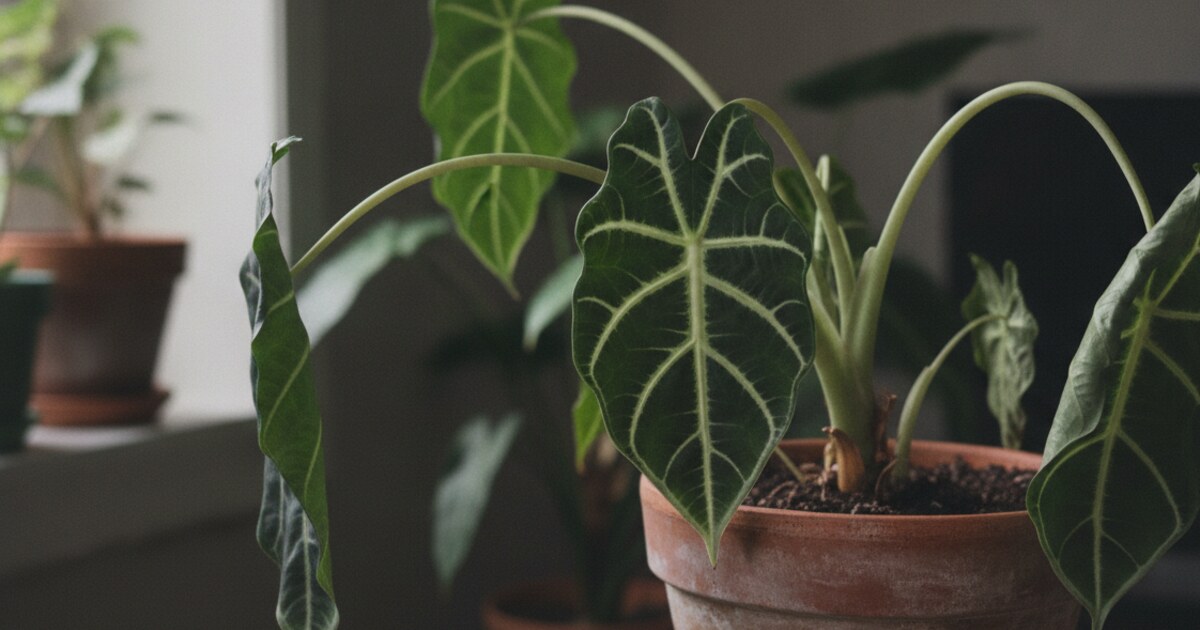
Alocasia has a talent for dramatic drooping. One morning the leaves stand tall and glossy; by afternoon every petiole has slumped toward the soil. If your alocasia leaves are drooping, you’re dealing with one of six common problems, and the tricky part is that each one looks identical from the outside. Overwatering, underwatering, low humidity, cold shock, transplant stress, and pest damage all produce the same limp result.
The good news: almost every case of alocasia drooping is reversible within a week or two if you act on the right cause. This guide walks through a quick diagnostic check, then covers each cause with specific fixes you can apply today.
Alocasia leaves droop when the plant can’t maintain turgor pressure in its leaf stems. The most common trigger is overwatering leading to root rot, which blocks water uptake even when the soil feels wet. Check soil moisture at 2 inches deep first: soggy soil points to overwatering, bone-dry soil to drought, and firm-but-dry soil to humidity or temperature stress.
How to Diagnose a Drooping Alocasia
Before treating anything, spend 60 seconds on this check. It narrows you to one cause quickly.
Touch the soil at 2 inches deep. Soggy, cold, and heavy: likely overwatering. Bone dry, pulling away from the pot sides: drought stress.
Lift the pot. Heavy for its size means waterlogged. Unusually light means dry to the core.
Squeeze the petiole base where the stem meets the soil. Soft and mushy suggests root rot is already underway. Firm petioles with limp leaf blades suggest humidity collapse or temperature stress without rot.
Scan the undersides of leaves for webbing, sticky residue, or tiny moving dots. Pests hide there and cause drooping by damaging root tissue or disrupting water movement in the leaves.
Work through the sections below starting with whichever symptom your check flagged first.
Overwatering and Root Rot in Alocasia
Overwatering is the most common reason alocasia leaves droop. Alocasia have shallow, fleshy rhizomes that are highly sensitive to saturated soil; even 24-48 hours of waterlogged conditions can trigger rapid leaf collapse as oxygen-depleted roots fail. The root system can’t transport water when it’s rotting, so leaves droop even though the potting mix is wet. Healthy alocasia roots are pale tan to white and firm. Rotted roots are brown or black, mushy, and smell sour or foul. To fix overwatering-related drooping, unpot the plant, trim all brown mushy root tissue back to firm white tissue with sterilized scissors, dust cut ends with cinnamon as a natural antifungal, and repot into a chunky aerated mix: two parts potting soil, one part perlite, one part orchid bark. Recovery starts within 7-14 days if intervention is early, before rot affects more than 50% of the root system. Going forward, water only when the top 2 inches of soil have dried out.
Step-by-step root rot fix:
- Unpot the plant and shake loose the old soil.
- Rinse the roots under room-temperature water.
- Trim all brown, mushy roots back to firm, white tissue. Use clean scissors and sterilize between cuts with rubbing alcohol.
- Dust cut ends with cinnamon. Let air-dry for 30 minutes.
- Repot into fresh chunky mix (2 parts potting soil + 1 part perlite + 1 part orchid bark).
- Water lightly. Place in bright indirect light with 60%+ humidity.
Overwatered alocasia often show yellowing alongside the drooping. If the leaves are also changing color, alocasia leaves turning yellow covers how the two symptoms overlap and what each pattern signals.
Underwatering: When Drought Causes the Droop
Alocasia are thirsty plants. In summer, a fully dry pot can produce visible drooping within 24 hours. The difference from overwatering droop: drought-stressed plants have dry, light-feeling soil and slightly crispy leaf edges. The petioles stay firm but the leaf blades go limp from lack of turgor pressure.
How to fix it: Bottom-water the plant by setting the pot in a tray of room-temperature water for 20-30 minutes. Let the soil wick moisture up through the drainage holes rather than pouring from the top, which can miss dry pockets when soil has shrunk away from the pot walls.
Most alocasias recover within a few hours of a thorough soak. Some large-leafed varieties like Alocasia macrorrhiza may take a full day to straighten up.
Going forward, check the top 2 inches of soil rather than watering on a fixed schedule. Alocasia’s water needs change with the season: more frequent in summer, much less in winter. Knowing the difference between overwatering and underwatering before you start is easier with the overwatered vs underwatered plant guide.
Low Humidity and Temperature Stress
Alocasia are native to the understory forests of tropical Southeast Asia, where humidity averages 70-90%. In the average home running at 40-50% humidity, they’re already near their lower limit. When winter heating systems drop indoor air to 20-30%, drooping follows quickly.
The humidity floor for alocasia: 50%. Below that, leaves lose turgor faster than roots can replace it. The target range is 60-80%.
Three ways to raise humidity fast:
- Group the alocasia with other houseplants. Transpiration from nearby plants raises local humidity by 5-10%.
- Set the pot on a pebble tray filled with water, keeping the pot base above the waterline.
- Run a small humidifier nearby, especially from October through March when heating runs constantly.
Temperature stress causes similar drooping. Alocasia want 65-85°F (18-29°C). A cold draft from a window, air conditioning vent, or a temperature drop below 55°F (13°C) shocks the vascular system in the petioles and leaves collapse. Move the plant away from drafts and vents; recovery usually happens in 2-3 days once conditions stabilize.
Transplant Shock and Drooping After Repotting
If your alocasia drooped within a few days of repotting, transplant shock is almost certainly the reason. When roots are disturbed, the fine feeder roots that handle water uptake get severed, and the plant can’t sustain its large leaves until those roots regenerate.
This is normal and temporary. Most alocasias resolve transplant shock in 3-7 days.
What to do while waiting:
Keep the plant in a stable, bright-indirect-light spot. Resist the urge to move it, mist it constantly, or add more water to “help.” Hold off on fertilizing for 4-6 weeks; fertilizer on stressed roots causes chemical burn and worsens the situation. Maintain 60%+ humidity and temperatures between 65-80°F (18-27°C). Water only when the top 2 inches dry out.
If a leaf was already semi-drooped or yellowing before the repot, it may not recover. New growth after the shock period should emerge upright and firm.
Pests and Nutrient Deficiency
Two less-obvious causes worth checking if the common ones don’t match:
Root mealybugs and spider mites cause drooping by damaging root tissue or blocking water movement in the leaves. Root mealybugs look like small white powdery masses clinging to roots; you’ll find them when you unpot the plant. Spider mites leave fine webbing on leaf undersides and tiny pale stippling on the leaf surface. Treat root mealybugs with a neem oil soil drench (2 tbsp neem per gallon of water, applied weekly for 3-4 weeks). Treat spider mites with insecticidal soap spray on the undersides of leaves, repeated every 5-7 days.
Potassium deficiency weakens petiole structure, causing leaves to droop even when moisture and humidity are adequate. It usually shows alongside yellowing along leaf margins. Feed with a balanced fertilizer containing potassium (NPK ratios like 10-10-10 or 3-1-2) every 2-3 weeks during spring and summer. Cut feeding to once a month or stop entirely in winter.
How PlantlyAI Helps Diagnose Drooping Alocasia
When leaves droop and you’re not sure which of the six causes is responsible, the soil touch test gets you partway there. But when the cause isn’t clear from the surface, a photo-based diagnosis can help you skip the guesswork.
PlantlyAI identifies plant diseases, pest damage, and stress symptoms from a single photo. Snap a picture of your drooping alocasia including the petiole base and any discoloration, and the app returns a diagnosis with a step-by-step treatment plan. You get a choice of organic, biological, or chemical treatment options depending on what it finds.
PlantlyAI works across houseplants, garden plants, vegetables, and crops. It’s free to start: 2 diagnoses per day, no account required.
Frequently Asked Questions
Why is my alocasia drooping after repotting?
Transplant shock is the most likely cause. When roots are disturbed during repotting, fine feeder roots that handle water uptake get severed, and the plant can’t support its large leaves until they regenerate. Most alocasias recover in 3-7 days. Keep it in stable bright indirect light, hold off on fertilizer, and don’t overwater while it settles.
Can alocasia recover from drooping?
Yes, in almost every case. Overwatering and root rot cases recover in 7-14 days once you remove the damaged roots and repot into fresh, aerated soil. Drought and humidity stress recover within hours to a day once corrected. Cold shock resolves once the plant moves to a warmer, stable spot, usually within 2-3 days.
How do I tell if my alocasia is overwatered or underwatered?
Touch the soil at 2 inches deep. Soggy, heavy, cold soil means overwatering. Bone dry, pulling from pot walls, very light pot means underwatering. With overwatering, petiole bases often feel soft or mushy; with underwatering, the petioles stay firm but the leaf blades hang limp from lack of turgor pressure.
Should I cut drooping alocasia leaves?
Cut a drooping leaf only if it’s fully yellowed, brown, or clearly dead. A leaf that’s drooping but still green can recover as the underlying problem gets fixed. Cutting a live leaf removes photosynthesis capacity when the plant is already under stress, which slows recovery.
Why does my alocasia droop in winter?
Alocasia often enter dormancy when temperatures drop below 60°F (15°C) or day length shortens significantly. Leaves may droop or yellow as the plant pulls energy back to its corm (the underground storage structure). Reduce watering significantly, stop fertilizing, and keep the plant warm and away from cold windows. New upright growth should push again in spring.
If your alocasia is drooping and you can’t pin down the cause from the surface, snap a photo with PlantlyAI. The app diagnoses plant problems from a single photo and walks you through a step-by-step treatment plan with organic, biological, and chemical options. Free to start, 2 diagnoses per day, no account required. Get PlantlyAI on iOS or download for Android.
Not sure what's wrong? Diagnose your plant free
Upload a photo to our free plant disease identifier and get an instant diagnosis.