Anthurium Leaves Turning Yellow: Causes & How to Fix It
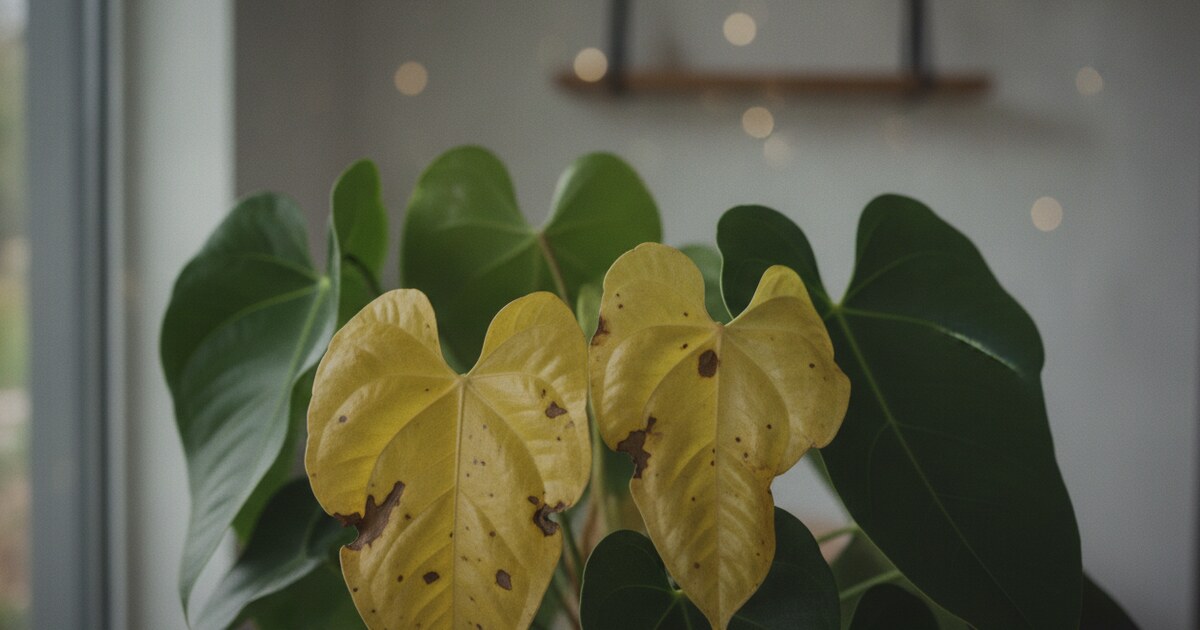
Anthuriums are forgiving houseplants right up until their glossy leaves start going yellow. One or two older leaves yellowing at the base is normal. But when multiple leaves turn yellow fast, or young leaves start fading, something is off. The tricky part: overwatering, underwatering, low light, and nutrient deficiency can all produce almost identical-looking yellow leaves, so guessing the wrong cause usually makes things worse.
Anthurium leaves turn yellow most often from overwatering and root rot, but low light, nutrient depletion, temperature stress, and pests produce the same symptom. The pattern tells you which: old leaves yellowing at the base points to natural aging or nutrient depletion; new growth coming in pale yellow signals iron deficiency or root damage.
Why Anthurium Leaves Turn Yellow: Reading the Pattern
The location and speed of yellowing is your best diagnostic clue before you touch the soil.
Old leaves yellowing first (lower, outermost leaves going yellow while new growth stays green) usually means one of three things: natural leaf turnover, nitrogen depletion in exhausted soil, or early root stress. A single old leaf going yellow every few weeks is normal. Anthuriums shed older leaves as they push out new growth.
New leaves coming in pale yellow or with green veins but yellow between them tells a different story. That pattern is chlorosis, typically caused by iron or magnesium deficiency. It means the plant can’t pull enough micronutrients from the soil, either because the pH is too high or because the roots are damaged and can’t absorb anything.
Uniform yellowing across the whole plant, old and new leaves together, usually means root rot is well advanced, a severe watering problem, or a sudden environmental shift like moving to a much colder or darker location.
Anthuriums are tropical aroids native to the rainforests of Central and South America, where roughly 600 species grow in warm, humid conditions with excellent drainage. Their roots evolved to grip bark and mossy surfaces, so they need air as much as water. Optimal growing conditions are 65-85°F (18-29°C) during the day, humidity of 60-80%, and a chunky, fast-draining mix with a pH between 5.5 and 6.5. Standard potting soil compacts over time and stays waterlogged, gradually cutting off oxygen to the roots. In those conditions, even a plant that’s been healthy for years starts yellowing because the roots can’t move water or nutrients into the leaves properly, regardless of how carefully you water. Mildly deficient plants usually recover with a feed and a repot within 4-6 weeks once new roots establish. Severely rotted cases take 6-10 weeks after trimming and repotting into fresh, aerated mix. That’s why diagnosing which leaves are yellowing first matters: it tells you how far along the problem is.
Overwatering and Root Rot: The Most Common Cause of Anthurium Yellow Leaves
Overwatering is behind most cases of anthurium yellowing. Anthuriums need to dry out partially between waterings. If soil stays damp for more than 7-10 days, roots start to suffocate and rot. Once root rot sets in, the plant can’t move water or nutrients up into the leaves, and they turn yellow.
Signs this is your problem:
- Soil feels wet or soggy more than a week after your last watering
- Yellow leaves feel soft or slightly limp rather than firm
- The pot feels heavier than it should
- Unpotting reveals brown, mushy roots with a sour smell (healthy roots are white or cream-colored and firm)
How to fix it: Let the soil dry before watering again. If root rot has already started, unpot the plant, cut away all brown mushy roots with sterile scissors, and repot in a fresh aerated mix. Aroid mix, perlite combined with orchid bark, or coco coir combined with perlite all work well. Don’t fertilize right after repotting. Give the root system 4-6 weeks to recover first.
A common mistake is watering more because the plant looks stressed. Yellow leaves from root rot get worse with more water, not better. The full breakdown of signs is in our guide to overwatered vs underwatered plant symptoms.
Other Reasons Anthurium Leaves Turn Yellow
Underwatering. Yellow leaves from underwatering tend to be dry and papery rather than soft. The soil pulls away from the pot edges and feels completely dry several inches down. Water thoroughly until it drains from the bottom, then let the plant recover over a few days. Check the top 2 inches of soil before every watering going forward.
Low light. Anthuriums need bright indirect light. In dim spots, photosynthesis slows and older leaves gradually yellow. Moving the plant 1-2 feet closer to a window (avoiding direct afternoon sun, which scorches leaves) usually shows improvement within a few weeks.
Temperature stress. Anthurium growth slows below 60°F (15°C) and leaves start yellowing and dropping. Cold drafts from AC vents or windowsills in winter are a common cause. Keep the plant above 65°F and away from temperature swings greater than 10-15°F in a single day.
Nutrient deficiency. After 1-2 years in the same pot, soil nutrients get depleted. A balanced liquid fertilizer with an NPK ratio around 15-30-15, applied monthly from spring through summer, restores nitrogen, phosphorus, and potassium. For chlorosis (new leaves with green veins but yellow between them), a fertilizer with chelated iron or a separate iron supplement corrects it within 4-6 weeks of new growth.
Pests. Spider mites and mealybugs both cause yellowing by feeding on leaf tissue and sap. Mealybugs leave white cottony deposits in leaf joints. Spider mites leave fine webbing on the undersides of leaves. Both spread fast if caught late. Wipe mealybugs off with isopropyl alcohol on a cotton swab, then follow with diluted neem oil every 7-10 days for 4-6 weeks. For spider mites, spray the entire plant, including undersides, with neem oil solution.
Soil pH problems. If soil pH drifts above 7.0, anthuriums can’t absorb iron and manganese even when those nutrients are present. Peat-heavy mixes stay acidic, but old soil in hard-water areas can creep alkaline over time. A basic soil pH test tells you if this is the issue. Switching to a fresh aroid mix with the correct pH range typically resolves it.
Arrowhead plants (Syngonium podophyllum), another popular tropical aroid in the same Araceae family, develop yellow leaves for the same set of reasons. If you’ve worked through arrowhead plant leaves turning yellow, the same diagnostic pattern applies here.
How to Fix Anthurium Yellow Leaves: Step by Step
Work through these in order rather than guessing:
- Check soil moisture first. Press a finger 2 inches into the soil. Wet a week after watering means likely root rot. Bone dry means underwatering.
- Unpot and inspect the roots. Healthy roots are white or cream and firm. Rotted roots are brown, mushy, or smell sour. Trim all rotted sections with sterile scissors, dust cut ends with cinnamon powder (a natural antifungal), and repot in fresh well-draining mix.
- Move to brighter indirect light. A spot 3-5 feet from a south- or east-facing window works for most homes. No direct afternoon sun.
- Check temperature and drafts. Keep above 65°F. Move the plant away from AC vents, drafty windows, or exterior doors in winter.
- Fertilize if soil is exhausted. Monthly balanced liquid fertilizer during spring and summer. Skip the first 4-6 weeks after repotting.
- Inspect for pests. Check leaf undersides and stem joints closely. Spider mites and mealybugs are small enough to miss on a quick glance.
Yellow leaves won’t turn green again. Remove them with clean scissors to redirect the plant’s energy toward new, healthy growth. With the correct fix in place, new green leaves should appear within 4-6 weeks.
Frequently Asked Questions
Why are my anthurium leaves turning yellow and brown at the same time?
Yellow leaves with brown edges usually point to a combination of root stress and low humidity. The yellowing comes from overwatering or nutrient issues, while brown edges typically mean the air is too dry. Check soil moisture first, then consider raising humidity by grouping plants together or setting the pot on a pebble tray with water.
Should I cut yellow leaves off my anthurium?
Yes. Yellow anthurium leaves won’t recover their color, so removing them helps the plant put energy into healthy new growth. Use clean scissors and cut the stem close to the base. Sterilize the scissors between cuts if you suspect a disease or pest problem.
How often should I water anthurium to prevent yellow leaves?
Water when the top 1-2 inches of soil are dry, roughly every 7-14 days depending on pot size, season, and light levels. Always check the soil before watering rather than following a fixed schedule. Anthurium roots need to breathe between waterings.
Can old anthurium leaves turn yellow naturally?
Yes. A single lower leaf yellowing and dropping every few weeks is normal. Anthuriums shed old leaves as they produce new ones. The concern is when multiple leaves yellow at once, when new growth is affected, or when yellowing spreads faster than new leaves appear.
My anthurium has new leaves coming in yellow with green veins. What does that mean?
Yellow new leaves with green veins (chlorosis) typically signal iron or magnesium deficiency. The most common causes are soil pH above 6.5, which blocks nutrient absorption, or exhausted old soil. A balanced liquid fertilizer with chelated iron should correct it within 4-6 weeks of new growth emerging.
Anthurium yellowing has a clear fix once you identify the actual cause. PlantlyAI makes that diagnosis fast. Snap a photo of your yellowing leaves and the app identifies the problem, whether it’s overwatering, root rot, nutrient deficiency, pests, or something else, then walks you through a step-by-step treatment plan with organic, biological, and chemical options. Free to start, with 2 diagnoses a day and no account required. Available on iOS and Google Play.
Not sure what's wrong? Diagnose your plant free
Upload a photo to our free plant disease identifier and get an instant diagnosis.