Arrowhead Plant Leaves Turning Yellow: Causes & Fixes
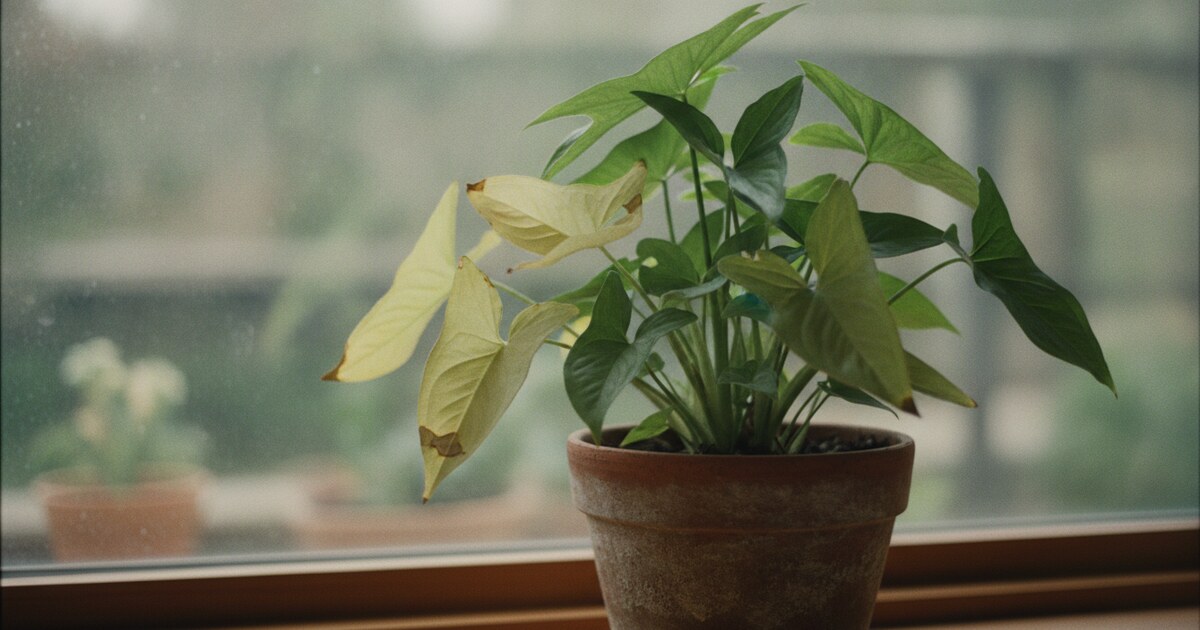
Your arrowhead plant was pushing out glossy new leaves last week. Now several are going yellow, and you’re not sure if it’s something you did or something the plant needs. Syngonium podophyllum is forgiving in most conditions, but yellowing leaves almost always mean one thing is off. The pattern tells you which. Lower leaves going yellow one at a time is different from upper leaves bleaching out, which is different from random yellow patches scattered across the whole plant. Matching the symptom to the cause saves you from making the wrong fix and possibly making things worse.
Arrowhead plant leaves turn yellow most often because of overwatering, which leaves roots oxygen-starved and unable to move nutrients. Other causes include underwatering, low humidity, too much direct sun, nutrient deficiency, pests, or normal shedding of old leaves. Identifying which leaves are yellow and what they look and feel like narrows the cause quickly.
Why Arrowhead Plant Leaves Turn Yellow: Read the Pattern
Where yellowing starts gives you a diagnosis before you even check the soil.
Lower leaves going yellow one or two at a time, while the top of the plant looks healthy and is pushing new growth? That’s normal aging. Syngonium sheds older foliage as new leaves unfurl, cycling through roughly 1-2 lower leaves per month during active growth seasons.
Upper or mid-canopy leaves yellowing? That’s a stress signal worth investigating.
Uniform pale yellow across many leaves usually points to light or nutrient problems. Yellow with bleached or scorched patches means direct sun hit the leaf surface. Small yellow speckles or stippling (especially on undersides) typically signals spider mites or another sap-sucking pest.
Syngonium podophyllum is native to tropical forests from Mexico to Bolivia, where it grows as a climbing ground cover under a forest canopy. In its natural habitat it gets diffuse, filtered light, consistent moisture, and high humidity (often above 70%). The conditions that cause yellowing at home are exactly those that push the plant away from its native environment: waterlogged or bone-dry soil, dry indoor air, or direct afternoon sun that no forest canopy would let through. Keeping that baseline in mind makes the diagnosis straightforward. The plant’s stress responses trace back to its origin. Excess water is more dangerous than drought because the tropical forest floor drains quickly; the roots aren’t built for standing water, and root rot spreads through waterlogged soil within 1-2 weeks. Spider mites, meanwhile, thrive in the dry indoor air that’s the opposite of the plant’s 70%+ humidity home.
Overwatering and Root Rot
Overwatering is the most common reason arrowhead plant leaves turn yellow. The signs: leaves go uniformly yellow (not just patches), they may feel soft or limp, and the lower stems near the soil can look darkened or mushy.
Pull the plant from its pot to confirm. Healthy roots are white and firm. Overwatered roots are brown, slimy, and may smell sour.
What happens: when soil stays wet too long, air pockets disappear and roots suffocate. Oxygen-starved roots can’t absorb water or nutrients, so the plant looks like it’s both drowning and starving at the same time.
Fix it: let the top 2 inches of soil dry out before watering. If root rot has set in, trim away any mushy brown roots, let them air-dry for an hour, then repot into fresh, well-draining mix. Hold back watering for 3-4 days after repotting to let the cuts heal.
For a side-by-side comparison of symptoms, see our guide on overwatered vs underwatered plants.
Arrowhead plants need drainage holes, full stop. A pot without them is a waterlogging trap.
Underwatering and Low Humidity
Underwatered yellow looks different from overwatered yellow. Leaves go yellow starting at the tips and edges, often turning crispy rather than limp. The soil is bone dry, and the leaves may curl slightly inward.
Dry air makes things worse. Most homes run at 30-50% humidity; arrowhead plants prefer 60%+ during active growth. Low humidity pulls moisture from leaves faster than the roots can replace it, which shows up as tip yellowing and browning at the margins.
Fix it: water more consistently, letting only the top inch of soil dry out between waterings rather than the top 3-4 inches. For humidity, group plants together, place a pebble tray of water beneath the pot, or run a small humidifier nearby. Misting works short-term but doesn’t raise ambient humidity for long.
Light Problems
Arrowhead plants want bright, indirect light. Direct afternoon sun through a south or west-facing window will scorch the leaves. The damage shows as bleached yellow or tan patches that don’t spread but also don’t heal. Scorched leaf tissue stays yellow until you trim it or the leaf eventually drops.
Too little light causes a different problem: uniform pale yellowing over time, usually paired with leggy stems and smaller new leaves. The plant produces less chlorophyll when it can’t justify the energy cost in dim conditions.
Fix: move the plant back from a sunny window or filter direct sun through a sheer curtain. If it’s stuck in a dark corner, bring it closer to a window or supplement with a grow light running 12-14 hours per day. Arrowheads adapt well to grow lights.
Temperature Stress
Arrowhead plants want temperatures between 60 and 85°F (15 to 29°C). Cold air causes yellowing that often shows up on outer leaves first, since those are the furthest from the root system and most exposed to drafts.
Common culprits: air conditioning vents blowing directly on the plant, a drafty window in winter, or a spot near an exterior door. Plants left outdoors when temperatures drop below 55°F will show cold damage within a few hours.
Fix: move the plant away from AC vents, drafty windows, and cold glass. Arrowheads aren’t frost-tolerant, so bring any outdoor plants inside before temperatures dip below 55°F.
Nutrient Deficiency and Natural Leaf Drop
Nitrogen deficiency causes yellowing that starts at the oldest, lowest leaves and moves upward over weeks. Iron chlorosis looks different: new leaves come in pale yellow while older leaves stay green. Both are uncommon in plants that get repotted or fertilized regularly, but a pot-bound plant sitting in old, depleted soil will eventually show these signs.
Fix: fertilize monthly during spring and summer with a balanced liquid fertilizer (10-10-10 or 20-20-20 ratio works fine). Skip fertilizing in winter when growth slows. If the plant hasn’t been repotted in 2+ years, fresh soil alone often clears up mild yellowing.
Natural shedding: lower leaves yellowing one or two at a time while new growth keeps coming at the top is just the plant cycling foliage. Trim the yellowed leaves at the base with clean scissors and move on. No fix needed.
Pests That Turn Arrowhead Plant Leaves Yellow
Spider mites and mealybugs are the most common pests on arrowhead plants, and both cause yellowing by piercing leaves and draining sap.
Spider mites leave tiny yellow stipples across the upper leaf surface and fine webbing on the undersides. They thrive in hot, dry air and can go from a scattered few to a full infestation in under 2 weeks. Treat with a forceful water rinse first to knock off adults and eggs, then spray with neem oil weekly for 3-4 weeks.
Mealybugs cluster in leaf axils and stem joints as white cottony tufts. They secrete honeydew, which encourages sooty mold and causes nearby leaves to yellow. Dab individual bugs with 70% isopropyl alcohol on a cotton swab, then spray the whole plant with neem.
Checking both leaf surfaces with a magnifying glass takes about 30 seconds and rules out pests quickly. See also our guide on spider mites on monstera for treatment steps that apply equally to arrowheads.
How PlantlyAI Can Help Diagnose the Cause
When a yellow leaf looks ambiguous (not clearly overwatered, not obviously a pest, not a pattern you recognize), a photo diagnosis skips the guesswork. PlantlyAI lets you snap a photo of the affected leaf and get a specific diagnosis: root rot, nitrogen deficiency, mite damage, sunburn, or another cause the visual pattern points to.
The app returns a step-by-step treatment plan with organic, biological, and chemical options so you can pick what fits your situation. It works for arrowhead plants and most other common houseplants, and the first 2 diagnoses each day are free with no account required.
Learn more about what these apps can do in our guide to apps that tell you what’s wrong with your plant.
Frequently Asked Questions
Why are the lower leaves on my arrowhead plant turning yellow?
Lower leaves yellowing one at a time is usually normal aging. Syngonium sheds old leaves as it pushes out new growth, cycling through roughly 1-2 lower leaves per month during active seasons. If multiple lower leaves are going yellow at once, check the soil: consistent overwatering causes the same bottom-up pattern but also leaves stems limp and mushy near the base.
Can arrowhead plant yellow leaves turn green again?
No. Once a leaf loses chlorophyll and turns yellow, that tissue doesn’t recover. Trim yellowed leaves cleanly at the base with sterilized scissors. The plant won’t miss them. Focus on fixing the underlying cause so new growth comes in healthy and green.
Should I cut off yellow leaves on my arrowhead plant?
Yes. Remove them cleanly with sterilized scissors or pruning shears. Yellow leaves don’t recover, and removing them helps the plant direct energy toward healthy foliage. If many leaves are yellowing at once, find the cause first so you’re not just trimming symptoms while the problem continues.
Why is my arrowhead plant turning yellow and limp?
Yellow and limp together almost always means overwatering or root rot. Dry, underwatered leaves go yellow but stay firm and papery at the edges. Soft, limp yellow leaves mean waterlogged roots can’t transport nutrients. Check soil moisture, pull the plant from its pot, and inspect the roots.
How often should I water my arrowhead plant?
Water when the top 1-2 inches of soil are dry, usually every 7-10 days in summer and every 14-21 days in winter, though it varies by pot size, light, and humidity. The finger test is more reliable than any fixed schedule because conditions change season to season.
Arrowhead plant leaves turning yellow almost always trace back to a fixable problem. Lower leaves dropping on their own while the top looks healthy? Natural. Mushy yellow leaves with wet soil? Pull back on water and check the roots. Bleached patches on upper leaves? Move it away from direct sun. And if the diagnosis still isn’t clear after checking, PlantlyAI can identify the exact cause from a photo and walk you through the fix. It’s free to start, with 2 diagnoses a day, no account required. Available on iOS and Google Play.
Not sure what's wrong? Diagnose your plant free
Upload a photo to our free plant disease identifier and get an instant diagnosis.