Aphids on Hibiscus: Signs, Treatment & How to Fix It
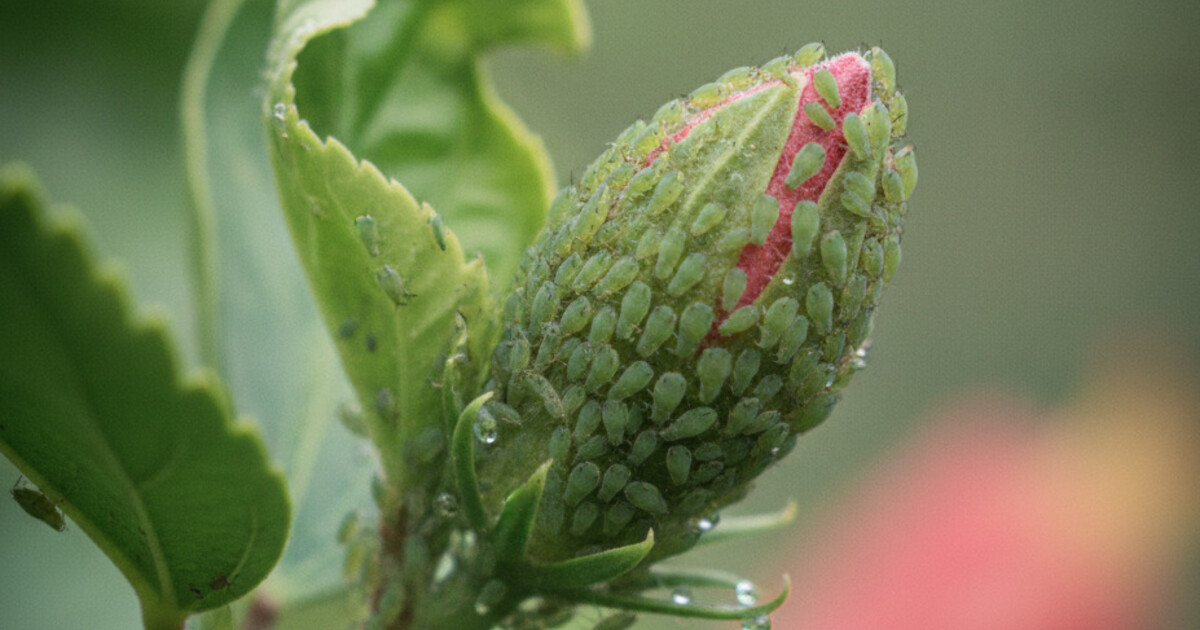
Your hibiscus looked healthy last week. Now the newest buds are sticky and curled inward, and tiny green insects are clustered on every soft stem tip. That’s an aphid infestation, and it can go from a handful of bugs to hundreds within a week.
Aphids on hibiscus are one of the most common pest problems for both indoor and outdoor growers. They pierce plant tissue to feed on sap, deform new growth before it can open, and leave behind a sticky coating that attracts ants and mold. A small colony handled early clears up in two to three weeks. Left alone, it keeps the plant in a cycle of stress that weakens it heading into the next growing season.
Quick answer: Aphids on hibiscus are tiny (1-3mm) sap-sucking insects that cluster on new stem tips, flower buds, and leaf undersides, causing curled growth and sticky residue. Remove the colony with a strong water spray, then apply insecticidal soap every 5-7 days for 3 weeks until no new aphids appear on new growth.
What Aphids on Hibiscus Look Like
Aphid colonies build up fast on the newest, softest tissue: fresh stem tips, unopened flower buds, and the undersides of young leaves. The insects are 1-3mm long and soft-bodied, running yellow-green to dark green on hibiscus. You might also spot black, brown, or pinkish colonies depending on the species and host plant.
On most hibiscus, the culprit is Aphis gossypii, the cotton/melon aphid, which feeds on tropical species including hibiscus roses and mallow relatives. Ants near the plant are a reliable early warning sign: they farm aphid colonies by defending them from predators in exchange for the honeydew the insects produce.
Look for these signs alongside the insects themselves:
- Curling or puckering new growth: Leaves curl inward as aphids drain sap from developing cell tissue.
- Sticky residue (honeydew): A shiny coating on leaves and stems below the colony.
- Sooty mold: Black fungal growth that forms on dried honeydew, dulling leaf surfaces.
- Dropped or stunted flower buds: A heavy infestation causes buds to wither before opening.
- Ant trails: Ants running up and down the main stem usually signal an active colony above.
Aphis gossypii reproduces by parthenogenesis: females give birth to live nymphs without mating. A single aphid produces 80 nymphs per week under warm conditions (21-27°C / 70-80°F), and a colony doubles in size every 1-3 days. Each nymph reaches reproductive maturity in 7-10 days, which is why a tiny cluster spotted on Monday turns into a blanket infestation by Friday. Aphids also transmit plant viruses while feeding: Hibiscus chlorotic ringspot virus (HCRSV) and several cucurbit mosaic viruses can transfer from mouthpart to plant cell in under 60 seconds of probing. On outdoor hibiscus, populations peak in spring and early summer when plants push out abundant soft new growth, and can spike again in early fall if temperatures stay warm. Winged adults (alates) develop when colonies become overcrowded and fly to new plants, seeding fresh infestations nearby. Physical removal combined with a contact insecticide breaks the cycle; eggs and late-instar nymphs resist systemic products longer than adults, which is why repeat applications matter more than one heavy spray.
Why Aphids Target Hibiscus
Aphids go where feeding is easy. Hibiscus pushes out fast, nitrogen-rich growth throughout the growing season, and that’s exactly the tissue they prefer: soft cell walls, high sap sugar content, easy to pierce with a stylet (their needle-like mouthpart).
Warm weather speeds up their lifecycle dramatically. Temperatures between 21-27°C (70-80°F) push colonies into overdrive. A mild winter can let eggs and overwintering adults survive in bark crevices or nearby soil, ready to emerge as soon as temperatures climb.
A few factors put individual plants at higher risk:
- Over-fertilizing with nitrogen: High nitrogen pushes out lush, tender shoots that aphids find most attractive. Ease up on fertilizer if you’re seeing repeat infestations.
- Nearby ant colonies: Ants actively carry aphids to uninfested plants and drive off ladybugs and lacewings that would otherwise eat the colony.
- Drought stress: Hibiscus weakened by inconsistent watering produces softer, more vulnerable growth than a well-watered plant.
How to Get Rid of Aphids on Hibiscus
The most reliable approach works in stages: physical removal first, then repeat chemical treatment to catch what survives.
Step 1: Wash the colony off
Take the plant outside (or to a sink for container-grown hibiscus) and blast the infested stems with a strong stream of water. Focus on stem tips, bud joints, and leaf undersides where the colony is densest. This knocks off the majority of adult aphids immediately. Repeat every few days in between spray treatments.
Step 2: Apply insecticidal soap
Mix insecticidal soap (potassium fatty acids, sold as Safer Brand or Garden Safe) at 2-3% dilution and spray every part of the plant you washed. Insecticidal soap kills on contact by breaking down the waxy cuticle on the aphid’s body, causing rapid dehydration. It has no residual effect, so repeat every 5-7 days for at least 3 applications.
Step 3: Follow up with neem oil
Neem oil (azadirachtin) disrupts aphid feeding behavior and reproductive signaling. It works slower than soap but coats eggs and slows reinfection from the surrounding area. Mix at 1-2% with a few drops of dish soap as an emulsifier and apply in the evening to avoid leaf scorch on hibiscus foliage.
Step 4: Recheck at day 5
Aphids can survive on stems you missed or hatch from eggs that contact killers don’t penetrate. A second look at day 5 tells you whether the population is declining or recovering.
Organic and Chemical Treatment Options for Aphids on Hibiscus
Organic options:
- Insecticidal soap: Kills on contact, safe for most beneficial insects once dry, low toxicity. Repeat every 5-7 days.
- Neem oil (azadirachtin): Disrupts feeding and reproduction over 1-2 weeks. Mix at 1-2%, apply in the evening.
- Beneficial insects: Release ladybugs (Hippodamia convergens) near the plant. A single ladybug eats 50-60 aphids per day and hundreds over a season.
- Diatomaceous earth: Dust around the base and on stems to deter crawling aphids. Less effective on dense colonies already established on foliage.
Chemical options for severe infestations:
- Pyrethrin sprays: Fast knockdown, derived from chrysanthemum flowers, breaks down within 24 hours. Apply in low-light conditions to limit pollinator exposure.
- Spinosad: Naturally derived, low mammalian toxicity, a solid middle ground between organic and synthetic. Apply per label.
- Imidacloprid (systemic): Applied to soil, absorbed through roots, kills aphids as they feed for 4-8 weeks. Avoid on blooming hibiscus as it can pass through pollen and harm pollinators.
For most home growers, insecticidal soap combined with neem oil handles the majority of infestations without risking bees or other beneficial insects.
Confirm the Problem With PlantlyAI
Aphids aren’t the only pest that leaves curled leaves and sticky residue. Scale insects and mealybugs produce similar signs on other plants, and whiteflies create nearly identical honeydew on hibiscus specifically. Treating for the wrong pest wastes time and adds unnecessary stress to the plant.
PlantlyAI’s AI photo diagnosis identifies aphid infestations from a single photo. Snap a shot of the affected stem or bud, and the app returns the most likely pest along with a step-by-step treatment plan covering organic, biological, and chemical options. The diagnosis comes with specific product recommendations and application timing, so you know exactly what to buy and when to spray.
The diagnosis starts free: 2 scans per day, no account needed. PlantlyAI works across houseplants, tropical species, vegetables, and trees, so one tool covers the whole garden.
If you’re confident it’s aphids, the treatment steps above are everything you need. If there’s any doubt about what you’re looking at, a quick scan rules out the other culprits before you spend money on the wrong product.
Frequently Asked Questions
What are the small green bugs on my hibiscus? Those are almost certainly aphids, most likely Aphis gossypii (the cotton/melon aphid), which runs yellow-green to dark green on hibiscus. They cluster on new stem tips, flower buds, and leaf undersides. Blast them off with water first, then treat with insecticidal soap every 5-7 days for 3 weeks.
Will aphids kill my hibiscus? A small or moderate infestation rarely kills a healthy plant, but it does stunt new growth and can cause flower buds to drop before opening. Left untreated, a large colony weakens the plant enough to make it vulnerable to secondary infections. Treat within a week of spotting the first colony.
Can I use dish soap to kill aphids on hibiscus? Diluted dish soap (1-2 teaspoons per quart of water) works as a contact kill in a pinch, but it can burn hibiscus leaves at higher concentrations and lacks the refined formula of commercial insecticidal soap. Use it only if you don’t have insecticidal soap available, and rinse the plant about an hour after applying.
Why do ants keep returning to my hibiscus after treatment? Ants are farming the honeydew produced by your aphid colony. Remove the aphids and the ants have no reason to climb the plant. If ants return after treatment, check the stem tips closely for a surviving or new colony. A sticky barrier around the base of the pot breaks the ant-aphid cycle while you finish the treatment.
How long does it take to get rid of aphids on hibiscus? With consistent treatment (water blast plus insecticidal soap every 5-7 days), most infestations are under control within 2-3 weeks. Severe cases with eggs tucked into bud crevices can take up to 4 weeks. Stop treating when you see zero aphids on new growth and buds are forming straight rather than curled.
If you’re dealing with aphids or aren’t sure what pest is behind the damage on your hibiscus, photograph the affected stem in PlantlyAI for an instant diagnosis and a treatment plan you can follow the same day. Free to start on iOS and Android.
Not sure what's wrong? Diagnose your plant free
Upload a photo to our free plant disease identifier and get an instant diagnosis.