Scale on Ficus Tree: Signs, Treatment & How to Fix It
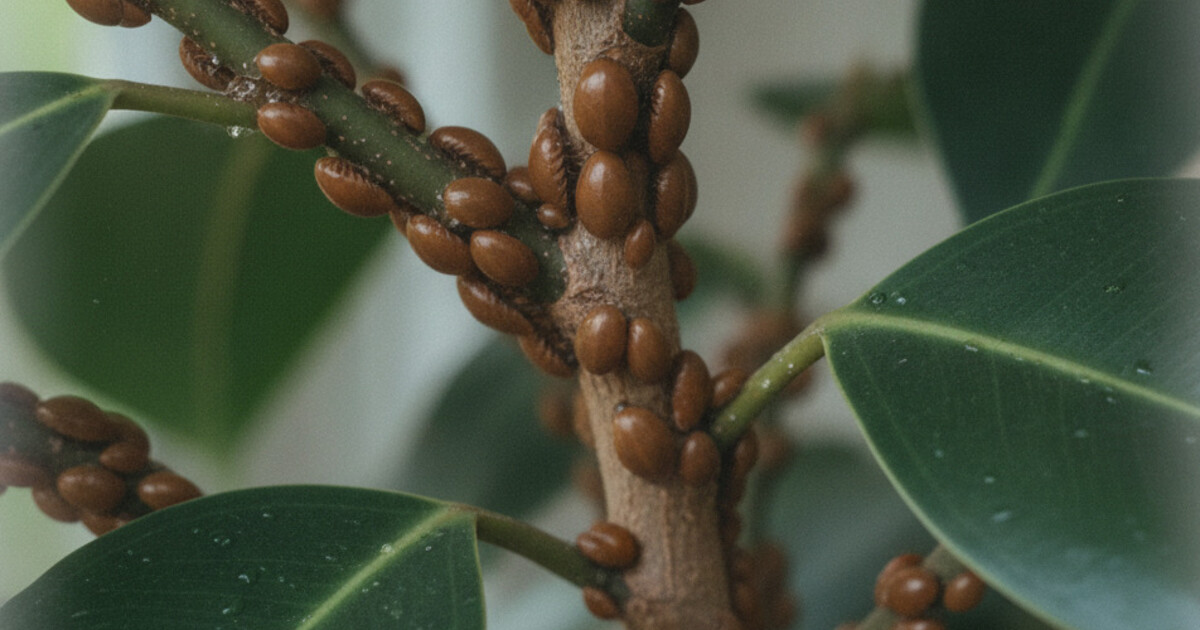
If the leaves on your ficus have turned sticky and you’ve spotted small brown or tan bumps clustered along the stems, you’re dealing with scale insects. Scale on ficus trees is one of the most common indoor plant pest problems, and it tends to sneak up on you. The infestation is usually well established by the time the sooty black mold on the leaves makes it obvious. The good news is that most cases are treatable, even when they look bad.
Scale on ficus trees shows up as small brown or white bumps on stems and leaf undersides. The insects drain sap and excrete sticky honeydew that triggers sooty black mold. Treat light infestations with 70% isopropyl alcohol on a cotton swab. For heavier cases, neem oil or horticultural oil applied every 7-10 days clears most infestations within 4-6 weeks.
What Scale Looks Like on a Ficus Tree
Scale insects hide under a waxy or hard shell that protects them while they feed. On a ficus, you’ll spot them as flat or domed bumps along stems, at leaf nodes, and along the main veins on the underside of leaves.
The most common early sign of scale on a ficus is sticky, shiny residue on leaves and surfaces below the plant. That’s the honeydew the scale insects excrete as they feed. Within a few weeks, a black fungus called sooty mold (Capnodium spp.) grows on that honeydew, giving leaves a dusty or grimy appearance.
Scale insects belong to the order Hemiptera, superfamily Coccoidea, and more than 8,000 species have been described worldwide. Ficus benjamina (weeping fig) and Ficus lyrata (fiddle-leaf fig) rank among the most common indoor hosts. The brown soft scale (Coccus hesperidum) is the species most frequently found on houseplants and can survive year-round in indoor conditions. A single female produces 200-500 eggs without fertilization, and crawlers (newly hatched nymphs) begin feeding and spreading within hours of hatching. Heavy infestations can reduce a plant’s photosynthetic capacity by 30-40% within a single growing season, leading to yellowing leaves and progressive defoliation. Ants reliably signal scale: they actively tend colonies to harvest the honeydew the insects produce, and ant activity on the plant often precedes visible scale populations by several weeks. Eliminating ant access cuts reinfestation rates significantly during treatment.
Soft Scale vs. Armored Scale on Ficus
Most ficus scale problems fall into two categories, and they respond differently to treatment.
Soft scale (like the brown soft scale, Coccus hesperidum) is the most common indoor culprit. The insects appear as brownish oval bumps attached loosely to the stem surface. They produce large amounts of honeydew, so sticky leaves are usually the first thing people notice. Soft scale can be rubbed off with a fingernail.
Armored (hard) scale is trickier to remove. The waxy armor bonds directly to the bark or leaf surface, so contact pesticides don’t penetrate it well. Horticultural oils are more effective for armored scale because they suffocate the insect by blocking the breathing pores under the shell. If the bumps on your ficus don’t come off when you try to flick them, you’re likely dealing with armored scale.
Both types drain the plant by piercing tissue and extracting sap. Heavy feeding leads to yellowing leaves, stunted new growth, and eventually leaf drop.
Why Ficus Trees Get Scale
Scale doesn’t appear by chance. Several conditions make ficus trees particularly vulnerable.
Bringing the plant indoors. Ficus is often moved inside in autumn when temperatures drop. Scale overwinters on stems as tiny crawlers, and the move indoors strips away the natural predators (parasitic wasps, ladybugs) that keep populations in check outdoors.
Low humidity. Ficus prefer humidity above 50%. Central heating drops indoor humidity below 30% through winter, and the resulting plant stress lets infestations escalate faster.
Ant activity. Ants farm scale colonies, protecting them from predators and moving crawlers to fresh feeding spots on the plant. Ants on your ficus almost always mean scale nearby.
New plant arrivals. Scale crawlers can hitch a ride on any new plant you bring home. Quarantine all new plants for 2-3 weeks before placing them near your ficus.
Poor air circulation. Scale thrives in stagnant air. A ficus tucked into a corner without airflow is more vulnerable than one in a well-ventilated spot.
How to Treat Scale on a Ficus Tree
Work through these steps in order. You don’t need to reach the later steps unless the earlier ones don’t clear the problem.
Step 1: Isolate the plant. Move the ficus away from other houseplants right away. Scale crawlers spread by contact and can reach nearby plants within 48 hours of hatching.
Step 2: Remove scale by hand and with alcohol. Dip a cotton swab in 70% isopropyl alcohol and rub down every stem and leaf, focusing on nodes and leaf undersides. Alcohol dissolves the waxy coating and kills the insects on contact. For a ficus with moderate scale, this step removes a large portion of the infestation on its own.
Step 3: Spray with neem oil. Mix neem oil at 2 tablespoons per gallon of water, add a few drops of dish soap as an emulsifier, and spray the entire plant, including undersides of leaves and the base of each stem. Neem disrupts scale feeding and egg production. Apply every 7-10 days for 3-4 rounds.
Step 4: Switch to horticultural oil for armored scale. If neem hasn’t made a dent and the bumps still don’t come off by hand, use horticultural oil (sold as dormant oil or summer oil). It smothers the insect by blocking the breathing pores under the shell.
Step 5: Use a systemic drench as a last resort. Imidacloprid (available as a soil drench) is absorbed through the roots and makes sap toxic to feeding insects. Reserve this for infestations that don’t respond after 6-8 weeks of oil treatment, since it also harms beneficial insects.
Step 6: Block the ants. If ants have been visiting the plant, apply a sticky barrier (like Tanglefoot) around the pot or the surface it sits on. Cutting off ant access stops them from reintroducing crawlers after you’ve cleared the infestation.
After treatment wraps up, wipe sooty mold off the leaves with a damp cloth. The mold is cosmetic once scale is gone, but cleaning it off helps the plant absorb light more efficiently.
How PlantlyAI Helps Identify Ficus Scale
Scale insects can look like part of the plant if you don’t know what you’re looking for. Soft scale resembles a natural bump in the bark. Armored scale can pass for discoloration on older stems. Sooty mold is frequently mistaken for dust or a fungal infection unrelated to pests.
PlantlyAI lets you photograph your ficus and get a diagnosis in seconds. The app scans the image and identifies whether you’re dealing with scale, spider mites, mealybugs, or something else entirely. Getting the pest right the first time matters: mealybugs, mites, and scale all call for slightly different treatments, and using the wrong product wastes weeks. If you’re curious how photo diagnosis compares to symptom guessing, this guide to identifying what’s wrong with your plant walks through the differences.
After confirming scale, PlantlyAI gives you a step-by-step treatment plan with organic, biological, and chemical options so you can pick what fits your situation. You get 2 free diagnoses per day without creating an account.
For other common houseplant pests, the same approach applies. Spider mites on monstera shows how to work through a mite infestation step by step, and many of the treatments overlap with what works for ficus scale.
Frequently Asked Questions
Can scale kill a ficus tree?
Yes, a heavy untreated scale infestation can kill a ficus. Sustained feeding drains sap from the plant and can reduce photosynthesis by 30-40% at peak infestation. A ficus that drops most of its leaves and stops putting out new growth despite normal watering and light is under serious pest stress. Treat at the first signs rather than waiting to see if the plant rallies on its own.
How long does it take to get rid of scale on ficus?
With consistent treatment, most infestations clear up in 4-8 weeks. You’ll need 3-4 rounds of neem or horticultural oil applied every 7-10 days. The alcohol wipe-down speeds things up for visible scale, but oil sprays are necessary to catch crawlers that hatch over the following weeks. Don’t stop treatment early just because you can’t see active scale anymore.
Does rubbing alcohol kill scale on ficus?
Yes. 70% isopropyl alcohol kills scale on contact by dissolving the protective coating. Apply it with a cotton swab or soft cloth rather than spraying it across the whole plant, since undiluted alcohol can scorch leaf tissue. Alcohol works best for removing established visible scale. Pair it with oil sprays to reach crawlers and eggs in stem crevices.
Why does my ficus keep getting scale after treatment?
Recurring scale usually points to ants reintroducing crawlers, or a new plant that came home with scale already on it. Low humidity (below 40%) and poor airflow also let infestations take hold faster on a stressed plant. If scale keeps coming back, check for ant activity and inspect any new plants you’ve added near the ficus.
Can scale spread from my ficus to other houseplants?
Scale crawlers are mobile for the first 48 hours after hatching and can move to nearby plants by contact. Keep an infested ficus isolated until you’ve completed at least 2-3 treatment cycles. Plants that sat close to the infected ficus should be inspected carefully, since newly hatched crawlers are small and easy to miss against leaf and stem surfaces.
Scale on ficus trees is manageable with the right treatment sequence. Catch it early, work through the alcohol and oil applications consistently, and block ant access to prevent reinfestation. If you’re not sure what pest you’re dealing with, snap a photo in PlantlyAI and get a confirmed diagnosis before buying anything at the garden center.
Not sure what's wrong? Diagnose your plant free
Upload a photo to our free plant disease identifier and get an instant diagnosis.