Mealybugs on Orchids: Signs, Treatment & Prevention
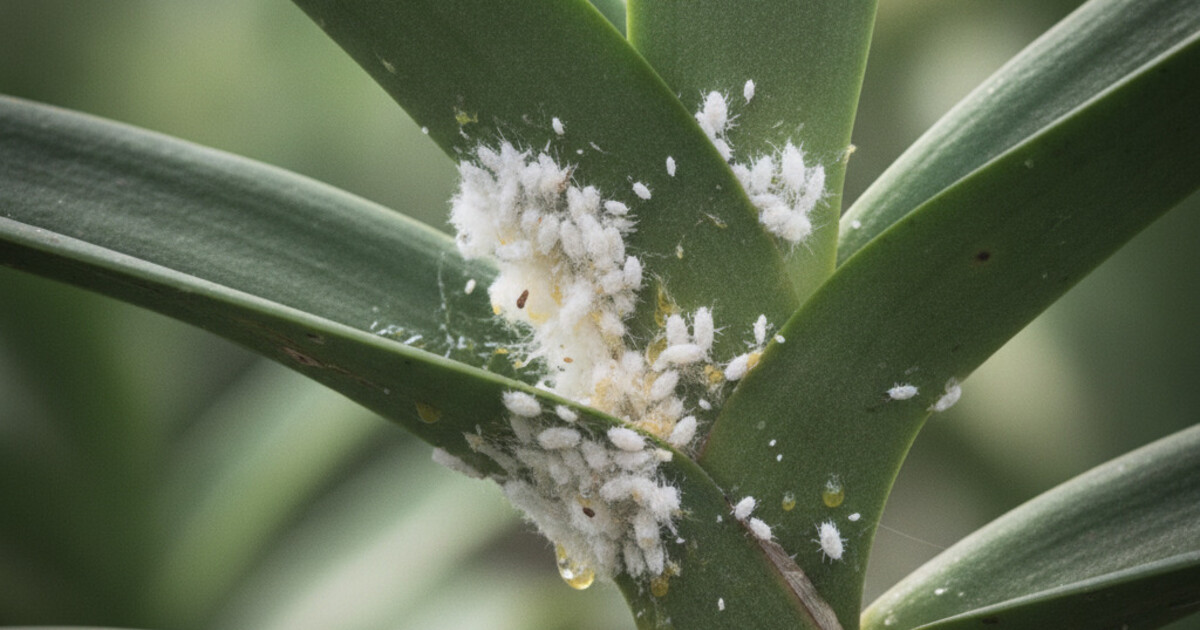
You spot a white, cottony cluster tucked into the base of your orchid’s leaves. Maybe it looks like fluff or powder, harmless enough to ignore. That’s mealybugs, and they’re already feeding on your plant.
Mealybugs on orchids spread fast in warm indoor environments. A single infested pot can contaminate everything nearby within weeks. The good news is catching them early makes treatment straightforward. This guide covers what mealybugs look like on orchids, where they hide, how to wipe them out, and how to keep them from coming back.
Mealybugs on orchids are tiny, soft-bodied insects coated in white waxy fluff. They cluster in leaf axils, along pseudobulbs, and at the base of roots. Treat them by dabbing each bug with a cotton swab soaked in 70% isopropyl alcohol, then spray the whole plant with diluted neem oil every 7-10 days for 4-6 weeks.
What Mealybugs Look Like on Orchid Plants
Mealybugs belong to the Pseudococcidae family. The two species most likely to show up on orchids are Planococcus citri (citrus mealybug) and Dysmicoccus brevipes (pineapple mealybug). Both look similar: oval, soft-bodied insects about 3-4mm long, coated in white or gray waxy filaments.
The females are the visible culprits. They settle in one place to feed and don’t move much once established. Males are tiny, winged, and rarely seen.
What you’ll notice first is the white cottony fluff rather than the insects themselves. Look for small, tight clusters that almost resemble a pinch of cotton. Part the fluff and you’ll see pale, oval-bodied insects underneath.
Mealybugs also produce honeydew, a sticky, clear liquid waste product. Run a finger along a stem and if it feels tacky, that’s active feeding. Honeydew invites sooty mold, a black fungal coating that blocks light on leaf surfaces. Black sooty patches alongside white fluff is a two-alarm signal.
Female citrus mealybugs lay 100-200 eggs inside a protective waxy ovisac over 10-14 days. Eggs hatch into nymphs called crawlers in 6-14 days at typical indoor temperatures of 70-85°F. These crawlers are the most mobile stage and the primary way infestations spread from plant to plant. A single female can produce 400 eggs in her lifetime of roughly 88 days. At room temperature, a mealybug goes from egg to egg-laying adult in about 30 days, meaning populations can triple within a month if untreated. In botanical collections and greenhouses, mealybugs rank among the top 5 most damaging pests for orchid genera including Phalaenopsis, Cattleya, Dendrobium, and Oncidium. Damage shows as yellowing, puckered, or wilted growth where feeding has drained plant sap. Severe infestations of 50 or more individuals per plant can stunt pseudobulb development and prevent blooming entirely.
Where Mealybugs Hide on Orchids
Mealybugs burrow into the places you don’t naturally look, which is why infestations often grow out of control before anyone spots them.
Leaf axils (the junction where a leaf meets the stem or rhizome) are the most common hiding spot. The tight crevice gives them shelter and keeps them invisible until you actively look. Check here first.
Pseudobulbs are another favorite. Mealybugs tuck under the paper-like sheaths that wrap the bulbs, completely invisible until you peel the sheaths back.
Root systems also harbor infestations. You might not discover root mealybugs until you repot and find white fluff woven through the roots. Root mealybugs are the most damaging type because they feed underground while the plant shows only vague decline above.
Other spots worth checking: the base of flower spikes, inside cork or bark mounts, and the underside of leaves along the midrib.
How to Treat Mealybugs on Orchids
Start with mechanical removal, then follow up with spray treatments to kill eggs and crawlers. You’ll need to repeat several times, because no single application reaches every egg.
Step 1: Isolate the plant. Move the infested orchid away from your other plants immediately. Crawler nymphs can walk or hitch rides on air currents, clothing, and tools.
Step 2: Remove visible mealybugs manually. Dip a cotton swab in 70% isopropyl alcohol and press it directly onto each mealybug cluster. The alcohol dissolves the waxy coating and kills on contact. Use 70%, not 90% or higher. Higher concentrations evaporate too fast to work and can burn orchid tissue.
Step 3: Rinse the plant. Take the orchid to a sink and rinse it under lukewarm water, washing off dead bugs and honeydew residue. Let it dry completely before applying a spray.
Step 4: Apply a spray treatment. Three options work well on orchids:
- Neem oil spray: Mix 2 tablespoons of cold-pressed neem oil with 1 teaspoon of dish soap per gallon of water. Spray the whole plant, covering leaf axils, pseudobulb sheaths, and root surfaces where possible. Neem disrupts the mealybug’s hormonal cycle and kills nymphs on contact.
- Insecticidal soap: A diluted insecticidal soap (2-3%) kills soft-bodied insects on contact. Avoid applying in direct sunlight, which can cause leaf burn.
- Systemic insecticide: For severe infestations, imidacloprid applied as a soil drench can kill root-feeding mealybugs. Use sparingly and never during bloom, as it’s toxic to pollinators.
Step 5: Repeat every 7-10 days for 4-6 weeks. Mealybug eggs inside the waxy ovisac resist most sprays. Repeated treatment catches each new generation of crawlers as they hatch.
Treating Mealybugs in Orchid Roots
Root mealybugs need a different approach since spraying alone won’t reach them.
Remove the orchid from its pot and shake off all the old growing medium. Rinse the roots under running water to dislodge bugs and eggs. Soak the roots in a diluted neem oil or insecticidal soap solution for 10-15 minutes. Inspect carefully, trimming any roots that look brown, hollow, or papery.
Repot into fresh orchid bark or sphagnum moss. Don’t reuse the old medium since it likely contains eggs and crawlers. Wash the pot thoroughly with hot soapy water, or switch to a new pot entirely.
How to Prevent Mealybugs on Orchids
Mealybugs thrive in warm, stagnant, crowded conditions. Most preventable infestations start the same way: a new plant comes home without quarantine.
Quarantine new plants. Put any new orchid (or any new plant) in a separate room for 2-4 weeks and inspect it weekly. If it’s clean after a month, it can join the rest of your collection.
Improve airflow. Mealybugs struggle in moving air. A small fan near your orchid shelf creates an environment they don’t like. Stagnant, humid, still air does the opposite.
Avoid over-fertilizing. High-nitrogen fertilizer produces soft, lush growth that mealybugs find particularly appealing. A balanced fertilizer, applied at half strength, is safer during high-risk periods.
Inspect monthly. Set a calendar reminder to check leaf axils and pseudobulb bases. Five minutes of inspection once a month catches infestations when they’re a few bugs, not a colony.
Identifying Orchid Pests Before You Treat
Mealybugs look like a few other things on first glance. Scale insects produce a similar waxy, shell-like coating on stems and leaves. Botrytis (gray mold) creates fuzzy white growth that can mimic mealybug fluff. Even spider mites, which cause different but similarly cryptic early damage, get misidentified until webbing appears. Treating for the wrong pest wastes weeks while the infestation spreads.
If you’re not sure what’s on your orchid, a photo diagnosis gets you an answer fast. PlantlyAI’s AI pest and disease diagnosis identifies problems from a single snapshot and returns a step-by-step treatment plan with organic, biological, and chemical options. It covers houseplants, orchids, garden plants, and vegetables. See the full guide to apps that diagnose what’s wrong with your plant for more on how photo diagnosis works.
Frequently Asked Questions
What do mealybugs look like on orchids?
Mealybugs on orchids look like small white or gray cottony clusters, usually found in leaf axils, along pseudobulbs, or tucked under bark sheaths. The insects themselves are oval-shaped and about 3-4mm long. They produce sticky honeydew, which can lead to sooty mold: a black coating that appears alongside the white fluff.
Can mealybugs kill an orchid?
A light infestation rarely kills a healthy orchid, but a heavy one can. Severe feeding drains plant sap, stunts pseudobulb growth, and stops flowering. Root mealybugs are the most dangerous because they go undetected until the plant is already in serious decline. Treat at the first sign and repeat consistently for at least 4-6 weeks.
Does rubbing alcohol kill mealybugs on orchids?
Yes. A cotton swab dipped in 70% isopropyl alcohol kills mealybugs on contact by dissolving their waxy protective coating. Use 70%, not higher concentrations, which can burn orchid tissue. Alcohol only kills bugs it touches directly, so follow up with a spray treatment to catch eggs and crawlers in hidden spots.
How long does it take to get rid of mealybugs on orchids?
Plan for 4-6 weeks of consistent treatment. Eggs hatch in 6-14 days, so a single spray doesn’t break the cycle. Treating every 7-10 days targets each new generation of crawlers before they mature and lay more eggs. After 4-6 weeks with no new activity, the infestation is cleared.
Can mealybugs spread from my orchid to other plants?
Yes. Crawler nymphs are mobile and can walk between pots that are touching. They also travel on clothing, gardening tools, and in air currents. Isolate any infested orchid immediately and check nearby plants before treating the main one.
If you can’t tell whether that white fuzz on your orchid is mealybugs, scale, or mold, a photo can settle it fast. PlantlyAI identifies pests and diseases from a single snapshot and walks you through a treatment plan with organic and chemical options. Download it on the App Store or Google Play and run 2 free diagnoses a day, no sign-up needed.
Not sure what's wrong? Diagnose your plant free
Upload a photo to our free plant disease identifier and get an instant diagnosis.