Basil Leaves Black Spots: Causes & How to Fix It
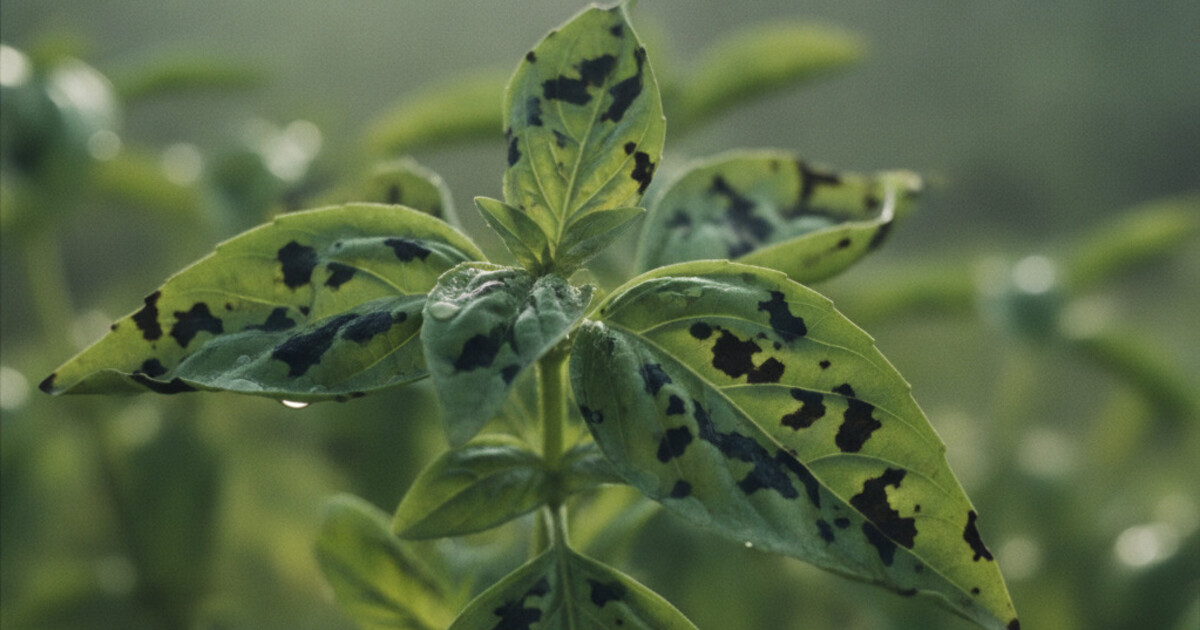
Black spots on your basil probably appeared fast and are spreading faster. One morning the plant looks fine; by afternoon a cluster of dark patches covers half the top leaves. Basil is unusually sensitive to fungal pathogens, bacterial infection, and temperature swings, so those spots are rarely cosmetic. Acting on the right cause quickly is the difference between saving the plant and losing it.
This article covers the five most common reasons basil leaves develop black spots, how to tell them apart, and what to do about each one before the plant declines further.
Quick answer: Black spots on basil leaves usually signal downy mildew, Cercospora leaf spot, or bacterial leaf spot. Downy mildew spreads fastest and shows yellow patches on top with a gray-purple fuzzy layer on the underside. Bacterial leaf spot leaves angular, water-soaked marks that turn black within 24-48 hours. Cold damage produces overnight black patches that don’t spread further.
What Causes Black Spots on Basil Leaves
Basil develops black spots from five main causes: Peronospora belbahrii (downy mildew), Cercospora leaf spot, Pseudomonas cichorii (bacterial leaf spot), cold damage, and occasional pest feeding. Downy mildew first appeared in North American production fields in 2007 and can devastate sweet basil (Ocimum basilicum) crops entirely within 48-72 hours under humid conditions. The pathogen thrives between 54-72°F with humidity above 95%, producing yellow-green chlorosis on upper leaf surfaces and a distinctive purple-gray sporulation layer on the underside. Cercospora produces smaller round spots with pale centers and yellow halos, spreading more slowly. Bacterial leaf spot (Pseudomonas cichorii) causes water-soaked lesions that darken to black within 24-48 hours, typically spreading fastest when overhead irrigation splashes contaminated soil onto leaves. Cold injury at temperatures below 50°F causes cell rupture, producing black patches that appear overnight and don’t spread further. Correctly matching the symptom pattern to the cause is the first step toward effective treatment.
Basil is particularly prone to these problems because its large, soft leaves hold moisture and it’s often grown in warm, humid conditions, whether in a crowded outdoor bed or a south-facing window sill. Any of the five causes can appear on container-grown or garden plants.
How to Tell What’s Causing the Black Spots on Basil
The visual differences between causes are specific enough that you can usually identify the problem in under a minute.
Downy Mildew
Downy mildew (Peronospora belbahrii) is the fastest mover and the hardest to stop. Look for:
- Yellow-green patches or chlorosis on the upper leaf surface
- A gray-purple or white fuzzy coating on the underside of those same spots
- Rapid spread from lower leaves upward
- Sudden plant collapse without obvious wilting first
This pathogen travels on wind and water splash. Once it appears on outdoor plants during warm, humid weather, the whole bed is usually exposed within a few days. Sweet basil (Ocimum basilicum) has almost no natural resistance. Thai basil (O. basilicum var. thyrsiflora) and the variety ‘Eleonora’ show better tolerance.
The underside check is the key diagnostic step. If you see fuzzy gray-purple sporulation beneath the yellow patches, it’s downy mildew. No other cause produces that coating.
Cercospora Leaf Spot
Cercospora (Cercospora sp.) produces small circular spots with dark brown or black centers and pale yellow halos. The spots stay relatively contained at first, typically starting on older, lower leaves. The center of each spot may fall out, leaving a “shot hole” appearance as the tissue dies.
Spread is much slower than downy mildew. Hot, wet weather speeds it up. High-nitrogen fertilization, which pushes soft, lush leaf growth, makes plants more susceptible.
Bacterial Leaf Spot
Bacterial leaf spot from Pseudomonas cichorii starts as water-soaked, greasy-looking patches, usually angular because the bacteria spread within the boundaries between leaf veins. Within 24-48 hours those lesions turn black or dark brown.
Overhead watering is the main driver. Rain or irrigation splash picks up bacteria from soil or infected debris and deposits it on leaves. Indoor basil on a sunny sill rarely gets this; outdoor basil during wet summers is at higher risk.
Cold Damage
Basil is tropical. Cell damage begins at 50°F (10°C) and the plant blackens quickly below 40°F. The resulting patches are irregular and often appear overnight after a cold snap or near an air conditioning vent. Cold damage doesn’t spread from leaf to leaf. It’s static. If the black spots appeared the morning after temperatures dropped, cold is almost certainly the cause.
Pest Feeding
Aphids, thrips, and spider mites occasionally leave dark marks on basil leaves. Aphid feeding turns tissue yellow first, then black at the feeding sites. Thrip damage shows as silvery streaks or speckling that can darken with secondary fungal infection. Check the undersides of leaves for live insects, cast skins, or frass to confirm before treating as a pest problem.
How to Treat Black Spots on Basil Leaves
Treatment depends on which cause you’ve identified. Using the wrong treatment wastes time while the problem spreads.
For downy mildew: Remove affected leaves immediately and discard them (not the compost bin). Increase air circulation around the plant. Apply a copper-based fungicide (Bonide Copper Fungicide or copper octanoate at label rates) every 7 days. Stop wetting the leaves when watering. Outdoors, switching to resistant varieties like ‘Amazel’, ‘Devotion’, or ‘Thunderstruck’ is the most reliable long-term fix, since no fungicide fully controls Peronospora belbahrii once it’s established.
For Cercospora leaf spot: Remove and destroy infected leaves. Spray copper fungicide or neem oil every 7-10 days until new growth comes in clean. Cut back nitrogen-heavy fertilizer, which encourages the soft growth Cercospora thrives in. Let the soil dry slightly between waterings.
For bacterial leaf spot: Cut away infected leaves with clean scissors and switch to bottom watering only: water the soil, not the foliage. Copper-based bactericides (copper sulfate or copper hydroxide) reduce bacterial spread when applied every 7-10 days. If infection covers more than half the plant, it’s usually faster to take healthy cuttings and start a new plant.
For cold damage: Move the plant indoors or to a warmer spot above 55°F. Trim blackened leaves back to healthy tissue. A cold-stressed basil can regrow from the stem if damage isn’t too severe and the stem is still green and firm. Don’t overwater during recovery; cold-stressed roots are sluggish and susceptible to rot.
For pest damage: Spray the entire plant (including leaf undersides) with insecticidal soap or diluted neem oil. Repeat every 5-7 days for 3 weeks to break the pest life cycle.
For a fast visual comparison of fungal leaf diseases, the guide on septoria leaf spot treatment covers a related pathogen that affects basil neighbors like tomatoes.
Preventing Black Spots on Basil
A few consistent habits cut the risk of black spots on basil significantly:
- Water at the base. Overhead watering is the single biggest driver of both fungal and bacterial leaf diseases on basil. Drip irrigation or bottom watering keeps leaves dry and pathogens out.
- Space plants 12-18 inches apart. Good air circulation slows spore and bacteria spread and keeps leaf surfaces drying quickly after rain.
- Avoid evening watering. Morning watering gives leaves time to dry before temperatures drop at night.
- Keep temperatures above 50°F. Move container basil indoors when overnight lows dip below that mark.
- Choose resistant varieties for downy mildew. ‘Amazel’, ‘Devotion’, ‘Thunderstruck’, and ‘Obsession DMR’ are bred for resistance and widely available in seed form.
- Don’t over-fertilize with nitrogen. Lush, fast-growing basil is softer and more vulnerable to Cercospora and bacterial infections.
How PlantlyAI Helps Identify Basil Problems
Distinguishing between downy mildew, Cercospora, and bacterial leaf spot from a quick glance at the top of a leaf is tricky. The underside is usually the tell, but knowing exactly what you’re looking at still takes practice. Getting the diagnosis wrong means applying the wrong treatment, which costs days you don’t have when downy mildew is involved.
PlantlyAI is a plant disease diagnosis app that works from a single photo. Take a close-up of the affected basil leaf (including the underside if possible) and the app identifies the problem and gives a step-by-step treatment plan, including organic, biological, and chemical options so you can treat with whatever you have on hand. It covers fungal diseases, bacterial infections, pest infestations, and environmental stress across herbs, houseplants, vegetable garden plants, and more.
For uncertain situations, the app is also useful as a second check after your own visual inspection. You can read more about how plant diagnosis apps work in the guide to the best app that tells you what’s wrong with your plant.
PlantlyAI offers 2 free diagnoses per day with no account required. It’s available on iOS and Android.
Frequently Asked Questions
Why are my basil leaves turning black overnight? Overnight blackening almost always points to cold injury. Basil is tropical and cell damage starts at 50°F. If temperatures dropped below 50°F the previous night, bring the plant inside and trim blackened tissue back to healthy stem. The plant often recovers if the stem is still green and firm. If the overnight temperature was fine, check for a nearby air conditioning vent or drafty window.
Can basil recover from black spots? It depends on how much of the plant is affected. If spots are limited to a few leaves and you remove them quickly, basil usually produces clean new growth within 1-2 weeks. Downy mildew is the exception: once it’s spreading through a plant in warm, humid conditions, recovery is unlikely without immediate removal of infected leaves plus a copper fungicide and, outdoors, a switch to resistant varieties.
Are black-spotted basil leaves safe to eat? Leaves with active fungal or bacterial infection should be discarded, particularly from the lesions themselves. Surrounding healthy tissue on mildly infected plants is generally safe, but heavily spotted leaves have poor flavor and texture anyway. Cold-damaged basil is safe to eat; the tissue is just mushy.
Why does my indoor basil have black spots? Indoor basil most often gets black spots from downy mildew (common in crowded, low-airflow conditions) or cold drafts near windows and air conditioning vents. Overwatering can also lead to Pythium root rot, which produces yellow leaves and dark patches as the problem progresses upward. Check whether the plant sits near any cold drafts and whether soil stays wet for more than a week between waterings.
How do I tell downy mildew from bacterial leaf spot on basil? Flip the leaf over. Downy mildew shows a gray-purple or white fuzzy sporulation layer on the underside directly beneath the yellow spots. Bacterial leaf spot has no fuzzy underside coating; its lesions are angular, water-soaked, and brown-black on both sides. Downy mildew also spreads faster, sometimes covering a plant in 2-3 days during warm humid weather, while bacterial leaf spot progresses more gradually.
If your basil has black spots and you’re not certain which problem you’re dealing with, a photo diagnosis cuts the guesswork immediately. PlantlyAI identifies the cause from a single photo and walks you through the fix, from organic neem oil timing to targeted copper fungicide schedules. Get 2 free plant diagnoses a day on iOS and Android.
Not sure what's wrong? Diagnose your plant free
Upload a photo to our free plant disease identifier and get an instant diagnosis.