Black Spots on Orchid Leaves: Causes & How to Fix Them
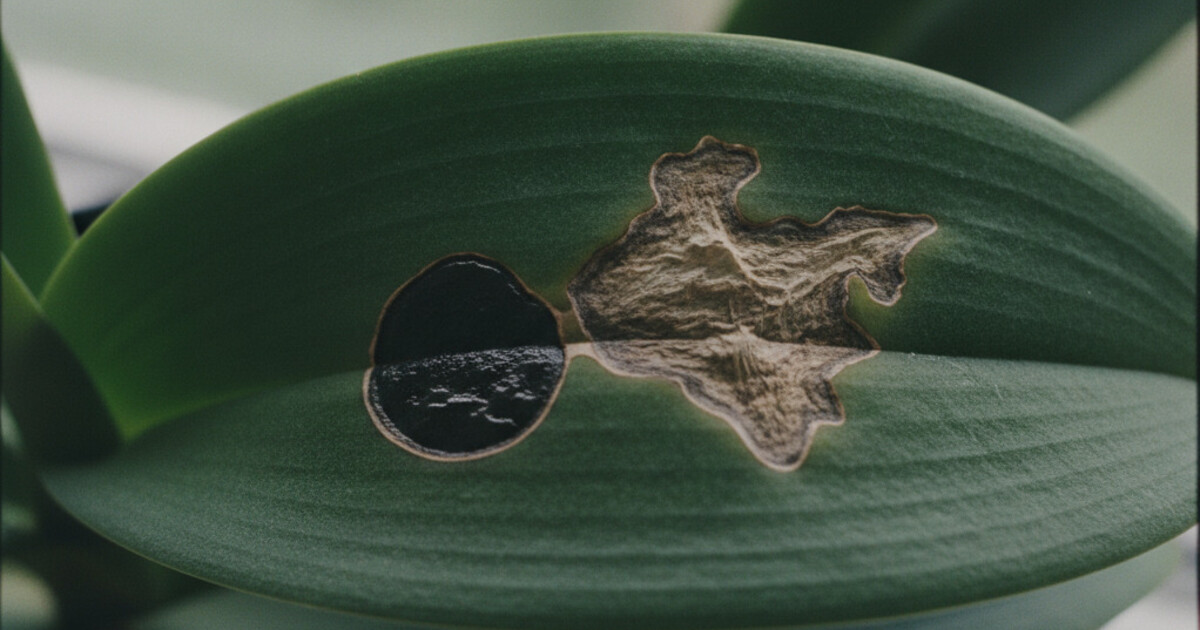
You spot a dark patch on your orchid’s leaf and wonder whether to reach for scissors or just move the plant. Black spots on orchid leaves can mean very different things. Some are dry and stable, the result of too much direct sun or a cold draft, and they won’t spread. Others are fungal or bacterial rot that moves fast, and waiting even 24 hours can cost you the crown.
Knowing which cause you’re dealing with determines everything about what to do next. This article covers the 4 main causes of black spots on orchid leaves, how to tell them apart quickly, and the right treatment for each.
Black spots on orchid leaves come from 4 causes: fungal black rot (Phytophthora or Pythium), bacterial infection (Erwinia), sunburn from direct light, or cold damage from drafts. Fungal and bacterial spots spread fast and need immediate removal. Sunburn and cold damage spots are dry, stable, and don’t spread to other areas. The treatment depends entirely on which type you’re looking at.
What Causes Black Spots on Orchid Leaves?
The 4 causes split into two groups: infectious (fungal rot and bacterial rot, which spread and need fast action) and non-infectious (sunburn and cold damage, which are stable once you remove the environmental stressor).
To identify which you’re dealing with, run 3 quick checks:
- Touch the black area. Soft, wet, or mushy tissue points to rot. Firm and papery points to environmental damage.
- Look at the location. Crown or leaf base is more likely rot. Leaf surface facing the window is more likely sunburn.
- Watch for 24 hours. A spreading spot is infectious. A stable spot is environmental.
Phalaenopsis (moth orchids), the most common houseplant orchid in North America, prefer 60-85°F (15-29°C) and indirect light of 1,000-2,000 foot-candles — conditions that also favor the two main fungal rot pathogens, Phytophthora and Pythium. These oomycetes (water molds) thrive between 50-95°F with relative humidity above 70%, spreading through contaminated water within 24-48 hours of contact with damaged tissue. Erwinia carotovora and related species, which cause bacterial soft rot, spread 2-3x faster than fungal rot and can destroy an orchid crown within 48-72 hours in warm, humid conditions. Sunburn damage occurs when light intensity exceeds 3,000-4,000 foot-candles, typical of unfiltered afternoon sun through south- or west-facing windows. Cold damage appears when temperatures drop below 50°F (10°C), whether from an AC vent, a cold window pane on a winter night, or cold water contacting leaves during watering.
The fastest way to differentiate: press a fingertip to the black tissue. Rot feels soft or wet. Environmental damage feels dry and firm.
Fungal Black Rot: The Most Common Infectious Black Spots on Orchid Leaves
Black rot caused by Phytophthora and Pythium is the most common and destructive fungal problem orchid growers face.
It enters through the crown (where new leaves emerge), cut surfaces, or damaged tissue, then moves downward into the rhizome and pseudobulbs if untreated.
What it looks like:
- Starts as a pale green or water-soaked area on the leaf
- Turns brown, then black within 24-48 hours
- Spreads outward from the entry point
- Affected tissue feels soft and slightly spongy
Water is the main carrier. Leaving water sitting in the crown after watering, or misting in low-airflow conditions, gives the pathogen a direct path in.
Treatment:
- Sterilize scissors or a blade with 70% isopropyl alcohol before the first cut, and again between cuts.
- Remove the affected leaf, or cut back to healthy tissue if catching it early. Every bit of soft or discolored material comes out.
- If the crown is affected, cut down until you reach solid green tissue with no brown or black discoloration.
- Let the cut surface air-dry for 30-60 minutes.
- Apply powdered cinnamon or a copper-based fungicide (copper hydroxide at 0.5-1% dilution) to the cut. Cinnamon provides mild antifungal action; copper is more reliable for active infections.
- Move the plant to a spot with better air circulation.
- Stop overhead watering entirely. Water at the base only, and tip the pot to drain any water that collects in the crown.
For context on how leaf spot diseases progress in other plants and the same cut-and-treat approach, the article on septoria leaf spot treatment walks through that process in detail.
Bacterial Soft Rot (Erwinia): When Black Spots Move Fastest
Erwinia bacterial rot spreads faster than fungal black rot and has a few distinct visual differences.
Signs that point to bacterial rot over fungal rot:
- The tissue collapses completely when pressed, rather than just feeling spongy
- A faint sour or fermented smell from the decaying cells
- Visible spread within hours, not days
- No clear yellow halo around the black area — the transition from healthy to dead tissue is more abrupt
Bacterial rot needs moisture to spread. A drier environment slows it significantly, which is why treatment focuses as much on cultural changes as on cutting out infected material.
Treatment:
- Cut 2-3cm past the last visible black tissue into clearly healthy green material. With bacterial rot, cutting close to the margin isn’t enough.
- Sterilize your cutting tool between every single cut, not just between plants.
- Apply copper-based bactericide (copper hydroxide or copper sulfate) to the cut surface.
- Keep the plant dry: no misting, no overhead watering, and improve air movement around the pot.
- Isolate the orchid immediately. Erwinia spreads through water contact between pots on a shelf or windowsill.
If you catch bacterial rot before it reaches the crown, the orchid usually recovers. Once the crown is involved, the odds drop sharply. Act the same day you spot it.
Sunburn and Cold Damage: Non-Spreading Black Spots on Orchid Leaves
Both sunburn and cold damage produce black spots that look alarming but stay stable once the source of stress is removed.
Sunburn:
- Dry, papery, brownish-black patches on the side of the leaf facing the window
- More common in summer when sun angles shift and intensity increases
- The tissue dries and may shrivel slightly at the edges
- Doesn’t spread to neighboring leaves or other areas of the same leaf
Fix: Move the orchid behind a sheer curtain or to an east- or north-facing windowsill. The damaged area stays scarred but the plant stops getting worse.
Cold damage:
- Dark patches near AC vents, drafty windows, or cold glass panes in winter
- Appears after exposure to temperatures below 50°F (10°C), especially combined with cold water during watering
- Usually located at leaf edges or areas closest to the cold source
- Starts slightly soft, then dries out over several days
Fix: Move the orchid away from cold drafts and cold glass. Phalaenopsis should stay above 60°F consistently — they’re sensitive to even brief cold exposure.
The single test that separates environmental from infectious: does the spot grow over 24-48 hours? Spreading means rot. Stable means environmental cause. Treat accordingly.
How to Treat Black Spots on Orchid Leaves: The Core Process
Whether the cause is fungal or bacterial, the core removal process is the same:
- Sterilize first. Wipe scissors or a blade with 70% rubbing alcohol or a 10% bleach solution before touching the plant.
- Remove all discolored tissue. Cut into clearly healthy, green material. Don’t leave soft or discolored tissue behind hoping it recovers.
- Air-dry the cut surface. Wait 30-60 minutes before applying any treatment. Wet cuts absorb fungicide and bactericide poorly.
- Apply copper-based treatment. Copper hydroxide handles both fungal and bacterial pathogens. Cinnamon powder works for minor cases and small cuts.
- Adjust the environment. Improve airflow, stop overhead watering, and make sure the plant dries out between sessions.
- Check every 24-48 hours for 5-7 days. New spots appearing means the infection hasn’t fully cleared. Repeat the removal process.
Orchids are more likely to survive aggressive removal than hesitant partial treatment. A plant that loses two leaves but keeps its crown and healthy roots will push new growth within 8-12 weeks. One treated too gently while rot reaches the roots usually doesn’t.
How PlantlyAI Helps Identify Orchid Leaf Problems
Fungal rot and bacterial rot look nearly identical in the first 24 hours. Confusing either with sunburn means waiting instead of cutting, which closes the window to save the plant.
PlantlyAI lets you photograph a sick leaf and get a specific diagnosis with step-by-step treatment options covering organic, biological, and chemical approaches. Take a close-up photo of the black spot in good natural light, and the app identifies whether you’re looking at fungal rot, bacterial infection, cold damage, or sunburn — then tells you exactly what to do next.
If your orchid also has pest problems alongside the leaf spots, the guide to mealybugs on orchids covers the other common orchid problem that hides in similar locations.
PlantlyAI offers 2 free diagnoses per day with no account required, on iOS and Android.
Frequently Asked Questions
Are black spots on orchid leaves always rot?
No. Black spots on orchid leaves come from 4 causes: fungal black rot, bacterial infection, sunburn, and cold damage. Press the spot to find out quickly — soft and wet means rot, dry and firm means environmental damage. Treat them very differently: rot needs immediate removal, while environmental damage just needs the stressor removed.
Can I save an orchid with black rot?
Yes, if you act before it reaches the crown. Cut all discolored tissue back to healthy green material, apply copper-based fungicide, and stop overhead watering. An orchid that loses leaves but keeps an intact crown and healthy roots will push new growth within 8-12 weeks. Rot that destroys the crown is much harder to recover from, so acting the same day matters.
Should I repot an orchid after treating black rot?
Repotting isn’t always necessary after leaf-level rot, but it helps for severe cases. If the rot reached the roots, unpot the plant, trim any black or mushy roots back to healthy tissue, dust the cuts with cinnamon or copper powder, and repot in fresh, dry orchid bark. Let the roots air-dry for several hours before placing in the new pot.
Why do my orchid leaves keep getting black spots?
Recurring black spots usually point to a persistent environmental issue: water collecting in the crown, poor airflow around the pot, or cold water contacting leaves during watering. If spots keep appearing in the same location, that spot is receiving water contact or temperature stress it shouldn’t be. Fix the environment before treating the spots themselves.
How fast does orchid black rot spread?
Fungal black rot (Phytophthora and Pythium) spreads within 24-48 hours under warm, humid conditions. Bacterial rot (Erwinia) moves faster: visible spread can happen within hours in temperatures above 70°F. Both pathogens need moisture to move through tissue. The moment you spot soft, water-soaked discoloration on an orchid leaf, that day’s treatment is what determines the outcome.
Black spots that spread are a timer. If you spot soft, wet discoloration on an orchid leaf, photograph it in PlantlyAI, get the diagnosis, and start treatment the same day. Download free on iOS and Android.
Not sure what's wrong? Diagnose your plant free
Upload a photo to our free plant disease identifier and get an instant diagnosis.