Chinese Money Plant Leaves Curling: Causes and Fixes
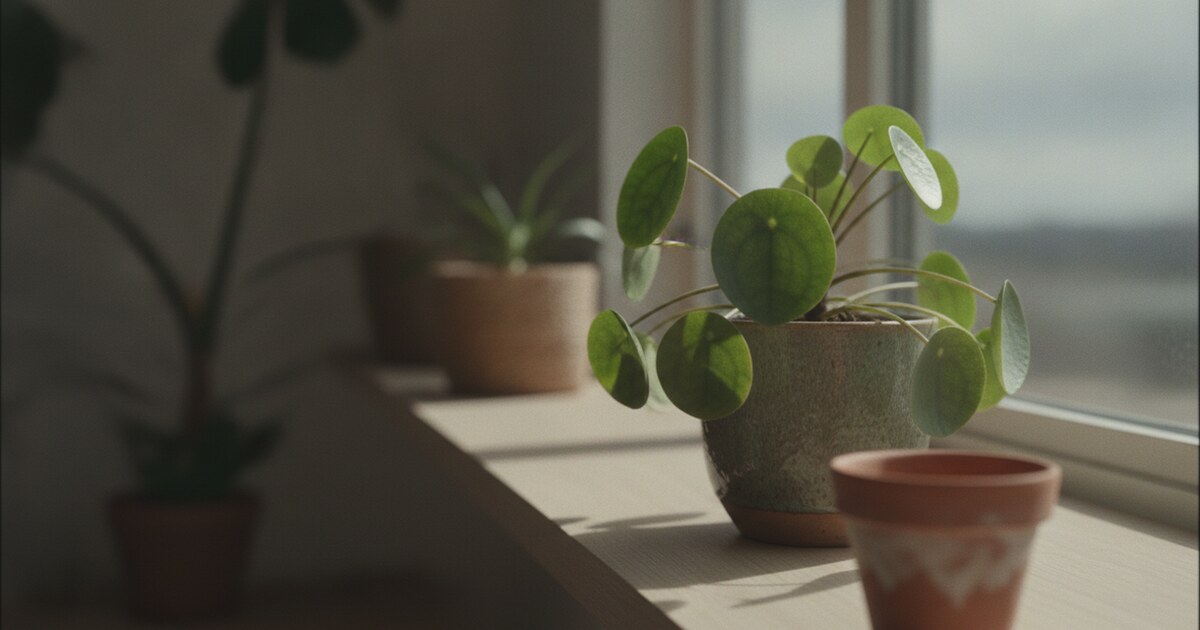
Pilea peperomioides is one of the most recognizable houseplants around, with those perfectly round, coin-shaped leaves perched on thin stalks. When those leaves start curling instead of lying flat, it’s almost always a sign that something in the plant’s environment has shifted.
Chinese money plant leaves curling is one of the most common problems Pilea owners run into. The causes are fixable in most cases once you match the symptom to the specific trigger.
Chinese money plant leaves curl most often from underwatering or low humidity. Pilea rolls its leaves inward to slow moisture loss through the leaf surface. Check whether the top inch of soil is dry, boost humidity to 40-60%, and most curled leaves open back up within 3-7 days.
Why Chinese Money Plant Leaves Curl (and What the Direction Tells You)
Pilea peperomioides is native to Yunnan Province in southwestern China, where it grows on shaded, mossy rock faces in subtropical mountain forests at 1,500-3,000 meters elevation. In its natural habitat, the plant experiences moderate temperatures of 50-75°F, consistent moisture from mountain mist, and filtered light through a dense forest canopy. Indoors, conditions rarely match: heating and air conditioning strip humidity below 30%, windows deliver unfiltered sun the plant never encounters naturally, and inconsistent watering creates wet-to-bone-dry soil cycles.
Curling is Pilea’s first stress signal. The direction of the curl points to the specific cause. Inward rolling from leaf edges toward the center midrib usually indicates moisture deficit from underwatering or dry air. Upward cupping (leaves forming a shallow bowl) points to too much direct light or heat. Downward drooping paired with soft, yellowing leaves is the overwatering pattern.
One thing worth knowing: Pilea naturally tilts and pivots its leaves throughout the day to track light. You might see leaves leaning or angling on their stalks rather than lying perfectly horizontal. That’s normal phototropic behavior, not stress. The signal to act on is persistent curling that stays rolled throughout the day and doesn’t open back up by afternoon.
Underwatering: The Most Common Cause of Chinese Money Plant Leaf Curl
Pilea prefers consistently moist soil. When the soil dries out too much between waterings, the plant curls its leaves inward to cut down moisture loss through transpiration.
Poke a finger about 1 inch into the soil. If it comes back completely dry, the plant needs water. Water thoroughly until it flows freely from the drainage holes, then let the excess drain completely before putting the pot back in its saucer.
The goal is to let the top 1 inch dry out between waterings, but keep the root zone consistently moist. In summer, that typically means watering once a week. In winter, every 10-14 days is more common, since growth slows and soil holds moisture longer.
Bottom watering works particularly well for Pilea: set the pot in a few inches of water for 20-30 minutes and let the roots pull moisture up from below. This delivers water all the way to the root tips without leaving the surface perpetually wet, and it avoids the wet-then-bone-dry cycle that curling often traces back to.
Pot size matters too. A pot much larger than the root ball holds excess moisture around the roots, which puts the plant at overwatering risk even on a sensible watering schedule. Pilea does better slightly snug in its container.
Low Humidity: The Second Most Common Trigger
Pilea evolved in mountain mist. Most homes, especially in winter when heating runs all day, drop to 20-30% relative humidity. That’s far below the 40-60% Pilea needs to hold its leaves flat.
A cool-mist humidifier placed 2-3 feet from the plant is the most reliable fix. Run it 6-8 hours a day during heating season and position it near the plant’s level, since humidity naturally settles toward the floor.
Pebble trays offer a passive boost without electricity: fill a shallow tray with pebbles, add water to just below the stone tops, and set the pot on top. As the water evaporates, it raises local humidity around the plant.
Misting the leaves doesn’t work. The water evaporates in minutes without raising ambient humidity in any meaningful way. Leaves that stay wet in still air also invite fungal spots.
A $10-15 hygrometer placed next to the plant tells you exactly where humidity sits. Read it in the morning, when it’s typically at its lowest. If it reads below 40%, dry air is driving the curl.
Temperature Stress and Cold Drafts
Pilea’s comfort zone sits between 60-75°F. Temperatures below 50°F can cause lasting cell damage, showing up as yellowing, limpness, or leaves that never uncurl. Cold-damaged leaves won’t recover, but removing them and moving the plant to a warmer spot lets new growth come in healthy and flat.
Drafts are just as disruptive as sustained cold. A plant sitting within 2-3 feet of an AC vent in summer, a drafty window in winter, or near an exterior door that opens regularly will curl its leaves in response to temperature swings, even if average room temperature looks fine on a thermostat.
Feel the air directly around the plant on a cold night or when the AC kicks in. If there’s a noticeable cool airflow near the leaves, move the plant.
Too Much Direct Light and Heat
Pilea grows under a dense forest canopy in nature and handles direct sun poorly. When placed in a south- or west-facing window with full sun exposure, the plant cups its leaves upward to reduce surface area absorbing heat. The leaves may also bleach to pale green or develop dry, papery patches alongside the curl.
Move the plant 3-5 feet back from the window, or filter the light with a sheer curtain. Bright indirect light is the target: enough to cast a soft shadow, not enough to feel warm on the back of your hand. Four to six hours of this daily is ideal.
South-facing windowsills in summer are especially harsh. The combination of intense light and reflected heat from the glass creates hot-spot stress even when the rest of the room is comfortable.
Overwatering and Root Rot
When curling comes with yellowing leaves, mushy stems near the soil line, or a faintly sour smell from the pot, overwatering and root rot are the likely culprits.
Overwatered Pilea roots can’t move oxygen properly, which prevents the plant from taking up water effectively. The result looks deceptively similar to underwatering: curled, drooping leaves on a plant that looks thirsty. The difference is in the soil: wet, compacted soil that stays soggy days after watering is the overwatering tell.
If you suspect root rot, unpot the plant and inspect the roots. Healthy Pilea roots are white to cream and firm. Rotted roots are brown to black, soft, and may smell faintly sour.
Trim away damaged sections with clean scissors, dust the cuts with cinnamon powder as a natural antifungal, and repot into fresh, well-draining mix. Two parts potting soil to one part perlite is a reliable ratio.
Hold off on watering for 4-5 days after repotting to let the roots settle.
If you’re not sure whether underwatering or overwatering is behind the symptoms, the guide on overwatered vs underwatered plant signs walks through the visual differences in detail.
Another tropical houseplant that curls for the same set of reasons is the calathea. Calathea leaves curling follows nearly identical patterns, and the diagnostic approach (curl direction, soil moisture check, humidity measurement) transfers directly to Pilea.
How PlantlyAI Can Help Identify the Cause
Pilea symptoms overlap in confusing ways. Inward curling with dry soil points to underwatering, but the same curl with wet soil and yellow leaves points to root rot. Both look like “the plant is unhappy” until you narrow it down.
PlantlyAI lets you photograph your plant and get an instant diagnosis. The app identifies diseases, pests, and environmental stress across houseplants, vegetables, and garden plants. For each diagnosed problem, it gives you a step-by-step treatment plan with organic, biological, and chemical options depending on severity.
You get 2 free diagnoses per day with no account required. Download PlantlyAI on iOS or Android and scan your Pilea the next time its leaves curl.
Frequently Asked Questions About Chinese Money Plant Leaves Curling
Why are my Chinese money plant leaves curling inward?
Inward curling from the leaf edges toward the midrib almost always points to underwatering or low humidity. Pilea rolls its leaves to slow moisture loss. Check soil moisture first: poke a finger 1 inch in. If it’s dry, water thoroughly. If the soil is moist, measure humidity with a hygrometer and aim for 40-60%.
Can curled Chinese money plant leaves uncurl?
Yes, most curled leaves open back up once you fix the underlying cause. Humidity and watering problems resolve fastest, usually within 3-7 days. Root rot takes longer: allow 2-4 weeks after repotting for the plant to stabilize. Leaves that stayed curled for several weeks may not fully recover, but new growth will come in flat once conditions are right.
Why are my Pilea leaves curling and turning yellow?
Curling paired with yellowing almost always points to overwatering or root rot. Check the soil: if it’s been consistently wet and smells slightly sour, root rot is likely. Unpot the plant, inspect the roots, trim any brown or mushy sections, and repot into fresh mix with better drainage. Reduce watering frequency going forward.
How often should I water a Chinese money plant?
In summer, once a week is typical. In winter, every 10-14 days. The practical rule is to let the top 1 inch of soil dry out between waterings without letting the plant go fully bone-dry. Bottom watering for 20-30 minutes every 7-10 days in the growing season gives consistent moisture to the root zone.
Do Chinese money plant leaves curl at night naturally?
Pilea tilts and pivots its leaves throughout the day to track light (phototropism), but it doesn’t fold up at night the way calathea does. If your Pilea’s leaves are curled first thing in the morning and don’t open by midday, that’s a stress response rather than natural behavior, and it’s worth checking humidity and soil moisture.
Not sure what's wrong? Diagnose your plant free
Upload a photo to our free plant disease identifier and get an instant diagnosis.