Croton Dropping Leaves: Causes and How to Fix It
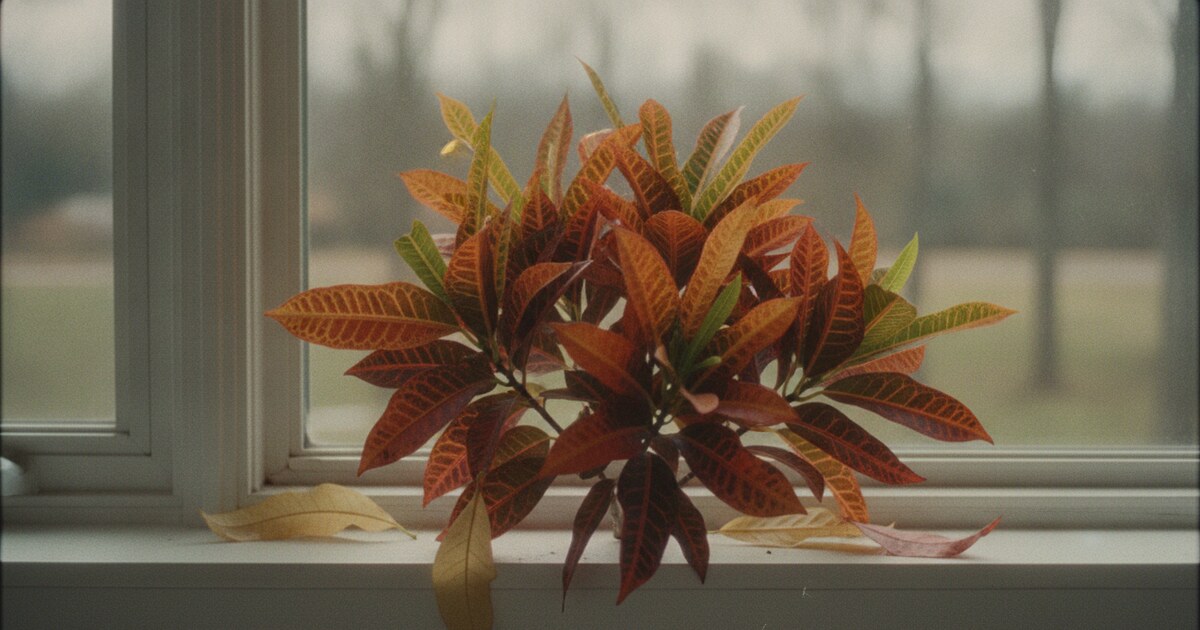
You move a croton home from the nursery and within a week it starts shedding leaves like it’s quitting. Or it’s been sitting on your shelf for months, looking vivid and healthy, and suddenly you find 10 leaves piled at its base overnight. Croton dropping leaves is one of the most dramatic stress responses in the houseplant world, and it happens fast. The encouraging part: the cause is almost always fixable once you identify it correctly. The trap most people fall into is adjusting the wrong variable and adding more stress to an already struggling plant.
Crotons drop leaves when their environment shifts suddenly. Transplant shock, overwatering, temperatures below 50°F, low humidity, or insufficient light are the most common triggers. Even moving the plant across the room can set off leaf drop. Identify the cause before adjusting anything. Treating the wrong problem adds stress and slows recovery.
Why Crotons Drop Leaves So Easily
Codiaeum variegatum belongs to the family Euphorbiaceae and originates from the tropical forests of Malaysia, Indonesia, the Pacific Islands, and northern Australia. Outdoors it grows in USDA zones 9–11, where temperatures stay above 50°F year-round and ambient humidity rarely dips below 70%. Most US households run 30–50% relative humidity in winter, roughly half what a croton needs. The comfortable indoor temperature range is 60–85°F; anything below 50°F triggers cold shock and leaf drop within hours. Their light requirement is bright, indirect light for 6 or more hours daily, far more than most interior rooms deliver naturally. Because crotons evolved to jettison leaves under stress rather than sustain tissue they can’t maintain, the response is fast and visible. A single cold draft or one very dry week can strip a plant of a dozen leaves in 48 hours. The same dense pigmentation that makes crotons so striking (carotenoids for yellow and orange, anthocyanins for red and purple) also makes them quick to abort leaves the moment conditions fall below their tropical baseline.
Transplant Shock: The Most Common Croton Leaf Drop Cause
If your croton is newly purchased or recently repotted, transplant shock is almost certainly responsible. Crotons are notoriously sensitive to relocation. The shift from a warm, humid, consistently lit greenhouse to your home is a significant environmental change, even if your home is a genuinely good environment for houseplants. Root disturbance makes it worse.
The same response happens when you move a croton to a new room, take it outside for summer and then bring it back in, or repot it into fresh soil. The plant drops leaves to reduce the surface area it needs to maintain while roots settle.
What actually helps during this phase:
- Put the plant in bright, indirect light and leave it there. Every additional move resets the clock.
- Keep temperature stable between 65–80°F. Drafts are a bigger problem than a slightly cool room.
- Water normally when the top 2 inches of soil dry out. Resist overwatering a stressed plant.
- Hold off on fertilizing for 6–8 weeks. Pushing new growth on a plant still establishing roots pulls energy away from stabilization.
Expect heavy leaf drop to slow within 2–3 weeks. New growth buds typically appear within 4–6 weeks once conditions stabilize. If the plant is still shedding heavily after a month with no new growth visible, there’s a second issue at play.
Watering Problems: Too Much or Too Little
Both overwatering and underwatering cause croton leaf drop, and they look different if you observe the leaves before they fall.
Overwatered croton: Leaves go soft and yellow, usually starting at the base of the plant first. Fallen leaves feel limp rather than papery. Soil stays wet more than a week after watering. Root rot can develop quickly; once roots are damaged, the plant can’t draw water upward even with moist soil, creating a confusing situation where the plant looks drought-stressed while sitting in a soggy pot.
Underwatered croton: Leaves dry out, curl inward, or go limp before dropping. Fallen leaves feel papery. Soil is bone dry and often pulling away from the pot edges. Lower leaves drop first.
Check the soil before every watering. Stick a finger 2 inches in: if it’s still damp, wait. Crotons want consistently moist (not soggy) soil during spring and summer. In fall and winter, let the top inch dry out a bit more between waterings.
If overwatering is the problem, let the soil dry completely before the next drink. Pull the plant from the pot and inspect the roots: white or tan and firm means healthy, black or mushy means rot. Trim rotted roots with clean scissors, dust cuts with cinnamon, and repot in fresh, well-draining mix. Our guide on overwatered vs underwatered plant symptoms covers how to tell the difference at a glance.
Temperature and Humidity: The Two Most Overlooked Causes
These two variables catch most indoor growers off guard because problems don’t show up as standard yellowing or wilting. The leaves just fall.
Temperature: Crotons drop leaves fast when temperatures fall below 50°F. The main culprits indoors are microclimates, not cold rooms. Air conditioning vents, single-pane windows in winter, exterior doors, and heating ducts all create pockets that can be 10–15°F colder or hotter than your thermostat reads. A croton sitting 6 inches from a drafty window might be experiencing 45°F air while the room registers 68°F.
Move the plant at least 2 feet from any window, vent, or exterior door. Consistent temperature between 65–80°F is the target year-round.
Humidity: The gap between what most homes offer and what crotons need is significant. Most US homes sit at 30–50% relative humidity; crotons need 40–80%, and their native tropical habitat averages 77–88%. When humidity drops below 40% (common in heated winter homes), the plant dries out faster than it can compensate and starts shedding leaves to cut moisture loss.
Options that reliably raise humidity:
- A small humidifier running 4–6 hours daily, positioned near the plant
- A pebble tray filled with water, with the pot resting on the pebbles above the water line
- Grouping the croton with other plants (shared transpiration lifts local humidity slightly)
Misting raises humidity for about 15 minutes. It’s not harmful, but as the primary strategy it won’t stop leaf drop.
Light Problems and Pest Damage
Insufficient light: Crotons need bright, indirect light for at least 6 hours daily. East-facing windows are ideal; south-facing windows with sheer curtains work too. When light levels drop too low, color fades first: the reds, oranges, and yellows wash toward green. After that comes leaf drop. Leaves fading in color before dropping is a reliable light-deficiency signal.
Spider mites: Nearly invisible without magnification, but they leave clear evidence. Look for fine webbing on leaf undersides and a dusty, stippled appearance on the leaf surface as mites drain cell content. Low humidity accelerates infestations, so plants already stressed by dry air are most vulnerable. Treat with neem oil or insecticidal soap, saturating both leaf surfaces. Repeat every 5–7 days for at least 3 treatment cycles to break the egg cycle. The approach is the same as treating spider mites on monstera; crotons respond identically.
Scale insects: These appear as small, flat brown bumps along stems and leaf midribs. They don’t move once settled, making them easy to miss. Scrape them off with a soft toothbrush dipped in 70% isopropyl alcohol, then follow with an insecticidal soap spray across the whole plant. Repeat in 7–10 days.
If the cause of your croton’s leaf drop still isn’t clear (leaves falling without yellowing, wilting, or visible pests), a photo diagnosis helps cut through the guesswork. PlantlyAI analyzes a photo of your plant and identifies the specific stress pattern, so you’re treating the actual problem rather than cycling through possibilities.
How to Revive a Croton After Leaf Drop
Order matters here. Changing multiple variables at once adds more stress than the plant can process.
Step 1: Check the soil first. Wet and soggy: stop watering, let it dry fully, check roots for rot. Dry and crumbly: water thoroughly until it drains from the bottom.
Step 2: Find the drafts. Run your hand near every window and vent close to the plant. Any cold airflow means the plant needs to move.
Step 3: Assess the light. Count actual bright-light hours per day. Fewer than 4–5 means a brighter window before anything else.
Step 4: Boost humidity. A pebble tray or small humidifier is the most reliable indoor fix. Aim for 40–50% relative humidity minimum.
Step 5: Check for pests. Use a magnifying glass on leaf undersides and along every stem. Look for webbing (mites) or bumps (scale).
Step 6: Wait. Once conditions are stable, give the plant 3–6 weeks before expecting visible change. Fallen leaves won’t come back, but new growth from the stems confirms recovery is working. The croton tells you it’s stable when it stops dropping and starts pushing new buds.
Frequently Asked Questions
Will my croton grow back leaves after dropping them? Yes, once the cause is resolved. Fallen leaves don’t reattach, but healthy new growth typically starts within 4–8 weeks under stable conditions. A plant that’s dropped most of its leaves can fully recover if the root system is still healthy.
Why is my croton dropping leaves after repotting? Repotting disturbs roots and shifts the soil environment, triggering the same stress response as relocation. Keep the plant warm (65–80°F), in bright indirect light, and water normally. Resist moving it again while it adjusts. Most crotons stabilize within 3–4 weeks.
How do I tell if my croton is dropping leaves from overwatering or underwatering? Overwatered crotons drop soft, yellowed leaves with soil that stays wet for over a week. Underwatered crotons drop dry, papery leaves with bone-dry soil pulling from the pot edges. Check the soil texture first — it’s the fastest diagnostic.
Do crotons lose leaves in winter? Some winter leaf drop is normal, especially when heating systems drop indoor humidity below 30–40% or the plant sits near a cold window. A few leaves over a month is not alarming. More than 5 leaves per week through winter warrants diagnosis.
Can a croton recover from losing most of its leaves? Often yes, if the roots are still healthy. Pull the plant from its pot and check: white or tan and firm means it can recover. Black and mushy means root rot needs addressing first. Trim rotted sections, repot in fresh, well-draining mix, and provide consistent warmth, moisture, and humidity. Recovery is slow but possible even after severe defoliation.
Croton dropping leaves almost always traces to one environmental variable that slipped out of range. Steady conditions (65–80°F, 40–60% humidity, bright indirect light, and consistent watering) give the plant what it needs to stabilize and push out new growth. If the cause still isn’t obvious, take a photo with PlantlyAI. It identifies the specific stress pattern your croton is showing and tells you exactly what to fix. Free to try with 2 scans per day, available on iOS and Android.
Not sure what's wrong? Diagnose your plant free
Upload a photo to our free plant disease identifier and get an instant diagnosis.