English Ivy Leaves Turning Brown and Crispy: Causes & Fixes
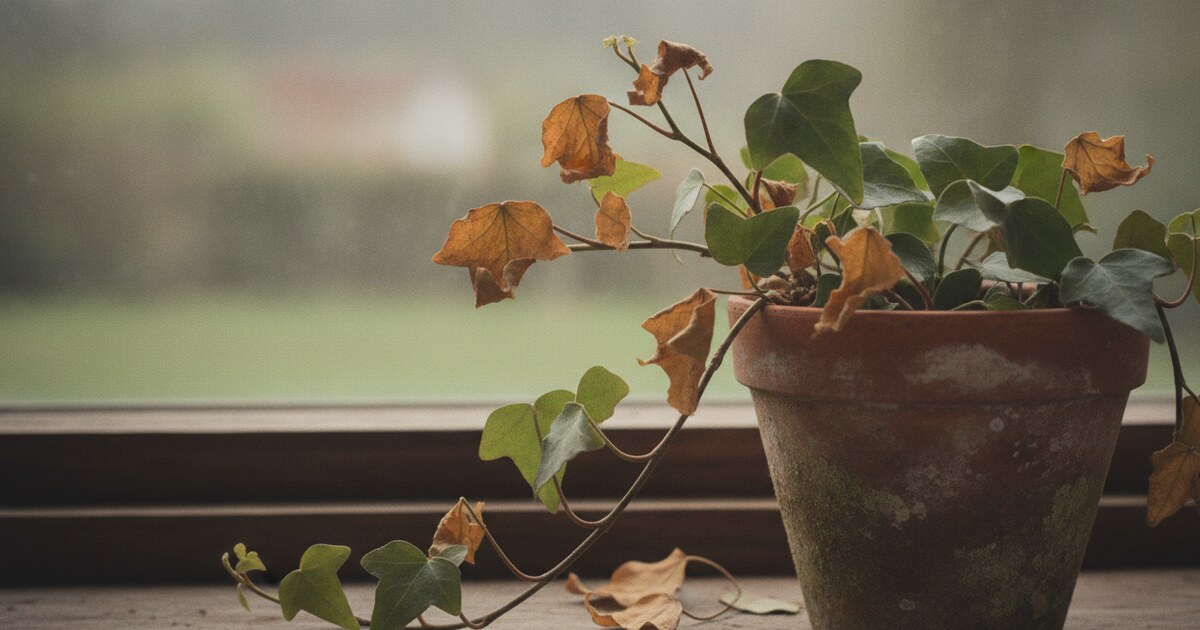
Your english ivy was doing fine, and then the leaves started going brown and crispy. Edges first, then whole leaves. You’ve been watering it and it’s still getting worse.
The tricky part with english ivy is that brown, crispy leaves come from several different causes — and some have opposite fixes. Watering more helps when the plant is thirsty. More water makes things worse if the roots are already sitting in soggy soil. This guide breaks down the six main causes of crispy, brown english ivy leaves and shows you how to tell them apart based on where the browning appears, what the soil feels like, and how fast the damage is spreading.
English ivy leaves turn brown and crispy most often because of low humidity, underwatering, or too much direct sun. Low humidity is the leading cause indoors, especially in winter when heating drops indoor moisture to 10-20%. The browning location tells you why: crispy tips and edges point to humidity, while all-over crispiness means drought or sun scorch.
Why English Ivy Leaves Turn Brown and Crispy
English ivy (Hedera helix) is native to Europe and western Asia, where it grows in shaded forests and hedgerows with year-round humidity between 50-70% and temperatures from 45-75°F (7-24°C). Indoors, it faces conditions far outside those norms. Centrally heated rooms drop to 10-20% relative humidity in winter, less than half of what ivy needs to hold moisture in its leaves. When humidity falls below 40%, the stomata on ivy leaves can’t regulate water loss fast enough, and the leaf margins dry out before roots can replace the moisture. Hedera helix also has moderate light needs: direct sun above 2,000-3,000 foot-candles scorches the waxy leaf cuticle within days. A secondary stress is tap water chemistry: fluoride and chlorine accumulate in leaf tissue over months and produce tip and edge browning that looks identical to drought stress. Spider mites add another layer, thriving in the same dry, warm conditions that already stress the plant. Identifying the real driver requires reading the specific browning pattern, not just adding water and hoping.
Low Humidity: The Most Common Cause of Crispy Ivy
Low humidity causes more brown, crispy english ivy leaves than any other factor. English ivy came from humid forest environments, and most indoor air — especially in winter — is far drier than it tolerates well.
When indoor humidity drops below 40%, leaves start losing water faster than the roots pull it up. The damage appears at the tips and edges first, then works inward. By the time a leaf is half brown, that tissue is dead and won’t recover. But correcting humidity stops more leaves from following.
How to tell it’s humidity:
- Crispy brown tips and edges on leaves that are otherwise green
- Leaves feel dry and papery, not soft or mushy
- Multiple leaves affected at once, especially at the tips
- Problem gets worse in winter when indoor heating runs
Run a humidifier near the plant and aim for 45-55% relative humidity. A hygrometer (under $15) tells you the actual number. Grouping plants together also raises local humidity a little. Misting helps briefly but wears off within an hour or two, so it’s not reliable as a primary fix.
Move the plant away from heating vents, radiators, and air conditioners — all of them strip moisture from the air faster than ivy can compensate.
Underwatering vs. Overwatering: How to Tell Them Apart
Both underwatering and overwatering cause brown, crispy leaves in english ivy, and the fix for one makes the other worse.
Underwatered ivy goes limp first, then the leaves dry and crisp from the tips. The soil feels bone dry 1-2 inches down. Older leaves usually brown before new growth does. The pot feels light when you lift it.
Overwatered ivy often shows yellowing before the browning starts, and when it does brown, the damage may feel soft or mushy at the base rather than paper-dry. The soil stays wet for more than a week. The pot feels heavy. When you pull the plant out and check the roots, they may smell musty or look brown and slimy.
The check: push your finger 1-2 inches into the soil. Dry soil means water thoroughly until it drains from the bottom holes. Consistently wet soil that hasn’t dried in a week means back off and let it dry — and check the roots.
For a deeper breakdown of the signs, Overwatered vs Underwatered Plant: How to Tell covers the diagnostic steps that apply to ivy just as well.
Watering schedule for english ivy: roughly every 7-10 days in spring and summer, every 12-18 days in fall and winter. Always check soil moisture first rather than following a fixed schedule. Terracotta pots dry out faster than plastic or glazed ceramic, so your frequency will vary by pot type.
Too Much Direct Sun
English ivy does best in bright, indirect light. Direct sun from south or west-facing windows scorches the leaf cuticle quickly. The damage shows up as bleached, pale patches across the middle or upper surface of leaves, or as whole leaves going crispy and washed out.
Sun scorch damage is permanent. The bleached tissue won’t recover, but moving the plant prevents new leaves from burning.
Position ivy 3-5 feet back from a south or west window, or use an east-facing window where morning sun is gentler. A sheer curtain filters harsh afternoon light without cutting brightness too much.
The pattern here is key: sun scorch creates bleached, papery patches across the leaf face, not just at the tips. If you’re seeing browning at the tips only, humidity or water chemistry is more likely the culprit.
Tap Water Chemicals and Fertilizer Salt Buildup
Tap water carries chlorine and fluoride, and both accumulate in soil over months of regular watering. Fluoride in particular builds up in leaf tissue and causes tip and edge browning that can look exactly like humidity stress — the difference is that fluoride damage shows up consistently on new leaves as they emerge, even when humidity is adequate.
Fertilizer salts do the same thing. Over-fertilizing, or never flushing the soil, concentrates salts around the roots. This damages root cells and limits water uptake. The plant responds by going brown at the tips.
How to tell it’s water chemistry or salt buildup:
- Brown tips appear on new leaves, not just old ones
- White crust or residue on the soil surface or along the pot rim
- Problem worsens gradually over months even with consistent watering and humidity
Fix: switch to filtered water or let tap water sit overnight before using it (chlorine off-gasses in 24 hours, though fluoride does not). For salt buildup, flush the soil thoroughly by pouring water through slowly until it runs clear, using 2-3 times the pot volume. Stop fertilizing for 4-6 weeks, then resume at half the recommended dose.
Spider Mites: When Crispy Leaves Come with Stippling
Spider mites cause crispy browning that looks different from drought or humidity damage. Instead of clean brown tips or edges, you’ll see tiny pale spots or a bronze, dusty texture spreading across the leaf surface. In heavier infestations, fine webbing appears between leaves and along stems.
Mites thrive in the same dry, warm indoor conditions that already stress english ivy. A plant struggling with low humidity is also more vulnerable to mite colonization.
How to check: hold a sheet of white paper under a leaf and tap the stem firmly. Tiny moving specks on the paper confirm spider mites.
Treatment: blast the undersides of leaves with water first to knock off active mites, then apply neem oil or insecticidal soap to all leaf surfaces every 5-7 days for at least 3 weeks. One treatment won’t reach all life stages. The approach is the same as for other houseplants — see Spider Mites on Monstera for full treatment steps.
Reading the Pattern to Diagnose English Ivy Browning
The location and texture of browning is your fastest diagnostic tool before you try anything else.
| Pattern | Most likely cause |
|---|---|
| Crispy tips and edges, otherwise green | Low humidity or tap water buildup |
| Crispy all over, dry soil, light pot | Underwatering |
| Brown with yellow edges, wet heavy soil | Overwatering or root rot |
| Bleached pale patches on leaf face | Sun scorch |
| Stippled bronze texture, fine webbing | Spider mites |
| White crust on soil + crispy tips | Salt buildup from fertilizer |
Start with the pattern, check the soil, then adjust one variable at a time. Fixing the wrong problem — like adding more water to a root rot situation — accelerates the damage.
If the damage pattern is ambiguous or multiple things seem off at once, a photo diagnosis cuts through the guesswork. Snap a picture of the affected leaves in PlantlyAI and the app identifies whether you’re dealing with drought stress, overwatering, pests, or chemical damage — then walks you through a treatment plan. The app works for english ivy and hundreds of other houseplant species, with 2 free diagnoses per day and no account needed. Download for iOS or Android.
Frequently Asked Questions
Can brown, crispy english ivy leaves turn green again?
Brown tissue is dead and won’t reverse. Prune the most affected leaves with clean scissors so the plant puts energy into healthy growth. Once you fix the underlying cause — humidity, watering, or light — new leaves come in undamaged. Full recovery shows clearly in 3-6 weeks.
How much humidity does english ivy need indoors?
English ivy does best at 45-55% relative humidity. Most centrally heated homes drop to 10-20% in winter, well below what ivy needs. A humidifier helps considerably. A hygrometer (under $15) gives you the actual reading so you’re not guessing — misting and pebble trays alone rarely get humidity high enough to make a lasting difference.
Why are only the leaf tips on my english ivy turning brown?
Crispy tips with the rest of the leaf staying green usually point to low humidity or fluoride and chlorine accumulation from tap water. Check the humidity level in your room and try switching to filtered water for a few weeks. If the tips stop browning on new leaves, tap water chemistry was the driver.
Should I cut off the brown leaves on my english ivy?
Yes. Brown leaves won’t recover, and removing them lets you monitor new damage more clearly. Use clean scissors or pruning shears and cut close to the stem without leaving a long stub. Don’t pull leaves off — that can tear the stem and leave an entry point for pathogens.
Why is my indoor english ivy dying even though I’m watering it regularly?
Regular watering doesn’t cover all of ivy’s needs. If the plant is also sitting near a heating vent, getting direct sun, or sitting in soil that stays wet too long, watering won’t fix the browning. Check humidity, light position, and drainage. If the roots are brown and mushy when you unpot the plant, root rot from overwatering is likely — the rescue steps in Overwatered vs Underwatered Plant: How to Tell apply to ivy.
Not sure what's wrong? Diagnose your plant free
Upload a photo to our free plant disease identifier and get an instant diagnosis.