Fiddle Leaf Fig Brown Spots: 6 Causes and How to Fix Them
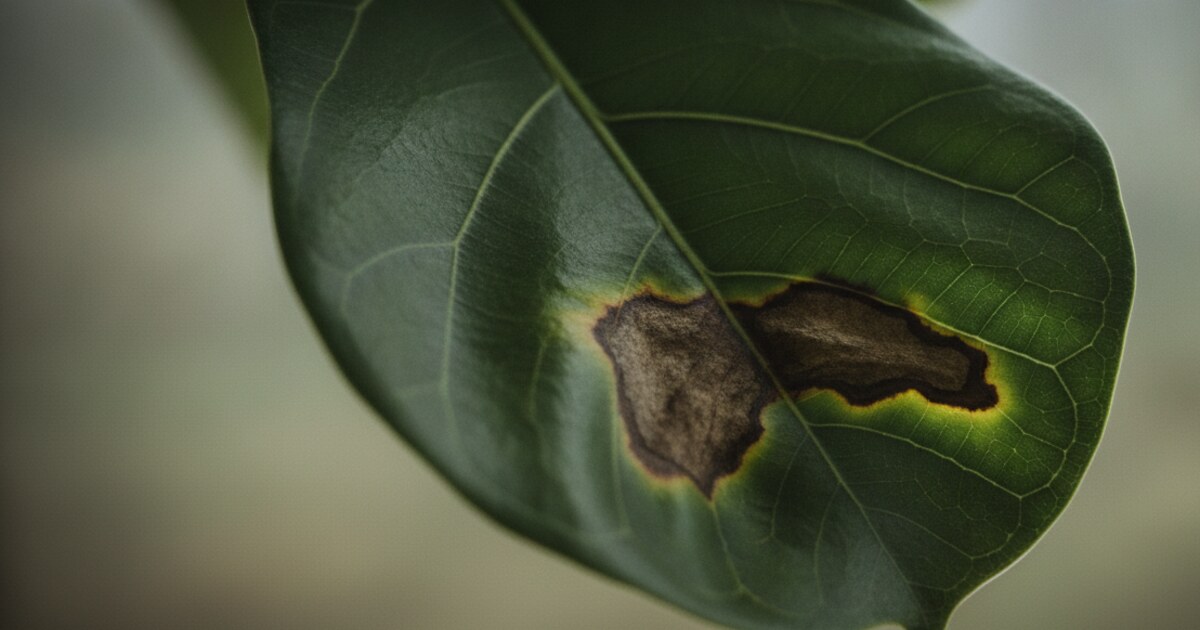
Brown spots on a fiddle leaf fig are one of those problems that look simple on the surface but have six completely different causes that need six completely different fixes. Water more and you make root rot worse. Water less and you make underwatering worse. The spots look similar either way, which is why so many fiddle leaf figs get misdiagnosed.
Here’s the thing: where the spots appear and what they feel like tells you almost exactly what’s wrong. Mushy spots starting on lower leaves point to root rot. Dry, crispy patches facing the window mean sunburn. Brown spots with a yellow halo that spread to new leaves mean bacterial infection. Read the pattern first, and you’ll know exactly what to do.
Quick answer: Fiddle leaf fig brown spots have 6 main causes: root rot, bacterial infection, sunburn, underwatering, low humidity, and pests. Root rot creates dark mushy spots starting on lower leaves; bacterial spots spread with a yellow halo around each one; sunburn produces dry bleached patches on window-facing leaves only. Identify the spot pattern before treating.
If you want a faster answer, PlantlyAI can diagnose your fiddle leaf fig from a photo and walk you through the exact fix. Two free scans per day, no sign-up needed. Available for iOS and Android.
How to Read Brown Spots: Location and Texture Point to the Cause
Before treating anything, spend 30 seconds examining the spots. Press one gently with your fingertip. Peek under the leaf. Note which leaves are affected first. These three steps tell you more than any visual description.
Ficus lyrata originates from tropical West Africa (Sierra Leone to Cameroon), where it grows in humid lowland rainforests with consistent warmth, filtered light, and well-drained soil. In that environment, brown spots signal a very specific problem: drainage failure, pathogen invasion, or light overexposure. Root rot is driven by Phytophthora parasitica and Pythium ultimum, which thrive between 60 and 80°F in waterlogged soil and colonize root tissue within 48 to 72 hours of anaerobic conditions. Bacterial leaf spot, caused by Pseudomonas cichorii or Xanthomonas campestris, spreads leaf to leaf within 24 to 48 hours and travels upward toward newer growth. Sunburn occurs above 3,000 to 4,000 foot-candles of direct light, roughly equivalent to 2 or more hours of afternoon sun through an unfiltered window. Low humidity below 30% relative humidity causes cell desiccation at leaf margins within 1 to 2 weeks. Knowing which pathogen or stressor you’re dealing with decides the treatment.
Use this table to match what you’re seeing to a cause:
| Spot appearance | Affected leaves | Texture when pressed | Cause |
|---|---|---|---|
| Dark brown or black, spreading from center | Lower and inner leaves first | Soft, mushy | Root rot / overwatering |
| Medium brown, yellow halo around edges | Any leaf; spreads to new leaves | Firm | Bacterial infection |
| Tan, bleached, or washed-out patches | Only the side facing the window | Dry, papery | Sunburn |
| Brown tips and crispy edges | Tips and outer edges, all leaves | Dry, brittle | Underwatering / low humidity |
| Tiny brown specks, fine webbing underneath | Scattered across many leaves | Dry | Spider mites |
| Small brown or tan spots, sticky residue | Scattered, especially stems and nodes | Dry | Mealybugs or scale |
Root Rot and Overwatering: The Most Common Cause of Fiddle Leaf Fig Brown Spots
Root rot is the most frequent cause of fiddle leaf fig brown spots, and it’s the one most often misdiagnosed as underwatering.
The spots start at the base or center of lower leaves, not at the tips. They’re dark brown to black, and the affected area is soft when you press it. As root rot advances, spots spread toward leaf edges and jump to neighboring leaves. The soil usually smells sour, and the lower stem may feel soft.
Root rot follows a predictable sequence. Soil stays wet too long, oxygen gets squeezed out of the root zone, and Phytophthora or Pythium moves in. By the time you see spots, the roots may already be significantly compromised.
What does an overwatered fiddle leaf fig look like? Lower leaves develop dark, soft brown spots that spread. New leaves may look small or stunted. The soil feels wet several days after the last watering. Sometimes the stem near the soil line starts to discolor.
To fix it:
- Stop watering immediately and move the plant to bright indirect light.
- Unpot the plant and shake loose the old soil.
- Rinse the roots under running water and inspect them. Healthy roots are white or tan. Rotted roots are brown, black, and smell bad.
- Cut off all rotted roots with sterile scissors. Dust cuts with cinnamon powder (a natural antifungal) or soak roots in a 3% hydrogen peroxide solution for 30 minutes.
- Repot into fresh, well-draining mix: 60% potting soil, 30% perlite, 10% orchid bark.
- Hold off watering for 5 to 7 days after repotting to let the roots dry slightly.
Open PlantlyAI, photograph the affected leaves and the base of the stem, and the app will confirm whether what you’re seeing matches root rot and show you the exact treatment steps.
Bacterial Infection: When Fiddle Leaf Fig Brown Spots Spread Fast
Bacterial leaf spot is the second most common cause, and it behaves differently from root rot in one key way: it spreads upward.
Root rot kills older, lower leaves first. Bacterial infection moves toward new growth. The spots are medium brown with a distinct yellow halo around each one. They’re firm to the touch, not mushy. Once bacterial infection takes hold, it can jump from leaf to leaf within 24 to 48 hours, especially if you’re misting the plant or it’s in a humid spot with poor air circulation.
The cause is almost always erratic watering: the plant swings from bone-dry to waterlogged and back. This stresses the tissue and opens it to infection. Misting the leaves also spreads bacteria between leaves.
How to treat bacterial infection:
There’s no pesticide or fungicide that cures bacterial leaf spot. The fix is stabilizing your watering routine so the plant isn’t under constant stress.
- Water thoroughly when the top 2 inches of soil are dry.
- Let all excess water drain completely. Don’t leave the pot sitting in a saucer of water.
- Stop misting. Improve humidity with a pebble tray or humidifier instead.
- Remove the most heavily spotted leaves to reduce the spread. Sterilize your scissors with rubbing alcohol between each cut.
Existing spots won’t disappear. Dead leaf cells don’t recover. But once conditions stabilize, the plant will stop producing new spots and push out healthy leaves within 6 to 8 weeks.
Sunburn, Underwatering, Low Humidity, and Pests
Four other causes account for the remaining fiddle leaf fig brown spots, and each has a clear visual signature.
Sunburn shows up as tan or bleached patches only on the side of the leaf facing the window. The rest of the leaf stays green. The damaged area is dry and papery. Fiddle leaf figs want bright indirect light, not direct afternoon sun through glass. Move the plant back from the window by 2 to 3 feet, or diffuse the light with a sheer curtain.
Underwatering causes brown tips that spread inward from the outer edges. The leaf tips turn brown first, then the browning works its way along the margins. The soil feels bone dry when you press a finger 2 inches in. Soak the pot thoroughly in a bucket of water for 20 to 30 minutes to rehydrate compacted soil, then resume regular watering.
Low humidity produces crispy brown tips that look a lot like underwatering, but the soil is actually moist. Fiddle leaf figs need 40 to 60% relative humidity. In most homes during winter, indoor humidity drops to 20 to 30%. A hygrometer tells you exactly what you’re dealing with. Fix it with a pebble tray, a humidifier placed 2 to 3 feet from the plant, or grouping plants together to raise local humidity.
Pests (mainly spider mites and mealybugs) leave clusters of tiny brown specks, often on the undersides of leaves. Spider mite infestations come with fine webbing between leaves and stems. Mealybugs leave white cottony residue at leaf nodes. Treat spider mites with neem oil spray every 7 to 10 days for 4 weeks. Treat mealybugs with 70% isopropyl alcohol on a cotton swab, then follow with neem oil.
How PlantlyAI Helps With Fiddle Leaf Fig Brown Spots
When the spots on your fiddle leaf fig don’t match a clean pattern, or the plant has more than one issue at once, a visual diagnosis from a photo speeds things up.
PlantlyAI is an AI plant disease diagnosis app for iOS and Android. You photograph the affected leaves, and the app identifies the disease, pest, or problem and returns a step-by-step treatment plan. It covers organic, biological, and chemical treatment options so you can pick what fits your situation. The app works for houseplants, garden plants, vegetables, and outdoor trees.
You get 2 free diagnoses per day with no account required. If you’re dealing with a fiddle leaf fig that has multiple brown spot types, or you’re unsure whether you’re looking at root rot or bacterial infection, a PlantlyAI scan takes the guesswork out of it.
The app also covers brown spot problems on related articles we’ve covered, like monstera brown spots on leaves if you have both plants struggling.
Frequently Asked Questions
Should I cut off brown leaves on a fiddle leaf fig?
Remove leaves that are more than 50% brown or those heavily affected by bacterial infection to slow the spread. Leaves with only minor spotting can stay. Always use sterile scissors and cut cleanly at the petiole (the leaf stem). Don’t remove more than 2 to 3 leaves at once, as defoliating too aggressively adds stress.
Can brown spots on a fiddle leaf fig be fixed?
The spots themselves are permanent. Dead plant cells don’t regenerate. But you can stop new spots from forming by fixing the underlying cause: adjust watering, improve humidity, move the plant from direct sun, or treat the pest. Once conditions improve, the plant will push out healthy new leaves within 6 to 8 weeks.
How do I know if my fiddle leaf fig has root rot or bacterial infection?
Press a brown spot with your fingertip. Soft and mushy means root rot. Firm means bacterial infection. Also check which leaves are affected: root rot starts on lower, older leaves and moves upward; bacterial infection can appear anywhere and tends to jump to new growth. Root rot also often comes with soggy soil and a sour smell.
How often should I water a fiddle leaf fig?
Most fiddle leaf figs in a 10-inch pot need watering every 7 to 10 days in warm months and every 10 to 14 days in winter. The reliable test is to push your finger 2 inches into the soil. If it’s still moist, wait. If it’s dry, water thoroughly until it drains from the bottom.
What’s the brown spotting that appears on older lower leaves even with good care?
This is natural oxidation. Older fiddle leaf fig leaves develop small, rusty brown spots as they age and eventually drop from the plant. If the spots are limited to the lowest 1 to 2 leaves and the plant is otherwise pushing new growth, this is normal leaf senescence, not disease.
Your fiddle leaf fig can recover from almost any of these causes if you catch it early and treat the right problem. If you’re not sure which cause you’re dealing with, take a photo of the affected leaves and snap the base of the plant, then run it through PlantlyAI for a diagnosis in seconds. The app also has Android support, and you’ll get step-by-step treatment options including organic choices. For more fiddle leaf fig problems, see our guide on fiddle leaf fig dropping leaves and the how to save a dying fiddle leaf fig rescue guide.
Not sure what's wrong? Diagnose your plant free
Upload a photo to our free plant disease identifier and get an instant diagnosis.