How to Save a Dying Fiddle Leaf Fig (Step-by-Step)
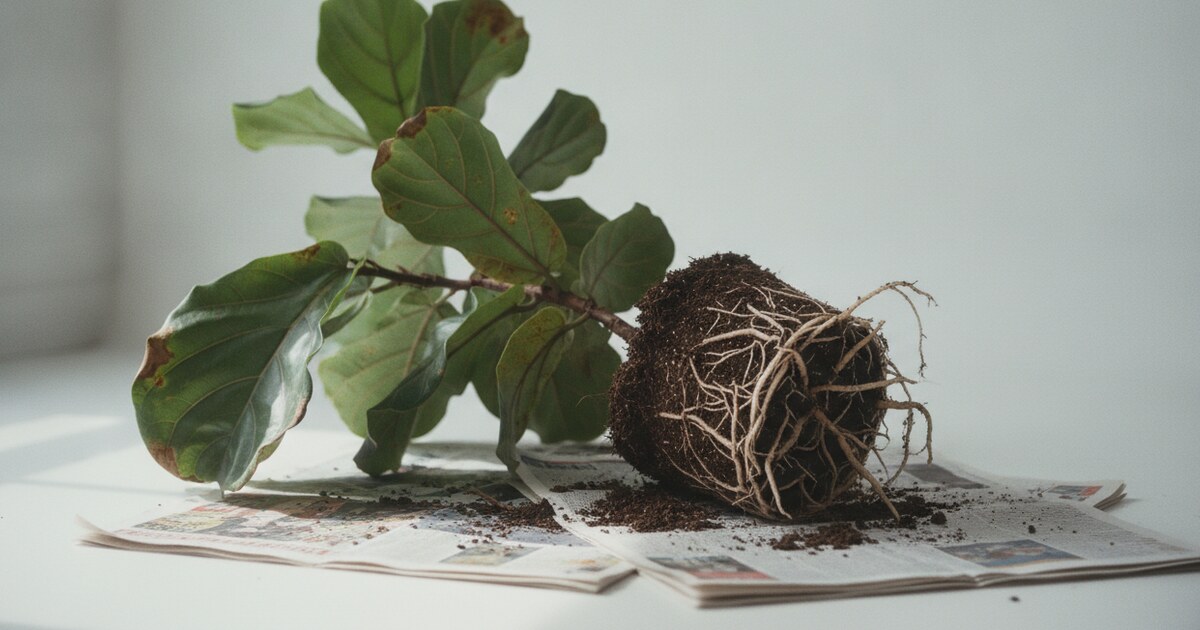
Your fiddle leaf fig looked fine last week. Now there are brown spots spreading across the leaves, whole branches drooping, or leaves hitting the floor every morning. You’re wondering if it’s too late.
Most of the time, it isn’t. Fiddle leaf figs are dramatic plants. They respond hard to any disruption: a move, a cold draft, a change in watering schedule. But “dramatic” and “dead” are two different things. Most dying fiddle leaf figs can recover once you identify the actual problem and address it consistently.
This guide covers how to save a dying fiddle leaf fig: match the symptoms to the right cause, then follow the specific fix for that problem.
To save a dying fiddle leaf fig, identify the cause from its symptoms. Brown spots with yellow halos and soggy soil signal root rot from overwatering. Dry, crispy edges mean underwatering. Sudden mass leaf drop usually means cold stress. Fix the root cause, move to bright indirect light, and give it 4 to 12 weeks to stabilize.
Is Your Fiddle Leaf Fig Actually Dying?
Before doing anything, check the stalk. Run your finger along the main stem and scratch the surface gently with a fingernail. If the tissue underneath is green or light tan and the stalk feels firm, the plant has living tissue and can recover. A firm trunk is worth fighting for.
If the stalk is soft, mushy, or completely shriveled from the soil line upward, root rot has spread too far. At that point, the plant is unlikely to come back.
Check the branches next. A fiddle leaf fig can drop every single leaf and still survive, as long as the trunk and some roots have health left. Bare branches with a firm, green-under-bark trunk are stress, not death. New growth can still emerge from nodes along the stem once conditions improve.
Do the stalk check before composting. Firm and green underneath means give it one more try.
Why Your Fiddle Leaf Fig Is Dying
Fiddle leaf figs fail for a short list of reasons. Matching your plant’s symptoms to the right cause tells you exactly what to fix.
Overwatering and root rot is the most common killer. Symptoms: brown spots that start in the middle of the leaf (not the edges), yellow halos around those spots, soil that stays wet for more than a week, and a faint musty smell from the pot. Leaves may drop in clusters, and the base of the stalk may feel soft.
Underwatering and drought stress is less common indoors, but it happens. Symptoms: brown edges and tips that are dry and crispy (not soft or wet), leaves that droop and feel papery, and soil that has pulled away from the sides of the pot. The soil is bone dry an inch or two down.
Low light won’t kill a fiddle leaf fig quickly, but it weakens the plant so other problems take hold. Symptoms: small, pale new leaves, no new growth for months, and older leaves yellowing and dropping slowly one at a time.
Cold drafts or temperature shock: fiddle leaf figs drop leaves fast when exposed to temperatures below 55°F (13°C) or cold air blasts from AC vents, fans, or drafty windows. Symptom: sudden mass leaf drop within days of moving the plant or a change in season. The stalk stays firm.
Root-bound stress slows the plant down and makes it vulnerable when roots fill the entire pot. Symptoms: roots growing out of drainage holes, soil drying out within 1 to 2 days of watering, and slow growth despite decent light.
Pests: spider mites and scale can take hold on a stressed plant. Symptoms: sticky residue on leaves, fine webbing on leaf undersides, or small yellow patches that spread.
Match your symptoms above, then go directly to the relevant fix below.
How to Save a Fiddle Leaf Fig with Root Rot
Root rot is the leading cause of fiddle leaf fig death, and it’s fixable if you catch it before the stalk goes mushy all the way through.
Step 1: Unpot the plant. Tip the pot on its side and slide the root ball out. Lay it on newspaper or a tray so you can see the roots clearly.
Step 2: Examine the roots. Healthy roots are white or light tan and firm. Rotted roots are dark brown or black, mushy, and they may smell. Cut away every rotted root with clean scissors or pruning shears, trimming back to healthy tissue. Even if that means removing most of the root system, do it. Leaving rotted material means the rot continues.
Step 3: Treat with hydrogen peroxide. Mix 1 part 3% hydrogen peroxide with 2 parts water and pour it over the trimmed root system. This kills remaining fungal spores without harming any surviving root tissue.
Step 4: Repot in fresh, well-draining soil. Use a mix of potting soil and perlite (roughly 2:1 ratio). Choose a pot only slightly larger than the trimmed root ball: too much soil stays wet and invites rot back. The pot must have drainage holes.
Step 5: Water sparingly and wait. Water once after repotting, then hold off until the top 2 inches of soil are completely dry. Skip fertilizer for at least 6 weeks. Keep the plant in bright, indirect light, away from drafts.
Fiddle leaf figs are among the most root-rot-prone indoor plants. The genus Ficus lyrata is native to lowland tropical rainforests in West Africa, where it grows in well-draining, loamy soil with warm, humid air rather than waterlogged conditions. Root rot sets in when Phytophthora or Pythium fungi colonize oxygen-depleted soil, typically after the plant sits in soggy soil for more than 7 days. Temperatures below 55°F (13°C) make the plant more susceptible. Recovery depends on how much healthy root remains: a plant that retains at least 30% of its original root mass after trimming has a strong chance of stabilizing. A soil moisture meter showing consistently above 7 on a 1-to-10 scale before watering is the clearest early warning sign. Most fiddle leaf figs need watering only every 7 to 14 days indoors. The fungal infection spreads fastest in pots without drainage holes or in soil that compacts and holds water, like straight potting mix without amendment.
Root rot rescue works the same way across different species. If you’ve dealt with it on other houseplants, our guide on how to save monstera root rot walks through the same steps for a plant that fails for identical reasons.
How to Revive an Underwatered Fiddle Leaf Fig
An underwatered fiddle leaf fig is easier to fix than an overwatered one. The cell damage is less severe, and the roots are usually intact.
Bottom-water the plant first: set the pot in a tray of room-temperature water for 30 to 40 minutes, letting the soil absorb moisture from the drainage holes upward. This fully saturates dry, compacted soil better than top-watering, which tends to run straight through without absorbing.
After watering, check the leaves. Drooping caused by dehydration typically improves within 24 to 48 hours once the roots get water. Crispy brown edges won’t turn green again, but new, healthy leaves will grow in as long as you water consistently going forward.
For a plant that keeps drying out too fast, check whether it’s root-bound. A pot-bound fiddle leaf fig dries out within 1 to 2 days of watering because there’s almost no soil left to hold moisture. If that’s the case, repot into the next pot size up.
To tell overwatering from underwatering without digging up the roots, check our guide on overwatered vs underwatered plant signs. The visual differences are clearer than most people expect.
Light, Temperature, and Location Fixes
Fiddle leaf figs need a minimum of 6 hours of bright, indirect light daily. A north-facing room with no window nearby won’t support one long-term. The ideal spot is 3 to 5 feet from a south- or east-facing window, where the light is strong but the plant doesn’t sit in direct afternoon sun, which can scorch the large leaves.
Temperature matters more than most care guides mention. Keep your fiddle leaf fig in a room between 60 and 85°F (15 to 29°C). Anything below 55°F risks cold stress. More importantly, keep the plant away from cold drafts from windows, doors, and air conditioning vents, even if the average room temperature is fine. A cold blast from an AC vent every hour is enough to trigger mass leaf drop.
If you moved your plant recently and it started dropping leaves within days, location is almost certainly the cause. Move it to a stable spot, maintain consistent watering, and give it 4 to 6 weeks without any further changes before deciding it’s not recovering.
How Long Does a Fiddle Leaf Fig Take to Recover?
Recovery takes longer than most owners expect. A realistic timeline:
- Weeks 1 to 4: Stabilization. Leaf drop slows or stops. No new growth yet.
- Weeks 4 to 8: Small buds may appear at the nodes. The plant is building energy reserves.
- Months 3 to 6: New leaves unfurl. These will be smaller than mature leaves at first.
- Months 6 to 12: Full foliage recovery, if care conditions stay consistent.
One mistake that restarts the clock: moving the plant or changing care routines while it’s recovering. Pick a spot, settle on a watering schedule, and leave it alone for at least 8 weeks.
If you’re uncertain whether your plant’s symptoms point to root rot, underwatering, or a pest problem, a plant diagnosis app can narrow it down before you start cutting roots or repotting. PlantlyAI identifies plant diseases and problems from a photo, then suggests targeted treatment steps. There’s a full comparison of options in our guide to free plant diagnosis apps if you want to compare what’s available.
Frequently Asked Questions
Can a fiddle leaf fig regrow leaves after losing all of them? Yes, but only if the stalk is still firm and has living tissue underneath the bark. A completely leafless FLF with a healthy trunk can push out new growth from the nodes along the stem. It typically takes 2 to 4 months before new buds emerge. A bare plant with a firm trunk is stressed, not dead.
How do I know if my fiddle leaf fig has root rot? The clearest signs are brown spots that start in the middle of the leaf rather than the edges, yellow halos surrounding those spots, soil that stays wet for more than a week, and a musty smell from the pot. Unpotting the plant confirms it: rotted roots are dark brown or black, soft, and may smell. Overwatering is the cause in almost every case.
Should I cut off the brown leaves? Remove leaves that are more than 50% brown. They won’t recover and the plant spends energy maintaining them. For leaves with only brown tips or edges, trim the brown part back 1 to 2 cm, preserving the leaf shape. The remaining green tissue still photosynthesizes and helps the plant recover.
How often should I water a recovering fiddle leaf fig? Water only when the top 2 inches of soil are dry, typically every 7 to 14 days indoors, depending on pot size, season, and light levels. Never let the plant sit in water in a saucer. Consistent moisture (not wet, not bone dry) is the goal. Err on the side of too dry rather than too wet during recovery.
When should I give up on a dying fiddle leaf fig? If the entire stalk from soil level upward is soft, mushy, or shriveled, root rot has likely progressed too far. A stalk that’s mushy at the base but still firm and green-under-bark higher up may survive with aggressive root trimming, though survival isn’t guaranteed. If there’s still firm, green tissue anywhere on the trunk, it’s worth one more rescue attempt before composting.
If you can’t tell from the leaves alone whether your fiddle leaf fig has root rot, a nutrient problem, or something else, PlantlyAI can diagnose it from a photo. Snap a picture, get an AI-powered diagnosis, and see the specific treatment steps (including organic, biological, and chemical options) for whatever’s affecting your plant. Two free diagnoses per day on iOS or Android, no account needed.
Not sure what's wrong? Diagnose your plant free
Upload a photo to our free plant disease identifier and get an instant diagnosis.