Monstera Brown Spots on Leaves: 7 Causes and How to Fix Them
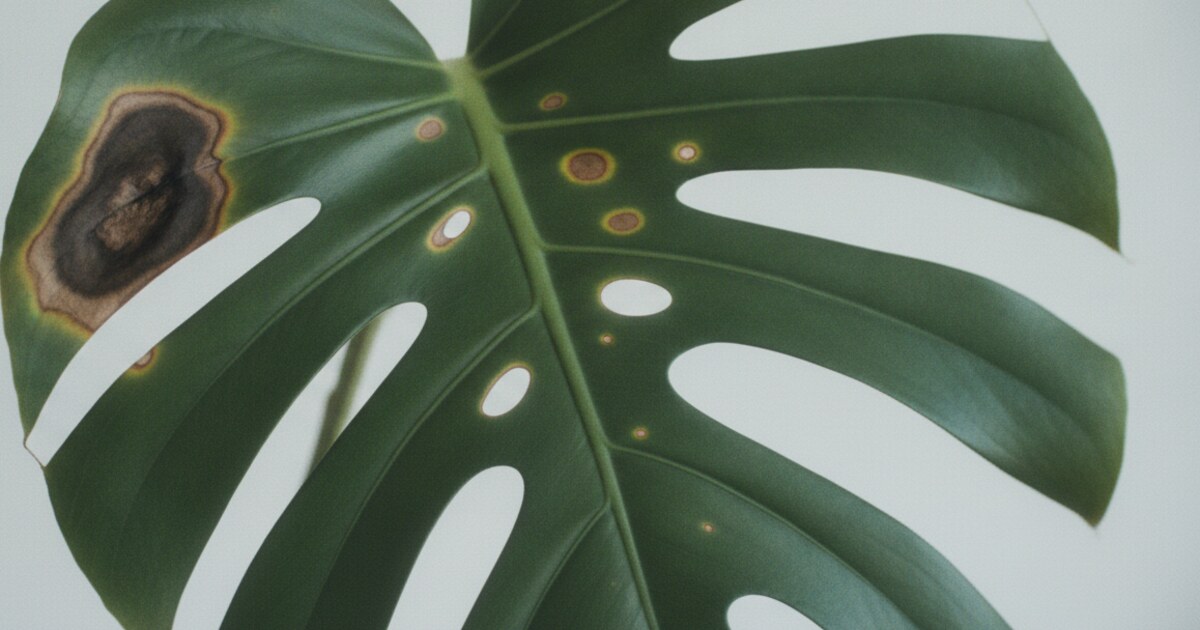
Monstera is one of the most forgiving plants you can own, but brown spots have a way of making owners panic. The good news: brown spots are fixable. The challenge is that at least 7 different problems can cause them, and each one looks slightly different. Reaching for the watering can when root rot is already present makes things worse.
This guide walks through the 7 causes of brown spots on monstera leaves, what each one looks like, and exactly how to fix it.
Quick answer: Brown spots on monstera leaves come from 7 main causes: overwatering or root rot (dark mushy patches), underwatering (dry crispy edges), low humidity (brown tips spreading inward), too much direct sun (large bleached patches), fungal leaf spot (spots with yellow halos), bacterial infection (dark spreading patches), and mineral buildup from tap water (edge speckling). The texture and location of the spots tell you which cause you’re dealing with before you even touch the soil.
How to Read Brown Spots Before You Treat Anything
Before doing anything, spend a minute examining the spots closely. Most monstera brown spot problems get fixed faster when you match the visual pattern to the cause rather than trying common fixes at random.
Monstera brown spots follow predictable patterns tied to specific stressors. Soft, mushy dark patches on lower leaves with a yellow border indicate overwatering or root rot; the fungi Pythium and Phytophthora colonize waterlogged roots within 48–72 hours of continuous saturation, cutting off water and nutrient uptake. Dry, crispy edges spreading inward from leaf tips signal underwatering or low humidity; monsteras need 60–80% relative humidity and show dehydration stress when air drops below 40%. Large tan or bleached patches on upper leaf surfaces facing a window point to sunscorch; monstera leaves lack UV-protective pigments of full-sun species and scorch in under 30 minutes of afternoon direct light. Small circular spots with a yellow-green halo suggest fungal leaf spot (Cercospora spp.), which spreads fastest above 77°F with poor air circulation. Bacterial blight produces dark, water-soaked patches that double in size within 24–48 hours. Each pattern maps directly to a specific cause and fix.
Once you’ve matched the pattern, the sections below cover each cause in detail.
Cause 1: Overwatering and Root Rot (Dark Mushy Brown Spots)
Overwatering is the most common cause of brown spots on monstera. The spots have a distinct look:
- Dark brown or black, often mushy when touched
- Surrounded by a yellow ring
- Starting on lower, older leaves before spreading upward
- Soil that stays wet for more than 10 days
When roots sit in waterlogged soil, they can’t pull in oxygen. The roots start rotting, and the plant can’t move water and nutrients up through the stem properly. Brown patches appear first on older leaves because the plant pulls resources away from them to protect new growth.
To fix overwatering:
- Stop watering immediately and let the soil dry out completely.
- Pull the plant out of its pot and check the roots. Healthy roots are white and firm. Rotted roots are brown, black, or slimy.
- Cut away all rotted roots with clean scissors or pruning shears. Sterilize the blades between cuts.
- Repot into fresh, well-draining potting mix. A pot with drainage holes is essential.
- Water next only when the top 2 inches of soil feel dry.
If the stem itself has gone soft, see our guide on monstera stem rot for recovery steps.
Cause 2: Underwatering (Dry, Crispy Brown Edges)
Underwatered monsteras show a different pattern. The brown areas are dry and crispy, not mushy. They typically start at leaf tips and edges and work inward.
Signs of underwatering:
- Brown edges that feel papery and dry
- Soil pulling away from the sides of the pot
- Leaves that droop or curl slightly before spots appear
- Pot feels noticeably light when lifted
Fix: Water thoroughly until it drains out the bottom of the pot. Don’t water little and often. Water deeply, then wait until the top 2 inches dry out before watering again. In summer, most monsteras need water every 7–10 days. In winter, every 14–21 days.
Cause 3: Low Humidity (Brown Tips That Spread Inward)
Monstera is tropical. It wants 60–80% humidity, and most homes sit at 30–50%, especially in winter when heating dries the air.
Low humidity looks like:
- Brown tips that gradually spread inward along leaf margins
- Crispy texture to the brown areas
- Newer, younger leaves most affected (they’re more sensitive to dry air)
Ways to raise humidity around your monstera:
- Set the pot on a tray of pebbles with water underneath (the pot should sit above the waterline, not in it)
- Run a small humidifier nearby
- Group your monstera with other plants, which raise local humidity through natural transpiration
Misting the leaves helps briefly but doesn’t hold humidity long enough to make a real difference.
Cause 4: Too Much Direct Sunlight (Bleached Patches)
Monstera evolved under the canopy of tropical forests. It’s built for bright, indirect light, not direct afternoon sun through a west- or south-facing window.
Sunscorch on monstera leaves looks like:
- Large bleached, tan, or pale yellow-brown patches
- Spots only on the upper leaf surface facing the light source
- Clear, somewhat sharp edges to the damaged area (unlike the gradual spread of fungal spots)
- Newest growth on the most exposed leaves affected first
Fix: Move the plant 2–3 feet back from the window, or hang a sheer curtain to filter the incoming light. Already-scorched leaves won’t recover their green color. Don’t trim them unless they’re more than 50% damaged; they still contribute to photosynthesis until new leaves replace them.
Cause 5: Fungal Leaf Spot (Brown Spots With Yellow Halos)
Fungal leaf spot is common in monsteras kept in warm, humid conditions with stagnant air. The classic sign: brown spots with a clear yellow halo around them.
Other signs of fungal infection:
- Roughly circular spots
- Brown or tan center with yellow-green edges
- Multiple spots spread across the same leaf
- Spreads to neighboring leaves if untreated
Treatment:
- Isolate the plant from nearby plants immediately.
- Remove all visibly affected leaves using sterilized scissors.
- Apply a copper-based fungicide following the label directions. Coat both sides of the leaves.
- Improve airflow around the plant. Even a small fan on low helps prevent spores from settling.
- Water at the base rather than overhead. Wet foliage gives fungal spores easier entry.
For a detailed treatment guide covering the main types of leaf spot on indoor plants, see the leaf spot treatment guide.
Cause 6: Bacterial Infection (Dark, Spreading Patches)
Bacterial blight on monstera moves faster than fungal leaf spot. The spots are darker, have irregular edges, and spread visibly within 24–48 hours.
Signs that separate bacterial from fungal:
- Water-soaked, dark brown or black patches (not dry in the center)
- Irregular rather than circular shape
- Patches expand quickly, sometimes doubling in size overnight
- May have a faint musty smell from affected tissue
There’s no fungicide for bacteria. The approach is containment:
- Remove all affected leaves immediately.
- Sterilize your scissors with rubbing alcohol between every cut.
- Improve airflow and stop misting.
- Avoid splashing water onto the leaves when watering.
In severe cases where more than half the leaves are affected, propagate healthy stem cuttings from growth above the infection rather than trying to nurse the full plant back.
Cause 7: Pests and Mineral Buildup
Spider mites cause a pattern that looks different from anything else: fine stippling or tiny dots scattered across the leaf surface, as though someone dusted it with a very fine brush. Check the undersides of leaves for webbing and tiny moving specks. Treat with insecticidal soap or diluted neem oil, coating both sides of all leaves and repeating every 5–7 days for 3 weeks.
Tap water mineral buildup from fluoride and chloride produces slow brown speckling and tip browning along leaf edges over months. You’ll often see a white crust forming on the soil surface. Switch to filtered water, or fill your watering can the night before and let it sit uncovered so chlorine evaporates. Flush the soil with distilled water every 2–3 months to wash out accumulated mineral salts.
How PlantlyAI Can Speed Up the Diagnosis
Several of these causes look similar in early stages, especially fungal leaf spot, bacterial blight, and early root rot. Knowing which one you’re dealing with matters because the treatments are different.
PlantlyAI lets you photograph your monstera’s affected leaves and get an AI diagnosis of the specific problem. It cross-references the spot pattern, color, texture, and spread to identify the cause rather than giving you a generic checklist.
Once it identifies the problem, the app gives you a step-by-step treatment plan with organic, biological, and chemical options. If your monstera has multiple symptoms at once (brown spots plus yellowing, or spots plus a soft stem), the diagnosis feature catches combined problems that a visual checklist can miss.
You get 2 free diagnoses per day with no account required, on iOS and Android.
Frequently Asked Questions
Can brown spots on monstera leaves spread to other plants?
Fungal and bacterial brown spots can spread to nearby plants through spore transfer or splashing water. Overwatering, underwatering, sun damage, and humidity spots won’t spread because they’re environmental responses rather than infections. Whenever you see circular spots with yellow halos or dark expanding patches, isolate the plant before treating.
Why does my monstera keep getting brown spots even after I fix the problem?
Existing brown spots on monstera leaves don’t disappear after the problem is fixed. The damage is permanent. What you’re looking for after a fix is that new leaves come in clean and no new spots appear on healthy growth. If spots keep appearing on new growth, the underlying cause isn’t fully resolved.
Should I cut off monstera leaves with brown spots?
Remove leaves that are more than 50% damaged. They drain the plant’s energy without contributing much to photosynthesis. For leaves with minor spots, leave them unless you suspect an active infection. New growth will come in clean once the cause is fixed.
Why do my monstera’s brown spots have yellow edges?
A yellow border around a brown spot points to two causes: overwatering (where yellow signals nutrient stress spreading from root rot) or fungal leaf spot (where the yellow is part of the infection pattern). Mushy texture points to overwatering. Dry center points to fungal infection.
How do I tell overwatering from underwatering spots on monstera?
Overwatering spots are dark, mushy, and surrounded by yellow. The soil stays wet for long periods. Underwatering spots are dry, crispy, and start at tips and edges. The soil is dry and pulls away from the pot sides. Checking soil moisture is the fastest way to separate the two before treating.
When you’re staring at brown spots on your monstera and not sure what’s causing them, the fastest path forward is getting the diagnosis right before you start treating. PlantlyAI photographs the affected leaves and tells you exactly what’s wrong, with a treatment plan included. Try it on iOS or Android — 2 free diagnoses per day, no account needed.
Not sure what's wrong? Diagnose your plant free
Upload a photo to our free plant disease identifier and get an instant diagnosis.