Leaf Spot Treatment for Indoor Plants: Full 2026 Guide
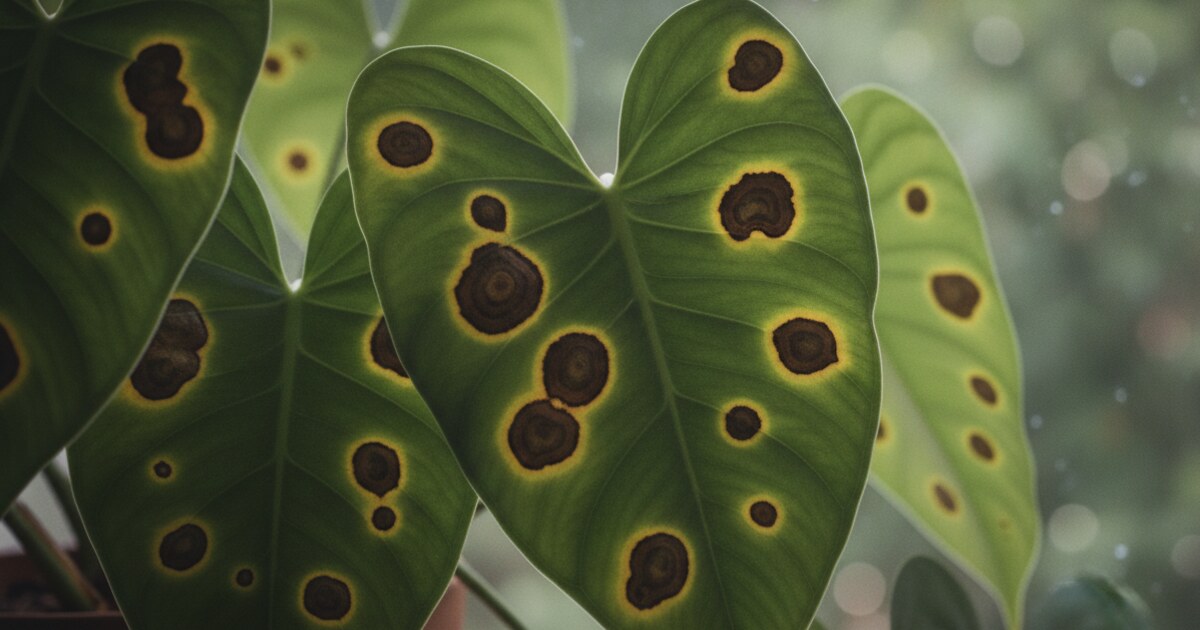
Those brown, yellow, or black dots spreading across your houseplant’s leaves are usually leaf spot disease. Finding the right leaf spot treatment for indoor plants depends on knowing which type you’re dealing with: fungal or bacterial. They look similar but respond to different remedies, and getting the diagnosis right saves you weeks of guesswork.
The good news: when caught early, most leaf spot infections clear up within 2-3 weeks of consistent treatment.
Leaf spot treatment for indoor plants starts with removing infected leaves and improving airflow. For fungal leaf spot, spray neem oil diluted to 1-2% every 7 days. For bacterial leaf spot, use a copper-based bactericide on the same schedule. Most plants recover within 2-3 weeks when you catch it early.
Fungal vs. Bacterial Leaf Spot: Know What You’re Dealing With
The two types share visual symptoms but behave differently, and treatment options don’t overlap much.
Leaf spot disease on indoor plants falls into two main categories: fungal and bacterial. Fungal leaf spot (from species like Cercospora, Alternaria, or Colletotrichum) appears as circular brown or tan spots with defined edges and a yellow halo. Fungal spores need at least 4-6 hours of continuous leaf wetness at 60-75°F (15-24°C) to germinate and infect tissue. Bacterial leaf spot (Pseudomonas or Xanthomonas species) produces water-soaked, irregular spots that look greasy when wet.
Treatment differs by type: neem oil at a 1-2% dilution every 7 days works against fungal strains, while copper-based bactericides handle bacterial infections at 7-14 day intervals. Both types respond to the same sanitation measures: removing infected leaves and improving airflow. Most plants show clean new growth within 2-3 weeks of consistent treatment. Getting the diagnosis right early is what separates a quick recovery from weeks of ineffective spraying.
Two tests help distinguish the types. If spots show a white or grayish powdery center, or smell faintly musty, you’re dealing with fungal. If they look translucent and water-soaked when the leaf is wet with no visible spores, suspect bacterial.
Both infect a wide range of common houseplants: pothos, philodendrons, peace lilies, snake plants, fiddle leaf figs, and most tropical foliage. If you can’t tell which type you have, start with neem oil. It has mild antifungal and antibacterial properties, so it’s useful while you observe.
Step-by-Step Leaf Spot Treatment for Indoor Plants
Treatment works best at the first sign of infection. Here’s the full process.
Step 1: Remove infected material. Cut off every spotted leaf using scissors sanitized with 70% isopropyl alcohol. Don’t compost the removed leaves. Seal them in a bag and throw them out. Leaving infected leaves on the soil or in the pot speeds spread significantly.
Step 2: Isolate the plant. Move it at least 3 feet from your other plants right away. Fungal spores travel through air movement and water splash; bacterial pathogens spread on tools and hands. Isolation protects your other plants while you treat.
Step 3: Let the plant dry. Skip watering for 2-3 days if the soil is already moist. Most leaf spot pathogens thrive in wet surface conditions. Getting leaves and the soil surface consistently dry cuts off one of the main ways the cycle continues.
Step 4: Apply the right treatment.
For fungal leaf spot: mix neem oil at 1-2 tablespoons per gallon of water with a few drops of dish soap as an emulsifier. Spray all leaf surfaces thoroughly, including the undersides, every 7 days for 3-4 weeks.
For bacterial leaf spot: apply a copper-based bactericide (copper octanoate or copper sulfate formulations) per label directions, typically every 7-14 days. Copper is one of the few treatments that works against bacterial pathogens on plant tissue.
Step 5: Improve airflow. Move the plant somewhere with better air circulation. A small fan running 4-6 hours per day nearby helps significantly. Still, stagnant air is how leaf spot conditions persist indoors.
Step 6: Monitor for 2-3 weeks. Spots on already-infected leaves won’t disappear. What you’re watching for is whether new leaves come in spot-free. If they do by week 3, treatment is working.
One specific type of fungal leaf spot you may recognize is Septoria, which most commonly attacks tomatoes and herbs. Our Septoria leaf spot treatment guide covers that pathogen in depth, but the core treatment approach (remove, spray, dry, repeat) applies to any fungal leaf spot.
Organic and Home Remedies for Leaf Spot
Several DIY treatments have solid track records for fungal leaf spot and work well for mild to moderate infections.
Baking soda spray: Mix 1 tablespoon baking soda, 1/2 teaspoon dish soap, and 1 gallon of water. Spray every 7-10 days. The alkaline pH disrupts fungal cell walls and stops spore germination. Works best as a preventive or early-stage treatment.
Neem oil: The most reliable organic option. Cold-pressed neem oil contains azadirachtin, which disrupts fungal cell membranes and has mild activity against some bacterial pathogens. Dilute properly: too concentrated causes leaf burn, especially in direct sunlight.
Hydrogen peroxide solution: Mix 1 tablespoon of 3% hydrogen peroxide per cup of water. Wipe affected leaves with a soft cloth. Useful for spot-treating isolated spots without spraying the whole plant.
A note on timing for all three: apply in the evening or early morning, not midday. Neem oil and baking soda can cause mild leaf stress in bright midday light. Let treated leaves dry before the lights come on or the sun moves to the plant’s position.
These remedies work well for mild to moderate cases. Severe infections with more than 30-40% of foliage affected usually need commercial-strength fungicides.
How to Stop Leaf Spot from Coming Back
Most outbreaks trace back to the same three care habits.
Overhead watering. Water landing on leaves creates the wet surface conditions fungal spores need to germinate. Water at the base of the plant with a narrow-spout can, aimed at the soil.
Crowded conditions. Plants packed closely together trap humid, still air between them. Fungal spores and bacterial splash spread easily between neighbors. Space plants at least 2-4 inches apart, more for large-leaved tropicals.
Soil debris. Dead leaves and organic debris sitting on the soil surface harbor fungal spores between watering cycles. Clear it away regularly.
Humidity also plays a role. Most leaf spot fungi and bacteria thrive above 70% relative humidity. If you’re running a humidifier near your plants, keep it below 60% RH to stay in a safer range. A cheap hygrometer from any hardware store tells you where you’re sitting.
One prevention step that gets overlooked: sanitize pots before repotting. Wash any pot that previously held a sick plant with a 10% bleach solution before reuse.
Leaf spot can also appear alongside other fungal problems. Gray mold (botrytis) thrives in the same humid, still conditions and can attack plants already weakened by a leaf spot infection. If you’re seeing both (spots on leaves and soft gray fuzz on stems or dying tissue), treat for both simultaneously.
When to Use Chemical Treatments
If organic options haven’t controlled the infection after 3 weeks, commercial fungicides are the next step.
For fungal leaf spot, products with chlorothalonil, mancozeb, or thiophanate-methyl as active ingredients are broad-spectrum options available at most garden centers. Follow label rates exactly. Overdosing doesn’t speed recovery and can burn leaf tissue.
For bacterial leaf spot, copper-based products are the most accessible option. Biological alternatives containing Bacillus subtilis (such as Serenade) work against both bacterial and fungal pathogens and are safe to use indoors around pets and people.
One thing to set realistic expectations on: chemical treatments don’t erase existing spots. The marks left by leaf spot are permanent on the tissue they damaged. What treatment does is stop the active infection. A recovering plant shows clean, spot-free new growth while old spotted leaves remain. That’s the sign you’re looking for.
Frequently Asked Questions
Can leaf spot kill my plant?
Leaf spot rarely kills healthy plants directly. When infections are severe (affecting more than half the leaf surface), the plant loses photosynthetic capacity and weakens over time. Repeated reinfections compound that damage. Treating early keeps the problem from escalating to the point where the plant can’t recover.
How long does leaf spot take to clear up?
With consistent treatment, most leaf spot infections stop spreading within 2-3 weeks. Existing spots on leaves don’t disappear. The visible sign of recovery is clean new growth coming in without spots. How long full recovery takes depends on how far the infection spread before you started treatment.
Is leaf spot contagious to other houseplants?
Yes. Both fungal and bacterial leaf spot spread through water splash, air movement, and contaminated tools. Isolate any affected plant immediately and sanitize your pruning scissors or shears with 70% isopropyl alcohol between uses.
Can I use neem oil on all my houseplants?
Neem oil is safe on most houseplants but can cause leaf burn on sensitive plants (some ferns and African violets in particular), especially when applied in direct sunlight. Test a small leaf area first and apply in the early morning or evening, not during peak light hours.
If you’re not sure whether what you’re seeing is fungal leaf spot, bacterial infection, or something else, PlantlyAI can help. Snap a photo of the affected leaves and the app identifies the disease and gives you a step-by-step treatment plan. Two free diagnoses per day, no account needed.
Not sure what's wrong? Diagnose your plant free
Upload a photo to our free plant disease identifier and get an instant diagnosis.