Gray Mold (Botrytis) on Houseplants: Treatment Guide
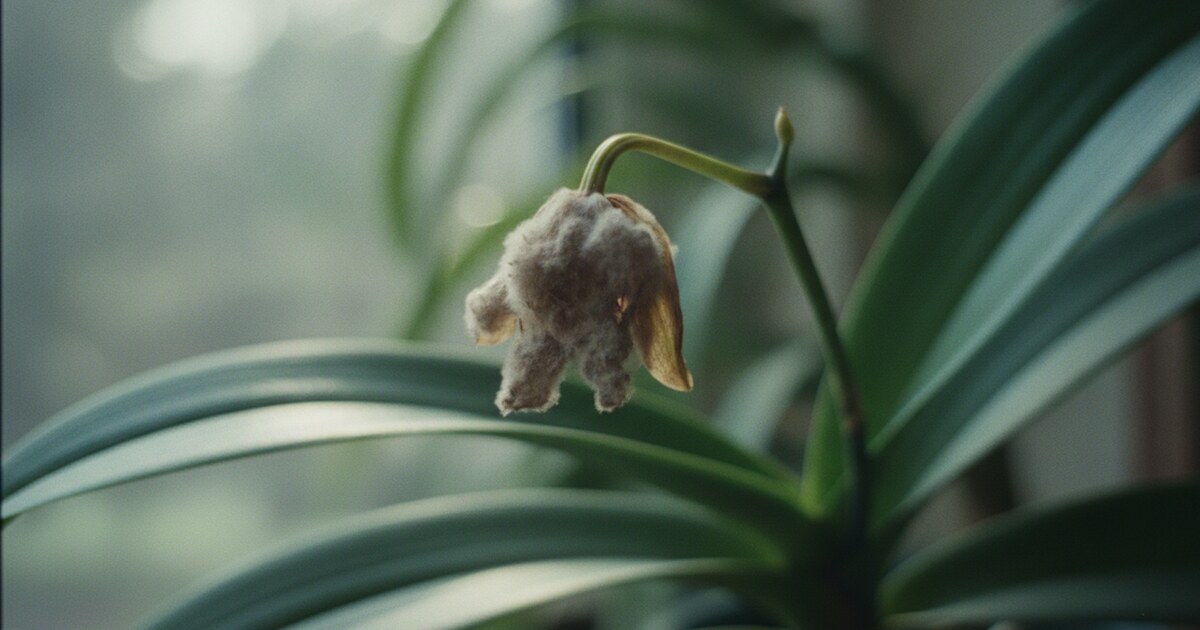
That soft gray fuzz spreading across your plant’s flowers and stems is botrytis (gray mold), a fungal disease that moves fast once it takes hold. One day you notice a fuzzy patch on a wilting orchid petal. A few days later it’s on the stem, and then on the plant next to it. Gray mold on houseplants spreads by releasing airborne spores, so a single infected plant can seed your entire windowsill in less than a week.
The good news is that gray mold botrytis on houseplants responds well to treatment when you catch it early. This guide covers how to identify it, which plants get hit hardest, and exactly what to do to clear it up.
Gray mold (botrytis) on houseplants is caused by the fungus Botrytis cinerea. It appears as gray-brown fuzzy growth on leaves, stems, and flowers, starting on dying or damaged tissue. Treat it by removing all infected parts, improving air circulation, and letting foliage dry out. Neem oil or copper-based fungicides help in moderate to severe cases.
What Gray Mold Botrytis Looks Like
Gray mold starts where a plant is already vulnerable. Dying flowers, softening stems, yellowing leaves: that’s where Botrytis cinerea moves in first.
Look for these signs:
- Gray-brown soft spots on leaves, usually on older growth first
- Fuzzy gray coating across affected tissue: this is the spore mass, looks like a dusty ash bloom
- Collapsed stems that turn brown and watery before the gray fuzz appears
- Flower petals with tan or brown patches that expand quickly
- Small black specks embedded in the gray coating; these are sclerotia, the resting structures the fungus uses to survive
If you blow gently across the gray area, you’ll often see a puff of spores lift off. That’s exactly how it spreads to neighboring plants.
Gray mold gets confused with powdery mildew, but the two diseases are quite different. Powdery mildew is white, powdery, and grows on healthy green leaf surfaces. Botrytis is gray to brown, fuzzy rather than powdery, and concentrated on dying or wounded tissue. Powdery mildew also tends to spread in warm, dry conditions; botrytis prefers cool and damp. If you’re unsure which you’re dealing with, snap a photo and run it through PlantlyAI, which can confirm the diagnosis from the image and distinguish between fungal diseases that look similar.
Why Gray Mold Botrytis Spreads So Fast Indoors
Botrytis cinerea is one of the most widespread plant pathogens in the world, known to infect over 200 plant species including tomatoes, strawberries, grapes, and a wide range of ornamental houseplants. Indoors, it thrives when three conditions overlap: temperatures between 60°F and 77°F (15°C to 25°C), relative humidity above 85%, and water sitting on leaf or petal surfaces for more than 4 hours. These conditions describe most living rooms and sunrooms in winter, when windows are closed and air circulation drops. The fungus produces two types of reproductive structures: conidia (spores) that travel on air currents and land on nearby plants within minutes, and sclerotia (hard black bodies) that can survive dormant in soil and dead plant debris for years. A single infected stem can release millions of spores in one event. Once spores land on dying or damaged tissue and moisture is present, germination takes just a few hours. That’s why one infected plant can seed an entire shelf in under a week.
Understanding those three conditions gives you the roadmap for treatment. Remove the moisture from the equation, break up the still air, and warm the room slightly, and the spread stops.
Overcrowded windowsills make things worse. Plants packed together trap humid air between their leaves and create the stagnant pocket the fungus needs. Winter is the highest-risk season for indoor gray mold outbreaks for exactly this reason.
Which Houseplants Get Botrytis Most Often
Botrytis isn’t picky, but some plants are consistently higher risk than others.
Most vulnerable:
- Orchids (especially during blooming, when spent petals fall onto the crown)
- Begonias
- African violets
- Cyclamen
- Impatiens and geraniums grown indoors
- Chrysanthemums
- Roses kept indoors
Orchids are particularly prone because their flowers carry a lot of soft petal tissue, and most people don’t remove spent blooms quickly enough. If you’re seeing brown, watery patches spreading across an orchid’s flowers or its base, check for the fuzzy gray coating underneath. The disease patterns on orchids can overlap with other issues, so the guide on black spots on orchid leaves is worth reading alongside this one.
Lower risk:
- Pothos
- Snake plants
- ZZ plants
- Succulents
Thick-leaved, drought-tolerant plants are far less vulnerable. They don’t hold moisture on their leaf surfaces the way soft, thin-leaved flowering plants do. Botrytis can still develop on them if conditions are extreme, but it’s uncommon.
How to Treat Gray Mold Botrytis on Houseplants
Work through these steps in order. Starting with fungicide before removing infected tissue wastes product and doesn’t stop the spread.
Step 1: Isolate the plant. Move it away from your other plants before touching anything else. Handling an infected plant in the middle of your collection showers neighboring plants with spores. Set it somewhere with good airflow, away from other plants, until treatment is complete.
Step 2: Remove all infected tissue. Use scissors or pruning shears wiped with 70% isopropyl alcohol. Cut back to firm, healthy tissue (no soft patches, no gray fuzz). Bag everything you remove immediately; don’t let infected trimmings fall into the pot or onto the shelf.
Step 3: Clear debris from the soil surface. Dead petals, fallen leaves, and plant matter on the soil surface are where botrytis hides and reinfects from. Pick them out and discard them.
Step 4: Let the plant dry out. Skip watering for a few days. The fungus needs moisture, so letting the soil surface and any remaining foliage dry out creates an unfavorable environment for new growth.
Step 5: Improve air circulation. Move the plant to a spot with better airflow, or set a small fan nearby on low. You don’t need a strong breeze, just enough air movement to prevent moisture from sitting on the leaves.
Step 6: Apply a fungicide for moderate or advanced infections.
Organic and low-impact options that work on botrytis:
- Neem oil spray: Mix 2 teaspoons of neem oil and 1 teaspoon of dish soap per quart of water. Coat all leaf and stem surfaces, including undersides. Repeat every 7-10 days for 3-4 weeks.
- Copper-based fungicide: One of the more effective organic options for botrytis. Apply per label instructions; typically every 7-14 days.
- Baking soda solution: 1 tablespoon per quart of water with a few drops of dish soap. Less potent than copper but useful as a follow-up maintenance spray once the infection is cleared.
For severe outbreaks covering multiple plants, a thiophanate-methyl or sulfur-based fungicide works faster. These are available at garden centers and take effect within a few days of application.
After removing infected tissue and adjusting conditions, new gray growth should stop within 3-5 days if you’ve caught it at the source. Monitor for 2-3 weeks. If new patches appear, repeat the removal and fungicide steps.
How to Stop Gray Mold from Coming Back
Prevention comes down to taking away the three things botrytis needs: moisture on tissue, cool stagnant air, and dead plant material to colonize first.
Water at the base, in the morning. Water going onto foliage that stays wet overnight is one of the most reliable ways to trigger a botrytis outbreak. Water the soil only, early in the day, so anything that splashes on foliage dries before evening.
Remove spent flowers promptly. Fading and fallen petals are botrytis’s preferred entry point. Once a flower starts to wilt, pull it off cleanly. This one habit prevents most orchid and begonia infections.
Space plants apart. Crowded plants trap humid air between them. Even a few inches of space improves air movement considerably.
Keep pot surfaces clean. Fallen leaves and dead plant matter on the soil harbor sclerotia that can reinfect the plant at any time. Clearing pot debris regularly is cheap prevention.
Ventilate in winter. Most indoor botrytis outbreaks happen between November and February. Cracking a window for 20-30 minutes daily, or running a small fan on low, cuts fungal pressure significantly. The same logic applies to sooty mold treatment and most other fungal plant diseases: healthy plants in well-ventilated spaces resist infection; stressed plants in still, humid air don’t.
If a plant has had recurring botrytis infections, check the roots and watering history. A plant sitting in consistently wet soil stays perpetually stressed and vulnerable at the crown and lower stems.
How PlantlyAI Helps With Gray Mold
Botrytis and powdery mildew look similar, and treating one for the other wastes time. PlantlyAI diagnoses plant diseases from a photo: snap a shot of the affected area and the app identifies what’s wrong, then gives you a step-by-step treatment plan with organic, biological, and chemical options.
For gray mold cases, the app gives you specific treatment steps and lets you choose your approach based on severity and what you have on hand. It also picks up on general plant health signals in the image, which matters because botrytis almost always attacks plants already weakened by poor light, overwatering, or root problems. Addressing those underlying issues is what makes treatment stick.
PlantlyAI works for houseplants, garden plants, vegetables, and crops. Two free diagnoses per day, no account needed.
Frequently Asked Questions
Can gray mold kill my houseplant?
Yes, if the infection progresses without treatment. Botrytis can collapse stems and spread to the root crown, which kills the plant. Caught early, most houseplants recover fully once infected tissue is removed and conditions improve. Plants already stressed by overwatering or low light are harder to turn around.
Does gray mold spread to other houseplants?
It does. Botrytis spreads by airborne spores, which travel from infected plants to healthy ones within minutes. Isolate any infected plant before treating it. Don’t handle infected and healthy plants back to back without washing your hands and disinfecting your tools.
Is neem oil effective against botrytis?
Neem oil works well for mild to moderate infections, applied every 7-10 days for 3-4 weeks. For severe or fast-spreading infections, copper-based fungicides or sulfur sprays are more effective. Neem is most useful as a follow-up maintenance spray after all visible infected tissue is removed.
Can botrytis survive in the soil?
Yes. The sclerotia (small black resting bodies) can survive in soil and dead plant debris for years. Clearing debris from pot surfaces, top-dressing with fresh compost after an outbreak, and replacing the soil in severely infected pots all reduce the chance of reinfection from dormant fungal material.
If you’re not certain whether your plant has gray mold or a different problem, PlantlyAI can confirm it from a single photo. Scan the affected area and get a diagnosis with a specific treatment plan, including organic options. Download PlantlyAI on iOS or Android. Two free scans per day, no account needed.
Not sure what's wrong? Diagnose your plant free
Upload a photo to our free plant disease identifier and get an instant diagnosis.