Sooty Mold Treatment: Remove Black Coating From Plant Leaves
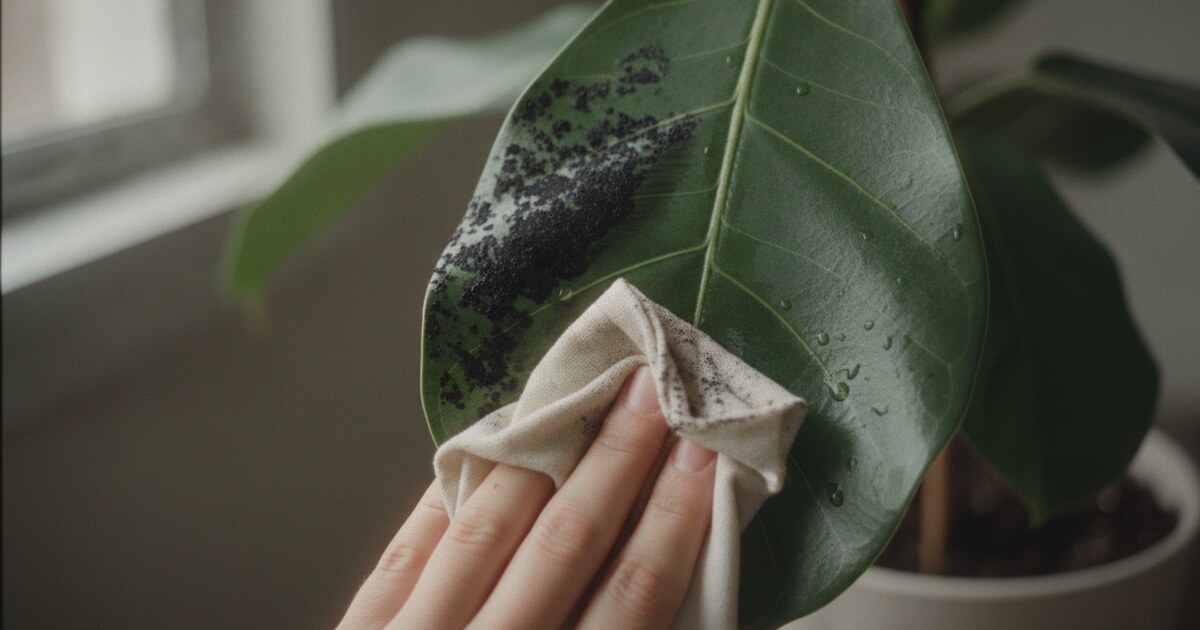
Your plant is covered in what looks like a layer of black soot — dusty, dark, coating the leaves like ash. You wipe it off and it comes back. That’s sooty mold, and the reason it keeps returning is that you haven’t dealt with the actual cause: sap-sucking insects leaving sticky honeydew on the foliage.
Sooty mold treatment requires two steps: eliminate the honeydew-producing pests (aphids, scale, mealybugs, or whiteflies) using neem oil or insecticidal soap, then clean the black coating off leaves with a 1-tablespoon-per-gallon dish soap solution. The mold can’t survive without honeydew, so fixing the pest problem stops it for good.
What Is Sooty Mold on Plants?
Sooty mold is a fungal growth that forms on honeydew, the sticky waste secreted by sap-sucking insects. The black coating is a colony of fungi from genera including Cladosporium, Capnodium, and Fumago. They’re powdery or velvety in texture and collect on leaf surfaces wherever honeydew drips.
The key point: sooty mold doesn’t infect your plant. It grows on the surface, not inside leaf tissue. But a heavy layer blocks sunlight from reaching the leaf, reducing photosynthesis and eventually causing leaf drop and slow decline.
Sooty mold fungi (most commonly from the genera Cladosporium, Capnodium, and Fumago) grow exclusively on honeydew secreted by sap-sucking insects and don’t penetrate plant tissue. A thick coating blocks 30 to 40 percent of the light a leaf can absorb, weakening the plant over time. The primary honeydew producers are aphids, mealybugs, soft scale insects, and whiteflies. Neem oil at a 2 percent dilution kills most soft-bodied insects on contact; a 1-tablespoon-per-gallon dish soap solution left on for 15 minutes softens and lifts the mold from leaf surfaces. Once the pest source is eliminated, sooty mold colonies stop growing immediately and the existing coating flakes off over 2 to 4 weeks. On heavily coated plants, washing the leaves speeds recovery by restoring the plant’s ability to photosynthesize before the residue fully clears.
Which Pest Is Causing Your Sooty Mold
Before you treat anything, figure out which insect is producing the honeydew. Different pests need different approaches.
Aphids: Small (1 to 3 mm), soft-bodied insects that cluster on new growth, stem tips, and leaf undersides. Often green, yellow, or black. They feed in groups and produce large amounts of honeydew. The mold tends to appear on leaves directly below where the aphids are feeding.
Scale insects: Brown, tan, or white bumps stuck to stems or leaves. Soft scale looks waxy; armored scale has a shell-like covering. They don’t move once they’ve settled, so they’re easy to overlook. Check sticky residue on plant leaves as an early warning sign before mold develops.
Mealybugs: White, cottony clusters in leaf joints and along stems. They move slowly and produce waxy threads along with honeydew. Common on succulents, orchids, and tropical houseplants.
Whiteflies: Tiny white insects that burst into the air when you disturb the plant. Nymphs and adults feed on leaf undersides and can coat leaves with honeydew within days. See the full treatment guide for getting rid of whiteflies on indoor plants.
Flip over a few leaves and check the stem joints closely before starting treatment. That’s where most of these insects hide.
Step-by-Step Sooty Mold Treatment
Work through these steps in order. Killing the pest first is what stops the mold from growing back.
Step 1: Kill the pest. Pick the right product based on what you found.
For aphids, mealybugs, and soft scale, mix 2 teaspoons of neem oil with 1 teaspoon of dish soap per quart of water. Coat every leaf surface, including undersides. Repeat every 7 to 10 days for 3 to 4 weeks. Neem works on contact, so full coverage matters.
For soft-bodied insects including whiteflies, use insecticidal soap: 1 tablespoon of pure liquid soap (no degreasers or moisturizers) per quart of water. Reapply weekly. The soap disrupts the insect’s protective coating on contact and doesn’t leave residue that harms most plants.
For mealybugs and scale on small infestations, dip a cotton swab in 70 percent isopropyl alcohol and wipe insects directly. It’s faster and more targeted than spraying.
For scale eggs and nymphs, horticultural oil smothers them. Apply in the cooler part of the day because horticultural oil can burn leaves in direct sun.
One treatment won’t be enough. Most pest control methods work on contact and don’t kill eggs. Multiple applications over 3 to 4 weeks are standard.
Step 2: Clean the mold off. Once you’ve started controlling the pest population, clean the visible mold off your plant. This restores photosynthesis while the remaining residue fades.
Mix 1 tablespoon of dish soap into 1 gallon of lukewarm water. Dip a soft cloth or sponge into the solution and wipe each leaf individually, top and bottom surfaces. Leave the soapy solution on for 10 to 15 minutes, then rinse with clean lukewarm water or move the plant to a sink and rinse gently.
For badly coated plants, a full rinse works better than wiping leaf by leaf. Place the pot in a bathtub, pour the soapy water over the foliage, let it sit, then rinse. Sooty mold softens quickly once wet and usually wipes away without scrubbing.
Step 3: Monitor for 4 weeks. Check the plant every few days after treatment. Look for new insects on leaf undersides and stem joints, fresh sticky residue on leaves or the shelf below, or any return of the black coating. If pests come back, restart the spray cycle. Missing one application during a pest’s egg-hatching cycle can undo weeks of progress.
Sooty Mold vs. Other Black Plant Problems
Sooty mold looks alarming, but a quick test separates it from more serious issues.
The wipe test: Dampen your finger and rub a coated area. If the black smears and lifts off on your finger, it’s sooty mold. If it’s part of the leaf tissue and won’t budge, you’re dealing with something else.
Black spot (mostly roses): Creates circular black spots with yellow halos. It penetrates leaf tissue and can’t be wiped off. Sooty mold never goes this deep.
Powdery mildew: White or gray, not black. Appears in warm, dry conditions and doesn’t need honeydew to grow. Easy to tell apart by color alone.
Black rot (orchids, mainly): Causes dark, mushy patches that spread from damaged tissue. Sooty mold stays on the surface and doesn’t cause soft or waterlogged spots.
If the black wipes off, treat for sooty mold. If it’s hard, sunken, or spreading into the tissue, look into fungal infections instead.
How to Prevent Sooty Mold Coming Back
Sooty mold needs honeydew to grow, and honeydew needs pests. Prevention is pest prevention.
Inspect new plants before bringing them indoors. Check the underside of every leaf and the joint between leaf and stem. One infested plant from a nursery can spread to your whole collection within a few weeks.
Wipe dust off leaves monthly during your regular plant care routine. Clean leaves are easier to check and give pests fewer places to hide between inspections.
Check for sticky residue on the pot, the shelf, or the floor beneath the plant. Honeydew drips down before the mold appears, so finding it early means catching the pest problem before it escalates to a full coating.
Frequently Asked Questions
Does sooty mold kill plants?
Sooty mold rarely kills plants directly. A heavy coating reduces photosynthesis, which weakens the plant and can cause leaf drop over time. The insects producing the honeydew are the bigger threat. Fix the pest problem and the plant usually recovers fully.
Can I just wipe sooty mold off without treating the pests?
You can clean the mold, but it’ll return within days if the insects are still feeding. Sooty mold treatment always starts with eliminating the pest source. Cleaning the leaves is step two, not step one.
Does sooty mold spread between plants?
The fungal spores can spread, but sooty mold won’t grow on a plant with no honeydew. Pests, however, spread easily between neighboring plants. Isolate any affected plant and check your others for early signs of infestation.
How long does sooty mold take to clear up?
After the pests are eliminated, the mold stops growing immediately. The existing coating fades and flakes off naturally over 2 to 4 weeks. Washing the leaves manually speeds this up considerably.
Is sooty mold dangerous to people or pets?
Sooty mold fungi don’t cause infections in people or pets. The mold is a problem for the plant’s ability to photosynthesize, not a health hazard for anyone in the household.
Sooty mold always points back to a pest problem. The black coating stops returning when you’ve cleared the insects producing the honeydew it grows on. Three to four weeks of consistent pest treatment followed by a soapy rinse restores most plants completely.
If you’re not sure which pest is causing the honeydew, photograph the affected leaves with PlantlyAI. The app identifies the pest from a photo and gives you a step-by-step treatment plan, so you’re using the right product from the start. Two free diagnoses per day, no account required.
Not sure what's wrong? Diagnose your plant free
Upload a photo to our free plant disease identifier and get an instant diagnosis.