Sticky Residue on Plant Leaves: Causes and How to Fix It
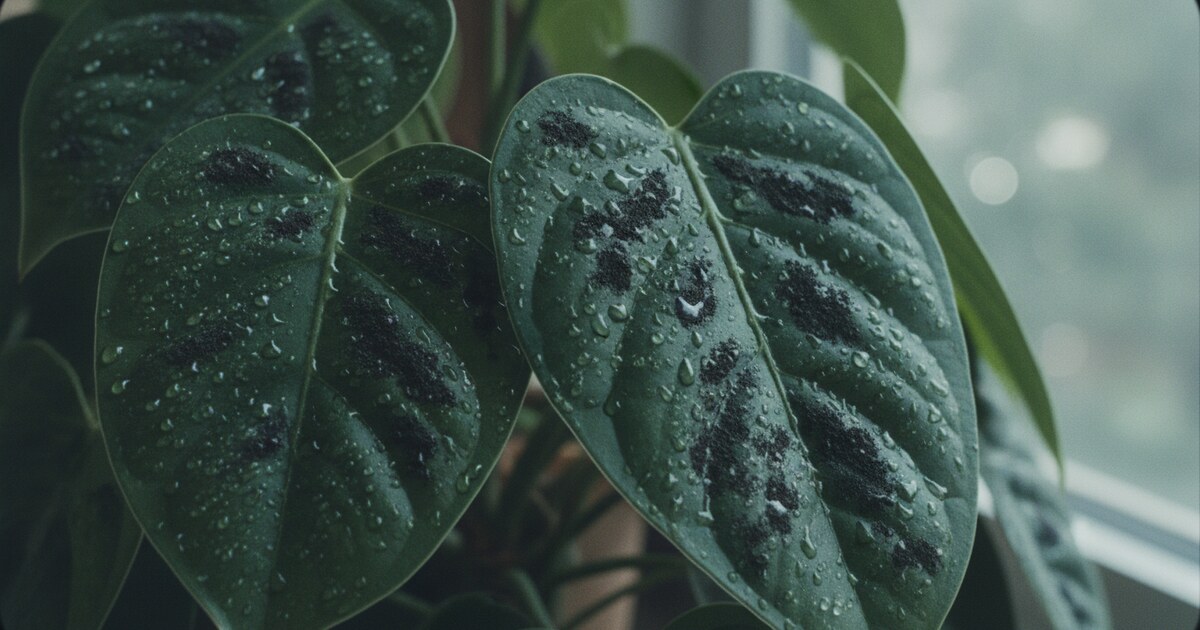
You reach for your pothos to move it and your fingers come away sticky. Or you notice the leaves on your hibiscus have a shiny, tacky film that wasn’t there last week. Maybe there’s even a black, powdery coating starting to spread across the surface.
Sticky residue on plant leaves sounds mysterious, but it almost always points to one thing: a pest infestation. Once you know what you’re looking for, it’s one of the easier houseplant problems to diagnose and fix. This guide covers every likely cause, how to tell which pest is responsible, and how to clear the problem for good.
Quick answer: Sticky residue on plant leaves is almost always honeydew, a sugary waste secreted by sap-sucking insects like aphids, scale insects, mealybugs, and whiteflies. If the residue has turned black and powdery, that’s sooty mold colonizing the honeydew. To fix it, identify the pest responsible, treat the infestation, and wash the leaves clean.
What Causes Sticky Residue on Plant Leaves
Sap-sucking insects pierce plant tissue and extract phloem sap, which is rich in dissolved sugars. They absorb the amino acids and proteins they need, then excrete the excess sugar as a clear, sticky liquid called honeydew. A small aphid colony can coat a plant’s new growth in honeydew within 48-72 hours of establishing itself. The droplets fall to lower leaves and pool on surfaces below the pot. Within one to two weeks in warm indoor conditions, sooty mold fungi (primarily Capnodium species) colonize the honeydew and form a black, powdery crust. The mold itself doesn’t infect plant tissue; it grows on the surface and blocks sunlight, slowing photosynthesis. The pest underneath is what’s actually damaging your plant. Four insects account for the vast majority of sticky residue cases: aphids, scale insects, mealybugs, and whiteflies. All four feed on phloem sap, all four produce honeydew, and all four require consistent treatment before the stickiness clears.
Occasionally sticky residue has a non-pest explanation. Some plants (figs, euphorbias, rubber plants) exude milky or sticky sap when a stem is cut or damaged. Condensation from high humidity can leave a slight film on large tropical leaves. But if the stickiness is spreading or getting worse, pests are almost certainly behind it.
How to Tell Which Pest Is Responsible
Identifying the insect before you treat saves time and gets better results. The four main culprits look quite different from each other.
Aphids are 1-3mm long, pear-shaped, and come in green, black, yellow, or pink depending on species and host plant. They cluster at new growth tips and under leaves. Heavy infestations are visible without magnification. Leaves near an aphid colony often curl or cup inward from the feeding damage.
Scale insects look nothing like typical bugs. They appear as small (2-5mm) brown, tan, or gray bumps fixed to stems and leaf undersides. They don’t move when you touch them. Soft scale leaves a smear when pressed; armored scale pops off like a tiny shell. Their waxy protective coating makes them significantly more resistant to contact sprays than aphids or mealybugs.
Mealybugs are white or pale yellow and covered in a cottony, waxy coating. They tuck into leaf axils (where the leaf meets the stem), along the midrib, and at soil level near the root crown. A heavy infestation looks like small tufts of cotton wool scattered across every stem node and leaf joint.
Whiteflies are easiest to catch in action: brush the foliage gently and a cloud of tiny white insects scatters. They favor leaf undersides and lay eggs there in small circular clusters. Leaves near a whitefly colony often show yellow stippling from feeding damage.
If you see sticky residue but can’t locate any insects, inspect more carefully with a magnifying lens. Look under every leaf and inside every leaf axil. Many pests are tiny and hide well in early infestations.
How to Clean Sticky Residue Off Leaves
Clean the leaves before or alongside pest treatment. Removing the honeydew and sooty mold eliminates the food source for the mold and lets any sprays reach the insects directly rather than hitting a sticky barrier.
- Move the plant to a sink, bathtub, or outdoors.
- Mix a few drops of mild dish soap into lukewarm water.
- Wipe each leaf with a soft cloth dampened in the solution, covering both sides.
- For sooty mold, let the soapy water sit on the leaf for 30 seconds before wiping. The mold softens and comes off cleanly.
- Rinse with plain water and let the plant dry away from direct sun before moving it back.
For large-leaved plants like peace lily, monstera, or fiddle leaf fig, a soft sponge covers more surface faster than a cloth. For plants with dozens of small leaves, a gentle shower from a handheld nozzle is quicker than wiping each leaf individually.
How to Treat Sticky Residue on Plants (By Pest)
Cleaning the leaves removes the symptom. Treating the pest removes the source.
For aphids: A strong blast of water from a hose or spray nozzle knocks most aphids off the plant immediately. Follow with insecticidal soap spray (1-2 teaspoons per quart of water), covering the undersides of leaves thoroughly. Repeat every 3-4 days for two weeks. Aphid populations rebound quickly from any survivors, so the follow-up sprays matter as much as the first one.
For scale insects: Start with a cotton swab dipped in 70% isopropyl alcohol, pressing it directly onto each bump. The alcohol dissolves the waxy protective shell on contact and kills the insect inside. Follow with a full neem oil spray (2 tablespoons neem oil plus 1 teaspoon dish soap per gallon of water), applied in the evening to avoid leaf scorch. Repeat every 7-10 days for 3-4 applications. Scale is among the harder houseplant pests to fully clear; the wax coating gives it significant protection against sprays, so the manual alcohol step is not optional. For a step-by-step example of this approach, the scale on ficus tree guide covers the same two-step method in detail.
For mealybugs: Apply 70% isopropyl alcohol to each visible cluster using a cotton swab, then follow with a diluted neem oil spray across the whole plant. Check the root zone too. Mealybugs often retreat underground when treated above soil and reinfest the plant within weeks from below. Mealybugs on succulents follow the same treatment logic: 7-10 day repeat schedule, at least four applications to break the egg cycle.
For whiteflies: Place yellow sticky traps just above the plant canopy to catch flying adults, and spray insecticidal soap directly onto leaf undersides where nymphs feed. The combination disrupts both the mobile adults and the immobile feeding stages. Whitefly pupae are more spray-resistant than nymphs, so consistent treatment over 3-4 weeks is necessary.
One rule applies across all four pests: stopping treatment when visible insects disappear almost always leads to reinfestation. Eggs survive the first few applications. Keep the repeat schedule going for the full recommended period to intercept the next generation before it matures and starts producing honeydew again.
Preventing Sticky Residue in the Future
Most indoor sticky residue problems start with a new plant brought home from a nursery or a garden plant moved inside for winter.
Quarantine new plants for 2-3 weeks before placing them near your existing collection. This single habit prevents the majority of houseplant pest introductions. Crawlers and eggs on a store-bought plant can spread to neighboring pots within a few days of contact.
Inspect leaf undersides weekly. Pests start there, before becoming visible from above. Catching an aphid colony at 10 individuals takes a cotton swab and 5 minutes. Finding it at 1,000 takes weeks of treatment.
Ease up on nitrogen fertilizer. High-nitrogen feeding pushes out soft, fast-growing tissue that aphids and mealybugs feed on more aggressively than firm, slower-grown tissue. Feed at the recommended rate rather than more.
Improve air circulation. A small fan running a few hours daily discourages several sap-sucking species that thrive in still, warm conditions. It also helps soil dry faster between waterings, which benefits overall root health.
Check plants before bringing them in from outdoors. Garden plants overwintered inside frequently carry aphids, whiteflies, or scale that weren’t noticeable in full summer sun.
When the Pest Is Hard to Identify
Sometimes the insect is too small to make out clearly, well-hidden, or genuinely hard to distinguish from another species by eye. Treating for the wrong pest wastes time and doesn’t clear the stickiness.
A photo-based diagnosis gets you to the right answer faster. PlantlyAI identifies the specific pest from a clear photo of the affected leaves or the insects themselves, then gives a step-by-step treatment plan with organic, biological, and chemical options. The app covers houseplants, vegetables, garden plants, and crops. For anyone dealing with pest damage and sticky residue across a garden or indoor collection, getting a confirmed ID before treating is faster than guessing and retreating.
Try it free at 2 diagnoses per day with no account required. Download on iOS or Android and photograph the sticky leaves before you treat.
Frequently Asked Questions
Why is my plant sticky but I can’t see any bugs? The pests are there but hiding. Aphids, mealybugs, and scale commonly settle into leaf axils, along stem undersides, or at soil level — spots that are easy to miss on a quick look. Inspect every leaf joint and the underside of leaves with a magnifying lens. Early infestations can have just a handful of insects that are already producing enough honeydew to make leaves feel tacky.
Is sticky residue on plant leaves dangerous? The stickiness itself doesn’t directly harm the plant, but the pest causing it does. Sap-sucking insects weaken the plant continuously by draining nutrients, leading to stunted growth, leaf drop, and potentially plant death in severe cases. Sooty mold adds further stress by blocking sunlight. Treat as soon as you notice the problem rather than waiting to see if it spreads.
Can sticky residue spread to other plants nearby? The stickiness itself doesn’t move, but the pests causing it do. Aphids fly between plants; mealybugs and scale hitchhike on hands, tools, and shared drip trays. Isolate any plant showing sticky residue as soon as you spot it, and inspect every neighboring plant before assuming they’re clean.
Will the stickiness go away on its own? Sooty mold will dry and eventually flake off once the pest is eliminated and the honeydew food source dries up, but this takes weeks. Wiping the leaves clean and clearing the infestation is faster and ensures the mold doesn’t return. Leaving it to resolve on its own while the pest continues feeding slows the plant’s recovery.
What does black sticky stuff on plant leaves mean? Black sticky residue is sooty mold, a fungus that grows on dried honeydew deposits. It looks alarming but the mold doesn’t attack plant cells directly; it coats the leaf surface and blocks light. Wipe it off with soapy water, identify and treat the underlying pest, and the mold won’t come back once the honeydew stops.
Not sure what's wrong? Diagnose your plant free
Upload a photo to our free plant disease identifier and get an instant diagnosis.