Mealybugs on Succulents: Signs, Treatment & Prevention
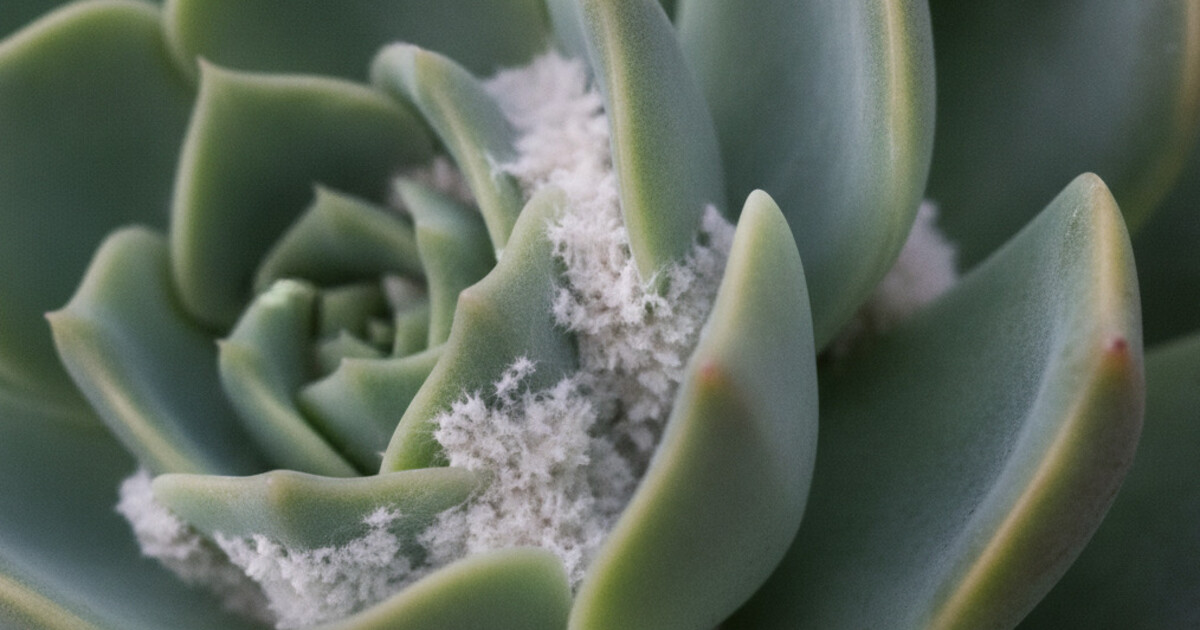
Your echeveria looked fine last week. Now there’s white, fluffy fuzz packed into every leaf crevice, and the newest growth is starting to look wan and slightly shriveled. That’s a mealybug infestation, and it moves faster than most people expect.
Mealybugs are one of the most common pests on succulents. They pierce leaf tissue to drain sap, and their waxy, cottony clusters make them easy to miss until the colony is well established. A small infestation caught in week one is a 20-minute job with a cotton swab. A large one left for a month is a multi-week treatment cycle that may not save the plant. This guide covers exactly what to look for, how to treat it effectively, and what to do differently so it doesn’t come back.
Quick answer: Mealybugs on succulents appear as white, cottony clusters tucked into leaf joints and stem bases. They drain sap and leave behind sticky honeydew that leads to mold. Treat by removing visible insects with a cotton swab dipped in 70% isopropyl alcohol, then spray the whole plant with a 50/50 alcohol-water mix or neem oil. Repeat every 7-10 days for 4-6 weeks to break the egg cycle.
What Mealybugs on Succulents Look Like
The clearest sign is white, waxy or fluffy-looking clusters concentrated in the joints where leaves meet the stem. On compact rosette varieties like Echeveria, Haworthia, or Sempervivum, the bugs nestle deep between leaf layers where they’re easy to miss at a glance.
Mealybugs belong to the family Pseudococcidae, with the citrus mealybug (Planococcus citri) and the longtailed mealybug (Pseudococcus longispinus) the two species most commonly found on houseplant succulents. Female mealybugs lay 100-200 eggs in cottony wax sacs over 2-3 weeks; those eggs hatch into mobile crawlers within 6-14 days depending on temperature. At 77°F (25°C), the full egg-to-adult cycle runs about 6 weeks; in cooler rooms below 60°F (15°C), development slows significantly. Succulents are especially vulnerable because their compact, overlapping leaf rosettes create sheltered microhabitats where mealybugs hide from predators and treatment sprays alike. Dense rosette varieties like Echeveria and Graptopetalum are the hardest to treat fully; thorough sprays still miss insects lodged 3-4 leaf layers deep. Over-fertilizing with nitrogen-heavy fertilizers produces soft, water-rich tissue that mealybugs feed on more aggressively than tissue from a plant on a lean feeding schedule.
Other signs to watch for alongside the white clusters:
- Sticky residue on leaves or below the pot: This is honeydew, the sugary waste mealybugs excrete.
- Sooty mold: A dark gray or black coating that forms on dried honeydew, dulling leaf surfaces.
- Yellowing or wrinkled leaves: The plant is losing sap faster than it can replace it.
- White powdery patches at soil level: This can point to root mealybugs, a separate problem the clusters above won’t reveal.
- Ants clustering on the plant: Ants farm mealybugs for honeydew and drive off predatory insects that would otherwise control the population.
Root mealybugs deserve a specific note. They colonize the root zone and stay invisible until you unpot the plant. If a succulent is declining steadily without obvious pests on the leaves, check the roots before assuming it’s a watering or soil problem.
Why Succulents Are Especially Vulnerable to Mealybugs
Most succulents are genuinely tough against drought. Against a mealybug colony that’s found a warm corner with reliable sap, they don’t have much defense.
A few things stack against them. The architecture comes first: rosette-forming types create tightly packed leaf canopies that give mealybugs covered real estate at every joint. Warm, dry indoor air (typically 68-78°F) sits squarely in the mealybug’s preferred temperature range, and indoor succulents don’t get the ladybugs, lacewings, or parasitic wasps that keep outdoor populations in check. Over-fertilizing with nitrogen compounds the problem by pushing out the soft, high-sugar sap mealybugs prefer.
New plant introductions are the most common entry point. A freshly purchased succulent from a garden center or nursery can carry crawlers or eggs that spread to neighboring pots within days. Quarantine every new plant for 2-3 weeks before placing it near the rest of your collection. That single habit prevents most infestations before they start.
How to Get Rid of Mealybugs on Succulents
Work through these steps in order. Jumping straight to sprays without the manual removal phase rarely clears an infestation; the cottony wax clusters protect the insects underneath from contact treatment.
Step 1: Isolate the plant. Move it away from everything else immediately. Mealybug crawlers spread on their own, and an infested plant touching others will seed new colonies.
Step 2: Remove visible mealybugs manually. Dip a cotton swab in 70% isopropyl alcohol and press it directly onto each white cluster. The alcohol dissolves the waxy coating and kills on contact. Work through every joint, stem node, and leaf crevice you can reach. For deep rosettes, a soft toothbrush dipped in the same alcohol lets you scrub crevices the swab won’t fit into.
Step 3: Spray the whole plant. Mix a 50/50 solution of 70% isopropyl alcohol and water in a spray bottle. Spray every leaf surface, stem, and the top layer of soil. Get it into the leaf joints. Test one small area and wait 48 hours before full treatment if you haven’t done this before; most succulents handle it fine, but a handful of thin-leaved types show slight bleaching.
Step 4: Follow with neem oil. Neem oil coats surviving eggs and crawlers with a film that blocks their breathing and disrupts feeding behavior. Mix 1 teaspoon neem oil with 1 teaspoon mild dish soap in 1 quart of water and spray the whole plant in the evening to avoid leaf scorch. Neem works slower than alcohol but provides residual protection that the alcohol spray doesn’t.
Step 5: Repeat every 7-10 days for at least 4 weeks. This step is where most people give up too early. A single treatment kills adults and many crawlers but doesn’t touch eggs sealed inside the wax sacs. The 7-10 day interval catches the next generation of crawlers before they reach reproductive maturity. Four weeks covers the full cycle.
For severe infestations: Systemic insecticides with imidacloprid get absorbed into plant tissue; mealybugs ingesting sap take in the pesticide. Apply as a soil drench per label directions. Don’t use on succulents you’re growing as food crops.
For root mealybugs: Unpot the plant and rinse all soil from the roots under running water. Soak the roots in a 70% isopropyl alcohol solution for 2-3 minutes. Repot into fresh, sterile succulent mix. Discard plastic pots; scrub ceramic or terracotta pots with diluted bleach before reusing.
Treating a Full Succulent Collection
If one plant is infested, treat every plant it was touching as suspect. Inspect them all within the same week.
Work systematically: inspect one plant, treat it, move it to a clean surface, then proceed to the next. Wipe down the shelf or sill where they were sitting — mealybug crawlers survive on surfaces for a short period and can reinfect a plant you just cleared.
For a large collection, spraying neem oil across the whole group on the same day is more practical than cotton-swabbing every plant individually. Use the swab method first on plants with visible heavy infestations, then blanket-spray the group.
The repeat-cycle principle applies to other pests on dense plants too. Orchids face a similar challenge because their crowns trap insects deep in the pseudobulb base. For a closer look at how mealybugs on orchids compare in treatment approach, the 7-10 day repeat schedule holds in both cases.
Preventing Mealybugs From Coming Back
Clearing an active infestation is the hard part. Keeping it clear is mostly about inspection habits.
Quarantine all new plants. Two to three weeks in a room separate from the main collection. This one habit prevents the majority of infestations.
Inspect every 2 weeks. Look into the joints, flip leaves over, check the stem base near the soil. Catching 5 mealybugs with a cotton swab is 10 minutes of work. Catching 500 is weeks of treatment.
Ease up on nitrogen fertilizer. A balanced, low-nitrogen fertilizer applied monthly during the growing season produces firmer tissue that’s less attractive to soft-piercing insects. Fertilizing more often pushes out exactly the soft growth mealybugs prefer.
Improve air circulation. A small fan running a few hours a day disrupts the warm, still conditions mealybugs thrive in. It also helps soil dry faster, which keeps the root zone healthier overall.
Run preventive neem oil monthly in spring and summer. A light monthly spray across all succulents during the peak pest season cuts establishment risk significantly. Spider mites respond to the same preventive schedule; the neem coating makes the plant inhospitable to both. For how that same approach works on other plants in your collection, the method for spider mites on monstera follows identical timing logic.
How PlantlyAI Helps Diagnose the Problem
One frustrating thing about early mealybug damage is that the symptoms overlap with several other issues. Yellowing leaves, slight leaf shriveling, and slowed growth also show up with overwatering, underwatering, and nutrient deficiency. Treating for the wrong cause wastes time and stresses the plant further.
PlantlyAI diagnoses the problem from a single photo. Snap a clear shot of the affected area and the app identifies whether you’re looking at mealybugs, scale insects, root rot, or a watering issue. It also returns a step-by-step treatment plan with organic, biological, and chemical options, so you know whether a cotton swab and isopropyl alcohol handles it or whether you need a systemic product.
The app covers succulents, orchids, vegetables, houseplants, and garden crops. You get 2 free diagnoses per day with no account required. If your succulent is showing signs of distress and you’re not certain what’s behind it, photograph the affected area in PlantlyAI on iOS or Android and get a clear answer before you treat.
Frequently Asked Questions
Can mealybugs kill a succulent? A severe infestation can kill a succulent, especially smaller or already-stressed plants. Mealybugs drain sap continuously, causing the leaves to yellow, wrinkle, and die back. Catching the infestation early and treating consistently gives most plants a full recovery. A plant that’s been infested for several months without treatment is harder to save, but removing the bugs, cutting off the most damaged growth, and repotting in fresh soil gives it the best chance.
Does isopropyl alcohol kill mealybug eggs? Isopropyl alcohol at 70% kills adult mealybugs and crawlers on contact by dissolving their waxy coating. It’s less effective against eggs still sealed inside the cottony wax sac. This is why the 7-10 day repeat treatment is essential: each application catches the crawlers that hatched since the last one, before they mature and reproduce.
Can mealybugs live in succulent soil? Yes. Root mealybugs colonize the root zone and are invisible from above. They often go unnoticed until the plant shows significant decline without obvious surface pests. If your succulent is struggling but the leaves look clean, unpot it and check the roots for white cottony clusters and fine wax threads in the soil.
How do I tell mealybugs from powdery mildew on succulents? Mealybugs form distinct, concentrated clusters in leaf joints and stem crevices, and you can see the insects themselves if you look closely. Powdery mildew spreads as a diffuse, chalky coating across broad leaf surfaces. Mealybugs also produce honeydew (sticky residue); mildew doesn’t. If the white material is clumped rather than smeared, it’s almost certainly mealybugs.
Will mealybugs spread to other succulents nearby? Yes, quickly. Crawlers move under their own power, and an infested plant sitting next to healthy pots will seed new colonies within days. Isolate the infested plant the same day you spot the infestation and inspect every neighboring plant before assuming they’re clean.
If you’re seeing signs of pest damage on your succulents and want a confirmed diagnosis before treating, photograph the affected area in PlantlyAI. Free to start on iOS and Android, with a step-by-step treatment plan for whatever it finds.
Not sure what's wrong? Diagnose your plant free
Upload a photo to our free plant disease identifier and get an instant diagnosis.