How to Save a Dying Calathea (Step-by-Step)
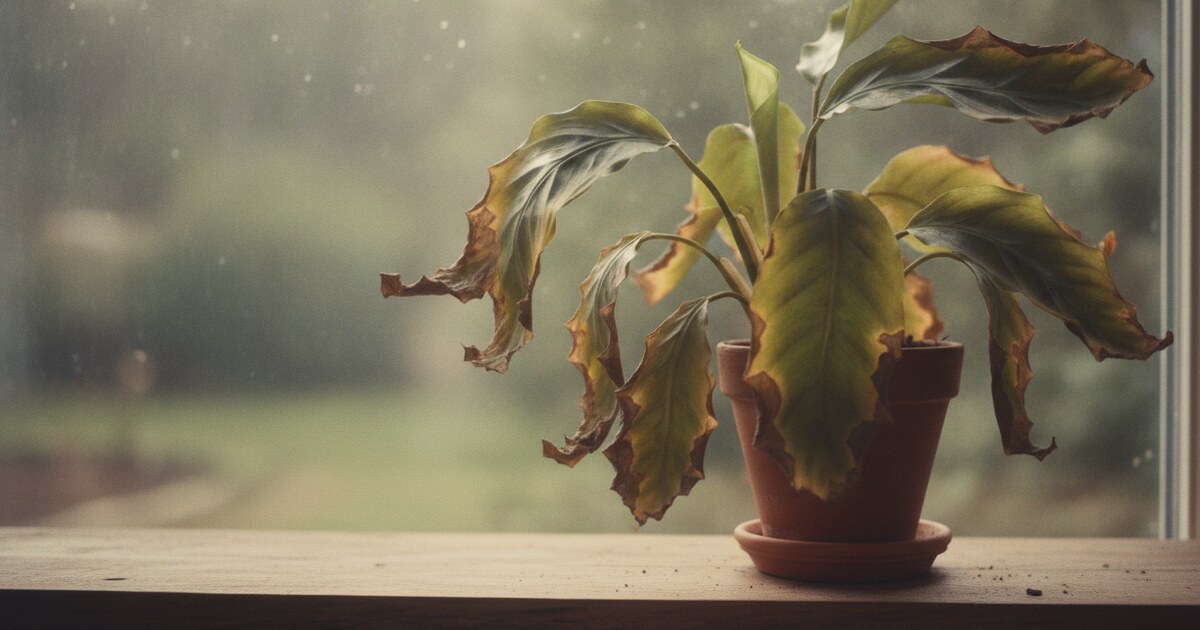
Calatheas have a reputation for drama. One week the patterned leaves look glossy and perfect; the next, they’re drooping, yellowing at the edges, or crisping up at the tips for no obvious reason. When the decline looks severe enough, it’s easy to assume the plant is simply too finicky to keep alive indoors.
Most dying calatheas aren’t that far gone. This guide walks through how to save a dying calathea: which causes are most likely, how to identify yours before treating, and the exact steps to pull the plant back from the edge.
A dying calathea is almost always struggling with one of five problems: overwatering and root rot, low humidity, fluoride or mineral buildup from tap water, light that’s too bright or too dim, or temperature stress. Check the symptoms against the causes before treating. Fixing the wrong thing won’t help, and repotting a plant that just needs filtered water wastes time.
Why Calatheas Are So Easy to Kill
Calathea (family Marantaceae, genus now classified as Goeppertia after a 2012 botanical revision) is native to the tropical rainforests of Central and South America, with most species originating in Brazil. In their natural habitat, calatheas grow as understory plants on the humid forest floor, where ambient humidity stays between 70 and 90%, temperatures range from 65 to 85°F (18 to 29°C) year-round, and light arrives as filtered, indirect dapple through the canopy above. As houseplants, they fail most often because standard home conditions fall short of those requirements: average indoor humidity runs 30 to 50%, well below the 60% minimum calatheas need. Most tap water contains fluoride and chloramine that accumulate in the leaves over time, showing up as brown, crispy leaf tips that owners typically blame on underwatering. Calatheas also move their leaves using a process called nyctinasty, folding upward at night and reopening in the morning; this movement stops when the plant is under significant stress, serving as an early warning sign before visible damage appears.
Overwatering and root rot. The most common cause of a severely declining calathea. Calatheas prefer soil that stays evenly moist but never waterlogged. When they sit in soggy soil for more than a few days, root rot sets in fast. Rotted roots can’t deliver water or nutrients to the leaves, so a plant drowning at the roots will actually look and feel thirsty above ground: leaves drooping, stems going limp, and yellowing spreading from the base.
Low humidity. Crispy brown edges along the leaf margins (not just the tips) almost always point to air that’s too dry. Calatheas can tolerate lower humidity short-term, but the leaf edges pay the price within days of exposure to dry indoor air or heating vents.
Water quality. Papery brown leaf tips that spread slowly over weeks are a classic fluoride and mineral toxicity symptom. Calatheas absorb fluoride through their roots and store it in leaf tissue until the edges burn. Most municipal tap water is the culprit.
Inadequate light. Too little light slows growth, causes washed-out patterns, and makes the plant vulnerable to overwatering because soil stays wet longer. Too much direct sun bleaches the ornamental patterns and scorches the leaves within a few hours.
Temperature stress. Calatheas dislike cold drafts, air conditioning vents blowing directly on them, and anything below 55°F. Chilled leaves droop, turn yellow, and sometimes develop dark patches along the edges.
How to Save a Dying Calathea: Step-by-Step
Step 1: Diagnose before you treat.
Look at the plant carefully before doing anything. Mushy, yellow leaves with wet soil points to overwatering. Crispy brown edges with dry soil suggests humidity problems or water quality. Faded, bleached patterns typically indicate too much direct light. General wilting with bone-dry soil means underwatering. Narrowing down the cause before acting saves the plant from unnecessary stress.
Step 2: Switch to filtered or distilled water.
Even if water quality isn’t your main problem right now, start using filtered, distilled, or collected rainwater from this point forward. Tap water fluoride is a slow-acting issue that becomes a serious one over months. If you can’t avoid tap water, letting it sit uncovered in a container overnight allows some chlorine to dissipate, though fluoride doesn’t evaporate.
Step 3: Let the soil dry down, then check the roots.
If the soil is wet, stop watering entirely. Wait until the top 1 to 2 inches feel dry before watering again. If the plant still looks terrible after the soil has dried out, unpot it. Healthy calathea roots are firm and range from white to light tan. Rotted roots are brown or black, soft, and often smell faintly sour. Trim any rotted roots back to firm tissue using scissors wiped clean with rubbing alcohol, then set the roots aside to air-dry for an hour before repotting.
Step 4: Boost humidity to 60% or higher.
Move the plant to a bathroom or kitchen if natural light allows it. Run a small humidifier nearby. A pebble tray, which is a shallow tray filled with water and smooth stones with the pot resting on top (not submerged), raises local humidity around the plant by 10 to 15%. Grouping calatheas with other houseplants adds a small humidity boost from combined transpiration. The goal is 60% or higher.
Step 5: Adjust the light position.
Calatheas thrive with bright, indirect light, the kind you’d find 2 to 4 feet from an east or north-facing window. Direct afternoon sun, especially from south or west windows, will scorch the patterns and bleach the color within days. If you’re growing under artificial light, a full-spectrum LED at 12 to 18 inches for 12 to 14 hours a day works well for most varieties.
Step 6: Stabilize the temperature.
Move the plant away from air conditioning vents, radiators, and drafty windows. The sweet spot is 65 to 80°F. Temperatures below 55°F for even a few hours cause cold stress symptoms that look similar to overwatering: drooping leaves, dark edge patches, general limpness. Once the temperature stabilizes, the plant usually responds within a week.
Step 7: Repot if root rot was found.
If you trimmed significant root rot in Step 3, repot into a pot one size smaller using fresh potting mix. A smaller container is harder to overwater because soil dries out faster. A good calathea mix is two parts standard potting soil, one part perlite, and a small handful of orchid bark; that combination holds some moisture while draining freely. Always use a pot with drainage holes.
How to Tell If Your Calathea Can Still Be Saved
Not every calathea bounces back, but the signs for and against recovery are fairly clear.
Signs it can recover:
- The main stem and crown feel firm when pressed gently
- At least some roots are still white and firm after unpotting
- New growth, even just a tiny furled leaf at the center, is visible
- Some leaves are still healthy even if others are badly damaged
Signs recovery is unlikely:
- The main stem is completely soft and dark from the base upward
- All roots crumble or dissolve when touched
- The crown smells of rot and no growing point is visible
Even one firm rhizome surviving in the root mass can regrow into a new plant. Calatheas are surprisingly resilient when even a small portion of healthy tissue remains. Keep the rescued rhizome barely moist in bright indirect light and new growth often appears within 2 to 4 weeks.
If your main symptom is leaves curling rather than general decline, the calathea leaves curling guide covers the specific humidity, light, and watering fixes for that issue. And if you’re unsure whether overwatering or underwatering caused the problem, the overwatered vs underwatered plant guide lays out the visual differences side by side.
How PlantlyAI Helps When You Can’t Tell What’s Wrong
When multiple symptoms overlap (yellowing plus drooping plus brown tips, all at once), it’s genuinely hard to know which problem to fix first. Getting that wrong means treating root rot when the real cause is fluoride toxicity, or boosting humidity when the plant is actually drowning.
PlantlyAI lets you photograph the struggling plant and get an AI diagnosis in seconds. The app identifies diseases, pests, and environmental problems from the photo, then gives a step-by-step treatment plan with organic, biological, or chemical options. Two free diagnoses a day, no account needed. It takes the guesswork out of the triage step that’s hardest to get right on a calathea.
Frequently Asked Questions
Why are my calathea leaves curling and turning brown at the edges?
Curling paired with brown edges almost always points to low humidity or mineral buildup from tap water. Air below 50% humidity causes leaf edges to dry and curl inward as the plant tries to conserve moisture. Switch to filtered or distilled water, run a humidifier to reach 60% humidity, and move the plant away from any heating or cooling vents.
Can a calathea survive with no leaves?
Yes, if the rhizomes are still firm. Cut away any rotted material, let the rhizomes air-dry for a few hours, and repot in fresh lightly moist soil. New growth usually emerges from a healthy rhizome within 2 to 4 weeks, given bright indirect light and consistent humidity.
How often should I water a dying calathea?
Stop watering entirely until the top 1 to 2 inches of soil feel dry. Once the plant stabilizes, water every 7 to 10 days in warm months and every 14 to 21 days in winter using filtered or distilled water. Always check soil moisture before watering rather than following a fixed calendar schedule.
Why does my calathea keep dying no matter what I try?
The most common hidden culprit is tap water. Fluoride accumulates in the root zone over months before visible symptoms develop. Switch to filtered or distilled water, flush the soil through with it a few times to clear mineral buildup, and prune damaged leaves. Most calatheas stabilize within 4 to 6 weeks.
Do calatheas come back after dying back completely?
Often yes. Calatheas can die back entirely to the rhizome and regrow from it. If you find at least one firm, pale rhizome in the root mass, the plant can regenerate. Give it warm temperatures above 65°F, 60% or higher humidity, and careful watering, and new shoots usually appear within a few weeks.
Not sure what's wrong? Diagnose your plant free
Upload a photo to our free plant disease identifier and get an instant diagnosis.