How to Save an Overwatered Succulent (Step-by-Step)
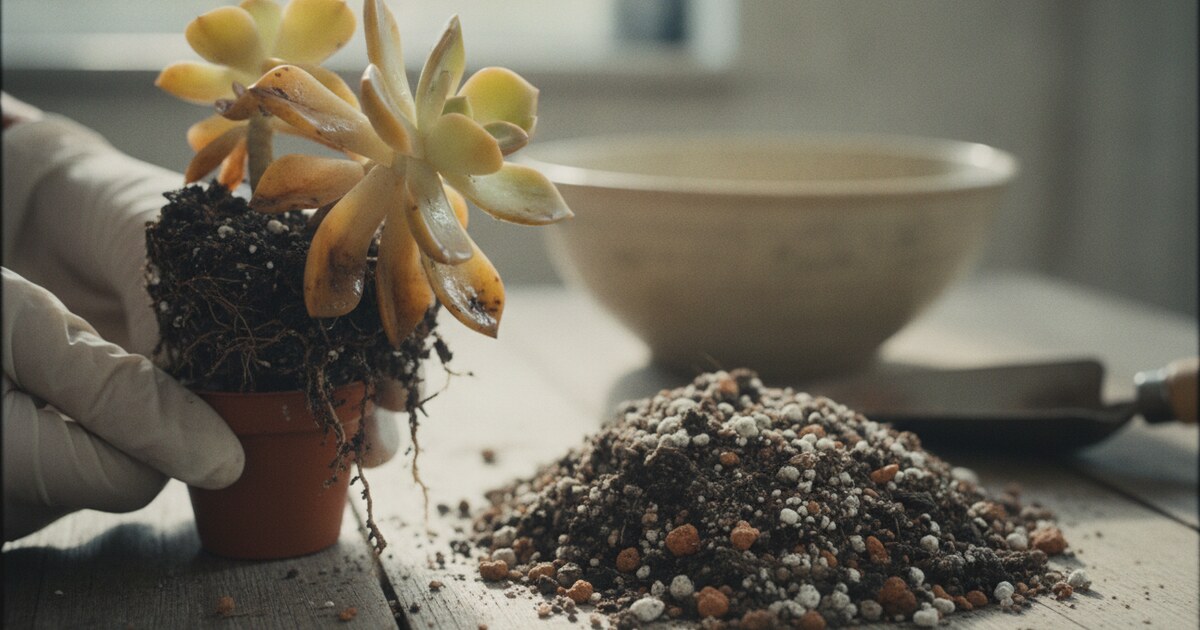
Succulents look nearly indestructible, which makes overwatering so sneaky. Most people assume more water means more care, but for a plant that evolved to survive months without rain, too much water is the fastest way to kill it. Overwatering is the leading cause of succulent death indoors, showing up as yellowing leaves, mushy stems, and eventually a plant that collapses from the roots up. If your succulent looks soft, soggy, or off-color, you’ve probably overwatered it. The good news: you can save an overwatered succulent if you catch it early enough.
An overwatered succulent can be saved by stopping watering immediately, removing the plant from its pot, trimming any rotted roots, and repotting in fresh dry cactus mix. Most succulents caught in the early stages recover fully within 2 to 4 weeks with correct soil and drier conditions. Severe root rot requires more aggressive treatment and takes 4 to 8 weeks.
Signs Your Succulent Is Overwatered
The earlier you catch it, the higher the survival rate. Here’s what to look for.
Mushy or translucent leaves are the clearest sign. Succulent leaves store water in specialized cells. When those cells get over-filled, they burst. The leaf turns translucent, then yellow or brown, and goes soft to the touch. These leaves can’t recover, but they tell you the problem started recently.
Yellowing from the base up usually means water is pooling around the roots. Healthy succulents occasionally yellow from old leaves at the very base, but a pattern moving upward signals root stress.
Wilting despite wet soil is counterintuitive but common. Root rot damages the roots’ ability to absorb water, so the plant wilts even though moisture is present. If the soil feels wet but your plant is drooping, root rot is likely the cause.
Other signs: black or brown spots on leaves, a foul smell from the soil, and leaves that fall off with barely any pressure.
Succulents use a water-conservation strategy called Crassulacean Acid Metabolism (CAM photosynthesis), keeping their stomata closed during the day and opening them only at night. This slow, efficient system means they need far less water than most houseplants. Most indoor succulents need watering only every 14 to 21 days in summer and every 30 to 45 days in winter. When soil stays wet for longer than 3 to 4 days at a stretch, root oxygen gets cut off and fungal pathogens (most often Pythium or Fusarium species) move in within 48 to 72 hours. A terracotta pot loses 30 to 40% more moisture through evaporation than plastic or glazed ceramic, which is why terracotta is the standard recommendation for succulent growers. Understanding this biology explains why recovery needs both dry conditions and fresh aerated soil, not just less water.
How to Save an Overwatered Succulent: 5 Steps
Work through these in order. Don’t skip the drying phase: it’s where most rescues succeed or fail.
Step 1: Stop watering immediately.
Pull the pot away from any saucer with collected water. Empty it. Don’t water again until the rescue is complete.
Step 2: Take the plant out of its pot.
Gently tip the pot and ease the plant out. Shake off as much wet soil as you can. Wet soil keeps the roots in contact with whatever fungal activity has started, so you want it gone quickly.
Step 3: Inspect and trim the roots.
Check every root. Healthy roots are white or light tan and firm to the touch. Rotted roots are brown to black, slimy, and smell sour. Use clean scissors or shears to cut away every rotted section, cutting back to healthy tissue. If more than 60 to 70% of the roots are rotted, the prognosis is poor, but still worth attempting.
After trimming, lay the plant on a dry surface in a spot with indirect light. Let it sit uncovered for 2 to 4 days. This drying period lets cut surfaces callous over, which prevents re-infection when you repot.
Step 4: Repot in fresh dry cactus mix.
Use cactus mix combined with perlite at a 1:1 ratio. Straight bagged cactus mix retains more moisture than succulents prefer. Adding perlite opens up the structure so air reaches the roots and excess water drains fast. A terracotta pot with a drainage hole is the best container.
Plant the succulent, but don’t water it yet. Wait 5 to 7 days before the first post-repot watering, and even then, water lightly.
Step 5: Resume a correct watering schedule.
Water only when the top 2 inches of soil are completely dry. Stick your finger into the soil: if it feels even slightly cool or damp, wait. In summer, that usually means watering every 14 to 21 days. In winter, stretch it to once a month or longer.
If you’re not sure whether overwatering is the only problem or whether a disease or pest issue is also present, PlantlyAI can help. Take a photo of your succulent and get an AI diagnosis in seconds. The app identifies root rot, fungal infections, pests, and nutrient deficiencies, then walks you through a treatment plan. Two free scans a day, no sign-up needed.
When Root Rot Has Already Set In
If your succulent has black mushy tissue spreading up from the base of the stem, you’re dealing with advanced root rot. The rescue process is the same, with one extra step: cut the stem back to above the rot line.
Even if the original plant can’t be saved, any healthy rosette on top of the affected stem can usually be propagated. Let the cut end dry and callous for 3 to 5 days, then place it on top of dry cactus mix. New roots form from the cut surface over 2 to 4 weeks. If your aloe vera is showing similar mushy leaves and collapse from the base, the same approach applies; see Aloe Plant Turning Brown and Mushy for species-specific rescue steps.
Pale yellow or orange mushy leaves that fall off easily are gone for good. Remove them cleanly and discard to prevent spreading.
How Long Does Recovery Take?
Recovery time depends on how far the damage progressed.
Early-stage overwatering (soft leaves, no root rot detected): 2 to 4 weeks. The plant stops dropping leaves within the first week after repotting and starts pushing out new growth within a month.
Mild root rot (some roots trimmed, majority healthy): 4 to 6 weeks. New root growth takes about 2 to 3 weeks to establish in fresh soil, and the plant fills back out after that.
Severe root rot (most roots removed): 6 to 10 weeks. Growth is slow while the plant rebuilds its root system from scratch. Species like echeveria and sedum bounce back faster than thicker-stemmed varieties like aeonium.
Don’t rush recovery by watering more. Re-watering too soon is the most common reason rescued succulents fail a second time.
How to Prevent Overwatering Again
The main habit shift: water the soil, not the plant, and only water when the soil is genuinely dry.
Use the right soil. Bagged “succulent mix” varies widely in drainage quality. Adding perlite at a 1:1 ratio gives consistent drainage regardless of brand.
Use pots with drainage holes. Decorative pots without drainage trap water at the bottom where you can’t see it or feel it.
Adjust for the seasons. Succulents slow down in winter and need far less water. Many die in winter when people keep summer watering schedules.
Lift the pot before watering. A pot with dry soil is noticeably lighter than one with wet soil. After a few tries, this becomes a reliable quick check without needing to dig into the soil.
For a full comparison of what overwatered versus underwatered succulents look like, see Overwatered vs Underwatered Plant.
Frequently Asked Questions
Can a completely mushy succulent be saved?
If the stem is fully mushy and black from base to tip, the plant itself is beyond saving. Any healthy leaves or rosettes can be removed and propagated. Those will become new plants. A fully rotted stem with no green tissue has no recovery path.
Should I water my succulent right after repotting it from overwatering?
No. After repotting a water-stressed succulent, wait 5 to 7 days before watering. This gives cut root surfaces time to callous and fresh soil time to settle. Then water lightly, just enough to moisten the top half of the soil.
Why are my succulent’s leaves falling off when I touch them?
Leaves that detach with almost no pressure are water-logged. Overwatered cells lose their structural integrity and can no longer hold to the stem. Remove affected leaves cleanly, check the roots, and follow the rescue steps above.
How do I know if it’s overwatering or underwatering?
Overwatered leaves are soft, mushy, and translucent. Underwatered leaves are wrinkled, dry, and shriveled. Both can cause wilting, but leaf texture is the tell. For a side-by-side breakdown, see Overwatered vs Underwatered Plant.
Do succulents recover on their own if I just stop watering?
Sometimes, for mild cases where the roots aren’t yet rotted. But if the soil stays wet, roots continue to deteriorate even without fresh water. The safest approach is to unpot the plant, check the roots, and let them dry before repotting in fresh soil.
Catching overwatering early makes all the difference. The first soft leaf is a warning: act on it before rot reaches the roots. Once you’ve rescued your plant, a simple soil-check habit keeps it from happening again. If you’re dealing with a more complex diagnosis (multiple symptoms, multiple plants), PlantlyAI can scan your plant photo and identify exactly what’s wrong, available free on iOS and Android.
Not sure what's wrong? Diagnose your plant free
Upload a photo to our free plant disease identifier and get an instant diagnosis.