Hoya Leaves Turning Yellow: Causes and How to Fix It
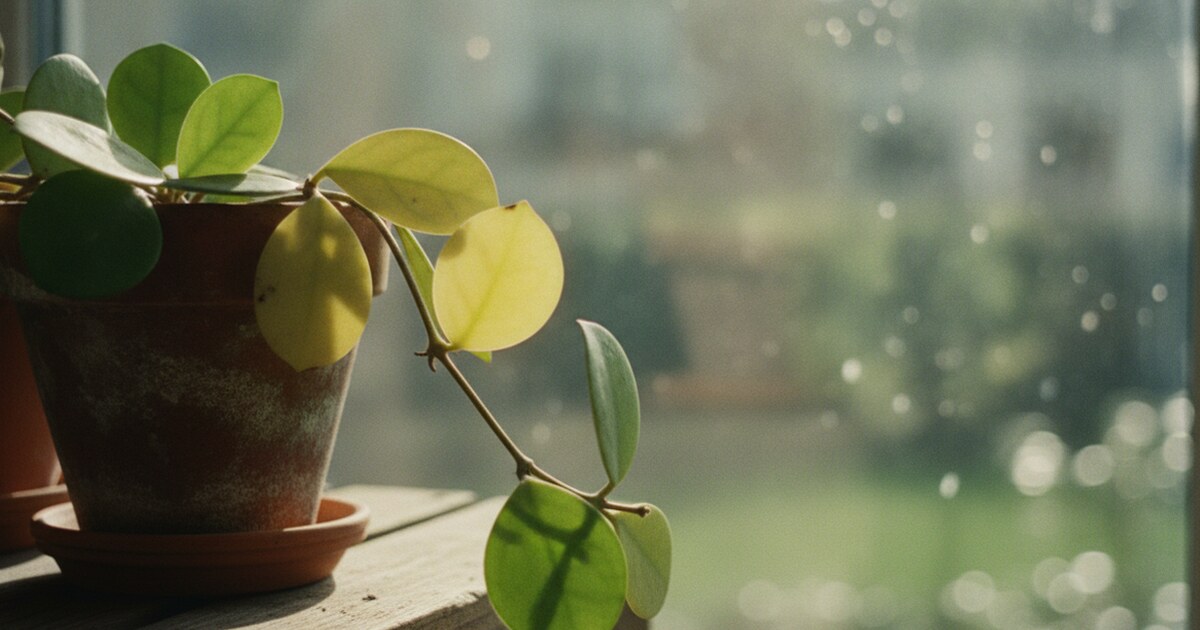
Hoya leaves turning yellow catches most plant owners off guard. These plants are famously forgiving, tolerating missed waterings and low humidity without complaint. So when the waxy leaves start going pale or lemon yellow, something specific is wrong, and the yellowing pattern tells you exactly what it is.
The good news: hoyas send clear signals. Whether the oldest lower leaves are yellowing first, new growth looks pale, or yellow spots are scattered across multiple leaves, each pattern points to a different cause. Work through the checklist below to nail the diagnosis and fix it fast.
Hoya leaves turn yellow most often from overwatering. The lower, older leaves go yellow and mushy when soil stays wet too long, cutting off oxygen to the roots. Other causes include too little light, nitrogen deficiency, pest damage, cold drafts, and fluoride-sensitive tap water. Checking the soil and which leaves are affected first will pinpoint the cause quickly.
Diagnosing Yellow Hoya Leaves: Three Questions First
Before reaching for fertilizer or repotting tools, run three quick checks:
- Which leaves are yellowing? Lower and older leaves first = overwatering or nutrient deficiency. New or middle growth pale = light problem. Scattered spots across multiple leaves = pests.
- What does the soil feel like? Soggy or compacted after a week without watering = overwatering. Bone dry and pulling away from the pot edges = dry stress.
- What do the leaves feel like? Mushy and soft = overwatering or root rot. Slightly wrinkled = dry stress. Firm but yellow = light or nutrient issue.
Hoya plants (genus Hoya, family Apocynaceae) are semi-succulent epiphytes native to Southeast Asia, the Asia-Pacific, and Australia, with over 200 recognized species. The most common houseplant varieties (Hoya carnosa, Hoya kerrii, and Hoya pubicalyx) store water in their thick, waxy leaves. This storage ability means hoyas survive longer between waterings than most tropical houseplants, but it also makes them sensitive to chronically wet soil. Roots need oxygen to absorb nutrients. When soil stays saturated for more than 7-10 days, roots shift toward anaerobic respiration, chlorophyll production drops, and leaves yellow from the oldest outward. The ideal moisture cycle for most hoya species: let the top 2 inches (5 cm) of potting mix dry completely before watering, roughly every 7-14 days in summer and every 14-21 days in winter. Hoyas grown in standard potting soil rather than an airy bark-perlite mix are significantly more prone to waterlogging and chlorosis.
Overwatering: The Top Cause of Yellow Hoya Leaves
Overwatering accounts for the majority of hoya yellowing cases. When soil stays waterlogged, roots can’t pull in oxygen, and nutrient transport to leaves breaks down.
Symptoms: Lower and older leaves yellow first. They may feel soft or slightly mushy. Soil stays damp or smells sour after a week or more without watering.
Check for root rot: Unpot the plant carefully. Healthy hoya roots are white or tan and firm. Rotted roots are brown or black, slimy, and may have a sour odor.
What to do:
- Stop watering and let the soil dry out completely before the next session
- If roots show rot, trim away damaged sections with sterilized scissors or pruners
- Repot into fresh, well-draining mix: a blend of 60% orchid bark and 40% perlite drains well for hoyas
- Make sure the pot has drainage holes; hoyas sitting in standing water rot quickly
Going forward, water when the top 2 inches (5 cm) of soil feel dry to the touch. In warm months that’s roughly every 10-14 days. See the full guide to reading overwatered vs underwatered plant signs if you’re still unsure which one is your problem.
Too Little Light
Hoyas need bright, indirect light for at least 4-6 hours a day. Low light slows photosynthesis, and leaves gradually lose their green color, going pale or lemon yellow over several weeks.
Symptoms: Yellowing is even and spread across both older and younger growth. Vines look stretched and leggy. New leaves are small and pale rather than deep green.
What to do: Move the plant to an east- or west-facing window. Morning sun from an east-facing window is ideal because it’s bright enough to fuel photosynthesis but gentle enough not to scorch. If your space doesn’t get much natural light, a grow light positioned 12-18 inches above the plant for 10-12 hours daily keeps most hoyas healthy.
Most common hoya species thrive in 200-400 foot-candles (roughly 2,150-4,300 lux) of indirect light. Direct afternoon sun scorches the leaves rather than just yellowing them, so a sheer curtain on a south-facing window works well as a filter.
Nitrogen Deficiency
If your hoya has been in the same potting mix for 2 or more years, it’s probably running low on nutrients. Nitrogen depletes first, and it’s directly responsible for leaf color.
Symptoms: Older, lower leaves yellow systematically while new growth stays green. The yellowing progresses slowly up the plant over several weeks. Leaves feel firm.
What to do: Feed with a balanced liquid fertilizer (10-10-10 or 20-20-20, diluted to half strength) every 2-4 weeks from spring through early fall. Stop fertilizing in winter when growth slows. A nitrogen-forward formula (3-1-2 NPK ratio) works well during the active growing season.
Water the plant first, then apply fertilizer. Applying fertilizer to dry soil risks burning the roots.
Pests Causing Yellow Hoya Leaves
Two pests commonly trigger yellowing on hoyas: mealybugs and spider mites.
Mealybugs leave white, cottony masses in leaf axils and along stems. They pierce the leaf and suck sap, causing leaves to yellow and eventually drop. Check the undersides of leaves and where each leaf attaches to the stem.
Spider mites create tiny yellow dots across the leaf surface (called stippling) and fine webbing on the undersides of leaves. They thrive in hot, dry indoor conditions.
For mealybugs: Dab each white cluster with a cotton swab soaked in 70% isopropyl alcohol. Then spray the whole plant with neem oil at 2 tablespoons per gallon of water, once weekly for 3-4 weeks.
For spider mites: Wipe leaves down with a damp cloth, then spray with neem oil or insecticidal soap weekly. Raising humidity around the plant discourages them.
If you’re seeing wrinkled or shriveled leaves alongside yellowing, check the guide on hoya leaves wrinkled and shriveled since pests and dry stress can show up together.
Temperature Stress and Tap Water Issues
Cold drafts or temperatures below 50°F (10°C) cause sudden yellowing, often with brown edges on the affected leaves. Keep hoyas away from air conditioning vents and from exterior windows that get cold in winter.
Fluoride and chlorine in tap water accumulate in the soil over time and cause yellowing that starts at the leaf tips and works inward. Hoya krohniana and Hoya kerrii are especially sensitive. Switch to filtered or distilled water, or let tap water sit uncovered for 24 hours before using it. Flushing the pot thoroughly with clean water every 2-3 months clears mineral buildup.
Natural Leaf Aging
Hoyas occasionally drop older leaves as part of normal growth. If a single lower leaf turns yellow and no other symptoms are present (soil condition is fine, no pests visible, the rest of the plant looks healthy), aging is the likely explanation.
Remove the leaf cleanly where it meets the stem. No treatment needed.
How PlantlyAI Helps Diagnose Hoya Problems
Reading leaf patterns takes practice, and it’s easy to confuse root rot with a nutrient problem when both start in the lower leaves. PlantlyAI cuts through the guesswork: snap a photo of the yellowing leaves and the app identifies the problem, then walks you through a step-by-step treatment plan. It covers organic, biological, and chemical treatment options so you can choose what fits your situation.
You get 2 free diagnoses per day with no account required. Download free on App Store or Google Play.
Frequently Asked Questions
Should I remove yellow leaves from my hoya?
Yes. Once a leaf turns fully yellow, it won’t recover its green color. Remove it cleanly at the stem to tidy the plant and redirect energy to healthy growth. If multiple leaves are yellowing at once, diagnose the underlying cause before removing them all.
Can underwatering cause hoya leaves to turn yellow?
Underwatering more commonly causes wrinkled, shriveled leaves before yellowing sets in. If your hoya leaves look flat and deflated rather than mushy, check the soil dryness and see the full guide on hoya leaves wrinkled and shriveled for the complete diagnosis checklist.
Why are my hoya’s lower leaves turning yellow?
Lower leaves yellowing first typically points to overwatering or nitrogen deficiency. Check the soil first: if it’s soggy, reduce watering and improve drainage. If the soil is dry and the plant hasn’t been fed in months, try a half-strength balanced fertilizer every 2 weeks.
How often should I water a hoya to prevent yellow leaves?
Wait until the top 2 inches (5 cm) of soil feel dry before watering again. In warm months that’s roughly every 7-14 days; in winter, every 14-21 days. The exact frequency depends on pot size, soil type, and light levels.
Can yellow hoya leaves turn green again?
Once a leaf turns yellow, the chlorophyll loss is permanent. Fixing the underlying cause stops more leaves from yellowing, but the affected leaf won’t recover its green color. Remove yellowed leaves to keep the plant looking healthy.
Not sure what's wrong? Diagnose your plant free
Upload a photo to our free plant disease identifier and get an instant diagnosis.