Hoya Leaves Wrinkled and Shriveled: Causes & Fixes
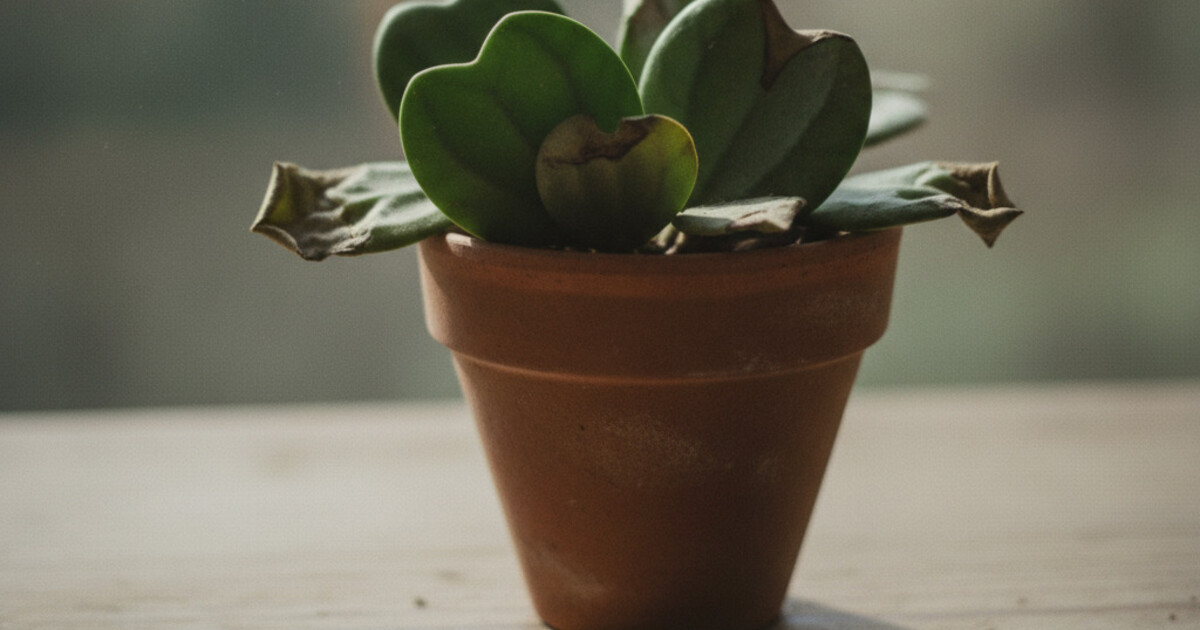
Hoya leaves wrinkled and shriveled is one of those symptoms that looks simple but has two completely opposite fixes. Hoyas store water inside their semi-succulent leaves, so when those reserves run low, the leaf walls collapse and the surface puckers. The plant looks sad, but it’s telling you something specific.
Getting the cause wrong here makes things worse. Water a root-rotted hoya and you kill it faster. Withhold water from an underwatered one and it keeps declining. Two minutes of checking the soil before you do anything else saves the plant.
The most common cause of wrinkled, shriveled hoya leaves is underwatering. Check the soil first: if it’s bone dry 2 inches down, water thoroughly and leaves will usually firm up within 24-48 hours. If the soil is wet or soggy, root rot is likely. Rotted roots can’t transport water, so leaves shrivel even in saturated conditions.
Why Hoya Leaves Wrinkle and Shrivel
Hoya plants are epiphytic succulents from tropical Asia and Australia, with 500+ species across the Apocynaceae family. Their leaves store water in a semi-succulent layer, which is why wrinkling is the plant’s visual alarm system. When leaves wrinkle and feel papery on a hoya with dry soil, the plant has drained its leaf reserves and needs water within 24-48 hours. When leaves wrinkle despite wet or waterlogged soil, root rot is the likely cause: Pythium and Phytophthora pathogens thrive between 60-80°F in saturated conditions and destroy feeder roots within 48-72 hours, cutting off water transport even though moisture is present. Low humidity (below 40%) also accelerates transpiration faster than roots can replenish, causing gradual wrinkling over days. Most hoyas prefer 40-60% relative humidity, temperatures of 60-95°F, and bright indirect light. Checking soil condition (dry vs. soggy) takes five seconds and immediately tells you which problem you’re dealing with.
The main causes in order of frequency:
- Underwatering — dry soil, papery limp leaves
- Root rot — wet soil, leaves still shriveling, possibly yellow
- Low humidity or heat stress — soil moisture is fine but wrinkling gets worse with heat
- Rootbound — plant perks up briefly after watering, then shrivels within a day
- Pest damage — mealybugs, aphids, or spider mites draining leaf sap
Underwatering: The Most Common Cause of Wrinkled Hoya Leaves
When the soil dries out too long, the plant pulls stored water from its leaves to keep vital processes running. That’s what causes the wrinkling and shriveling. This happens faster in summer, in small terracotta pots that wick moisture quickly, or near heating vents.
Signs that point to underwatering:
- Soil is bone dry 2+ inches down
- Leaves feel thin and papery, slightly limp
- The pot feels very light when lifted
- Lower or older leaves wrinkle first (the plant protects new growth)
How to fix it: Take the hoya to a sink and water slowly until water runs freely from the drainage holes. Let it drain completely, then return it to its spot. If water runs straight through without absorbing (the soil has become hydrophobic), soak the whole pot in a basin of room-temperature water for 30-45 minutes. Most hoyas firm up within 24-48 hours.
Going forward, water when the top 50-75% of the soil is dry. In summer, that’s roughly every 7-10 days for most species. In winter or cool rooms, stretch it to every 14-21 days. Terracotta dries faster than glazed ceramic or plastic, so adjust to what you observe rather than a fixed schedule.
Unsure whether you’re looking at overwatering or underwatering? The overwatered vs. underwatered plant guide covers the full checklist of signs for both.
Root Rot: When the Hoya Shrivels in Wet Soil
Root rot is the version that catches most hoya owners off guard, because every instinct says to water a plant with shriveled leaves. If the soil is already wet, watering more accelerates the damage.
Pythium and Phytophthora pathogens colonize waterlogged roots within 48-72 hours. Once the feeder roots are destroyed, the plant can’t move water from the soil into the stems and leaves, so it dehydrates from the inside out even while sitting in a saturated pot. Yellow leaves alongside the wrinkling, mushy stems near the soil line, or a sour smell when you lift the pot all point to rot.
How to rescue a root-rotted hoya:
- Unpot the plant and shake off as much old soil as possible
- Rinse the roots under lukewarm water
- Cut away any brown, soft, or mushy roots with clean scissors
- Dust cut ends with cinnamon (natural antifungal) or dip briefly in a 3% hydrogen peroxide solution
- Repot into a terracotta pot with a fast-draining mix: 50% cactus mix plus 50% perlite works well
- Hold off watering for 3-5 days, then resume lightly
Recovery takes 4-8 weeks. Keep the plant in bright indirect light and resist the urge to fertilize during this period. The process is nearly identical to rescuing other succulents from root rot — the string of hearts mushy yellow guide covers the same six-step approach if you want a reference for what healthy vs. rotten roots look like.
Low Humidity and Heat Stress
Hoyas come from humid tropical environments and prefer 40-60% relative humidity. In heated homes during winter, indoor humidity can drop below 25%. At that level, the plant loses water through its leaves faster than the roots can replace it, causing gradual wrinkling that worsens over days.
Heat stress amplifies the problem. Hoyas parked near radiators, heating vents, or in direct afternoon sun in summer can hit leaf temperatures above 90°F, spiking water loss rapidly.
How to tell humidity or heat is behind the wrinkling:
- Soil moisture is appropriate (not dry, not soggy)
- Wrinkling worsens after the heat turns on or during a hot spell
- Leaf tips may brown or curl inward alongside the wrinkling
Fixes that work:
- Move the hoya away from vents, radiators, and direct afternoon sun
- Group plants together to raise local humidity passively
- Set the pot on a pebble tray filled with water (pot sits above the waterline, never in it)
- A small humidifier near the plant, set to 50%, solves persistent low-humidity wrinkling
Skip misting directly onto hoya leaves. Most species don’t tolerate wet leaves sitting for long periods, and it doesn’t raise ambient humidity in any meaningful way.
Rootbound Plants and Pest Damage
Two other causes worth ruling out once moisture and humidity are checked.
Rootbound: A pot-bound hoya exhausts its soil moisture almost immediately after watering. The pattern looks like this: you water, the plant perks up, then shrivels again within a day or two. Check the drainage holes for roots pushing through, or look for a root-packed surface when you pull the plant from its pot. Sizing up to a pot 1-2 inches wider usually solves it. Repot into fresh, fast-draining mix at the same time.
Pest damage: Mealybugs, aphids, and spider mites feed on hoya sap, depleting leaves of both water and nutrients. Heavily infested leaves shrivel and pucker before they drop. Check the undersides of leaves and stem joints for cottony white fluff (mealybugs), sticky residue and clusters of small insects (aphids), or fine webbing (spider mites).
For mealybugs and spider mites, wipe each affected spot with a cotton swab dipped in 70% isopropyl alcohol, then follow up with neem oil spray every 7-10 days for 4-6 weeks. For aphids, a strong stream of water knocks most of them off, then neem oil handles the rest. The same neem oil rotation that clears mealybugs on succulents works on hoyas too.
How PlantlyAI Helps Diagnose Wrinkled Hoya Leaves
Splitting underwatering from root rot is straightforward once you know the soil test, but other causes can overlap. A hoya with root rot from overwatering can also be rootbound, and the wrinkled leaves look the same either way. PlantlyAI lets you photograph the affected leaves and plant, then returns a diagnosis with specific treatment steps so you’re not guessing.
The app covers hoyas and most houseplants. For each diagnosis, it provides organic, biological, and chemical treatment options, so you can pick what fits your situation. It’s free to start at 2 diagnoses per day on both iOS and Android, with no account needed.
If you’ve addressed watering but leaves stay wrinkled, a second photo of the roots or stem base can help the app catch rot that isn’t visible from leaf appearance alone.
Frequently Asked Questions
Why are my hoya leaves still wrinkled after watering?
If leaves haven’t firmed up 48 hours after a thorough watering, the roots are probably too damaged to move water. Unpot the plant and check for brown, soft, sour-smelling roots — that’s root rot. Severely compacted or hydrophobic soil can also block absorption even when you water, so the soil stays dry in the center despite water running through. Soak the pot in a basin for 30-45 minutes to verify absorption.
How long does it take for wrinkled hoya leaves to recover?
Underwatering recovery is fast: most leaves firm up within 24-48 hours of a good soak. Root rot recovery takes 4-8 weeks after repotting into fresh soil. Some leaves damaged by severe rot or pests won’t plump back up fully and will eventually drop, but healthy new growth replaces them once the plant stabilizes.
Should I mist my hoya to fix wrinkled leaves?
Misting gives very temporary relief and doesn’t solve the underlying problem. If the soil is dry, a thorough bottom-to-top watering is the fix. If humidity is the issue, a humidifier or pebble tray provides lasting moisture without the risk of fungal problems that wet leaves can invite. Most hoya species don’t need direct misting.
Can wrinkled hoya leaves go back to normal?
Leaves wrinkled from underwatering or low humidity usually plump back up once conditions improve. Leaves damaged by root rot or heavy pest feeding may stay puckered or drop off even after the plant recovers. Don’t remove wrinkled leaves unless they’re mushy or completely brown — if they’re still green and attached, the plant is still drawing some benefit from them.
How often should I water a hoya to prevent shriveling?
Water when the top 50-75% of the soil is dry. In warm months with good light, that’s roughly every 7-14 days for most hoya species in well-draining mix. In winter or low-light conditions, stretch it to every 14-28 days. Hoyas in small terracotta pots dry faster than those in glazed ceramic or plastic, so always check the soil rather than watering on a fixed schedule.
Wrinkled, shriveled hoya leaves almost always trace back to one of five causes, and the soil test narrows it down instantly. Check moisture first, rule out pests, and address humidity if the watering is already right. For a faster read on what’s happening, photograph the plant in PlantlyAI and get a diagnosis with a step-by-step treatment plan. Download it free for iOS and Android, with 2 free diagnoses per day and no account required.
Not sure what's wrong? Diagnose your plant free
Upload a photo to our free plant disease identifier and get an instant diagnosis.