Lemon Tree Leaves Curling: Causes and How to Fix It
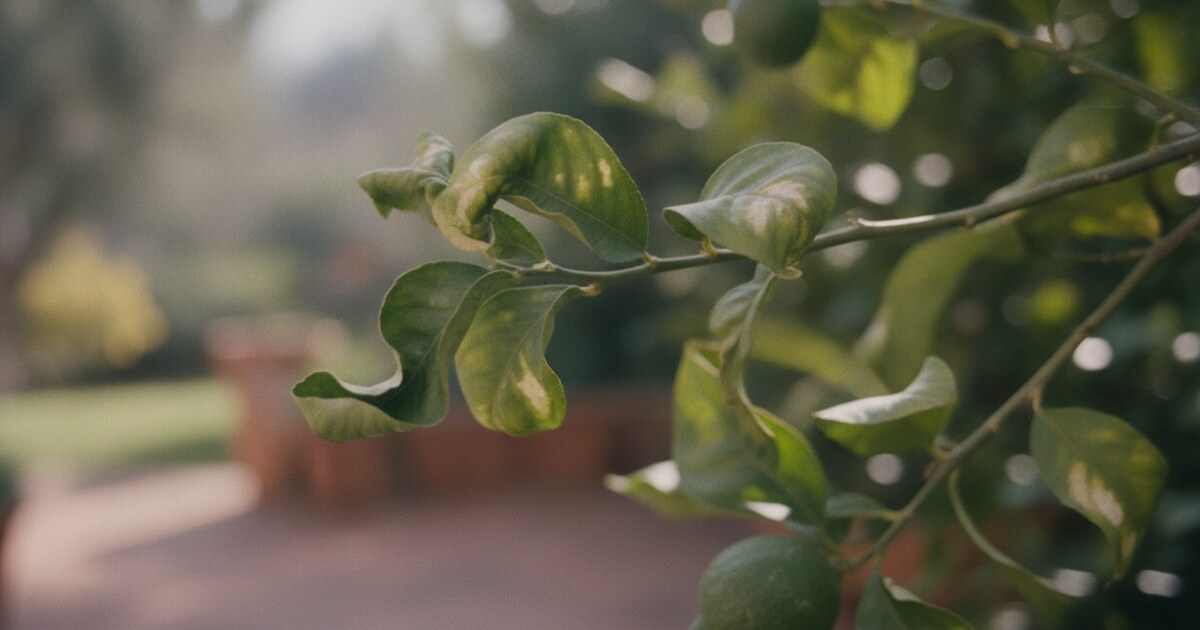
Your lemon tree looked fine last week. Now the leaves are curling and you’re not sure if you’ve watered too much, too little, or if something else is going on. The tricky part: underwatering and overwatering both curl lemon tree leaves. So do pests, heat stress, and nutrient deficiencies. Getting the diagnosis right first saves you from making the problem worse.
This guide covers the 6 most common causes of lemon tree leaf curl, shows how to read the curl direction as your first diagnostic clue, and gives you the exact fixes for each one.
Lemon tree leaves curl for 6 main reasons: underwatering (most common), overwatering, pests such as citrus leafminer and aphids, nutrient deficiency, temperature stress, and low indoor humidity. The curl direction gives you the fastest clue. Inward taco-shape curling means drought. Downward curling with yellowing points to overwatering or potassium deficiency. Tight, distorted curling with silvery trails inside the leaf surface indicates citrus leafminer.
How to Read the Curl Direction
Before reaching for the watering can or fertilizer, look at how the leaf is curling. Direction and texture narrow down the cause faster than checking soil moisture alone.
Inward curl (taco or tube shape): The leaf rolls lengthwise into a narrow cylinder. This is the classic drought response. The tree reduces leaf surface area to slow moisture loss when the root zone runs dry.
Downward curl with yellowing: Leaves fold down at the edges while turning pale yellow or lime green. This points to overwatering, root rot, or a potassium or magnesium deficiency.
Upward curl with dry, brittle edges: Leaves cup upward and feel crispy at the margins. Heat stress or low humidity is the most likely cause.
Tight, distorted curl with silvery serpentine trails: The leaf surface shows winding silver or white tracks just beneath the curl. That’s citrus leafminer. The larva tunnels through the leaf tissue, causing the leaf to curl tightly around it.
Once you’ve matched the curl type, you’re working with a specific suspect rather than all 6 possibilities at once.
Underwatering: The Most Common Cause of Lemon Tree Leaf Curl
Lemon trees need consistent moisture at root depth. A shallow sprinkle every few days often wets only the top inch of soil and leaves the root zone dry. The first sign is that inward taco curl, sometimes with slight drooping. Push a finger 2 or more inches into the soil: if it’s dry at that depth, underwatering is almost certainly the cause.
Lemon trees (Citrus limon) are grown primarily in USDA hardiness zones 9 to 11 and need deep watering to produce reliably. Mature in-ground trees typically need 20 to 25 gallons per week during peak summer and deep watering every 7 to 10 days. Container lemons dry out 30 to 40% faster than in-ground trees because unglazed terracotta and thin plastic walls wick or vent moisture faster than the soil can absorb it. The top 2 inches of soil should feel dry before each watering, but below that the root zone should stay lightly moist. Citrus roots sit mainly in the top 18 to 24 inches of soil. Shallow watering trains those roots upward into the zone most vulnerable to heat and evaporation. A 2 to 3-inch mulch layer over the root zone slows evaporation by 25 to 30% during summer. Submerging a bone-dry container root ball in a bucket of water for 20 minutes fully rehydrates soil that has started to repel water.
How to fix underwatering:
- Water deeply until water drains from the bottom of the pot
- Check soil 2 inches down before each watering, not just the surface
- Add 2 to 3 inches of mulch over the root zone to slow evaporation
- Move container trees out of strong wind, which dries soil faster
- Submerge container root balls in a bucket of water for 20 minutes if the soil has dried and begun to repel water
For the step-by-step soil moisture test that works just as well for citrus, see Overwatered vs Underwatered Plant: How to Tell.
Overwatering and Root Problems
Overwatered lemon trees curl their leaves too, but the pattern looks different. Leaves fold downward at the edges or roll under, often turning pale yellow or lime green before dropping. The soil stays wet days after watering. A sour or musty smell from the pot is another tell.
The real risk with overwatering is root rot. Waterlogged soil cuts off oxygen to the roots, and the tree declines from the roots up. Leaves curl even though the soil is saturated because the root system can no longer function.
Stop watering immediately and let the soil dry out. For container trees, check that the drainage holes aren’t blocked. If roots look brown and soft or smell sour when you unpot the tree, trim the damaged sections with clean scissors, dust the cuts with cinnamon, and repot into fresh citrus mix (roughly 1 part potting soil to 1 part perlite or coarse grit).
The key distinction between the two problems:
- Underwatering: soil dry 2+ inches down, leaves curl inward and look shriveled
- Overwatering: soil wet, leaves curl downward and yellow before dropping, possible musty smell
Pests That Curl Lemon Tree Leaves
Three pests account for most lemon tree leaf curl. Each one leaves a different set of clues on the leaf surface.
Citrus Leafminer
The citrus leafminer (Phyllocnistis citrella) is a tiny moth whose larvae tunnel through the surface cells of new leaves. As the larva feeds, the leaf puckers and curls tightly around the winding mine. Look for silvery or white serpentine trails just beneath the leaf surface, with the edges curling inward around them. Only new, soft growth is attacked. Older, hardened leaves are safe.
Treatment: the University of California Agriculture and Natural Resources advises against pesticide sprays for citrus leafminer because parasitic wasps (Cirrospilus spp.) and other natural predators control the pest effectively. Broad-spectrum insecticides kill those predators and make infestations worse the following season. The most effective response is avoiding late-summer nitrogen fertilizer, which pushes new growth flushes exactly when leafminer populations peak.
Aphids
Aphids cluster on new growth and flower buds, sucking sap and causing young leaves to curl and crinkle. Below the infestation you’ll usually find sticky honeydew residue on the leaves below, and sometimes black sooty mold growing on top of it.
Spray with a 2% neem oil solution or insecticidal soap, coating the undersides of leaves where aphids hide. For heavy infestations, knock insects off with a firm stream of water first, then follow with neem oil. Repeat every 5 to 7 days until clear. The same neem oil approach works for aphids on other plants; see Aphids on Hibiscus for a detailed treatment walkthrough.
Spider Mites
Spider mites cause tiny yellow speckles (stippling) across the leaf surface plus fine webbing on the undersides. Leaves curl upward and look dusty or washed out. Mites thrive in hot, dry conditions.
Mist leaves regularly to raise humidity and disrupt mite populations. Spray neem oil or diluted insecticidal soap, focusing on leaf undersides. Repeat weekly for 3 weeks.
Nutrient Deficiency and Temperature Stress
Potassium deficiency causes leaves to curl downward with yellowing or browning at the margins. The veins stay green while the leaf edges scorch. Apply a potassium-rich citrus fertilizer (look for an NPK with a higher K value, like 6-4-6 or 8-3-9). Container trees need feeding every 6 to 8 weeks from spring through summer.
Magnesium deficiency shows up as yellowing between the leaf veins (interveinal chlorosis) with mild curling. A foliar spray of Epsom salts (1 tablespoon per gallon of water) delivers magnesium quickly. Repeat monthly during the growing season.
One important rule: don’t fertilize a stressed tree until you’ve fixed the primary problem. Fertilizing a root-damaged tree can burn the surviving roots further.
For temperature stress, lemon trees prefer 55°F to 95°F (13°C to 35°C). Above 95°F, leaves cup upward to reduce sun exposure; move container trees to afternoon shade and water deeply. Below 55°F, leaves curl inward and may look water-soaked. Lemon trees are among the most cold-sensitive citrus: even a brief frost at 32°F (0°C) can curl and permanently brown leaves. Cover trees with frost cloth when temperatures drop toward freezing. Indoor trees near heating or cooling vents show the same drought-like curl even when the soil is adequately watered; move them away from vents and mist the leaves twice daily.
When to Photograph the Symptom
Lemon tree leaf curl has at least 6 distinct causes, and some fixes are completely opposite. More water fixes drought. More water on a root-rotted tree accelerates the damage.
PlantlyAI lets you photograph the affected leaves and get an instant AI diagnosis, with organic, biological, and chemical treatment options for each finding. The app covers citrus, houseplants, garden vegetables, and trees. You get 2 free diagnoses a day with no account needed.
If you’re unsure which cause you’re dealing with, a photo diagnosis is faster than process-of-elimination guessing.
Frequently Asked Questions
Why are my lemon tree leaves curling inward?
Inward curling (the taco shape) is almost always drought stress. The tree reduces leaf surface area to slow water loss through transpiration. Check the soil 2 inches down: if it’s dry, water deeply until water runs from the bottom. If the soil is wet, another cause such as root rot or a pest is responsible.
Can overwatering cause lemon tree leaves to curl?
Yes. Overwatered lemon trees curl leaves downward and the leaves often turn yellow before dropping. Waterlogged soil cuts off root function, which is why leaves curl even though the soil is saturated. Let the soil dry out fully between waterings. Container trees need drainage holes and the saucer should be emptied after each watering.
What does citrus leafminer damage look like?
Citrus leafminer leaves distinctive winding silvery or white trails beneath the surface of new leaves. The leaf curls tightly around the mines. Only new, soft growth is attacked. Natural predators control leafminer effectively, so broad-spectrum pesticides are counterproductive and make future infestations worse.
Why are my indoor lemon tree leaves curling?
Indoor lemon trees most often curl from low humidity or dry air from heating and cooling vents. Both mimic drought stress even when the soil is adequately moist. Mist leaves twice daily, keep the tree at least 3 feet from any vent, and confirm the pot has working drainage.
How do I tell if lemon tree leaf curl is a pest or a watering problem?
Check the leaf surface closely. Pests leave physical evidence: sticky honeydew (aphids), silvery serpentine mines (citrus leafminer), or fine webbing with yellow speckles (spider mites). Watering problems leave no residue on the leaves. Soil moisture gives you the second clue: bone-dry soil points to drought, saturated soil points to overwatering.
Lemon tree leaf curl almost always has a fixable cause. Start with the curl direction, then check soil moisture, then inspect the leaf surfaces for pest traces. For a faster diagnosis, photograph the affected leaves with PlantlyAI to get an AI-generated diagnosis and a specific treatment plan. Available for Android too.
Not sure what's wrong? Diagnose your plant free
Upload a photo to our free plant disease identifier and get an instant diagnosis.