Root Rot Treatment for Houseplants: 5-Step Rescue Guide
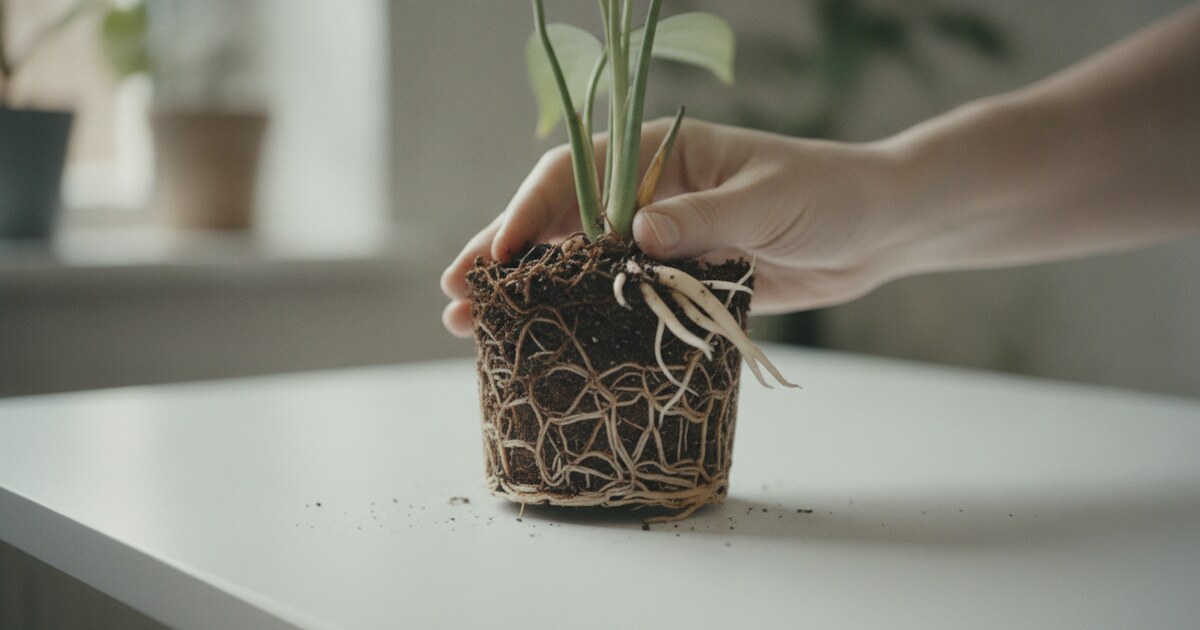
Your plant’s leaves are turning yellow, it wilts even after watering, and the stems feel soft near the soil. Pull it out of the pot and you’ll often find roots that are brown, slimy, and falling apart. That’s root rot, one of the most common reasons houseplants die. It almost always starts with too much water sitting around the roots for too long, cutting off the oxygen those roots need to stay alive. The good news: you can save the plant if you act fast and cut away all the damage. This guide covers how to spot root rot, how to treat it step by step, and how to stop it from coming back.
Quick answer: To treat root rot in a houseplant, take it out of its pot, cut off all brown or mushy roots with sterile scissors, and repot in fresh, well-draining soil with a clean pot. Hydrogen peroxide or cinnamon applied to the cut roots helps prevent reinfection. Recovery usually starts within 2 to 4 weeks.
What Root Rot Looks Like in Houseplants
Root rot in houseplants is caused by waterlogged soil that cuts off oxygen to the roots. Without oxygen, roots suffocate and die. The dead tissue then attracts Phytophthora, Pythium, and Fusarium: soil-dwelling fungi that colonize and spread through the root system. Healthy plant roots are firm, white or light tan, and pliable. Rotted roots are brown, black, slimy, or mushy, and they fall apart when touched. Above the soil, root rot shows as yellowing leaves, wilting that doesn’t recover after watering, brown leaf tips, and stems that feel soft at the base. Because symptoms mimic overwatering and drought stress, many gardeners keep watering a plant with root rot, which makes the problem worse. The most common causes are pots without drainage holes, heavy or compacted soil, and watering on a fixed schedule regardless of soil moisture. Catching root rot before more than half the roots are gone gives the plant a strong chance of recovery.
Smell test: lift the pot and smell the drainage holes. Healthy roots have a faint earthy smell. Rotted roots smell sour or sulfurous. That smell alone is a reliable early warning.
Above-ground symptoms:
- Leaves yellowing from the bottom up
- Wilting even though the soil is wet
- Brown, mushy stems near the soil line
- Leaves dropping without drying out first
- Stunted growth during the growing season
Below-ground symptoms:
- Roots that are brown, gray, or black
- Slimy texture that smears when handled
- Roots that break or crumble in your hand
- A foul smell from the root zone
Not all yellow leaves mean root rot. If your plant looks generally unwell and you’re working out whether you’re overwatering vs. underwatering, pulling it from the pot for a quick root check is the fastest way to confirm.
What Causes Root Rot in Houseplants
Overwatering is the number one cause, but the real trigger is oxygen-deprived soil. Root rot happens when roots stay wet long enough to suffocate, so anything that keeps soil waterlogged longer than the plant can handle will eventually cause it.
Common causes:
- Watering too often: Watering on a schedule instead of checking whether the soil is actually dry
- No drainage holes: Pots without drainage trap water at the bottom where roots sit
- Dense or compacted soil: Heavy mixes hold moisture far too long for most tropical houseplants
- Oversized pots: Too much soil around the roots means weeks for it to dry fully
- Low light or cold temperatures: Plants in dim, cool conditions use less water, so soil stays wet longer
The watering mistake that trips most people up is keeping a rigid schedule. “I water every Sunday” doesn’t account for the plant slowing down in winter, or a cloudy week, or a pot that happened to dry out faster in summer. Check the top 2 inches of soil with your finger every time before you water.
How to Treat Root Rot: 5 Steps
Treating root rot means getting the plant out of the damaged environment, cutting away everything already dead, and giving the healthy roots a clean start.
Step 1: Remove the Plant and Expose the Roots
Gently slide the plant out of its pot. Knock off as much old soil as you can by hand, then rinse the root ball under room-temperature water to get a clear view of what you’re working with.
Step 2: Trim Every Rotted Root
Look for roots that are firm and white or light tan — those are healthy, keep them. Everything brown, black, slimy, or mushy gets cut away. Use scissors or pruning shears sterilized with rubbing alcohol. Cut back to healthy tissue, even if that means removing most of the roots. One rotted root left behind can reinfect the rest.
If more than two-thirds of the roots are gone after trimming, prune the top of the plant by a similar proportion. Fewer roots can’t support as much foliage, and uncut leaves will just add stress during recovery.
Step 3: Treat the Cut Roots
This step isn’t required, but it lowers the risk of fungal reinfection.
Option 1: Hydrogen peroxide soak. Mix 1 part 3% hydrogen peroxide with 2 parts water. Soak the exposed roots for 10 minutes. The bubbling action kills surface pathogens and adds oxygen to the damaged tissue. After the soak, let the roots air-dry on a clean towel for about an hour.
Option 2: Cinnamon dust. Ground cinnamon is a natural antifungal. Dust the cut root ends lightly before repotting. It won’t reverse active infections, but it protects the wounds from new fungal colonization.
You can use both: do the hydrogen peroxide soak first, then dust the cut ends with cinnamon once they’ve dried.
Step 4: Repot in Fresh, Well-Draining Soil
Don’t reuse the old soil. It likely contains the same fungal spores that caused the problem. Use a fresh potting mix appropriate for your plant. For most tropical houseplants, a mix of 70% potting soil and 30% perlite drains well without drying out too fast. Succulents and cacti need an even faster-draining mix.
Choose a pot that fits the trimmed root system, not the plant’s original pot size. A smaller pot dries out faster, which is exactly what recovering roots need. Sterilize the pot with a solution of 1 part bleach to 9 parts water, or use a brand-new container.
Step 5: Water Carefully During Recovery
After repotting, water once to settle the soil around the roots, then stop. Wait until the top 2 inches are completely dry before watering again. Keep the plant in bright indirect light, away from cold drafts and heating vents.
Recovery stabilizes within 2 to 4 weeks: the plant stops declining and holds its remaining leaves. New root growth and new leaf emergence appear within 4 to 8 weeks. Don’t fertilize during recovery. Fertilizer pushes growth the damaged root system can’t support yet.
Does Hydrogen Peroxide Kill Root Rot?
Hydrogen peroxide at 3% concentration (the standard pharmacy bottle) kills surface pathogens on exposed roots. It won’t fix roots that are already dead, but it clears the environment around healthy roots so recovery can start cleaner.
The ratio for a root soak is 1 part 3% H2O2 to 2 parts water, 10 minutes, then air-dry before repotting. For a soil drench after repotting, mix 1 tablespoon of 3% hydrogen peroxide per cup of water and water the plant once with that solution.
Don’t use it every time you water. Hydrogen peroxide also kills beneficial soil microbes that support root health over time. One treatment as part of the rescue process is enough.
Can You Fix Root Rot Without Repotting?
In very mild cases, a hydrogen peroxide soil drench can slow or stop the spread while the plant stays in its pot. Remove any obviously dead roots visible at the surface, poke holes into the soil to improve aeration, and let the soil dry out completely before watering again.
That said, repotting is almost always the better option. The infected soil holds the same fungal spores that caused the problem, and they’ll reattack healthy roots even after a hydrogen peroxide treatment. If the roots are already slimy or the smell is noticeable, repotting is the right move.
For a step-by-step walkthrough of a plant-specific rescue, the monstera root rot guide covers the process in detail, and the core steps apply to most tropical houseplants.
How to Tell If Plant Roots Are Healthy
Pulling a plant from its pot to check the roots is worth doing any time it looks unwell and you can’t figure out why.
Healthy roots:
- Firm and slightly springy when pressed
- White, cream, or light tan in color
- Faint earthy smell or no smell at all
- Hold their structure when handled
Rotted roots:
- Soft, slimy, or mushy texture
- Brown, gray, or black in color
- Foul or sour smell
- Break apart or smear when touched
If you find a mix of both, you’ve caught root rot at a treatable stage. Cut out everything that fails the firm-and-white test.
How to Prevent Root Rot from Coming Back
Prevention comes down to two things: watering correctly and giving water somewhere to go.
Watering correctly:
- Check soil moisture with your finger before every single watering. Two inches deep: if it’s still moist, wait.
- Cut watering frequency by 30 to 50% in winter. Plants in low light and cooler temps need far less.
- Water thoroughly so the whole root zone gets moisture, then let it dry before watering again.
Improving drainage:
- Only use pots with drainage holes. No exceptions.
- Empty the saucer under the pot 30 minutes after watering. Standing water keeps the bottom of the soil soggy.
- Mix 20 to 30% perlite into standard potting soil to open up the structure.
- Match pot size to the plant’s root system. Oversized pots are one of the most common causes of repeat root rot.
If you’ve had root rot with the same plant more than once, the soil mix is usually the issue. Most all-purpose potting mixes are too dense for tropical houseplants. Adding perlite makes a real difference.
How PlantlyAI Helps You Diagnose Root Rot
Spotting root rot early is hard because the first signs — slightly yellow leaves, slow growth — look like a dozen other problems. PlantlyAI lets you snap a photo of your plant and get a diagnosis that includes root rot as a possible cause based on the visible symptoms. It gives you a step-by-step treatment plan with organic, biological, and chemical options so you know exactly what to do next.
It works for houseplants, garden plants, vegetables, and trees. With 2 free scans a day and no account needed, you can check a plant the moment something looks off, before root rot has time to spread to healthy roots.
Frequently Asked Questions
What kills root rot in plants? Root rot is stopped by cutting away infected roots and discarding contaminated soil. Hydrogen peroxide (3% concentration, mixed 1 part to 2 parts water) kills surface-level pathogens on exposed roots. Ground cinnamon dusted onto cut root wounds acts as a natural antifungal. No treatment reverses roots that are already dead; removal is the only fix.
Can a plant survive root rot if most of the roots are gone? A plant can survive with roughly 30 to 40% of its root system intact if treated quickly. After trimming, cut back the foliage proportionally to reduce the workload on the reduced roots. Repot in fresh soil, keep in bright indirect light, and skip fertilizer for 6 to 8 weeks. If root damage is too severe, propagating a healthy stem cutting is often the best path forward.
How long does root rot take to recover from? Recovery stabilizes in 2 to 4 weeks: the plant stops declining and holds its remaining leaves. New roots and new leaf growth typically appear within 4 to 8 weeks after repotting. Full recovery, where the plant looks strong and shows steady new growth, takes 2 to 3 months.
Can cinnamon help with root rot? Yes. Ground cinnamon contains cinnamaldehyde, a compound with antifungal properties. Dusting it onto cut root ends after trimming creates a barrier against fungal reinfection. It won’t treat an active infection on living roots, but it protects fresh wounds during the repotting process. Use plain ground cinnamon from the kitchen; no special preparation needed.
Is root rot contagious between plants? Root rot fungi spread through shared soil, contaminated tools, and runoff water. Sterilize any pots, trowels, or scissors that touched infected soil with a diluted bleach solution before using them on other plants. Don’t pour runoff water from an infected plant into neighboring pots. Isolate the recovering plant until you see healthy new growth.
If your plant is wilting and the leaves are going yellow, snap a photo in PlantlyAI to check for root rot alongside other common causes. You get a diagnosis and a treatment plan in seconds, free for up to 2 scans a day, with no account needed. Download it on the App Store or Google Play.
Not sure what's wrong? Diagnose your plant free
Upload a photo to our free plant disease identifier and get an instant diagnosis.