Snake Plant Leaves Turning Yellow: Causes & Fixes
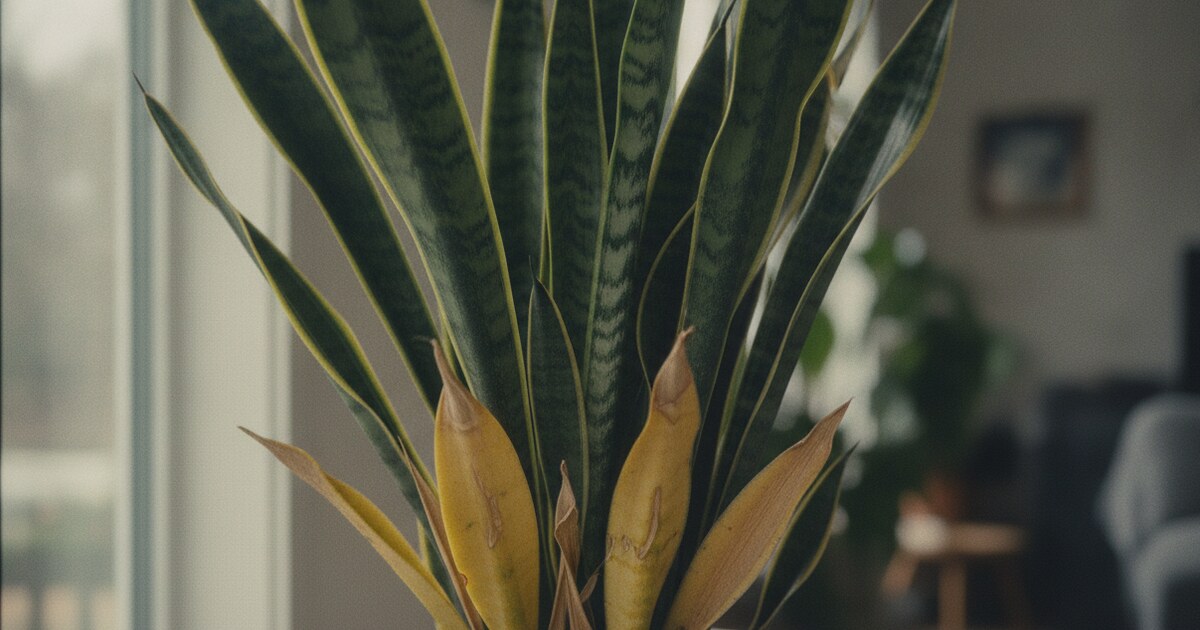
Snake plants (Dracaena trifasciata) are the closest thing to a hands-off houseplant you can find. They survive low light, inconsistent watering, and months of neglect without complaint. So when snake plant leaves start turning yellow, something has genuinely crossed a threshold.
The pattern tells you what went wrong. A single yellow leaf at the base of an otherwise healthy plant is very different from multiple leaves yellowing fast with soft, mushy stems. Which leaf yellows first, how the soil smells, and whether the roots look white or brown all point toward a specific fix.
This guide covers the six most common reasons snake plant leaves turn yellow, how to diagnose each one, and what steps bring your plant back.
Snake plant leaves turning yellow is manageable in most cases. Here’s how to figure out which problem you’re dealing with.
Snake plant leaves turn yellow most often because of overwatering and root rot. Other causes include poor lighting, temperature stress, nutrient deficiency, and natural leaf aging. Check the soil (soggy = overwatering), note which leaves yellow first (base = root rot or aging; new growth = nutrients or light), then fix the cause and trim yellowed leaves at the base.
Why Snake Plant Leaves Turn Yellow
Dracaena trifasciata is native to dry, rocky slopes across West Africa, from Nigeria to the Congo, where soils drain fast and rainfall is intensely seasonal. The plant stores water in its thick leaves and roots, making it drought-tolerant but very sensitive to soggy conditions. Indoors in the US, snake plants do best at 60 to 80°F (15 to 27°C) and need bright indirect light in the 1,000 to 5,000 lux range.
Watering should drop from every 2 to 3 weeks in summer to every 4 to 6 weeks in winter, when growth slows dramatically. Nutrient problems show up with distinct patterns: nitrogen deficiency causes uniform yellowing on older leaves starting from the base, while iron deficiency produces interveinal chlorosis on new growth (yellow blades with veins staying green). Temperatures below 50°F (10°C) cause cold damage within hours, and snake plants near AC vents or drafty windows often show outer-leaf yellowing first.
Quick diagnosis guide:
- Yellow leaves at the base of the plant, spreading slowly upward: overwatering or natural aging
- Multiple yellow leaves, soft and mushy to the touch: root rot
- Yellow leaves with a wrinkled or dry texture: underwatering
- New leaves yellow with green veins visible: iron or magnesium deficiency
- Outer or edge leaves yellowing, plant near a vent or window: temperature or light stress
Overwatering and Root Rot: the Most Common Cause
Overwatering is behind the majority of yellow snake plant cases. Snake plants can’t move excess water out of their roots. Oxygen gets cut off, roots die, and fungal rot (usually Pythium or Fusarium) takes hold in the waterlogged soil.
The warning signs are specific. Soil still damp a week or more after watering is a red flag. Pull the pot and smell the drainage hole: a sour or musty odor means rot is already happening. Healthy roots are white or tan and firm when pressed. Rotted roots are brown or black and feel mushy.
For mild overwatering without visible rot, let the soil dry out completely before watering again. Skip one or two watering cycles and move the pot to a spot with better airflow.
For active root rot, work through these steps:
- Remove the plant from its pot and shake off all the soil.
- Cut away mushy or dark brown roots with clean scissors or pruning shears. Sterilize the blade first with rubbing alcohol.
- Let the trimmed roots air dry for 2 to 4 hours.
- Repot in fresh, fast-draining soil: a cactus mix works well, or mix 2 parts potting soil with 1 part perlite.
- Wait 4 to 7 days before watering the newly repotted plant.
Yellow leaves won’t recover their color after root rot. Trim them at the base with clean scissors and focus on the new growth coming in.
For a detailed rescue plan, see how to save a dying snake plant. If you’re unsure whether overwatering or underwatering is the culprit, overwatered vs. underwatered plant: how to tell walks through the differences.
Light and Temperature Problems Can Turn Leaves Yellow
Low light causes a gradual kind of yellowing that’s easy to miss early on. Snake plants tolerate shade better than most succulents, but they can’t photosynthesize with no light at all. In rooms without natural windows or in north-facing corners that get almost no sun, older leaves start pulling nutrients from the plant to stay alive, turning yellow and limp in the process.
Moving the plant to a spot with bright indirect light fixes this within a few weeks. Don’t swing to direct sun, though. Direct summer sun above 5 to 6 hours scorches snake plant leaves and produces bleached, papery patches rather than the soft uniform yellow you see from low light.
Temperature stress is a less obvious cause but worth checking. Snake plants hate cold drafts. Parked next to an AC vent in summer or against a single-pane window in winter, they’ll show outer-leaf yellowing that’s easy to confuse with overwatering. The soil stays fine, but the leaves near the cold air source go yellow first.
Sudden temperature swings cause problems too. Moving a plant from a warm room to a cold garage, or setting it outside when temperatures drop below 50°F, stresses the leaves within days. Keep snake plants away from vents, drafts, and any spot where nighttime temperatures drop sharply.
Nutrient Deficiency and Natural Aging
Snake plants are light feeders. They don’t need fertilizing every month, but after a year or two in the same pot, they can exhaust the available nitrogen, iron, and magnesium in the soil.
Nitrogen deficiency shows up as even, uniform yellowing on older leaves, usually starting at the bottom of the plant. Iron deficiency looks different: the leaf blade turns yellow while the veins stay green (called interveinal chlorosis), and it appears on new growth first.
A balanced liquid fertilizer (10-10-10 or similar) diluted to half strength, applied once a month through spring and summer, prevents most nutrient problems. If leaves are already yellowing, fertilize and refresh the soil by repotting.
Natural aging is worth knowing about separately. Snake plants routinely shed their oldest leaves, particularly the ones at the base. A single bottom leaf going yellow on an otherwise healthy plant with dry soil and firm green leaves above it often means nothing is wrong. The plant cycles out old tissue over time. Trim the leaf at the base, keep the rest of your care routine consistent, and watch for new growth.
How to Fix Yellow Snake Plant Leaves
Yellow leaves on a snake plant won’t turn green again. Once chlorophyll breaks down, the color is gone. The goal is stopping the spread and getting new healthy growth pushing up from the center of the plant.
Step 1: Diagnose before acting. Check soil moisture, smell for rot, note which leaves are affected. Use the quick guide at the top of this article.
Step 2: Fix the root cause. Stop overwatering, shift the light situation, move away from cold vents, or fertilize depending on what the diagnosis points to.
Step 3: Trim yellowed leaves. Cut them cleanly at the base of the plant with sterilized scissors. Trimming removes dead tissue that can harbor fungal problems and tidies the plant without hurting it.
Step 4: Repot if needed. Root rot requires a repot immediately. Plants sitting in the same soil for 2 to 3 years benefit from a refresh even without a rot problem.
Step 5: Watch new growth. New leaves coming in green and firm confirm the fix worked. If yellowing continues after you’ve addressed the most likely cause, photograph the leaf pattern carefully and use a plant diagnosis app to narrow it down further.
Frequently Asked Questions
Can yellow snake plant leaves turn green again?
No. Once a snake plant leaf turns yellow, the chlorophyll is gone and the color won’t return. Trim the yellowed leaf at the base and put your energy into fixing whatever caused the problem. New growth will come in green as the plant recovers.
How often should I water a snake plant to prevent yellow leaves?
Water when the top 2 to 3 inches of soil feel completely dry. In summer that’s typically every 2 to 3 weeks; in winter, every 4 to 6 weeks. Snake plants are far more likely to develop root rot from too much water than to suffer from too little.
Why is only one leaf turning yellow on my snake plant?
A single yellowing leaf at the base of an otherwise healthy plant usually means natural aging. Snake plants cycle out old leaves over time. If the rest of the plant looks firm and green and the soil isn’t soggy, there’s likely nothing wrong. Trim the leaf and keep your care routine going.
Can low light cause snake plant leaves to turn yellow?
Yes, but it’s gradual. Plants in very dark rooms slowly yellow from the base up as the plant pulls energy from its oldest tissue. Moving to a brighter spot stops the progression, though existing yellow leaves won’t recover.
Do I need to repot a snake plant when leaves turn yellow?
Only if root rot is present or the plant has been in the same soil for 2 to 3 years. For overwatering without rot, letting the soil dry completely and adjusting your watering schedule is usually enough. For root rot, repotting into fresh well-draining soil is necessary to stop the spread.
If you’re staring at your snake plant and still can’t tell whether it’s root rot, a light problem, or a nutrient issue, PlantlyAI can help you figure it out. Take a photo of the yellowing leaves and the app identifies the problem with a step-by-step treatment plan. It’s free to start, with 2 diagnoses a day and no account needed. Available on iOS and Google Play.
Not sure what's wrong? Diagnose your plant free
Upload a photo to our free plant disease identifier and get an instant diagnosis.