How to Save a Dying Snake Plant (Step-by-Step)
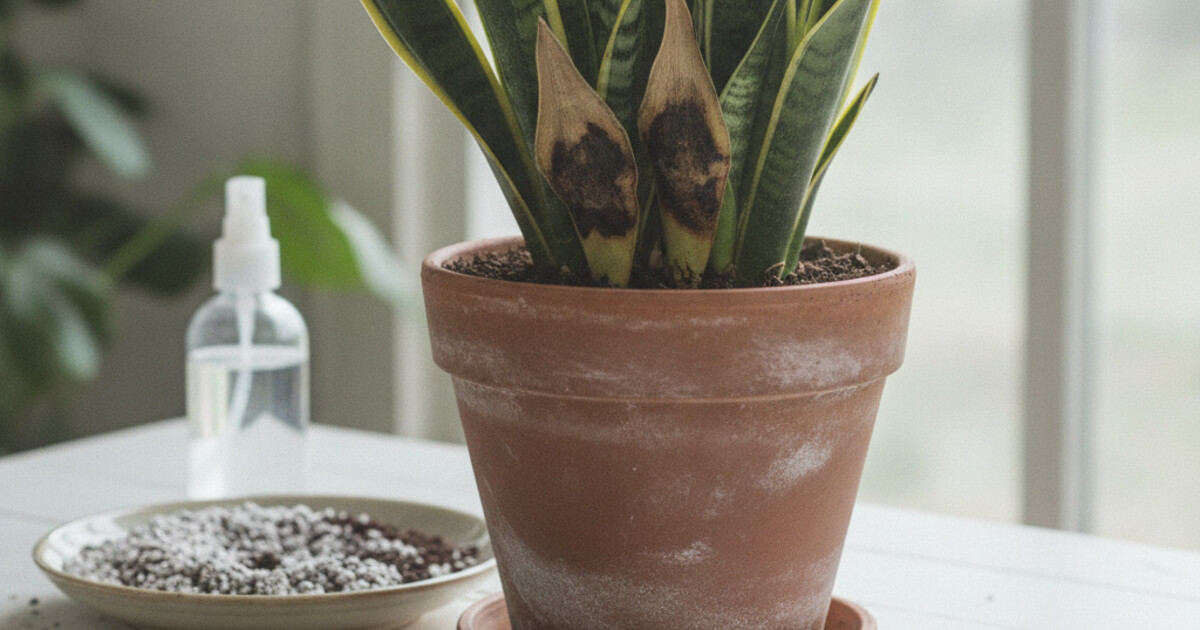
Snake plants have a reputation for surviving neglect. They sit in dim corners, go weeks without water, and look fine. But even Dracaena trifasciata has its limits, and when one starts declining, it usually does so quietly until the damage is hard to reverse.
The good news is that most dying snake plants can be saved if you catch the problem early. Yellowing leaves, a mushy base, brown crispy tips, or leaves that flop and pull out easily all tell you something specific about what’s gone wrong. Knowing the cause determines the fix.
To save a dying snake plant, first identify the cause. Mushy yellow leaves at the base signal root rot from overwatering. Crispy brown tips mean drought or fluoride. Translucent patches indicate cold damage. Remove all rotted roots, repot in dry well-draining soil, and fix the underlying watering issue to give the plant a chance to recover.
Why Snake Plants Die: The Most Common Causes
Snake plants are built for dry, rocky conditions. Their survival strategy is Crassulacean Acid Metabolism (CAM photosynthesis): they absorb CO2 at night and keep their stomata closed during the day to prevent moisture loss. This is why they handle drought so well, and why soggy soil kills them faster than almost anything else.
Reclassified from Sansevieria to Dracaena trifasciata by the Angiosperm Phylogeny Group in 2017, snake plants are native to tropical West Africa, from Nigeria south to the Democratic Republic of Congo. They grow in rocky, shallow soils with long dry periods between rains. Their CAM photosynthesis adaptation closes stomata during the day to prevent moisture loss and absorbs CO2 at night, letting a healthy plant go 6-8 weeks without water during winter dormancy.
Despite this drought tolerance, roots sitting in wet soil for more than 10-14 days develop anaerobic (oxygen-deprived) zones where Pythium and Fusarium fungi colonize quickly. These root rot pathogens thrive at 60-80°F soil temperature and spread from outer feeder roots inward toward the rhizome. Cold damage is the second most common cause of decline: leaf cells rupture below 50°F, leaving translucent water-soaked patches, and temperatures below 40°F typically kill the plant within a few days.
Here’s how to read the symptoms before you do anything:
Root rot: Lower leaves turn yellow or pale green and feel soft or mushy when you press them. The base of the plant may smell sour, look brown or black, and leaves pull out of the soil with almost no resistance.
Cold damage: Translucent, water-soaked patches appear on leaves, later drying to a papery brown. Most common on leaves closest to a drafty window or cold air vent.
Pests: Fine webbing on leaf undersides points to spider mites. White cottony masses at the base or between leaves are mealybugs. Small brown bumps stuck to the leaves are scale.
Fluoride toxicity or low humidity: Brown crispy tips on otherwise healthy leaves. The plant isn’t dying, just reacting to tap water minerals or dry indoor air.
If you’re not sure what you’re looking at, photographing the leaves and base with an app that tells you what’s wrong with your plant can save a lot of guesswork before you start cutting.
How to Save a Dying Snake Plant from Root Rot
Root rot is the most common and most serious problem. Work through these steps in order.
Step 1: Stop watering. If the soil is wet, let it dry completely before you do anything else. This buys a little time and makes the next steps easier.
Step 2: Unpot the plant. Tip the pot sideways and ease the root ball out. Shake off as much old soil as you can.
Step 3: Inspect the roots and base. Healthy roots are white or light tan and firm to the touch. Rotted roots are brown, black, or translucent and feel slimy or hollow. Press the rhizome (the thick horizontal base the leaves grow from): solid means salvageable, mushy or collapsing means that section is gone.
Step 4: Cut away everything damaged. Use clean scissors or pruning shears. Trim rotted roots back to healthy tissue. Remove any leaf with a black or mushy base, cutting it off at the rhizome. If a leaf is still green at the top but soft at the bottom, it still has to go. Leaving rotted material behind means the fungi keep spreading.
Step 5: Treat the cuts. Dust all cut surfaces with ground cinnamon, a natural antifungal that’s effective and gentle. Or dip the roots briefly in a 3% hydrogen peroxide solution for 30 seconds. Let everything air-dry for 30-60 minutes before repotting.
Step 6: Repot in dry, well-draining soil. A cactus and succulent mix works well. You can also make your own by mixing 50% standard potting soil with 50% perlite or coarse sand. Don’t water immediately. Wait 3-5 days, then give a very light watering.
Step 7: Let it recover in bright indirect light. New growth is the clearest sign the rescue worked. Snake plants grow slowly, so give it 4-8 weeks before drawing conclusions. Don’t fertilize until you see new leaves.
For context on how to tell whether the original problem was overwatering or underwatering, this guide on overwatered vs underwatered plant symptoms walks through the differences in detail.
Reviving a Snake Plant After Cold Damage
Cold damage looks alarming but often isn’t fatal if the rhizome is still intact. Move the plant away from the cold source first, whether that’s a drafty window, an outside wall in winter, or an air vent blowing cold air directly onto the leaves.
Remove any leaves that are completely mushy or have turned entirely brown from the cold. Leaves with partial damage (translucent patches that dried to brown while the rest of the leaf stayed green) can stay. They won’t recover their original appearance, but the plant can still use them.
Don’t fertilize a cold-stressed plant. Wait until it shows active new growth before adding any nutrients.
Getting Rid of Snake Plant Pests
Spider mites prefer hot, dry indoor conditions and usually appear in late winter when heating systems drop humidity. Rinse all leaves under a shower or hose, then wipe each leaf with a cloth dampened in insecticidal soap solution (a few drops of dish soap in a cup of water). Repeat every 5-7 days for 3 weeks to catch new hatches.
Mealybugs hide at the base and between tightly packed leaves where they’re easy to miss. Dab each visible cluster directly with a cotton swab dipped in 70% rubbing alcohol. Check the soil surface too, since mealybugs sometimes nest at the soil level near the rhizome.
Scale insects are slower to respond. A cotton swab with rubbing alcohol handles small infestations. For larger ones, neem oil spray applied to all leaf surfaces every 7-10 days is more effective.
How PlantlyAI Helps Diagnose What’s Wrong
Snake plant symptoms overlap in ways that make diagnosis tricky. A yellow mushy leaf at the base could be root rot, a mealybug infestation hidden at the rhizome, or just a natural leaf dying off at the end of its lifespan. Treating for root rot when the real problem is pests wastes time and risks losing the plant.
PlantlyAI lets you photograph the affected leaves, the base, and the root system if you’ve already unpotted the plant, and get an AI diagnosis of what’s actually causing the problem. The app returns a specific diagnosis and a step-by-step treatment plan, with organic, biological, and chemical options so you can choose what works for your situation.
You can also use it before you start to confirm what you’re dealing with. It’s free to use with 2 diagnoses a day, no account required, and it works for houseplants, garden plants, vegetables, and outdoor plants on both iOS and Android.
Just like saving a dying peace lily starts with confirming root rot versus drought stress, getting the snake plant diagnosis right before you cut is what separates a successful rescue from a failed one.
Frequently Asked Questions
Can a snake plant come back from root rot?
Yes, in many cases. If the rhizome (the thick base that the leaves grow from) is still firm and not entirely black or hollow, the plant can recover. Cut away all soft or rotted roots and any mushy leaves, treat the cuts with cinnamon or hydrogen peroxide, and repot in fresh dry soil. Recovery takes 4-8 weeks.
Why are my snake plant leaves turning yellow and mushy?
Yellow mushy leaves at the base almost always mean root rot from overwatering. Check the soil: if it’s been wet for more than 2 weeks, root rot is the likely culprit. Unpot the plant, trim any rotted roots, and repot in fresh well-draining soil. Hold off watering for 3-5 days after repotting.
How often should I water a snake plant?
Every 2-6 weeks in summer, every 6-8 weeks in winter. The exact schedule depends on your pot size, soil type, and light levels. Before watering, stick your finger 2 inches into the soil. If it still feels damp, wait.
Why does my snake plant have brown tips?
Brown crispy tips usually mean low humidity, fluoride in tap water, or inconsistent watering. Switching to filtered water or water that’s sat out overnight often solves it. Trim the brown tips with scissors at a slight angle to match the natural leaf taper.
Should I remove all the yellow leaves from my snake plant?
Remove yellow leaves only if the base is mushy or black. Cut them off at the rhizome with clean scissors. If a yellow leaf still feels firm when you press it, leave it for now: the yellowing might be temporary stress, and it could stabilize once you fix the watering.
If your snake plant’s symptoms are hard to read, PlantlyAI can help you figure out what’s wrong before you start cutting. Photograph the leaves and base, and the app identifies the problem and walks you through the fix. Download free on iOS or Android.
Not sure what's wrong? Diagnose your plant free
Upload a photo to our free plant disease identifier and get an instant diagnosis.