Tomato Leaves Turning Purple: Causes and How to Fix It
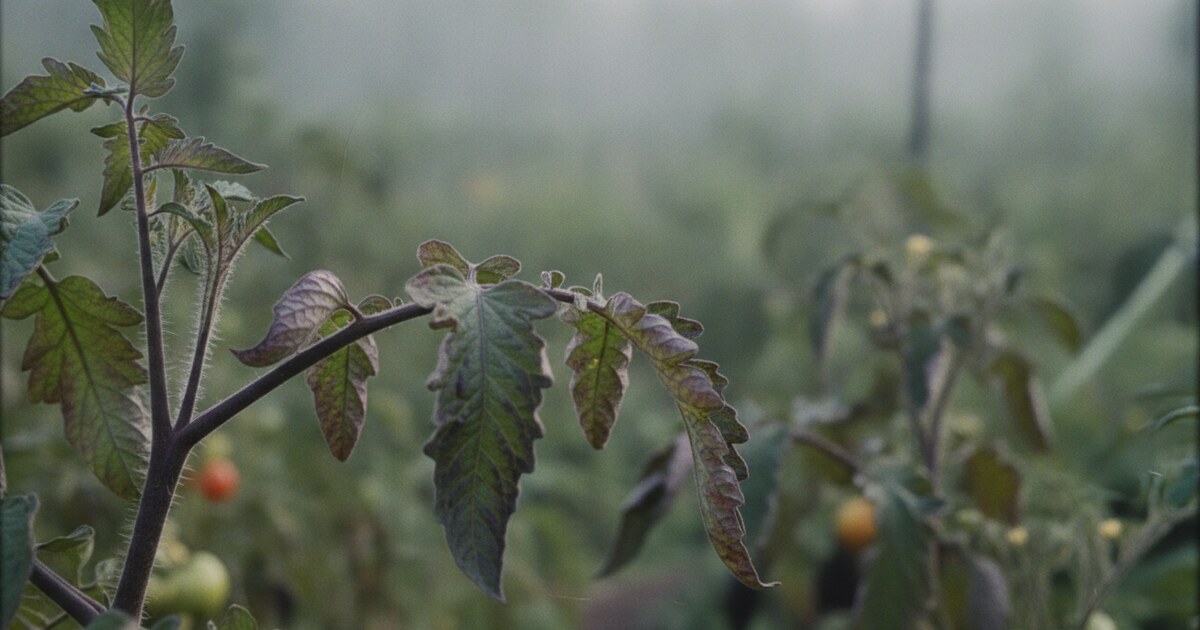
Purple tomato leaves tend to alarm gardeners because the color doesn’t belong there, and the cause isn’t always obvious. When tomato leaves start turning purple or reddish, it can trace back to six different problems, and the right fix depends entirely on which one you’re dealing with. Spraying neem oil on a phosphorus-deficient plant won’t help, and neither will fertilizing a plant that has a virus. Getting the diagnosis right in the first week or two can save your harvest.
Tomato leaves turning purple most often signals phosphorus deficiency triggered by cold soil temperatures below 60°F (16°C). When soil is too cold, roots can’t absorb phosphorus, so the plant produces anthocyanins (the same pigments in blueberries) and leaves turn reddish-purple. Warming the soil and applying a phosphorus-heavy fertilizer usually reverses the problem within 10-14 days.
Why Cold Soil and Phosphorus Deficiency Turn Leaves Purple
Phosphorus deficiency causes most purple tomato leaves, with cold soil as the trigger. Tomato roots stop absorbing phosphorus efficiently when soil temperature drops below 60°F (16°C), even in well-fertilized soil. The plant responds by producing anthocyanins, the reddish-purple pigments that also color blueberries and red cabbage.
These pigments accumulate in leaf tissue, turning leaves purple from the undersides outward, often spreading to veins and upper surfaces. Older leaves purple up first because phosphorus is mobile in plants and gets redirected toward new growth when supply runs short.
Soil pH intensifies the problem. Tomatoes need a pH between 6.2 and 6.8 to absorb phosphorus properly. Outside that range, phosphorus bonds with soil particles and becomes unavailable at the root level, even in phosphorus-rich soil.
When cold temperatures and off-pH soil combine, a healthy-looking plant can develop purple leaves in 5-7 days.
To fix it, lay dark plastic mulch around plants to trap heat and push soil temps past 60°F. Water in a liquid phosphorus fertilizer (products labeled “root starter” or “bloom starter,” with an N-P-K like 5-10-5 or 10-52-10) for fastest uptake.
If your soil pH is off, lime raises it; sulfur lowers it. A soil thermometer and a pH test kit, each around $10-15, take the guesswork out of both diagnoses.
How to Read the Purple: Underside vs. All Over
The location of the purple is your fastest diagnostic clue.
Purple mainly on the undersides of leaves is common in seedlings grown under bright grow lights and in outdoor plants adjusting to intense direct sun. The plant produces protective anthocyanins, and this pattern often resolves on its own as plants mature and light conditions normalize.
Purple spreading through the whole leaf, including the veins, points strongly to phosphorus deficiency combined with cold soil.
Purple spots or ring-shaped patterns on leaves and developing fruit suggest Tomato Spotted Wilt Virus. Plants with this pattern usually look stunted and distorted, not just discolored.
Purple leaf tips that curl upward or downward usually point to overwatering, root stress, or pest feeding (especially psyllids).
6 Causes of Purple Tomato Leaves
1. Phosphorus Deficiency
The most common cause by a wide margin. Phosphorus powers root development and energy transfer. When uptake stalls, anthocyanin production increases.
Symptoms: purple starting on leaf undersides and spreading to upper surfaces and stems; older leaves affected first; slow overall growth; upper leaf surfaces turning dark green before purple develops below.
Fix: liquid phosphorus fertilizer at the plant base; soil warming with dark mulch; pH adjustment if a test shows you’re outside 6.2-6.8.
2. Cold Soil Temperature
Cold soil blocks phosphorus absorption and is often the reason deficiency symptoms appear in spring. Even well-fertilized tomatoes can purple up if transplanted too early.
Symptoms: purple leaves concentrated in spring or early in the growing season; plants in shadier spots (colder soil) affected most; leaves may green up as weather warms without any additional fertilizing.
Fix: wait until soil consistently reads above 60°F before transplanting. A soil thermometer tells you this more reliably than the calendar or air temperature.
3. Intense Light or UV Exposure
Strong grow lights and high-UV outdoor conditions both trigger anthocyanin production as a protective response.
Symptoms: purple mainly on leaf undersides; seedlings under lights most often affected; plant otherwise looks healthy with no wilting or yellowing.
Fix: raise grow lights to 18-24 inches above seedlings. Outdoor plants in full, all-day sun can benefit from 30% shade cloth during peak summer heat, particularly in the weeks after transplanting.
4. Psyllid Infestation
Tomato-potato psyllids inject toxic saliva that disrupts nutrient transport in leaves, causing a condition called psyllid yellows, though the color can also run purple or bronze.
Symptoms: purple or bronze leaf discoloration combined with upward leaf curl; tiny yellow granules or white waxy flecks visible on leaf undersides (psyllid excrement, sometimes called “psyllid sugar”).
Fix: inspect leaf undersides with a magnifying glass. Treat with insecticidal soap, neem oil, or spinosad spray, then remove heavily infested leaves.
Nutrient transport disruption from pest feeding causes symptoms similar to those in pepper plant leaves curling, where the damage pattern looks like a deficiency even though the root cause is a pest.
5. Viral Disease
Two viruses cause purple or purplish coloration in tomatoes, and neither has a cure.
Tomato Spotted Wilt Virus (TSWV) spreads via thrips, particularly western flower thrips (Frankliniella occidentalis). Symptoms: dark brown or purple spots with yellow rings, distorted leaves, stunted plants, ringed or streaked fruit.
Curly Top Virus spreads via beet leafhoppers (Circulifer tenellus). Symptoms: leaves curl upward and turn purple or bronze; the plant stops growing and may wilt despite adequate water.
Fix: remove infected plants and bag them before disposal; composting diseased material spreads disease. Control thrips and leafhoppers with spinosad on surrounding plants.
For comparison, septoria leaf spot is a common tomato fungal disease that’s treatable and produces brown spots, not purple coloring. Knowing the distinction helps when you’re ruling out causes.
6. Overwatering and Root Stress
Waterlogged soil prevents roots from absorbing nutrients, including phosphorus, and the deficiency shows up as purple leaves.
Symptoms: purple or yellowing lower leaves; soil that stays wet for days after watering; plants that wilt despite moist soil (a sign of root rot rather than drought); dark or mushy roots if you pull the plant.
Fix: let soil dry out between waterings. Tomatoes do better with deep, infrequent watering than with daily light irrigation. Work compost or perlite into clay-heavy soil before planting season to build drainage from the start.
Purple Tomato Leaves in Seedlings: What’s Different
Seedlings purple up more readily than mature plants because their root systems are small and any disruption hits them fast. The cause is almost always phosphorus deficiency combined with cold temperatures or grow lights placed too close.
The most common scenario is seedlings started under grow lights in a cool room, basement, or garage. The combination of bright light (which boosts anthocyanin production) and cool room temperature (which slows phosphorus uptake) turns leaves purple within days of germination.
Fix: move grow lights to 18-24 inches above seedlings, raise room temperature to at least 65°F, and water once with a diluted phosphorus starter fertilizer at half the package strength. Most seedlings green up within 7-10 days. If purple leaves appear on seedlings in warm conditions with correct lighting, test soil pH before adding more fertilizer.
Will Purple Tomato Leaves Turn Green Again?
Yes, in most cases, once you address the underlying cause. Phosphorus deficiency and cold-triggered purple both reverse once soil warms and phosphorus uptake resumes. New growth comes in green, and existing purple leaves may gradually fade. Don’t expect already-purple leaves to snap back overnight; normalization usually takes 2-3 weeks.
Viral disease is the exception. Plants infected with TSWV or Curly Top Virus won’t recover. If a plant shows ring spots or yellow halos on the leaves alongside abnormalities on developing fruit, virus is the likely cause and the plant should come out. Leaving it in the garden lets thrips and leafhoppers carry the virus to neighboring plants.
When a Photo Diagnosis Saves You 2 Weeks
Purple tomato leaves look similar whether you’re dealing with a phosphorus shortage, psyllid damage, or early viral infection. The symptom overlaps enough that gardeners frequently apply the wrong fix and lose 2-3 weeks before trying something else.
PlantlyAI diagnoses the specific problem from a single photo. Photograph the affected leaves, and the app identifies whether you’re looking at a nutrient deficiency, pest feeding, or disease, then gives you a step-by-step treatment plan with organic, biological, or chemical options. Two free scans per day, no account needed to start.
If your tomato leaves turned purple recently and the cause isn’t obvious, a quick photo scan on PlantlyAI removes the guesswork before you spend money on the wrong fertilizer or treatment.
Frequently Asked Questions
Why are my tomato seedling leaves turning purple?
Seedling leaves turn purple almost always from phosphorus deficiency, made worse by cold temperatures (air or soil below 60°F) or grow lights placed too close. Raise the room temperature to at least 65°F, move grow lights 18-24 inches away from the tops of seedlings, and water once with a diluted phosphorus starter fertilizer. Most seedlings green up within 7-10 days.
Will purple tomato leaves turn green again?
Yes, if the cause is phosphorus deficiency or cold soil. Once phosphorus uptake resumes after soil warms or you fertilize, new growth comes in green and existing purple leaves may gradually fade. Virus-infected plants won’t recover; purple from TSWV or Curly Top Virus persists or worsens regardless of treatment.
Do all tomato varieties get purple leaves?
Most standard varieties can develop purple leaves under stress. Some heirloom and hybrid varieties, including ‘Indigo Rose’ and ‘Black Beauty,’ have natural purple pigmentation built into their genetics. If your plant’s leaves have been purple since germination and the plant otherwise looks healthy, check whether you’re growing a purple-fruited variety before assuming a deficiency.
Can I eat tomatoes from a plant with purple leaves?
Tomatoes from a phosphorus-deficient plant are safe to eat. Plants infected with TSWV or Curly Top Virus produce edible fruit, though it often looks deformed or tastes off. Fruit from psyllid-affected plants is also edible, though yield may be lower than normal.
What fertilizer fixes purple tomato leaves?
Use a phosphorus-heavy fertilizer labeled as a “root starter” or “bloom starter,” with an N-P-K like 5-10-5 or 10-52-10. Liquid forms work faster than granular because they’re immediately available at the roots. A half-strength dose watered in at the plant’s base, repeated after 10 days, usually reverses phosphorus-deficiency purple within 2-3 weeks.
Not sure what's wrong? Diagnose your plant free
Upload a photo to our free plant disease identifier and get an instant diagnosis.