What's Wrong With My Plant? Causes and How to Fix It
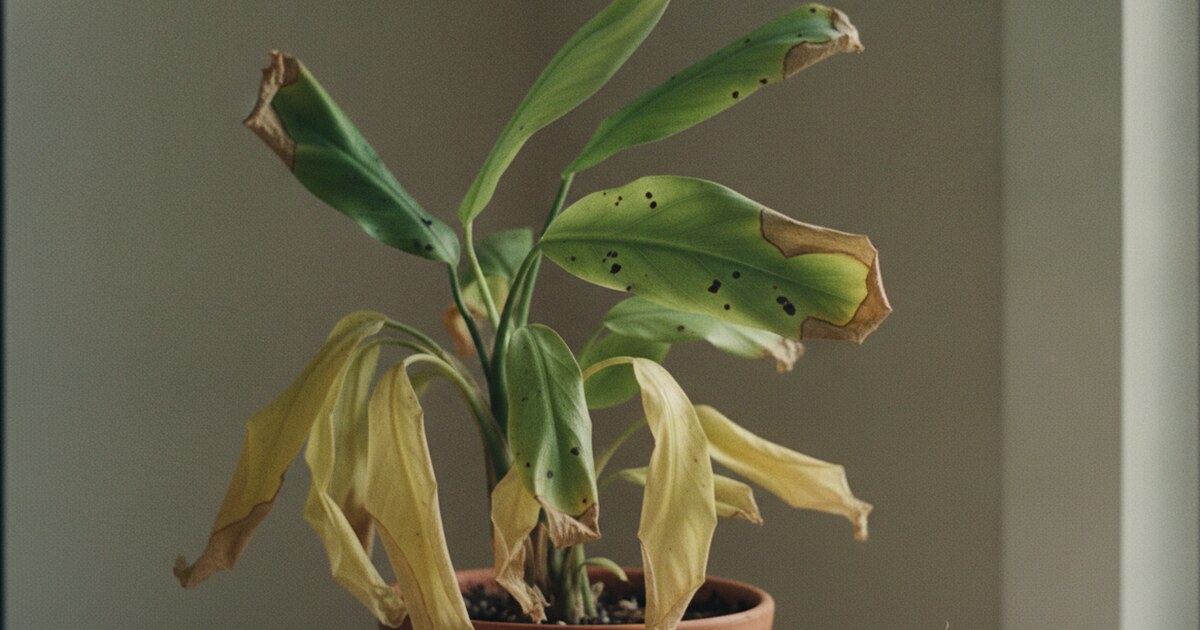
Something looks off. A leaf is going yellow, or the whole plant looks limp, or there’s a strange white powder you’ve never noticed before. Figuring out what’s wrong with your plant is frustrating because many plant problems look almost identical at first glance. Yellow leaves alone can mean overwatering, underwatering, too little light, root rot, or a nutrient deficiency.
Treating the wrong problem makes things worse. If you water more to fix a “wilting” plant that’s already overwatered, you accelerate root rot. If you spray fungicide on underwatering damage, nothing changes. Getting the diagnosis right is the first step.
This guide covers the five most common symptom groups, what each one usually means, and how to fix it. The key is reading the pattern rather than just the color.
Quick answer: Most plant problems fall into two categories: environmental stress (overwatering, underwatering, wrong light, low humidity) or living threats (pests and disease). Yellow leaves usually signal an environmental problem. Spots with defined borders, webbing, or white powder typically point to pests or fungal issues. Start by checking soil moisture and flipping a leaf to look at the underside.
How to Tell What’s Wrong With Your Plant: Start With the Pattern
Color is just one clue. Where the problem appears and how it spreads narrows the cause much faster.
Problems that begin on old, lower leaves and move upward usually mean nutrient deficiency or natural senescence. Problems appearing on new growth first tend to point to pests, root failure, or acute stress like cold or fertilizer burn. Damage limited to leaf edges (brown tips, crispy margins) typically means low humidity, fluoride in tap water, or underwatering rather than any disease.
University extension services, including Virginia Tech and the University of Maryland, classify plant problems into two categories: living (biotic) factors and nonliving (abiotic) factors. Data from multiple extension programs consistently shows that roughly 80% of houseplant problems are abiotic in origin; overwatering, insufficient light, temperature swings, and poor drainage cause the vast majority of plant failures. Fungal diseases appear as round spots with concentric rings. Bacterial infections produce dark, angular, water-soaked patches. Viral infections cause mottled, streaked, or distorted growth, and have no chemical cure. Root rot, one of the most common indoor plant killers, sets in within 2 to 4 weeks of consistent overwatering; roots turn brown and mushy and the soil smells sour. Identifying whether you’re facing an environmental problem or a living threat is the first diagnostic decision, and it determines everything that comes after.
Before anything else, do 2 quick checks:
- Push your finger 2 inches into the soil. Wet at the bottom means overwatering is a factor.
- Flip a leaf and look at the underside with a flashlight. Pests almost always live there first.
Yellow or Pale Leaves
Yellow leaves are the most common plant complaint, and also the least specific symptom.
A few lower leaves yellowing and dropping is usually just natural aging. Plants shed older leaves as they put energy into new growth. If 1 to 2 bottom leaves go yellow while the rest of the plant looks healthy, that’s normal.
Widespread yellowing across the whole plant means something is wrong. The likely causes:
- Overwatering or root rot (roots can’t pull nutrients when they’re waterlogged)
- Underwatering (pale, light yellow with crispy edges and dry soil)
- Too little light (slow, uniform fading across all leaves)
- Nitrogen deficiency (old leaves go yellow first; new growth stays pale green)
Check soil moisture first. Wet soil that has stayed wet for weeks points to overwatering. Bone-dry soil points to underwatering. For a full look at how to tell the difference, see Overwatered vs Underwatered Plant: How to Tell.
Brown Leaves, Brown Tips, or Crispy Edges
The shape of the browning narrows the cause quickly.
Brown tips only (rest of leaf healthy): Almost always low humidity, fluoride from tap water, or salt buildup from fertilizer. Try switching to filtered water or flushing the soil with plain water every few months.
Crispy edges spreading inward: Underwatering or low humidity. The leaf is drying out faster than the roots can supply water.
Brown patches with yellow halos: Fungal or bacterial leaf spot. The defined border around the brown area is the key identifier.
Soft, mushy brown areas: Root rot that has spread upward into the stem. Remove the damaged tissue and check the roots immediately.
Fully brown leaves that come off with a light pull: Either chronic underwatering or cold damage from a draft or cold window in winter.
Wilting, Drooping, or Soft Stems
Wilting looks alarming, but most wilting plants are fixable if you catch the cause early.
Wilting with wet, soggy soil: Overwatering. The roots are already damaged and can’t pull water upward. Adding more water makes it worse. Let the soil dry out and check the roots; trim any that are brown and mushy. If you suspect root rot, the full treatment guide is at Root Rot Treatment for Houseplants.
Wilting with dry soil: Underwatering. Water thoroughly and the plant should perk up within a few hours. If it doesn’t, the roots may have dried out too far.
Wilting right after repotting: Normal transplant shock. Keep it in indirect light, hold off on fertilizer, and water lightly for 2 to 3 weeks.
Wilting with healthy soil moisture: This one requires more investigation. Causes include root rot (roots present but dead), being severely root-bound, pests attacking the stem base, or a cold draft. Lift the plant from its pot and check the roots.
Spots, Mold, or White Coating on Leaves
Spots and coatings almost always point to a pest or disease. The texture tells you which.
White powdery coating that rubs off: Powdery mildew, a fungal problem. Remove badly affected leaves and treat with diluted baking soda (1 teaspoon per liter of water) or neem oil.
Gray fuzzy growth: Botrytis (gray mold). Common in cool, humid conditions or on damaged tissue. Remove affected leaves, improve air circulation, and cut back on watering.
Round spots with darker rings (concentric circles): Classic fungal leaf spot. The concentric rings are the key identifier. Copper-based fungicide or neem oil helps; remove affected leaves before treating.
Dark, angular, water-soaked spots: Bacterial infection. These spread quickly in humid conditions. Remove damaged tissue and avoid getting water on the leaves when watering.
Fine webbing on the undersides: Spider mites. Look closely for tiny moving dots. Wipe leaves with a damp cloth and treat with insecticidal soap or neem oil every 7 days for 3 to 4 weeks.
White cottony clusters in leaf joints: Mealybugs. Dab them with 70% isopropyl alcohol on a cotton swab, then follow up with neem oil spray.
Sticky residue on the leaves: Honeydew from sucking pests (aphids, scale, mealybugs, whiteflies). Flip the leaf and you’ll find the culprit on the underside.
Leggy Growth, Pale New Leaves, or Stunted Growth
If the plant is alive but not thriving — slow growth, small or pale new leaves, stems stretching toward the window — it’s almost always a light or space problem.
Stems stretching toward the light: Not enough light. The plant is reaching for more. Move it closer to a window or add a grow light.
Pale green new leaves: Nitrogen deficiency or root crowding. If the plant hasn’t been repotted in 2 or more years and was growing quickly, it’s likely root-bound. Lift it out; if roots circle the entire bottom and sides of the pot, give it a larger container.
Slow growth with healthy color: Normal dormancy in winter. Most houseplants barely grow from November through February and need fewer inputs during this period.
Small new leaves getting smaller over time: Root-bound. The roots have no room to expand, which limits how much water and nutrients the plant can absorb.
Still Not Sure What’s Wrong With Your Plant? Try PlantlyAI
Working through each symptom category takes time, and sometimes two problems look identical on the surface. PlantlyAI lets you skip the guesswork: take a photo of the affected leaf or plant, and the app identifies the disease, pest, or problem and delivers a step-by-step treatment plan.
The app covers houseplants, garden plants, vegetables, and trees. It offers a choice of organic, biological, or chemical treatments for each diagnosed problem. You get 2 free diagnoses per day with no account required.
Download PlantlyAI on the App Store or Google Play.
Frequently Asked Questions
How do I know if my plant is doing well?
A healthy plant puts out new growth regularly during the growing season, keeps its natural leaf color, and doesn’t drop leaves unexpectedly. The soil should cycle through wet and dry rather than staying permanently soggy or bone dry. Stems should be firm, not soft or mushy near the base.
What are the signs and symptoms of plant disease?
Plant disease symptoms fall into a few distinct patterns: round spots with defined borders (fungal), angular water-soaked patches (bacterial), mottled or streaked coloring (viral), white powder or fuzzy coatings on leaf surfaces (fungal growth), or soft brown rot at the base. Unlike environmental damage, disease symptoms usually have a clear edge or distinct texture rather than a gradual fade.
How do I treat a pathogen infection in plants?
Treatment depends on the pathogen type. Fungal infections respond to copper fungicide, neem oil, or bicarbonate sprays applied every 7 to 10 days. Bacterial infections need infected material removed immediately, watering practices changed to keep leaves dry, and sometimes a copper-based bactericide. Viral infections have no treatment; remove the plant to prevent spread to others.
How do I tell why my plant is dying?
Check soil moisture first to rule out overwatering. Then examine the roots for brown mushy tissue. Look at where symptoms appear: old leaves vs. new growth, edges vs. centers, uniform vs. patchy. Flip a leaf to check for pests on the underside. If the problem has a distinct texture (powder, fuzz, spots with borders), it’s likely a disease or pest. Uniform fading, general wilting, or crispy edges without clear borders almost always point to environment.
Not sure what's wrong? Diagnose your plant free
Upload a photo to our free plant disease identifier and get an instant diagnosis.