Peace Lily Yellow Leaves: Causes and How to Fix Each
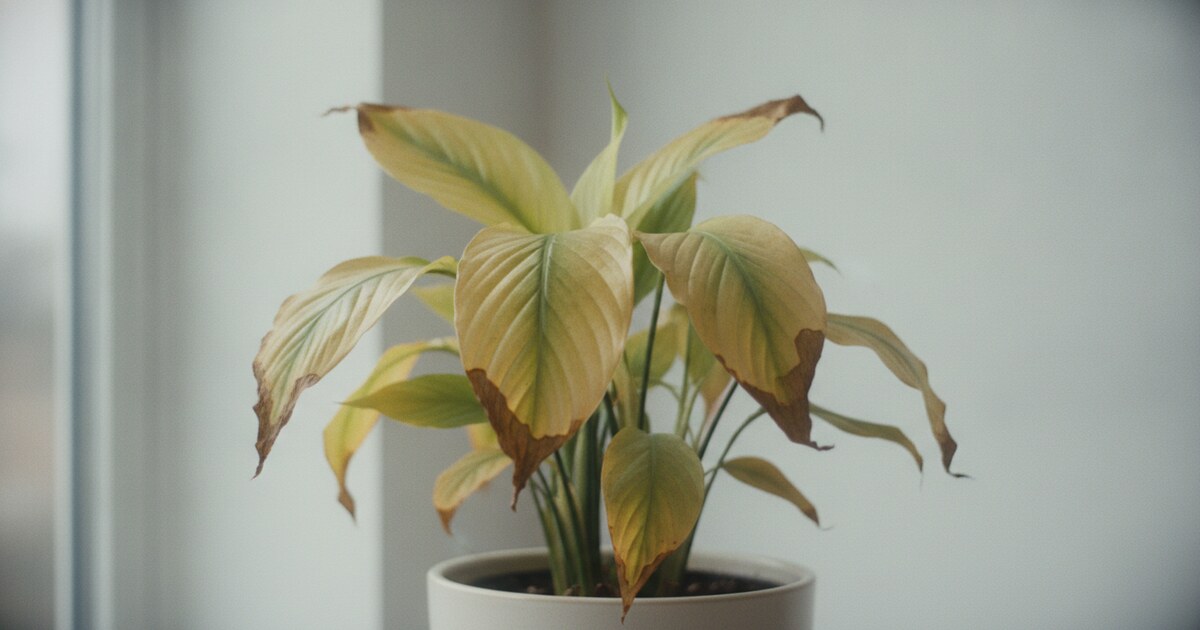
Peace lily leaves turning yellow can mean half a dozen different things, and treating the wrong cause makes it worse. The plant that yellowed from overwatering needs the opposite care from the one that yellowed from drought. Before you change anything, read the pattern: where the yellow appears, which leaves are affected, and whether the texture is soft or crispy tells you almost exactly what’s wrong.
This guide walks through each cause in order of how common it is, with the specific pattern to look for and the fix that matches.
Yellow leaves on a peace lily most often trace to overwatering or root rot. Other common causes include low light, underwatering, fluoride buildup from tap water, nutrient deficiency, natural leaf aging, and cold drafts below 55°F. Identifying which leaves are affected and checking soil moisture narrows the cause quickly.
Is This Normal? Check Your Lower Leaves First
If only 1 or 2 lower leaves are yellowing gradually while the upper leaves stay glossy green, you’re probably looking at natural senescence. Peace lily leaves live 1 to 3 years before the plant withdraws nutrients from them and lets them go. The leaf fades from deep green to pale yellow, the petiole softens at the base, and the plant redirects that energy upward to new growth.
One or two yellow lower leaves per month is normal, especially in late summer and fall. Remove them cleanly at the base and the plant moves on.
Spathiphyllum is a genus of about 47 species in the Araceae family, native to tropical forest floors in Colombia, Venezuela, and Central America. In its natural habitat, it grows beneath a dense canopy at 1,000 to 2,500 lux of indirect light, in air that stays between 65 and 85°F (18 to 29°C) year-round. Below 55°F (13°C), cell membranes begin to rupture, and the damage shows up days later as yellowing. Peace lily is one of the most fluoride-sensitive houseplants studied, showing leaf necrosis at fluoride concentrations as low as 0.5 ppm. Standard US municipal tap water sits at 0.7 ppm by EPA guidelines. Root pathogens such as Pythium and Phytophthora peak between 60 and 80°F and can colonize an anaerobic root system within 48 to 72 hours once soil stays saturated. Understanding this biology makes the diagnostic patterns below much easier to read.
The key question to answer before acting: is the yellowing confined to old lower leaves, or is it spreading through multiple parts of the canopy? Confined and slow means normal aging. Spreading and fast means a care problem.
Overwatering and Root Rot: The #1 Cause of Yellow Peace Lily Leaves
The pattern here is yellowing that starts in the lower or middle canopy and spreads upward, with leaves that feel soft and limp rather than crispy. The soil stays damp for more than 7 to 10 days without drying out, the pot feels heavy when you lift it, and there’s often a musty smell when you dig into the soil a few inches down.
Peace lily roots need oxygen. When soil stays waterlogged, anaerobic zones form and Pythium or Phytophthora move in fast. By the time leaves start yellowing, the roots have usually been compromised for a week or two already. That lag means you may not realize there’s a problem until it’s fairly advanced.
To fix it, stop watering for 10 to 14 days. Unpot the plant and inspect the roots: healthy roots are white and firm, rotted roots are brown, soft, and smell sour. If you find rot, cut away the damaged sections with clean scissors, dust the cuts with cinnamon powder or soak in a 3% hydrogen peroxide solution for 30 minutes, then repot into a mix of 60% potting soil, 30% perlite, and 10% orchid bark. Always use a pot with drainage holes.
For a full step-by-step rescue when root rot has already set in, How to Save a Dying Peace Lily covers the complete process.
Underwatering: Yellow Peace Lily Leaves With Crispy Edges
Underwatering yellows leaves differently. Tips go brown and crispy first, then the whole leaf fades from the outside inward. The texture is dry and papery rather than soft and limp. The soil is bone dry, the pot lifts light, and the rootball may have pulled away from the sides of the pot, leaving a visible gap.
Peace lily droops dramatically when thirsty, which fools a lot of growers. The droop looks similar to overwatering droop, but the cause is opposite. Check soil moisture before doing anything: dry soil plus drooping means underwatering; wet soil plus drooping means root rot is likely already in play.
To fix underwatering, water thoroughly until water runs freely from the drainage holes. Let the top 1 to 2 inches of soil dry before watering again. In summer that’s roughly every 7 to 10 days; in winter, every 14 to 21 days. If the rootball is severely dehydrated and water runs straight through without being absorbed, set the pot in a bowl of water for 20 minutes to rehydrate it from the bottom up.
Understanding the full overwater vs underwater picture makes the difference. Overwatered vs Underwatered Plant covers the diagnostic cues side by side, including the soil checks and leaf texture tests.
Low Light: When Every Leaf Slowly Fades Together
Peace lily tolerates lower light than most houseplants, and that reputation leads to a common mistake: placing it in a dim corner with almost no natural light and wondering why it slowly declines.
Low-light yellowing looks different from the other causes. The color bleeds out uniformly across all leaves at once, not concentrated in older or lower leaves. Everything shifts from deep green to pale yellow-green over weeks or months. The plant often stops producing flowers. There’s no mushy texture, no crispy edges. Just a slow, even fade.
If the plant is more than 8 feet from a window or the window faces north with no reflected light, low light is likely the problem.
To fix it, move the plant to a spot with bright indirect light: roughly 3 to 5 feet from an east- or north-facing window, or 5 to 6 feet from a south or west window with a sheer curtain. Avoid direct midday sun, which scorches leaves above 5,000 lux. Most plants recover their color within 3 to 4 weeks once light improves.
Cold air from an AC vent or drafts near a window can also cause yellowing that resembles low-light damage, especially if the plant sits below 55°F regularly. Check for drafts if moving the plant to better light doesn’t help within a few weeks.
Tap Water Fluoride and Mineral Buildup
If yellowing comes paired with brown leaf tips and a white crust forming on the soil surface or pot rim, tap water is the likely culprit.
Peace lily (specifically Spathiphyllum floribundum and its common cultivars) ranks among the most fluoride-sensitive houseplants. At 0.7 ppm, the standard fluoride level in US municipal water, sensitive cultivars develop tip burn and marginal yellowing after months of cumulative exposure. The damage builds slowly: the plant looks fine for a long time, then starts declining as buildup crosses a threshold in the leaf tissue.
Fluoride damage looks a lot like underwatering because both cause brown tips. The difference is that fluoride damage develops even when you’re watering correctly, and there’s often a white mineral crust on the soil or pot.
To fix it, switch to rainwater, distilled water, or filtered water. If tap water is your only option, letting it sit uncovered overnight off-gasses chlorine but doesn’t remove fluoride. Flush the soil every 3 to 6 months by slowly pouring 3 to 4 pot volumes of water through to wash out accumulated mineral salts.
Nutrient Deficiency: Yellow Leaves Between Green Veins
Interveinal chlorosis — yellow leaf tissue between veins that stay green — points to a nutrient problem rather than a watering or light issue. Iron and magnesium deficiencies both produce this pattern. Nitrogen deficiency tends to yellow leaves more uniformly, starting with the oldest leaves at the base and moving upward.
Peace lily doesn’t need heavy feeding, and most yellowing blamed on nutrients is actually overwatering or root rot in disguise. But after 2 or more years in the same soil without repotting or feeding, nutrients do deplete enough to cause problems.
To fix it, use a balanced liquid fertilizer (20-20-20 or similar) at half strength every 4 to 6 weeks from spring through summer. Skip fertilizing in winter, when the plant’s growth slows. If the interveinal pattern points specifically to iron deficiency, a chelated iron soil drench usually corrects it within 3 to 4 weeks.
Avoid fertilizing when the plant is stressed from root rot or repotting. Feed only after the plant has stabilized.
Diagnose Yellow Peace Lily Leaves With PlantlyAI
When the pattern isn’t obvious, a photo of the yellowing leaves tells PlantlyAI a lot. Snap a photo of the affected leaves and the soil, and the app identifies the most likely cause and gives a step-by-step treatment plan.
It distinguishes root rot from drought stress, fluoride burn from nutrient deficiency, sun scorch from natural aging, and everything in between. The plant disease library covers houseplants, vegetables, and outdoor plants, so it works across your whole yard if needed.
PlantlyAI gives you 2 free diagnoses per day with no account required. Get it on iOS or Android.
Frequently Asked Questions
Why are only the bottom leaves on my peace lily turning yellow?
Lower leaves yellowing one or two at a time is usually natural aging. Peace lily leaves live 1 to 3 years before the plant withdraws their nutrients. If several lower leaves yellow at once, or the yellowing spreads quickly upward through the canopy, overwatering is more likely than normal senescence. Check soil moisture first.
Can too much sunlight cause yellow peace lily leaves?
Yes. Direct sun above 5,000 lux bleaches chlorophyll out of peace lily leaves, leaving pale yellow patches where light hits hardest. The bleached areas don’t recover. Move the plant to bright indirect light and trim the most damaged leaves at the base. New growth should come in green.
How do I tell if my peace lily is overwatered or underwatered?
Check soil moisture and leaf texture together. Overwatered leaves feel soft and limp, soil stays wet for 7 or more days, and there’s often a musty smell at the soil surface. Underwatered leaves are dry and papery with crispy brown tips, and the pot feels noticeably light when lifted.
Should I remove yellow leaves from my peace lily?
Yes. Remove fully or mostly yellowed leaves by pulling or cutting the stem cleanly at the base. Leaving them wastes the plant’s energy and can invite fungal problems. Leaves that are partly yellow with green still showing can stay until they decline further, since the green portion still contributes to photosynthesis.
Can tap water cause yellow leaves on a peace lily?
Yes, especially over months of regular watering. Peace lily is one of the most fluoride-sensitive common houseplants, and standard tap water at 0.7 ppm causes yellowing and brown tips as fluoride accumulates in leaf tissue. Switch to filtered, distilled, or rainwater, and flush the soil every few months to clear mineral buildup.
Not sure what's wrong? Diagnose your plant free
Upload a photo to our free plant disease identifier and get an instant diagnosis.