Zucchini Leaves White Powdery Mildew: Causes & Treatment
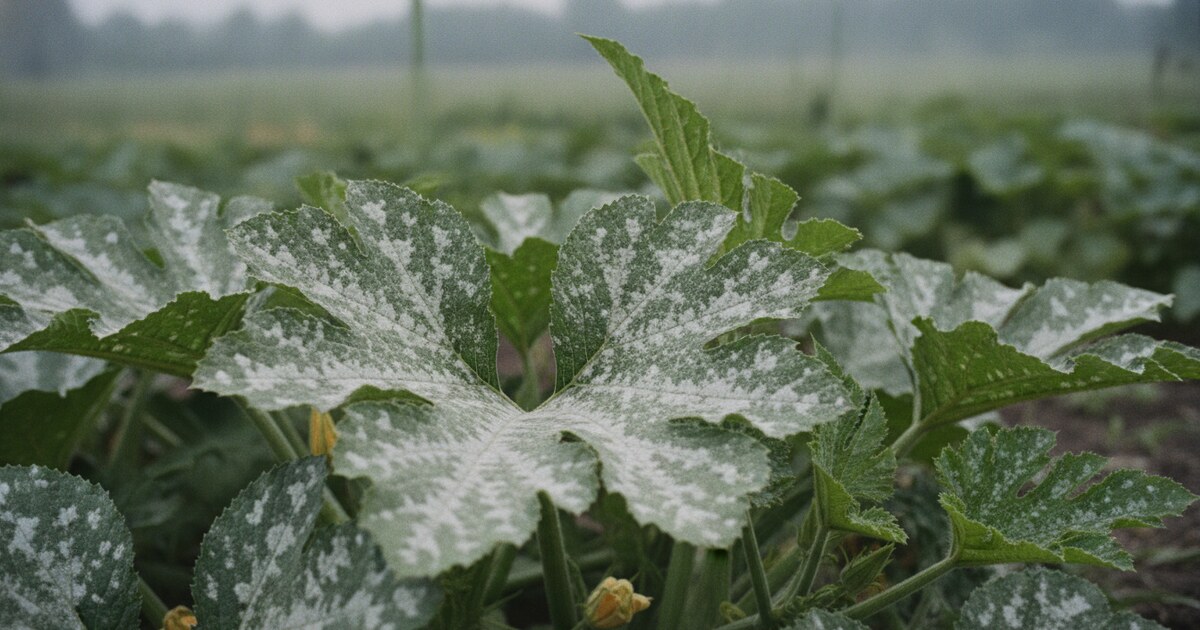
If you grow zucchini long enough, powdery mildew shows up. It’s one of the most predictable problems in a vegetable garden, especially once late summer arrives and the nights cool down. The white powder spreading across your leaves isn’t immediately dangerous, but left alone it weakens the plant and cuts your harvest. The good news is that you caught it, and most cases respond well to treatment.
This guide covers how to identify powdery mildew on zucchini, what causes it, and how to clear it up with organic and chemical options.
Powdery mildew on zucchini leaves is a fungal infection caused by Podosphaera xanthii. It appears as white or gray powdery spots on leaf surfaces, usually starting on older leaves near the base. It spreads quickly in warm, dry weather. Most plants recover with treatment, though heavy infections reduce fruit production.
What Powdery Mildew Looks Like on Zucchini
The first sign is usually a small circular white spot on the upper surface of a leaf. It looks a bit like someone pressed a flour-dusted finger to the plant.
The spots grow and merge over a few days until the entire leaf surface looks coated. In severe cases the coating spreads to stems and the undersides of leaves. You might also see leaves starting to yellow or curl as the infection deepens.
Powdery mildew looks different from other white markings on zucchini:
- Variegated leaf patterns are part of the leaf from the start, not spreading outward
- Water spots leave flat, dry mineral deposits, not a fluffy powder
- Mite damage creates pale stippling across the leaf surface, not a coating
- Downy mildew produces a gray or purple fuzzy growth on the undersides of leaves, not the upper surface
Powdery mildew on cucurbits (squash, zucchini, pumpkin, cucumber) is caused by the fungus Podosphaera xanthii, previously classified as Sphaerotheca fuliginea. Unlike most fungal diseases, it doesn’t need wet leaves to spread. It thrives in warm temperatures between 60 and 80°F (15 to 27°C) with moderate humidity and dry, cool nights. The white powder visible on leaf surfaces is fungal mycelium and thousands of airborne spores called conidia. A single infected leaf can release millions of spores per day, carried by wind to neighboring plants. Infection starts on older leaves near the soil because humidity near the ground stays consistently higher. It spreads upward as the season progresses. Plants rarely die from powdery mildew alone, but a severe infection causes leaves to yellow, shrivel, and drop early. Research on cucurbit crops shows untreated infections can reduce fruit yield by 25 to 50%, particularly when the infection takes hold before peak production.
Why Zucchini Gets Powdery Mildew
Late summer is peak season. The combination of warm days, cool nights, and mature plant age creates the ideal conditions for an outbreak.
Three factors drive infection:
- Temperature swings: Warm days (70 to 80°F) followed by cool nights (50 to 60°F) are perfect for spore germination
- Poor air circulation: Dense plantings trap humidity around the leaves
- Plant age: Older leaves are more susceptible than young growth higher on the plant
One thing that doesn’t cause it: overwatering. The fungus spreads through airborne spores, not wet leaves. Overhead watering doesn’t make it worse, despite what you might read elsewhere.
Squash family plants are among the most susceptible crops in any vegetable garden. Even with careful spacing and good care, most zucchini plants will pick up some powdery mildew by late summer. Planning for it beats being surprised by it.
If your zucchini is also showing yellowing alongside the white powder, see squash leaves turning yellow for the causes that go beyond fungal disease.
How to Treat Powdery Mildew on Zucchini Leaves
Catch it early and organic options work well. Let it spread for a few weeks and you’ll need something stronger.
Step 1: Remove the worst-affected leaves
Pull off any leaf that’s more than half covered in white powder. Put them directly in the trash. Don’t compost them since powdery mildew spores survive most home compost piles.
Step 2: Apply a fungicide spray
Choose based on what you have available:
Baking soda spray works best on early infections. Mix 1 tablespoon of baking soda, 1 tablespoon of horticultural oil or dish soap, and 1 gallon of water. The baking soda raises the leaf surface pH above 8.0, which the fungus can’t survive. Spray thoroughly on upper and lower leaf surfaces and reapply every 7 to 10 days.
Milk spray is a research-backed organic option. Mix 1 part milk with 9 parts water. Research by Wagner Bettiol at Brazil’s Agricultural Research Corporation in the 1990s found a 10% milk solution performed as well as commercial fungicides on cucurbit powdery mildew. The mechanism is lactoferrin, a protein in milk that activates the plant’s immune response. Full cream, skim, and powdered milk all work. Apply in full sun so the solution dries quickly on the leaf.
Neem oil interferes with fungal reproduction. Mix 2 tablespoons per gallon of water with a few drops of dish soap as an emulsifier. Apply in the evening to avoid leaf scorch from direct sun.
Potassium bicarbonate is more effective than baking soda (sodium bicarbonate) and works on both active infections and as a preventive. It’s sold at garden centers under brand names like Kaligreen and MilStop. It raises leaf pH faster and breaks down more readily than sodium bicarbonate.
Sulfur-based fungicides are the right tool for severe or late-season infections. Follow label directions carefully, and don’t apply when temperatures are above 90°F.
Step 3: Improve airflow around the plant
Trim leaves that cross and press against each other. Better air circulation slows the spread significantly, even without any chemical treatment.
Step 4: Keep treating weekly
No spray works in a single application. Plan on repeating treatments every 7 to 10 days for at least three to four weeks, even after the visible powder seems to clear.
Can You Still Eat Zucchini With Powdery Mildew?
Yes. The fruit is completely safe to eat. Powdery mildew affects the leaves and sometimes the stems, but the fungal infection doesn’t penetrate the fruit itself.
Zucchini harvested from an infected plant looks and tastes normal. Just wash it as you normally would.
Don’t eat the leaves. And treat the plant sooner rather than later. Heavy leaf loss reduces photosynthesis, which means smaller zucchinis and fewer of them before the season ends.
How to Prevent Powdery Mildew Next Season
If powdery mildew hit this year, it’ll likely be back. The spores overwinter in plant debris and soil, ready to reinfect next year’s planting.
Space plants wider. Zucchini needs at least 3 feet between plants, ideally 4 to 5. Crowded plants create the humid, low-airflow microclimate the fungus needs to establish.
Choose resistant varieties. Cultivars like Dunja, Patio Star, and Spineless Perfection were bred for mildew resistance. They’ll still get some infection in a bad year, but later in the season and less aggressively.
Start preventive sprays early. Once you’ve dealt with this, don’t wait for white spots before treating. Start applying milk spray or potassium bicarbonate in late summer, before the cool nights arrive.
Water at the base. A drip line or soaker hose keeps water off the leaves entirely and limits the spread of other fungal problems. Other fungal diseases can show up alongside powdery mildew in a vegetable garden. For a guide to another common one, see septoria leaf spot treatment.
Clean up in fall. Remove all squash family plant debris at the end of the season. Spores left behind in dead leaves will reinfect the following year’s crop.
How PlantlyAI Helps Diagnose Zucchini Plant Problems
White coatings on zucchini leaves are almost always powdery mildew, but not always. Downy mildew produces a similar-looking problem on the undersides of leaves. Angular leaf spot leaves pale angular patches that can look white from a distance. Treating the wrong disease delays recovery and can push the infection further.
PlantlyAI diagnoses plant diseases from a single photo. Snap a picture of the affected leaf and the app identifies the disease, pest, or deficiency, then walks you through a treatment plan with organic, biological, and chemical options. It works for vegetable gardens, outdoor plants, and houseplants. You get 2 free diagnoses per day with no account required.
If something looks off on your zucchini and you’re not certain what it is, a quick photo check takes under a minute. Getting the diagnosis right the first time saves days of treating the wrong problem.
Frequently Asked Questions
What is a good spray for powdery mildew on zucchini?
Potassium bicarbonate is the most effective organic option, outperforming standard baking soda in most studies. Milk spray (1 part milk, 9 parts water) is well-supported by research and works without any purchased products. For severe or late-season infections, a sulfur-based fungicide moves faster. Apply any spray to both sides of affected leaves and repeat every 7 to 10 days until the infection stops spreading.
Can you use Dawn dish soap for powdery mildew?
A few drops of dish soap help oil-based ingredients like neem or horticultural oil stick to the leaf surface. Soap alone doesn’t treat powdery mildew. Use it as an emulsifier in a baking soda or neem oil spray, not as the active ingredient. Concentrated soap solutions can burn leaves, so keep it to 2 to 3 drops per gallon of water.
Is baking soda or vinegar better for powdery mildew?
Baking soda is the better choice. It raises leaf surface pH to levels the fungus can’t survive, and it’s gentler on plant tissue. Vinegar is acidic and can burn leaves, especially in warm weather. Potassium bicarbonate, available at garden centers, is essentially an upgraded version of baking soda and performs better in direct comparisons.
Can zucchini recover from powdery mildew?
Yes, particularly when treated early. Plants treated in the early stages of infection typically keep enough healthy foliage to continue producing fruit through the season. Plants with heavy leaf loss may produce smaller or fewer zucchinis, but complete plant death from powdery mildew alone is rare.
If white powder has already spread across your zucchini leaves, start treatment today. Pull the worst-affected leaves, mix up a baking soda or milk spray, and keep at it weekly. If you’re not certain what you’re dealing with, PlantlyAI can identify it from a photo and give you the right treatment plan. Download it for iOS or Android and diagnose your plant before the infection spreads further.
Not sure what's wrong? Diagnose your plant free
Upload a photo to our free plant disease identifier and get an instant diagnosis.