ZZ Plant Leaves Turning Yellow: Causes and How to Fix It
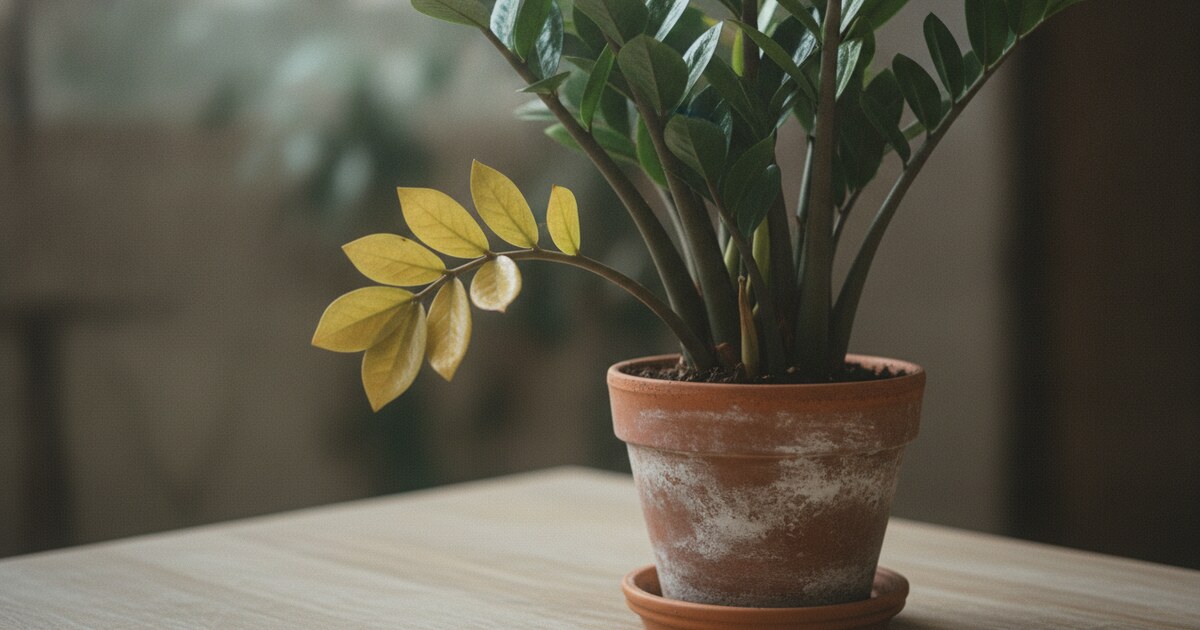
ZZ plants are famous for being low-maintenance. They handle low light, tolerate drought, and sit quietly for months without complaint. So when ZZ plant leaves start turning yellow, it’s reasonable to be concerned. The plant has been reliable for so long that visible distress means something is genuinely off.
The good news: yellow leaves on a ZZ plant almost always trace back to one of a handful of fixable causes. Overwatering accounts for the majority of cases. But natural aging, direct sun, cold drafts, and nutrient gaps each produce distinct yellowing patterns, and picking the right fix depends on identifying which one you have.
ZZ plant leaves turn yellow most often from overwatering. ZZ plants store water in thick underground rhizomes and need to dry out completely between waterings: every 3 to 4 weeks in summer, every 6 to 8 weeks in winter. Too much water leads to root rot, which cuts off nutrient flow and causes leaves to yellow and drop.
Why ZZ Plants Are So Easy to Overwater
The ZZ plant (Zamioculcas zamiifolia) is native to Eastern Africa, where rainfall is seasonal and sometimes months apart. To survive those dry stretches, the plant evolved thick, potato-like underground rhizomes that store water reserves for weeks at a time. That’s what makes ZZ plants so resilient when you skip a watering (and, paradoxically, so easy to accidentally drown).
Most houseplants show obvious thirst signals: the soil dries out fast, leaves wilt, and the pot feels light. ZZ plants don’t give those signals reliably. The rhizomes keep the plant looking healthy even when the soil has been staying too wet for weeks. By the time yellow leaves appear, root damage may already have been building quietly for a month or more.
The most common mistake is watering a ZZ on the same weekly schedule as other houseplants. A pothos or peace lily dries out fast and appreciates regular water. A ZZ in a 6-inch pot in winter may genuinely need water only once every six to eight weeks. Watering it weekly is a slow path to root rot.
Overwatering and Root Rot: The Top Cause of Yellow ZZ Plant Leaves
Overwatering causes 70 to 80 percent of yellow leaf cases on ZZ plants. The ZZ (Zamioculcas zamiifolia) evolved in Eastern Africa’s drought-prone regions, storing water in thick underground rhizomes that can sustain the plant for 6 to 8 weeks without irrigation. This means ZZ plants need far less water than most houseplants: every 3 to 4 weeks in summer and every 6 to 8 weeks in winter. When watered too frequently, the soil stays wet long enough for root rot to develop, a fungal condition that can destroy 30 to 50 percent of the root mass before any yellowing appears on the leaves above. Signs that overwatering is the cause: yellowing that starts on the lower stems, leaf bases that feel soft or mushy, soil that smells musty when you dig into it, and roots that are dark brown or black rather than firm and white. Once root rot sets in, the plant can’t pull nutrients through the damaged roots, and leaves yellow from the base upward.
How to fix overwatering:
- Stop watering immediately and let the soil dry out completely.
- Unpot the plant and inspect the roots. Trim any dark, soft roots back to healthy white tissue with clean scissors.
- Repot in fresh, dry, well-draining soil (a standard potting mix cut with perlite works well).
- Wait two to three weeks before watering again after repotting.
- Going forward, only water when the top 2 inches of soil are completely dry throughout, not just at the surface.
Not sure whether your plant is overwatered or underwatered? The guide to overwatered vs underwatered plant walks through how to read the distinct signs for each.
When Yellow Leaves on a ZZ Plant Are Normal
Not every yellow leaf signals a crisis. ZZ plants naturally shed older leaves from the lower part of the stem as they push out new growth higher up. This is cellular replacement, not disease.
The practical threshold: one or two yellow leaves per month on the lower stem, with the rest of the plant looking healthy and actively growing, is almost certainly natural aging. Three or more leaves yellowing in the same week, especially if they’re spread across multiple stems or appearing mid-stem or higher, is worth investigating.
Look at where the yellowing is happening and how the leaves feel. Lower, older leaves turning yellow and falling cleanly from the base, with green healthy leaves above? Aging. Upper or mid-stem yellowing, soft mushy bases, or discoloration spreading upward? That points to overwatering, pests, or another care issue that needs attention.
Other Causes of ZZ Plant Leaves Turning Yellow
Too Much Direct Sunlight
ZZ plants do best in bright indirect light. Direct sun for more than two to three hours a day bleaches and yellows the leaves, typically producing a pale, washed-out yellow rather than a deep one. Move the plant back from a south- or west-facing window, or filter the light with a sheer curtain. A spot 5 to 8 feet from a bright window suits most ZZ plants well.
Not Enough Light
Very low light causes slow, gradual yellowing over weeks or months. If the plant lives in a dark corner far from any windows, the leaves lose color and the plant eventually drops them. ZZ plants tolerate low light better than almost any houseplant, but they still need a few hours of indirect light each day to stay healthy.
Cold Temperatures and Drafts
ZZ plants are comfortable between 60 and 75°F (16 to 24°C). Temperatures below 45°F cause yellowing that starts at the leaf tips and edges before spreading inward. Keep the plant away from cold air vents, drafty windows, and windowsills that get cold at night in winter.
Nutrient Deficiency
A slow yellowing where the veins stay green (called interveinal chlorosis) often points to a nutrient gap, most commonly nitrogen, magnesium, or iron. This is most common after two or more years in the same soil. A half-strength balanced liquid fertilizer applied once a month during spring and summer typically resolves it.
Pests
Spider mites, mealybugs, and scale insects occasionally show up on ZZ plants. Mite damage starts as small yellow speckles across the leaf surface before larger yellowing develops. Check the undersides of leaves for fine webbing, white cottony spots, or a sticky residue. Treat with neem oil applied every five to seven days for three to four weeks.
Transplant Shock
If you recently repotted and a few leaves yellowed shortly afterward, that’s likely transplant shock as the roots adjust. Keep the plant in stable conditions (indirect light, consistent temperature, minimal watering) for two to four weeks. New healthy growth emerging from the top is the clearest sign it’s recovering.
How to Diagnose Which Cause You Have
The location and texture of the yellow leaves are the fastest clues:
- Lower stem, one or two leaves, rest of plant green and healthy: Natural aging.
- Lower stem, multiple leaves, mushy bases, musty-smelling soil: Overwatering with likely root rot.
- Pale, washed-out yellow on upper or outer leaves: Too much direct sun.
- Slow general pallor spreading across the whole plant: Insufficient light or nutrient deficiency.
- Yellowing concentrated at leaf tips and edges: Cold exposure or drafts.
- Small yellow speckles scattered across the leaf surface: Pest damage; check the undersides immediately.
Other drought-tolerant houseplants show a nearly identical pattern. If you’ve worked through snake plant leaves turning yellow before, you’ll recognize the overwatering signs quickly: both plants handle drought well but show fast, visible decline when the roots stay wet.
How PlantlyAI Can Help Diagnose a Sick ZZ Plant
When the yellowing pattern is ambiguous, or when you’ve worked through the checklist and the cause still isn’t clear, a photo diagnosis cuts through the guesswork. PlantlyAI identifies the specific problem from a photo of your ZZ plant and provides a step-by-step treatment plan, with organic, biological, and chemical options.
Take a photo of the yellowing leaves and the base of the affected stems. The app checks the visual patterns against common problems including root rot, pest damage, sunburn, and nutrient deficiency, then tells you which one fits and exactly what to do next.
PlantlyAI is free to try with 2 diagnoses per day, no account needed. It works for ZZ plants, houseplants, succulents, vegetables, and more.
Frequently Asked Questions
Should I remove yellow leaves from my ZZ plant?
Yes. Yellow leaves won’t turn green again, and removing them lets the plant direct its energy toward healthy growth. Use clean scissors or pull the leaf cleanly away at the base. Removing the leaves doesn’t fix the underlying cause, though. Address that first, or the yellowing will keep spreading.
Can a ZZ plant recover from root rot?
Yes, if you act before the damage is too extensive. Unpot the plant, trim all dark and mushy roots back to healthy white tissue, and repot in fresh dry soil. Hold off on watering for two to three weeks after repotting. A ZZ that has lost less than half its root mass typically recovers fully within a few months, with new growth at the top as the clearest sign of recovery.
How often should I water my ZZ plant to prevent yellowing?
Every 3 to 4 weeks in summer and every 6 to 8 weeks in winter. The most reliable method is to push a finger 2 inches into the soil: if there’s any dampness at all, wait. ZZ plants handle underwatering far better than overwatering, and skipping a scheduled watering is almost always the right call when you’re unsure.
Why is my ZZ plant turning yellow even though I barely water it?
ZZ plants can also yellow from low light, cold drafts, or nutrient deficiency, not just overwatering. If the soil is dry and the roots look healthy when you unpot, check the plant’s light exposure and temperature. Slow, pale yellowing spreading across the whole plant (rather than at the base of the stem) typically points to insufficient light or depleted soil nutrients rather than a watering problem.
Not sure what’s causing your ZZ plant to yellow? PlantlyAI diagnoses plant problems from a single photo and gives you a clear, step-by-step treatment plan. Snap a photo of the yellowing leaves and the app tells you exactly what’s wrong and how to fix it: whether it’s root rot, a light issue, or pests. Try it free with 2 diagnoses per day, no signup needed. Get PlantlyAI on iOS or download for Android.
Not sure what's wrong? Diagnose your plant free
Upload a photo to our free plant disease identifier and get an instant diagnosis.