Basil Leaves Turning Yellow: 6 Causes and How to Fix Them
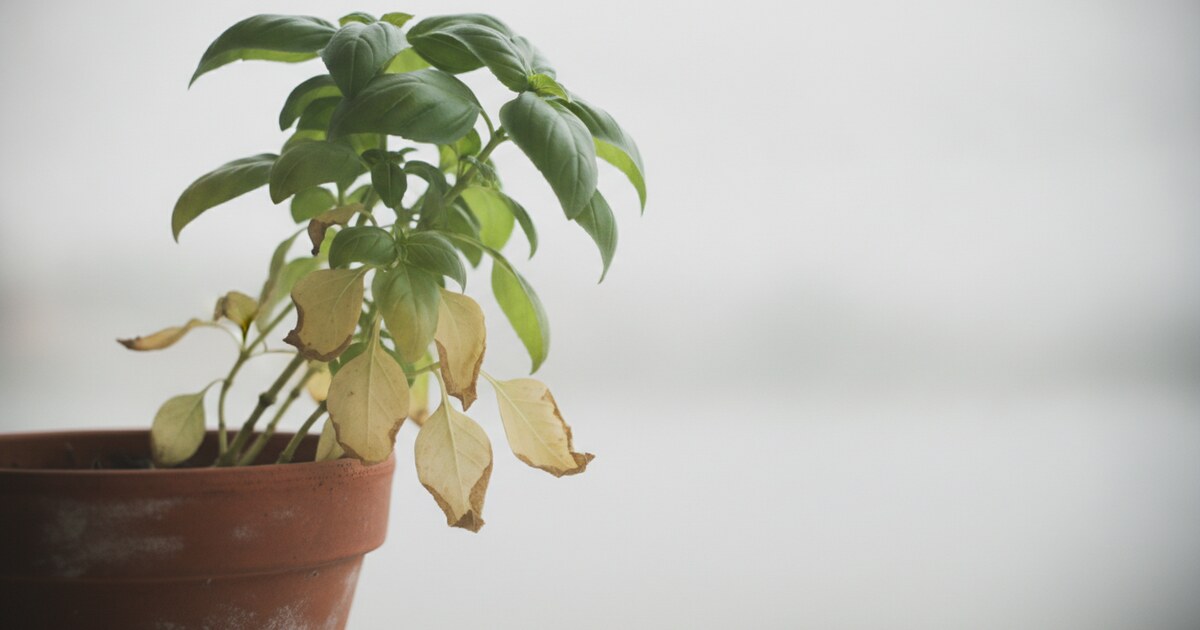
Basil is one of the most rewarding herbs to grow, but it has a short fuse when conditions aren’t right. Yellow leaves usually show up fast — sometimes overnight — and each cause looks slightly different if you know what to check. Treating overwatering the same way as a nutrient deficiency makes things worse, not better.
This guide covers the 6 most common causes of basil leaves turning yellow, how to tell them apart, and what to do for each one.
Quick answer: Basil leaves turn yellow for 6 main reasons: overwatering or root rot, nutrient deficiency (nitrogen, magnesium, or iron), too little light, cold temperatures below 50°F, aphid feeding, and downy mildew. Each cause produces a different leaf pattern. The location and timing of yellowing tell you which problem you’re dealing with before you start treating.
How to Read Yellow Basil Before You Treat Anything
Spend one minute looking at the plant before reaching for fertilizer or fungicide. The pattern of yellowing on basil is specific enough that you can usually narrow down the cause before checking anything else.
Basil (Ocimum basilicum) signals stress through leaf color in predictable patterns. Uniform yellowing starting on older, lower leaves with no spotting or fuzz points to nitrogen deficiency; basil redirects nitrogen from old tissue to new growth, leaving lower leaves pale and undersized. Faint angular yellow patches on upper leaf surfaces with gray-purple fuzzy spores on the undersides = downy mildew (Peronospora belbahrii), which spreads on cool nights below 60°F combined with high humidity. Sudden whole-plant yellowing and limpness arriving within 24-48 hours = cold injury; basil suffers chilling damage below 50°F (10°C) and shows symptoms fast. Mushy, darkening stem base with persistently wet soil points to overwatering and root rot. Pale, stretched, uniformly yellowing leaves on an otherwise compact plant = insufficient light; basil needs 6-8 hours of direct sun daily to stay green. Mapping the pattern before treating cuts time from diagnosis to fix.
Cause 1: Overwatering and Root Rot
Overwatering is the single most common reason basil leaves turn yellow, especially in container plants. Too much water drowns the roots — they can’t pull in oxygen, start rotting, and lose the ability to move water and nutrients up the stem.
What overwatered basil looks like:
- Lower, older leaves yellowing first (often with a slightly mushy feel)
- Stem base may feel soft or look dark
- Soil stays wet for more than 5-7 days
- Pot feels heavy
Check the soil before you water again. Push a finger 2 inches into the soil. Basil needs watering only when that top layer feels dry. In a container with good drainage, that’s roughly every 7-10 days in summer and 10-14 days in cooler months.
To fix overwatering:
- Stop watering and move the plant somewhere with good airflow.
- If the soil is soaked, tip the pot on its side for 30 minutes to drain excess water.
- Check the roots. Pull the plant from its pot and look. White, firm roots are healthy. Brown, black, or slimy roots indicate rot.
- Cut away all rotted roots with sterilized scissors. Repot into fresh, well-draining mix.
- Make sure the pot has drainage holes. Basil sitting in standing water will rot.
For help telling overwatering from underwatering, see the overwatered vs underwatered plant guide.
Cause 2: Nutrient Deficiency (Nitrogen, Magnesium, Iron)
Yellow basil leaves don’t always mean too much water. Nutrient deficiency looks different from overwatering and responds to a completely different fix.
Nitrogen deficiency: The most common. Lower, older leaves turn uniformly pale yellow, then bright yellow. New growth looks smaller and slower. No spots, no fuzz, just even yellowing that starts at the bottom. Basil is a fast grower and burns through nitrogen quickly, especially in containers where nutrients wash out with each watering.
Magnesium deficiency: Leaves yellow between the veins while the veins stay green. This interveinal pattern (green ribs, yellow patches) separates Mg deficiency from N deficiency. Older leaves show it first.
Iron deficiency: Similar interveinal yellowing but starts on the newest, youngest leaves rather than older ones. Less common in basil but can show up in alkaline soils above pH 7.
To fix nutrient deficiency: feed with a balanced, water-soluble fertilizer (10-10-10 or similar) mixed to half strength. One feeding usually restores leaf color within 7-10 days on a nitrogen-deficient plant. For magnesium, a diluted Epsom salt solution (1 tablespoon per gallon of water) works fast.
Don’t over-fertilize. High-nitrogen feeds push lots of leaf growth but make the herb taste weaker. Once every 2-3 weeks during the growing season is enough for container basil.
Cause 3: Too Little Sunlight
Basil comes from the Mediterranean and South Asia. It expects full, direct sun for 6-8 hours a day. Drop below that and the plant starts going yellow from lack of photosynthesis.
Low-light yellowing looks like:
- Pale, washed-out green shifting to yellow, starting on newer growth
- Stems stretch and get leggy between nodes
- Leaves are smaller than normal
- The plant leans toward the nearest light source
A windowsill that gets bright morning light but shade by noon often doesn’t give basil enough. South- or west-facing windows are better in the northern hemisphere. If you’re growing indoors and natural light is limited, a grow light set 4-6 inches above the plant for 14-16 hours a day fixes this fast.
Even a few days under a grow light will turn pale yellow leaves back to green if the cause really is light.
Cause 4: Cold Temperatures and Transplant Shock
Basil hates cold. Below 50°F (10°C), the plant suffers chilling injury and the leaves yellow, go limp, and sometimes drop entirely — sometimes within 24-48 hours. This is one of the fastest-appearing yellowing patterns and one of the easiest to misread as disease.
When cold is the cause:
- The whole plant yellows at once, not just the lower leaves
- Timing matches a cold snap, a night left by an open window, or moving outdoors in cool weather
- Leaves may look waterlogged or translucent along with the yellowing
- The soil moisture and light haven’t changed
The fix is simple: move the plant somewhere warm (above 60°F / 15°C). In mild cases the plant rebounds within a week. If the cold was sustained and most of the leaves are gone, the plant probably won’t recover. Start fresh.
Transplant shock can cause similar sudden yellowing when basil moves from a warm greenhouse into a cooler home or garden. Give transplanted basil a few days in a sheltered spot before exposing it to full conditions.
Cause 5: Aphids and Other Pests
Aphids are the most common pest on basil, and they cause distinctive yellowing through sap feeding. They cluster on new growth and undersides of leaves, puncture the leaf surface, and suck out the plant’s fluid.
Signs of aphid damage:
- Scattered yellow stippling or patches on leaves, particularly younger ones
- Sticky, shiny residue (honeydew) on leaves and nearby surfaces
- Tiny pale green, black, or white pear-shaped insects on leaf undersides or stem joints
- Distorted, curling new growth
Aphids reproduce fast; a small population can become a large one within days.
To get rid of aphids on basil:
- Knock them off with a strong jet of water, targeting the undersides of leaves. Repeat every 2-3 days.
- Spray with diluted neem oil (1 tablespoon per quart of water) in the evening. Coat all leaf surfaces.
- For indoor plants, check neighboring plants — aphids spread from plant to plant quickly.
If the infestation is severe and on a culinary basil you’re growing to eat, pinch off the most affected shoots. Heavy neem oil applications leave a residue that takes a few days to wash off.
If you’re seeing unusual patches or spotting that doesn’t match aphids, check the basil drooping and wilting guide — thrips cause a similar distorted-leaf pattern with different spot appearance.
Cause 6: Downy Mildew and Yellow Basil Leaves
Downy mildew (Peronospora belbahrii) is the most serious disease cause of yellow basil leaves, and it’s common enough that growers in humid climates see it every summer. Once established, there’s no spray that eliminates it — the plant usually needs to be removed.
How to identify downy mildew on basil:
- Faint angular yellow patches on the upper side of leaves (often mistaken for nitrogen deficiency at first)
- Gray-purple fuzzy or powdery growth on the undersides of those same leaves — this is the diagnostic sign
- Yellowing starts in the middle of the plant, spreads up and out
- Conditions: cool nights (below 60°F), high humidity, crowded plants, poor airflow
The Peronospora belbahrii pathogen spreads through spores on air currents and water splash. It moves between plants quickly once the conditions are right.
What to do:
- Check the leaf undersides first. No gray-purple fuzz = probably not downy mildew.
- If confirmed: harvest all healthy leaves you can use immediately.
- Remove and bag affected plants. Don’t compost them — spores survive in compost piles.
- Improve airflow for remaining plants. Space them farther apart.
- Avoid overhead watering; keep foliage dry.
For mild early cases, a copper-based fungicide or diluted neem oil applied to both leaf surfaces and reapplied every 5-7 days can slow progression. But if most of the plant is affected, the practical call is to pull it and replant with downy mildew-resistant varieties like ‘Eleonora’ or ‘Amazel’.
Note: downy mildew is different from powdery mildew. Powdery mildew produces a white coating on the upper leaf surface and is a separate disease. See the basil leaves with black spots guide for the full picture of basil-specific diseases.
How PlantlyAI Can Help When the Cause Isn’t Clear
Yellow leaves from nutrient deficiency and early downy mildew can look nearly identical in the first day or two. Both start on mid-plant leaves. Both produce even-looking yellowing without obvious spots. Getting the diagnosis wrong costs you a week or two on the wrong fix.
PlantlyAI analyzes a photo of your basil and identifies the specific problem — including the difference between early downy mildew, nitrogen deficiency, and overwatering symptoms that look similar at a glance. It then gives you a step-by-step treatment plan with organic, biological, and chemical options so you can pick what suits your setup.
It works for basil, other herbs, houseplants, vegetables, and garden plants. You get 2 free diagnoses per day with no account required, on iOS and Android.
Frequently Asked Questions
Can yellow basil leaves turn green again?
Leaves that are already yellow generally don’t turn back to green — the chlorophyll is gone and the damage is done. What you’re aiming for when you fix the cause is that new leaves come in fully green and healthy. If yellowing stops appearing on new growth, the problem is resolved.
Should I remove yellow basil leaves?
Yes, pinch them off once they’re mostly yellow. They’re not contributing to photosynthesis at that point and can harbor pests or fungal spores. Remove them cleanly at the stem, wash your hands after handling potentially diseased leaves, and check whether the yellowing is continuing on new leaves or has stopped.
Can you eat basil that has yellow leaves?
Mildly yellowed leaves that aren’t infected with downy mildew are safe to eat. They’ll taste weaker and less aromatic than green leaves, but there’s no food safety issue. Skip leaves that show gray fuzz on the undersides (downy mildew) or mushy spots — those indicate disease.
How often should I water basil?
Container basil generally needs water every 7-10 days in summer. Check the top 2 inches of soil: water when that layer is dry, not before. Basil in garden beds needs less frequent watering than container plants because garden soil holds moisture more evenly. Always water at the base, not overhead.
Why are only my lower basil leaves turning yellow?
Lower leaf yellowing with the top of the plant still green usually points to two causes: nitrogen deficiency (the plant pulls N from old leaves for new growth) or overwatering/root rot (the plant sheds lower leaves as the root system struggles). Check the soil moisture first — if the soil is wet, root rot is more likely. If the soil is fine and the plant is actively growing, try a diluted liquid fertilizer.
Yellow basil leaves are almost always fixable once you know the cause. Check the pattern first — lower leaves or whole plant, spots or no spots, fuzzy undersides or clean — and you’ll have a solid diagnosis in under a minute. If the pattern is ambiguous, PlantlyAI can photograph the affected leaves and tell you exactly what’s wrong. Try it on iOS or Android — 2 free diagnoses per day, no account needed.
Not sure what's wrong? Diagnose your plant free
Upload a photo to our free plant disease identifier and get an instant diagnosis.