Bird of Paradise Leaves Curling: Causes and Fixes
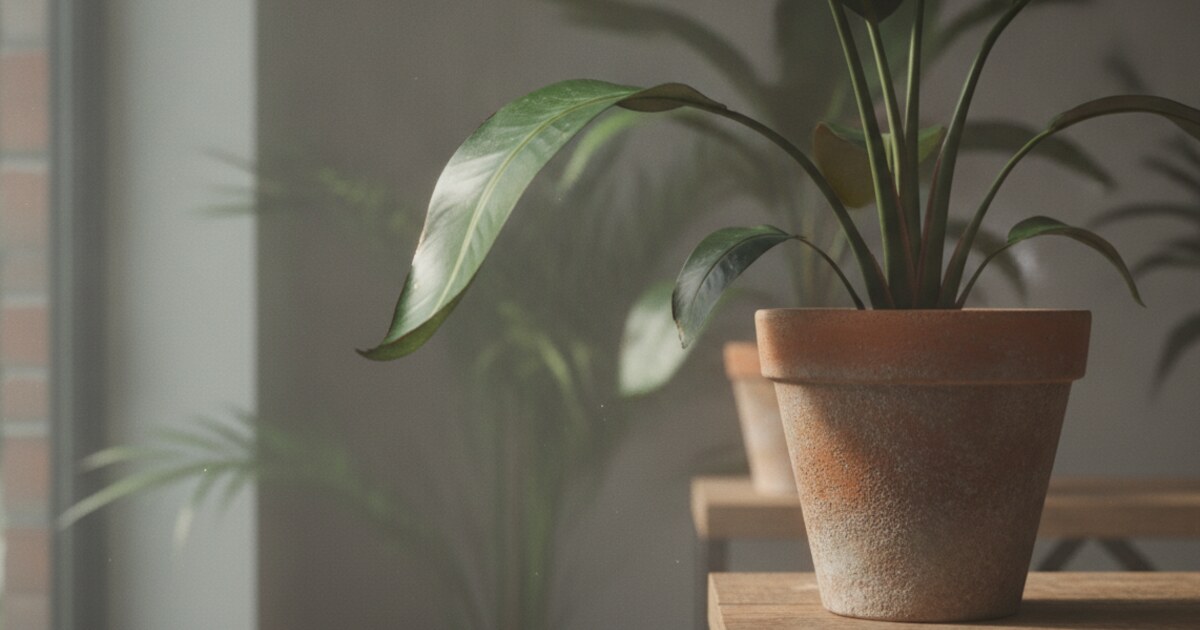
Bird of paradise plants are dramatic statement pieces, but those wide, glossy leaves curl fast when something’s wrong. The roll happens along the central midrib of the leaf, pulling both sides inward toward each other. It looks alarming, especially on a large Strelitzia nicolai with leaves the size of a small magazine. The good news: curling is usually reversible, and the curl pattern itself tells you exactly what to do.
Six things cause bird of paradise leaves to curl: underwatering, low humidity, overwatering, temperature stress, too much direct sun, and sap-sucking pests. Knowing which one you’re dealing with takes about two minutes of investigation.
Bird of paradise leaves curl mainly from underwatering or low humidity. The plant rolls its paddle-shaped leaves inward to slow moisture loss. Check the soil at 2 inches deep: dry soil points to underwatering. Curling combined with yellow leaves and wet soil points to overwatering instead. Curl direction and which leaves are affected narrow it down further.
Why Bird of Paradise Leaves Curl: Reading the Signs
Strelitzia reginae (the orange-flowered species, 3-5 ft tall) and S. nicolai (white flowers, 15-30 ft) are native to the Eastern Cape province of South Africa, where subtropical temperatures average 65-85°F and humidity stays around 50-70% year-round. Both species evolved large, paddle-shaped leaves to capture low-angle equatorial light, but that same structure makes them efficient moisture radiators. When humidity drops below 40% or soil moisture falls too low, the leaves roll inward along the central midrib, physically cutting the surface area exposed to dry air. This is a survival response, not permanent damage. The same rolling response gets triggered by inconsistent watering, cold drafts below 50°F, or sap-sucking pests (spider mites and thrips) that damage the leaf’s hydrostatic cells. Identifying which trigger is active comes down to checking three things: soil moisture at 2 inches deep, the humidity level near the plant, and which leaves are curling first: older ones, newer ones, or all at once.
Quick diagnostic:
- Inward curl, dry soil, dry air = underwatering or low humidity
- Inward curl, soft stems, soggy soil = overwatering
- Curl on new leaves only, silver streaks or stippling = pests
- Sudden curl after a cold night or near an AC vent = temperature stress
- Curl with bleached or faded color = too much direct sun
(If none of these match what you’re seeing, a general guide to why plant leaves curl covers the full range of causes across houseplant species.)
Underwatering and Low Humidity
These two problems often hit together, especially in winter when heating systems dry out indoor air. A bird of paradise needs soil that’s consistently moist in the top 2-3 inches during the growing season, not saturated, but never bone dry.
Water every 7-10 days in summer, and back off to every 14-21 days in winter. If the soil pulls away from the pot edges or the pot feels unusually light when you lift it, it’s been too dry for too long.
For humidity, the target is 50-60%. Most homes run at 20-30% in winter (well below what this plant wants). A pebble tray with water beneath the pot adds a bit of moisture. A humidifier placed 2-3 feet away works better for severe cases.
Recovery from underwatering is fast: leaves typically ease back within 24-48 hours after a thorough watering. If the curl doesn’t ease within two days, humidity is probably also a factor. See the full overwatered vs underwatered plant guide for help reading the symptoms side by side.
Overwatering and Root Rot
Overwatered bird of paradise leaves curl inward too, but the other signs are different. Press a few stems near the base: soft or mushy texture points to overwatering. Yellow leaves alongside the curl is another marker. Check the soil — soggy soil that smells earthy or sour points to root rot developing.
Bird of paradise roots need oxygen. Sitting in waterlogged soil for more than 7-10 days creates anaerobic conditions that let Pythium and Phytophthora fungi colonize the roots. Once root rot sets in, the plant can’t pull up water even when there’s plenty, which is why the leaves still curl and look thirsty.
To fix: let the soil dry completely before the next watering. If root rot is already present, unpot the plant, trim any black or mushy roots with clean shears, dust the cuts with cinnamon powder (a natural antifungal), and repot into fresh, well-draining mix. A good ratio: 60% potting soil, 30% perlite, 10% orchid bark. This gives roots the drainage they need without drying too fast.
Temperature Stress and Cold Drafts
Bird of paradise prefers 65-85°F. Temperatures below 50°F slow cellular function and cause the leaves to curl defensively. Even brief cold exposure from open windows in autumn or an AC vent pointing directly at the plant can trigger this.
The telltale sign: curling that appeared suddenly after a cold snap or shortly after you moved the plant near a window or vent. Leaf edges may also look waterlogged or slightly translucent.
Move the plant away from cold drafts and keep room temperature consistent. New leaves that emerge after the stress event typically come in uncurled. Existing curled leaves may not fully reverse if the cold was severe enough to damage cells.
Too Much Direct Sun
Strelitzia species evolved in high-light outdoor conditions, but indoor plants acclimated to lower light can’t handle full intensity from a south-facing window in summer. Too much direct sun causes the leaves to curl upward and inward along the edges as the plant reduces surface area exposed to heat.
Look for bleaching or a washed-out greenish-yellow tint alongside the curl. If the plant is outdoors, brown papery patches (scorching) usually appear on the same leaves.
Move the plant to bright indirect light, or diffuse the window with a sheer curtain. Outdoor plants do better with morning sun and afternoon shade during the hottest months. The curl usually eases within a week once the light intensity drops.
Spider Mites, Thrips, and Other Pests
Sap-sucking pests drain moisture from individual leaf cells, which causes those cells to lose turgor and the leaf to curl and distort. Spider mites leave fine webbing on the undersides of leaves and a dusty, stippled appearance on the surface. Thrips cause silver scarring and leave tiny black fecal deposits along the midrib.
Inspect the undersides of the curling leaves first. That’s where both pests concentrate. A 10x loupe helps spot spider mites, which are under 0.5mm and barely visible to the naked eye.
Treatment: isolate the plant immediately. For spider mites, spray with insecticidal soap solution every 3-5 days for 3-4 weeks, making sure to cover leaf undersides. For thrips, neem oil every 7 days works well; spinosad spray is the stronger option for severe infestations. Raising humidity to 60%+ slows both pests considerably. More detail on identifying and treating spider mites is in the spider mites on monstera guide, which covers the same pest on a closely related tropical species.
When Bird of Paradise Leaves Curl After Repotting
Curling shortly after repotting is normal and temporary. The root system gets disturbed during the move, temporarily reducing the plant’s ability to pull water from soil to leaves. Most plants stabilize within 1-2 weeks as the roots settle into fresh soil.
During recovery, keep the plant out of direct sun and maintain consistent moisture in the top 2-3 inches. Avoid fertilizing for at least 4-6 weeks: a stressed plant can’t absorb nutrients well, and excess fertilizer salts can burn healing roots.
If curl persists beyond two weeks after repotting, check two things. First, whether the new soil is retaining too much water (switch to a more porous mix). Second, whether the pot is too large — a bird of paradise in a pot much bigger than its root ball sits in wet, slow-drying soil between waterings, which tips toward root rot.
Frequently Asked Questions
How do I fix bird of paradise leaves curling? Check the soil first. Dry at 2 inches means water thoroughly and raise humidity toward 50-60%. Wet soil with soft stems means let it dry completely before the next watering. If water status looks fine, inspect the undersides of leaves for pests. Most cases resolve within 24-48 hours of addressing the right cause.
What does an overwatered bird of paradise look like? Curling leaves, soft or mushy stem bases near the soil, and soggy soil that may smell sour. Yellow leaves often appear alongside the curl. The plant looks limp and deflated even though the soil is wet — that’s the root rot preventing water uptake.
How often should you water a bird of paradise? Every 7-10 days in summer, every 14-21 days in winter. Let the top 2 inches dry between waterings. Pot size, soil composition, and whether the pot has drainage holes all affect dry-out speed. Lifting the pot to judge weight is more reliable than watering on a fixed calendar.
Should I cut the brown leaves off my bird of paradise? Yes. Remove fully brown or dead leaves by cutting at the base with clean shears. For leaves with just brown tips or edges, trim with scissors at a slight angle to match the natural leaf shape. Cutting brown tissue doesn’t harm the plant and improves airflow around the remaining foliage.
Can curled bird of paradise leaves recover fully? Curling from water stress or low humidity usually reverses within 24-48 hours of correcting the issue. Cold damage, severe root rot, or prolonged pest infestations can leave permanent curl or distortion on the affected leaves. New growth comes in normal once the underlying problem is fixed.
When you can’t tell which cause you’re dealing with, PlantlyAI can help. Take a photo of the affected leaves and the app runs a visual diagnosis, pointing to the specific problem and giving you a step-by-step treatment plan. Free to start, 2 diagnoses per day, no account needed. Available on iOS and Android.
Not sure what's wrong? Diagnose your plant free
Upload a photo to our free plant disease identifier and get an instant diagnosis.