Christmas Cactus Limp and Wilting: Causes and How to Fix It
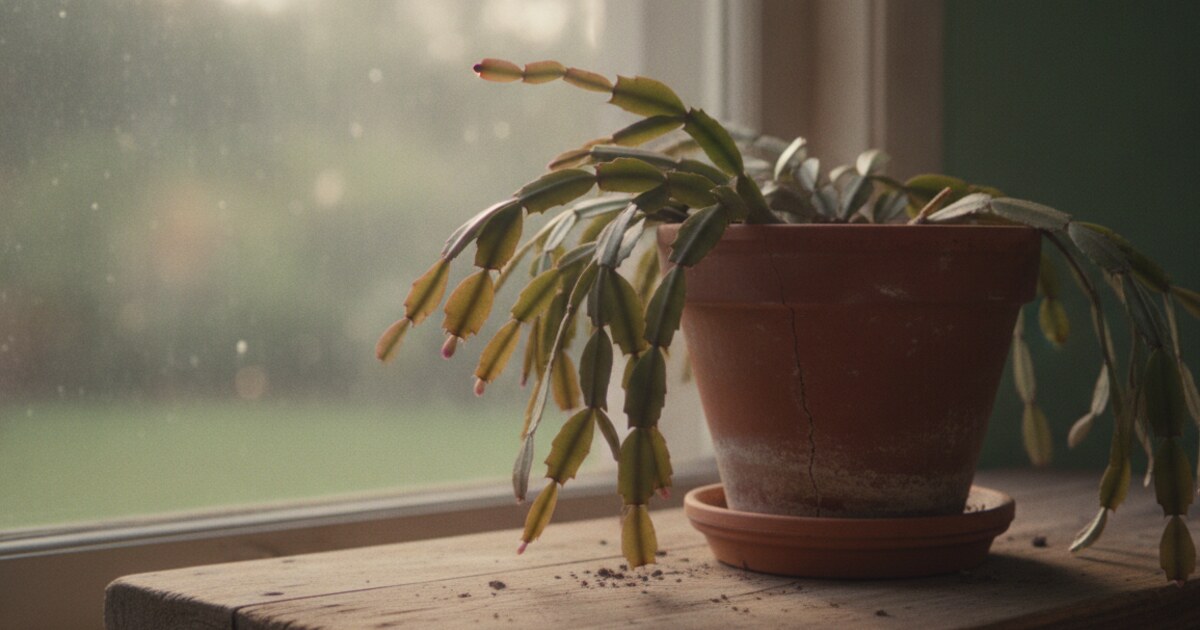
Your christmas cactus looked fine a few days ago, and now the segments are drooping and the whole plant seems to be collapsing. Christmas cactus wilting is one of the most common problems owners deal with, and the frustrating part is that two completely opposite issues (overwatering and underwatering) produce almost identical symptoms from above the soil. Getting the fix wrong makes things worse. This guide walks through every cause of a limp christmas cactus, starting with the simple soil test that tells you which problem you’re actually dealing with.
A christmas cactus goes limp due to overwatering and root rot, underwatering, temperature stress, or a root-bound pot. Overwatering is the most common cause; it damages roots so the plant can’t absorb water even when the soil is wet. Check the soil first: wet soil points to overwatering, dry soil to drought stress.
How to Diagnose a Limp Christmas Cactus
Before you water, repot, or move the plant, do the soil test. Push your finger 2 inches into the soil. Wet or soggy soil means overwatering is the likely culprit. Bone-dry soil that pulls away from the pot edges points to underwatering. Moist but not wet soil shifts suspicion toward temperature stress, drafts, or a root-bound pot.
Christmas cactus (Schlumbergera bridgesii and S. truncata) is a tropical forest cactus native to the humid cloud forests of southeastern Brazil, growing as an epiphyte on tree branches at elevations of 900-1,500 meters (3,000-5,000 feet). Despite its name, it has little in common with desert cacti and needs far more moisture: water every 7-10 days during active growth (spring through fall), and every 14-21 days in winter after blooming. The plant thrives at 60-70°F (15-21°C) with 50-60% relative humidity and bright indirect light. It blooms on short-day cycles, needing 13-14 hours of darkness per night for 6 weeks to initiate buds, which is why it flowers in November or December in the Northern Hemisphere. Because it evolved in a humid canopy environment, it’s sensitive to both waterlogged soil and prolonged drought. Segments stay plump and firm when conditions are right; they go limp when roots can’t deliver water, whether from rot, desiccation, or temperature shock.
After the soil test, check the base of the plant where stems meet the soil. Mushy or blackened stems at the base confirm root rot. A firm base with dry soil means drought stress or root-bound issues. A firm base with moist soil points to temperature or light problems.
Overwatering and Root Rot
Overwatering is the most common reason a christmas cactus goes limp. When the soil stays wet too long, roots suffocate and begin to rot. Once roots are damaged, they can’t pull water up to the stems. Even when the soil is soaking wet, the plant wilts.
Signs of overwatering:
- Soil is wet or waterlogged
- Stems feel soft or mushy at the base
- Reddish or purple tint to the segments in early stages
- Foul smell from the soil
- Brown or black roots when you unpot the plant
To fix early overwatering, stop watering immediately. Move the plant to a spot with good airflow and let the soil dry out completely. This takes 1-2 weeks. Empty the saucer after every watering so the roots don’t sit in pooled water.
For moderate to severe root rot, unpot the plant and shake off the old soil. Cut away any black or mushy roots with clean scissors, then let the roots air-dry for 2-3 hours. Repot in fresh, well-draining cactus mix; adding 20-30% perlite improves drainage significantly. Use a pot with drainage holes. Water sparingly for 3-4 weeks while the roots recover.
For background on reading your plant’s signals before the situation reaches root rot, see Overwatered vs Underwatered Plant: How to Tell. If you’re seeing softness at the base of a cactus plant, Cactus Turning Yellow and Soft at Base covers the root rot diagnosis in more detail.
Underwatering and Drought Stress
An underwatered christmas cactus goes limp differently from an overwatered one. The segments look flat and slightly wrinkled, feel thin and papery rather than soft and mushy, and the whole plant may sprawl or lean. The soil is bone dry when you check.
Signs of underwatering:
- Soil is very dry, often pulling away from pot edges
- Segments feel thin and flat rather than plump
- No soft spots or foul smell at the base
- Plant looks dull and deflated overall
To fix drought stress, water deeply. Pour water slowly until it runs freely from the drainage holes, let it drain fully, then water again after 30 minutes. Very dry soil sometimes repels water the first time through; the water channels down the pot edges and out before the root zone absorbs much.
Check back in 24-48 hours. A healthy root system pulls the water up quickly, and segments should firm up within a day or two. If the plant doesn’t respond, inspect the roots. Severely dry conditions can cause root dieback too, which requires repotting into fresh soil.
For a similar symptom pattern in trailing succulents, String of Pearls Shriveling covers how to distinguish drought stress from other causes in succulent-family plants.
Temperature Stress, Drafts, and Low Light
Christmas cactus prefers stable temperatures between 60-70°F (15-21°C). Below 50°F (10°C), the plant enters stress and segments go limp within hours. Above 90°F (32°C), heat stress causes the same drooping. Both extremes restrict water uptake at the roots, even when soil moisture is fine.
Temperature stress often happens fast. The plant looks healthy in the morning and wilts by evening after a cold draft or heat spike. Common culprits:
- Windows that frost over at night
- Exterior doors letting in cold air in winter
- Air conditioning or heating vents blowing directly on the plant
- Radiators or appliances generating dry heat nearby
Move the plant away from these sources to a stable, draft-free location with bright indirect light. Most christmas cactus recover within 24-48 hours once temperatures stabilize. If the damage is severe (segments dropping off or stems blackening), cut back to healthy tissue and let the plant recover in a stable spot.
Low light is a slower version of the same problem. Without enough bright indirect light, the plant can’t photosynthesize effectively and gradually loses the energy to keep segments firm. If your plant sits more than 6 feet from a window or in a north-facing room with no supplemental light, move it closer to an east or west window. Direct afternoon sun causes scorching in summer, so bright indirect is the target year-round.
Winter heating drops indoor humidity below 30% in many homes. Christmas cactus prefers 50-60% humidity. A pebble tray with water under the pot (keeping the pot bottom above the waterline) raises local humidity without waterlogging the roots.
When Christmas Cactus Is Root-Bound
A christmas cactus that has outgrown its pot becomes limp despite correct watering. The roots have no room to grow, the soil dries out faster than usual, and the plant can’t absorb enough water even when you water on schedule.
Signs of a root-bound christmas cactus:
- White roots visible at drainage holes or circling the top of the soil
- Soil dries out within 2-3 days of watering
- Wilting that rebounds briefly after watering but returns quickly
- Stunted growth with few or no new segments
To fix a root-bound plant, repot in spring after the blooming period ends. Choose a pot 1-2 inches larger in diameter. A much bigger pot holds too much excess moisture and creates overwatering risk. Use fresh cactus mix with added perlite. Christmas cactus roots are fragile, so ease the plant out carefully rather than pulling. Water lightly after repotting and keep it out of direct sun for a week while it adjusts.
Christmas cactus generally needs repotting every 3-4 years. If you’ve had yours in the same pot for longer than that and it’s wilting despite correct watering, this is likely the cause.
How PlantlyAI Can Help
A limp christmas cactus is genuinely tricky to diagnose because overwatering and underwatering look nearly identical from above the soil. If the finger test and base check give you mixed signals, a photo-based diagnosis app cuts through the uncertainty.
PlantlyAI lets you snap a photo of your plant and get an AI diagnosis of what’s wrong, along with a step-by-step treatment plan. The app covers houseplants, succulents, and tropical plants including christmas cactus. For each problem it finds, it gives you organic, biological, and chemical treatment options so you can choose based on severity and what you have on hand. Two diagnoses per day are free, with no account needed to get started.
If your christmas cactus is still limp after checking the soil and the base, snap a photo of the full plant and any affected stems, upload it to PlantlyAI, and get a specific diagnosis in seconds.
Frequently Asked Questions
Why is my christmas cactus drooping right after I watered it? A christmas cactus that droops immediately after watering almost always has root rot from prior overwatering. The roots are damaged and can’t absorb water even when it’s available. Unpot the plant, inspect the roots, and cut away any black or mushy sections before repotting in fresh, well-draining cactus mix.
Should I mist my christmas cactus to help with wilting? Misting won’t solve wilting and can cause fungal problems if foliage stays wet. To raise humidity, use a pebble tray with water placed under the pot instead. The tray raises local humidity steadily without wetting the stems or creating disease risk.
How do I know if my christmas cactus has root rot? Root rot shows up as soft, mushy, blackened stems at the base of the plant, a foul smell from the soil, and a plant that stays limp even with wet soil. Unpotting confirms it: healthy roots are white or tan, while rotted roots are brown or black and fall apart when touched.
Can a wilting christmas cactus be saved? Yes, in most cases. Overwatered plants recover after drying out and repotting with fresh soil. Underwatered plants firm up after a thorough soak. Temperature-stressed plants bounce back once moved to a stable spot. Severe root rot where most of the root system is gone has a worse outlook, but healthy stem cuttings can root in fresh cactus mix.
How often should I water christmas cactus to prevent wilting? Water every 7-10 days during spring and summer, and every 14-21 days in winter. The best approach is to check the top 1-2 inches of soil each time and water only when it’s dry. Christmas cactus handles short dry spells better than sitting in wet soil, so when in doubt, wait another day or two.
Not sure what's wrong? Diagnose your plant free
Upload a photo to our free plant disease identifier and get an instant diagnosis.