String of Pearls Shriveling: Causes & How to Fix It
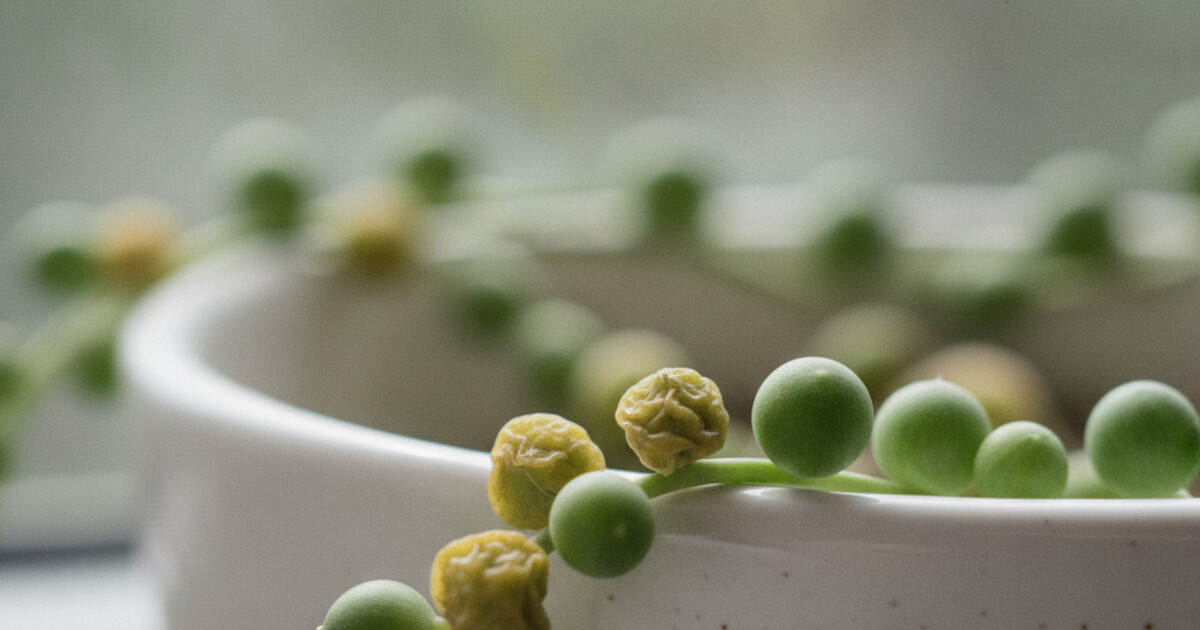
String of pearls (Curio rowleyanus) stores water inside each bead-shaped leaf. Those round, firm pearls are essentially tiny water reservoirs, and when something disrupts the water supply, they deflate fast. Shriveling string of pearls is almost always a moisture problem, whether there’s too little or, counterintuitively, too much.
The tricky part is that underwatering and overwatering can produce similar-looking symptoms. Getting the diagnosis right before you act is the difference between saving the plant and making things worse.
String of pearls shriveling is most often caused by underwatering. Flat, papery pearls with completely dry soil confirm this. Soft or mushy shriveling alongside wet soil points to overwatering and root rot. Heat stress, too much direct sun, and a rootbound pot are the other main causes.
Why Are My String of Pearls Shriveling?
Curio rowleyanus (formerly Senecio rowleyanus) is native to the semi-arid grasslands of southwestern Africa, particularly Namaqualand in South Africa. The plant evolved by packing water reserves into modified, bead-shaped leaves. When water levels drop below a threshold, or when root rot cuts off the roots’ ability to absorb water, the pearls lose that stored moisture and visibly deflate.
In indoor conditions, string of pearls needs watering every 14-21 days during active growth in spring and summer, and every 28-42 days in fall and winter. If the soil stays wet for more than 7-10 days, root rot can develop within 1-2 weeks of consistently waterlogged conditions, cutting off the water supply to the pearls even when the pot is saturated. Temperatures above 90°F (32°C) and direct sun exposure beyond 6 hours per day cause additional moisture stress that triggers shriveling regardless of watering frequency. A rootbound plant compounds the problem: roots filling the entire pot dry out within 2-3 days instead of the usual 14-21, causing shriveling between waterings.
Underwatering: The Most Common Cause of Shriveling
Underwatering causes the majority of shriveling cases in string of pearls grown indoors. The pearls look flat, feel dry and papery when you squeeze them gently, and the stems may look thin and stringy. The soil is bone dry, often pulling away from the pot edges.
How to diagnose it: Push your finger 2 inches into the soil. Completely dry all the way down confirms underwatering.
How to fix it: Water slowly and deeply. Pour water evenly over the soil surface and let it drain completely through the drainage holes. Once water runs out the bottom, wait 30 minutes and repeat. This saturates the entire root zone rather than just the top layer.
Most plants bounce back within 24-48 hours as the pearls reabsorb moisture. If the pearls haven’t plumped after 48 hours, the plant was severely dry and may need a second watering in 5-7 days to fully recover.
Going forward, check the soil every 10-14 days during the growing season. Water only when the top 2 inches of soil are completely dry. In winter, that interval stretches to 3-5 weeks as the plant’s growth slows considerably.
Avoid watering on a fixed schedule. Evaporation rates change with the seasons, your home’s temperature, and how much light the plant gets. Feeling the soil each time beats counting days.
Overwatering and Root Rot
Soft, mushy, or translucent pearls are a different problem from flat, papery ones. Shriveling pearls that feel squishy alongside wet soil signal overwatering and possible root rot.
Root rot destroys the plant’s roots, which means water can’t travel up into the stems and pearls. The pearls dehydrate from the top down even as the soil stays soaked. You may also notice yellowing pearls, dark stems near the soil line, and a musty or sour smell from the pot.
For a breakdown of how over- versus underwatering symptoms compare across plant types, the overwatered vs underwatered plant guide covers the key visual differences.
How to fix it: Unpot the plant and inspect the roots. Healthy string of pearls roots are white or pale tan. Rotted roots are brown, black, and mushy. Trim away all affected roots with sterile scissors, then let the remaining roots air-dry for 30-60 minutes. Repot into fresh, dry succulent mix in a clean pot with drainage holes.
Terra cotta pots are a solid choice for string of pearls because they wick moisture away faster than plastic or glazed ceramic, which lowers the risk of root rot between waterings.
If you’re also noticing white cottony patches on the plant alongside the moisture issues, mealybugs may be compounding the problem. The mealybugs on succulents article covers how to identify and remove them.
Heat, Direct Sun, and Low Humidity
String of pearls thrives in bright indirect light, around 4-6 hours per day. Beyond 6 hours of direct midday sun, the plant loses water faster than it can replenish it, causing the pearls to pucker and shrivel. The pearls may also bleach from deep green to a pale, washed-out color.
This is most common on south-facing windowsills in summer or when the plant sits outside on a hot patio. Moving the plant 12-18 inches back from the glass, or hanging a sheer curtain to filter the light, usually resolves the issue within 2-4 days.
Temperatures above 85-90°F (29-32°C) accelerate moisture loss through the leaf surface even in indirect light. Keep string of pearls away from heating vents and south-facing glass in the summer months.
Low humidity contributes to mild shriveling too, though string of pearls handles dry air better than most tropical houseplants. If indoor humidity falls below 30% in winter (common with central heating), grouping the plant with others or running a small humidifier nearby helps maintain moisture levels.
Being Rootbound
When string of pearls runs out of space in the pot, the roots fill every inch of soil and the plant dries out in 2-3 days instead of the usual 14-21. The pearls shrivel between waterings even when watering frequency is correct.
Check for roots circling the bottom of the pot or poking out of drainage holes. Either sign means it’s time to repot.
Move up one pot size (2 inches wider in diameter). Spring is the best window for repotting, when the plant is actively growing and recovers fastest from the root disturbance. Use a gritty, well-draining succulent mix; standard potting soil holds too much moisture and puts the plant at risk of root rot in its new container.
How PlantlyAI Helps
If your string of pearls is shriveling and the cause isn’t obvious, PlantlyAI can narrow it down in seconds. You snap a photo of the plant and the app diagnoses the problem, whether that’s underwatering, root rot, heat stress, or something else. It then gives you a step-by-step treatment plan covering organic, biological, and chemical options depending on what you have on hand.
PlantlyAI works on houseplants, vegetables, garden flowers, and crops. If you’ve got other plants showing symptoms alongside your string of pearls, the app handles those too. The string of hearts guide shows how a similar succulent presents when moisture problems develop, which can help you spot patterns across your collection.
The app gives 2 free diagnoses per day with no account required. Download it on iOS or Android to get started.
Frequently Asked Questions
Why are my string of pearls still shriveling after watering?
Shriveling 2-3 days after watering usually means root rot has set in. When roots are damaged, they can’t move water up to the pearls even when the soil is wet. Unpot the plant and check: healthy roots are white, rotted ones are brown and mushy. Trim the affected roots, let them air-dry for 30-60 minutes, then repot in fresh succulent mix.
What does an underwatered string of pearls look like?
Underwatered pearls look flat and feel papery or deflated when you squeeze them gently. The soil is completely dry and may be pulling away from the pot edges. After a thorough watering, pearls typically plump back up within 24-48 hours as the cells reabsorb moisture.
Can string of pearls recover from shriveling?
Yes, in most cases. Underwatered plants bounce back quickly after a deep watering. Plants with mild root rot can recover if you trim the damaged roots and repot in fresh soil. Severely root-rotted plants with very few healthy roots are harder to save, but stem cuttings from healthy sections can be propagated to start fresh plants.
How often should you water string of pearls?
Every 14-21 days during spring and summer, and every 28-42 days in fall and winter. Always wait until the top 2 inches of soil are completely dry before watering. In warm, bright spots the plant dries faster; in lower light it holds moisture longer. Check the soil rather than following a fixed schedule.
Should I mist string of pearls to fix shriveling?
Misting doesn’t help. It puts moisture on the leaf surface without reaching the roots, so a thirsty plant stays thirsty. Misting can also leave water sitting on the pearls and cause fungal spotting. Water at the soil level and let the pot drain completely through the drainage holes.
Worried about your string of pearls? Snap a photo with PlantlyAI and get a diagnosis in seconds. The app identifies whether it’s underwatering, root rot, sun stress, or another cause, then gives you a step-by-step fix to follow. Download it free on iOS or Google Play, and use 2 free diagnoses per day with no account needed.
Not sure what's wrong? Diagnose your plant free
Upload a photo to our free plant disease identifier and get an instant diagnosis.