Cucumber Leaves Turning Yellow: 7 Causes and How to Fix It
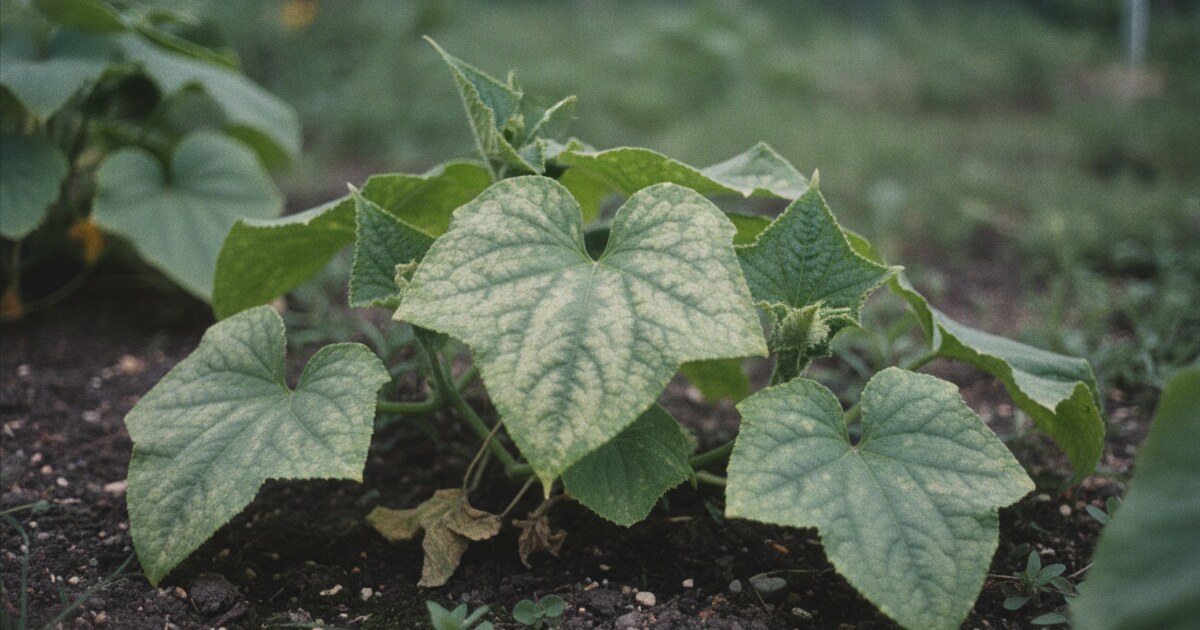
Your cucumber plant was thriving two weeks ago. Now the leaves are yellowing, and you can’t tell whether it’s the watering, the soil, or something worse. Seven different causes look similar at first glance, but each one needs a different fix. This guide walks through every cause, shows you how to tell them apart, and gives you a specific fix for each one.
Quick answer: Cucumber leaves turn yellow when the plant is stressed by nutrient deficiency, inconsistent watering, fungal disease, pest infestation, or too little light. The yellowing pattern tells you which one: uniform pale-yellow old leaves point to nitrogen deficiency, yellowing between veins means magnesium or iron is low, and water-soaked patches that go yellow suggest a fungal problem.
Why Cucumber Leaves Turn Yellow
Cucumbers are heavy feeders that need consistent moisture, good drainage, and at least 6 hours of direct sun daily. When any of these conditions slip, leaves show it fast.
Yellowing usually starts at the bottom of the plant on older leaves, which is sometimes normal aging. When it spreads upward or hits young leaves at the top, something’s wrong.
Cucumbers (Cucumis sativus) need 1 to 2 inches of water per week and a soil pH between 6.0 and 7.0 for optimal nutrient uptake. Nitrogen drives leaf color: a healthy cucumber leaf contains roughly 3-5% nitrogen by dry weight, and when soil nitrogen drops below 20 ppm, older leaves begin to pale within 7-10 days. Magnesium deficiency shows up differently, as interveinal chlorosis where the veins stay green while the tissue between them yellows, because magnesium is the central atom in every chlorophyll molecule. Fungal diseases like downy mildew (Peronospora cubensis) and cucumber mosaic virus can mimic deficiency symptoms but spread from yellow spots or water-soaked lesions rather than fading evenly. Fusarium wilt (Fusarium oxysporum f. sp. cucumerinum) kills infected plants in 3-5 days once it takes hold. Knowing which mechanism is active lets you pick the right fix before the damage spreads past recovery.
1. Nutrient Deficiencies That Cause Yellow Leaves on Cucumbers
This is the most common cause, and the pattern tells you exactly which nutrient is missing.
Nitrogen deficiency causes old leaves at the bottom to turn uniformly pale yellow, then moves up the plant. Nitrogen isn’t locked in leaves, so the plant pulls it from older tissue first when the soil runs low. Fix it by side-dressing with a balanced vegetable fertilizer (10-10-10 or 5-10-10 NPK) and watering it in well. You’ll see improvement in 7-10 days.
Magnesium deficiency turns leaves yellow between the veins while the veins themselves stay green. This interveinal chlorosis often appears mid-plant. Mix 1 tablespoon of Epsom salt into a gallon of water and spray directly onto leaves, or water the soil with the solution weekly for 3 weeks.
Iron deficiency yellows young leaves at the top while veins stay green. This usually means soil pH is too high (above 7.0), locking iron out even when it’s present. Test your soil pH; if it’s above 7.0, acidify with sulfur.
2. Watering Problems
Overwatering and underwatering both cause yellow leaves, and they look similar enough to confuse even experienced gardeners.
Overwatered cucumbers show soft, limp yellow leaves with soggy soil underneath. The roots suffocate in waterlogged soil, and the plant can’t absorb nutrients even if they’re there. Cut watering frequency and check that the bed or container drains freely. If roots look brown and smell off, you’re dealing with early root rot.
Underwatered cucumbers yellow at the leaf edges first, then crisp and curl inward. Soil feels dry 2 inches down. Cucumber plants need 1 to 2 inches of water weekly, consistently, not in sporadic large doses. Mulching around the base keeps moisture even between waterings.
The rule of thumb: push your finger 2 inches into the soil before watering. Moist = wait. Dry = water deeply until it drains from the bottom. For a full side-by-side comparison of both conditions, see Overwatered vs Underwatered Plant.
3. Fungal Diseases
Several fungal and fungal-like pathogens show up as yellow leaves on cucumbers.
Downy mildew (Peronospora cubensis) causes angular yellow patches on the upper leaf surface, with gray-purple fuzz on the underside. It spreads fast in cool, humid conditions with poor airflow. Remove affected leaves, space plants farther apart to improve circulation, and apply a copper-based fungicide every 7 days until symptoms stop spreading.
Leaf spot diseases like septoria and angular leaf spot cause small yellow halos around dark centers. They spread by water splash and infected soil debris. Remove affected leaves, stop overhead watering, and apply a fungicide labeled for cucurbits. For a detailed protocol on treating leaf spot, see Septoria Leaf Spot Treatment.
Fusarium wilt causes sudden overall yellowing followed by rapid wilting and plant death in 3-5 days. Infected plants won’t recover. Pull them, bag the debris, and rotate away from cucumbers in that bed for 3-4 years.
4. Pest Damage
Sap-sucking insects drain nutrients and discolor leaves in recognizable patterns.
Spider mites cause tiny yellow stippling across the entire leaf surface, not a uniform fade. Check the undersides of leaves for fine webbing and reddish-brown specks. Knock mites off with a strong stream of water, then follow with neem oil every 5-7 days until gone.
Aphids cluster on new growth and leaf undersides. Their feeding curls and yellows leaves and leaves behind sticky residue. Knock them off with water, then apply insecticidal soap every 4-5 days for 2 weeks.
Whiteflies leave yellow patches where they feed and can transmit viruses. Yellow sticky traps help monitor populations, and neem oil or insecticidal soap controls light to moderate infestations.
Cucumber beetles (striped or spotted) chew through leaves and spread bacterial wilt, which triggers rapid widespread yellowing. Row covers early in the season keep them out before populations build.
5. Too Little Light
Cucumbers need 6-8 hours of direct sunlight daily. In less light, leaves produce less chlorophyll and fade to a washed-out pale yellow-green, starting with the leaves most shaded by nearby plants or structures.
If the entire plant is paling and your spot only gets afternoon shade, there’s no watering or fertilizer fix. Move container plants to a sunnier position, or trim surrounding vegetation to open up the canopy.
6. Cold Temperature Stress
Cucumbers struggle below 50°F (10°C). Night temperatures that dip unexpectedly can yellow leaves on an otherwise healthy plant. A temporary cold snap typically lets the plant recover as temperatures rise. If cold nights repeat through the growing season, row covers protect plants on the coldest nights.
7. Cucumber Mosaic Virus
This virus creates a mottled pattern of yellow and green on leaves, usually with distortion and puckering. Unlike deficiency yellowing, it’s irregular and patchy, and often shows up alongside stunted, small new leaves.
There’s no cure. Remove infected plants immediately to stop the spread. The virus travels by aphids, so controlling aphid populations on nearby plants limits future infections. Use resistant cucumber varieties in future seasons.
How to Diagnose Why Your Cucumber Leaves Are Turning Yellow
The fastest approach is to look at three things: which leaves are affected, what the yellowing pattern looks like, and whether other symptoms are present at the same time.
| Symptom Pattern | Most Likely Cause |
|---|---|
| Old bottom leaves, uniform pale yellow | Nitrogen deficiency |
| Yellow between veins, veins stay green | Magnesium or iron deficiency |
| Angular yellow patches, gray-purple fuzz underneath | Downy mildew |
| Soft, limp yellow leaves with soggy soil | Overwatering |
| Yellow leaf edges, crispy and curling inward | Underwatering |
| Tiny yellow dots (stippling) with webbing | Spider mites |
| Mottled yellow-green patches, distorted leaves | Cucumber mosaic virus |
| Sudden total wilt and yellowing within 3-5 days | Fusarium wilt |
If the pattern fits multiple rows, treat the most likely cause first and reassess in 5-7 days. Squash and zucchini show nearly identical symptoms, so the same diagnosis table applies to both. See Squash Leaves Turning Yellow for a comparison of how these sister plants differ.
How PlantlyAI Helps Diagnose Cucumber Leaf Problems
Sometimes yellow leaves sit at the intersection of two causes, or the symptom is subtle enough that the table above doesn’t give you a clear answer. PlantlyAI lets you photograph your cucumber plant and get an AI diagnosis in seconds.
The app identifies the specific problem from your photo and gives you a step-by-step treatment plan with organic, biological, and chemical options so you can choose the approach that fits your garden. It works across vegetable gardens, houseplants, and crops, so it handles cucumbers alongside everything else you’re growing.
PlantlyAI is free to start with 2 diagnoses per day, no account needed. If your cucumber leaves are yellowing and the cause isn’t obvious, a photo diagnosis cuts through the guesswork.
Download PlantlyAI on App Store or Google Play.
Frequently Asked Questions
Why are the bottom leaves of my cucumber turning yellow first?
Bottom leaves yellowing first usually means nitrogen deficiency or natural leaf senescence (the plant retiring its oldest leaves as it matures). Check whether the yellowing is climbing upward. If it’s spreading toward newer growth, apply a nitrogen-rich fertilizer. If it’s only the lowest 2-3 leaves and the rest look healthy, it’s likely normal aging and nothing to treat.
Can yellow cucumber leaves turn green again?
Lightly yellowed leaves can partially recover once you fix the underlying cause, especially with nutrient deficiencies caught early. Leaves severely yellowed by disease or pest damage won’t reverse. The goal is stopping the spread and protecting the healthy tissue still on the plant.
Should I remove yellow leaves from my cucumber plant?
Remove leaves that are more than 50% yellow and any showing signs of disease or pest damage. Leaving diseased leaves on the plant speeds up the spread. Slightly pale older leaves that are otherwise intact can stay until they drop on their own.
How often should I water cucumbers to prevent yellowing?
Aim for 1 to 2 inches of water per week, applied deeply 2-3 times per week rather than shallow daily watering. Mulch helps retain moisture between sessions and prevents the wet-dry cycles that stress the plant. Check soil moisture 2 inches down before each watering session.
Not sure what's wrong? Diagnose your plant free
Upload a photo to our free plant disease identifier and get an instant diagnosis.