Dracaena Brown Tips: Causes and How to Fix Them
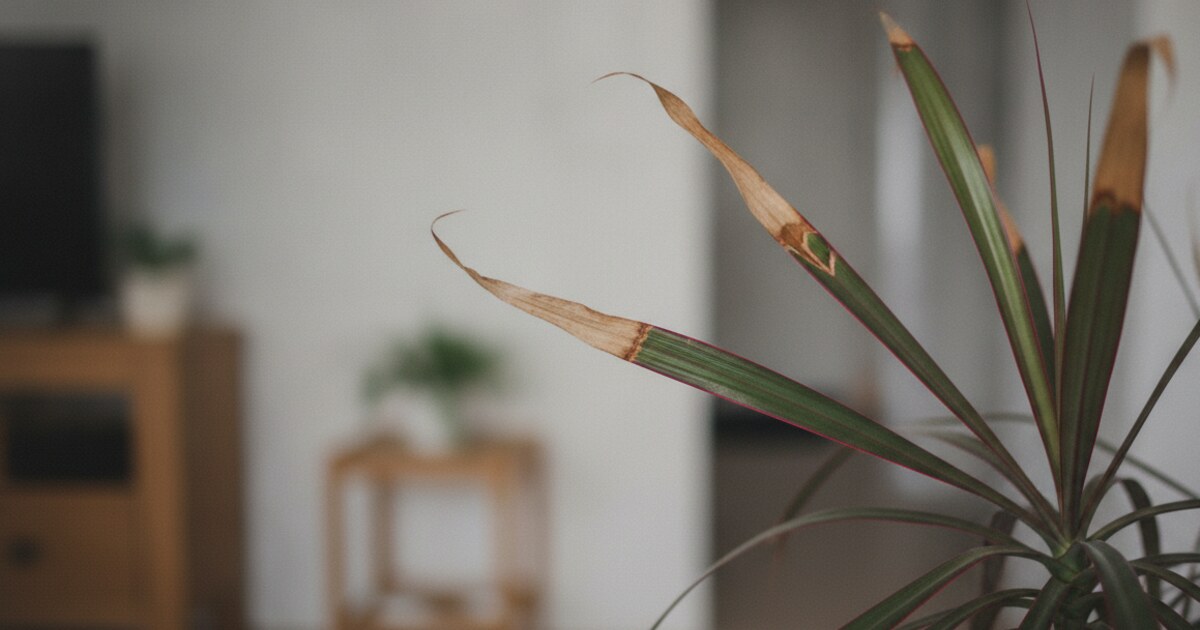
Dracaena are some of the most forgiving houseplants around, but brown tips have a way of showing up even on healthy, well-tended plants. You water consistently, keep them out of direct sun, and still the tips turn crispy and brown. The good news is that dracaena brown tips almost always trace back to one of five fixable causes, and figuring out which one takes about two minutes.
The tip is the last stop on the plant’s vascular highway. Any disruption to water or nutrient flow shows up there first, before anywhere else on the leaf.
Dracaena brown tips usually trace to fluoride or salt buildup in the soil from tap water, low humidity, inconsistent watering, direct sun exposure, or cold drafts. The tissue at the tip dies and turns brown. It won’t green back once damaged, but new growth continues normally once you correct the underlying cause.
What Causes Dracaena Brown Tips?
The pattern of browning gives you the first diagnostic clue. Crispy, dry, tan tips with a sharp line between green and brown point to water quality, low humidity, or underwatering. Tips that yellow before going brown suggest overwatering or root rot. Pale bleached edges along the outer margin of a leaf usually mean sun scorch. Sudden browning across multiple leaves at the same time, especially near a window in winter, points to a cold draft.
Dracaena is a genus of 120+ species in the family Asparagaceae, spanning sub-Saharan Africa, the Canary Islands, and tropical Asia. The most popular indoor varieties, D. fragrans (corn plant), D. marginata (Madagascar dragon tree), and D. reflexa, all share an unusual sensitivity to fluoride and dissolved salts in water. US municipal water supplies hold fluoride at roughly 0.7 mg/L (0.7 ppm) per EPA guidance, with a secondary maximum of 2.0 ppm. Dracaena show foliar damage at soil fluoride levels above 0.25 ppm, meaning standard tap water can accumulate enough fluoride to burn leaf tips within a few months of regular watering. Indoor growing compounds this: heated winter air drops relative humidity to 20-30%, while dracaena thrive at 40-60%. The combination of fluoride buildup, low humidity, and occasional underwatering explains why brown tips appear even in well-tended specimens kept in otherwise ideal conditions.
Dracaena and Tap Water: The Fluoride Problem
This is the most common cause, and the one that catches most people off guard. Tap water in US cities is fluoridated to around 0.7 ppm, which sounds harmlessly low. But dracaena absorb fluoride with every watering, and the plant can’t flush it through transpiration. Instead, fluoride accumulates at the leaf tips (the dead ends of the vascular system) and burns tissue from the inside out.
The signs: brown tips with a clean, sharp edge, affecting multiple leaves at once, with no yellowing or mushiness anywhere else on the plant. Damage spreads slowly inward over weeks or months.
Here’s how to fix it:
- Switch to filtered, distilled, or rainwater for all waterings
- If tap water is your only option, let it sit uncovered for 24 hours; this off-gases chlorine, though fluoride stays in the water
- Flush the soil every 3-6 months: pour filtered water slowly through the pot until it runs freely from the drainage holes, using 2-3x the pot’s volume; this washes accumulated salts and fluoride out of the root zone
- Check fertilizer labels and avoid superphosphate-based products, which contribute additional fluoride
Perlite in the potting mix also releases small amounts of fluoride as it breaks down. If your dracaena is in a perlite-heavy mix and you’re using tap water, switching both will fix the problem faster than addressing one at a time.
Low Humidity, Underwatering, and Sun Stress
These three causes produce the same visual result (dry, crispy brown tips) but show up in different patterns.
Low humidity is the second most common trigger. When indoor air drops below 40% relative humidity, which is typical in heated rooms during winter, dracaena can’t maintain moisture at their leaf tips. The tips dry out faster than the roots can resupply them. You’ll see uniform browning across many leaves at the same time, rather than isolated tips on a single stem.
Fix: run a humidifier near the plant, or set it on a pebble tray filled with water (evaporation raises local humidity by 5-10%). Skip daily misting. Wet foliage that stays damp overnight invites fungal issues, and the humidity boost from misting lasts only 30-60 minutes.
Underwatering shows up as dry, crispy tips paired with bone-dry soil and leaves that feel slightly papery. Dracaena store water in their cane-like stems, so they handle dry spells better than most tropicals. But pushed too far, the tips go first. Water when the top 50-75% of the soil is dry (about the top 3-4 inches in a 6-inch pot). In summer that’s roughly every 10-14 days; in winter, every 21-28 days.
Sun scorch bleaches a wider section of the leaf margin, often with a pale or silvery zone before the brown sets in. Direct afternoon sun through a south or west window is enough to scorch dracaena foliage. Move the plant to bright indirect light, 2-3 feet from the window, or filter with a sheer curtain.
Overwatering and Cold Damage
Overwatering creates a different look: tips may still go brown, but they’re soft and slightly mushy rather than crispy. You’ll usually see yellowing lower leaves alongside the browning, and soil that stays wet for more than 10-14 days between waterings. If you unpot and find dark, slimy roots with a sour smell, root rot has set in. See the overwatered vs underwatered plant guide for a full comparison of symptoms.
For early-stage overwatering: stop watering, move to bright indirect light, and let the soil dry out fully before the next water. If root rot is present, unpot the plant, cut away brown or mushy roots, let the root mass air-dry for 2-4 hours, then repot in fresh, well-draining mix.
Cold damage moves fast. Dracaena prefer 65-75°F (18-24°C) and start showing stress below 55°F (13°C). Below 50°F (10°C), cell walls rupture and leaves turn brown within 24-48 hours. The telltale sign is sudden browning across multiple leaves near a cold window or exterior door in winter, or near an air conditioning vent in summer.
Fix: move the plant at least 3-4 feet from exterior windows in winter, and don’t place it directly under AC vents in summer. Cold, dry air from vents hits dracaena twice as hard.
How to Trim Dracaena Brown Tips Cleanly
Brown tip tissue is dead and won’t recover. Trimming it improves appearance without stressing the plant, as long as you do it right.
Use clean scissors or pruning shears (wipe blades with 70% isopropyl alcohol before cutting). Cut at a slight angle that follows the natural taper of the leaf, leaving a 1-2mm sliver of brown at the edge. Cutting into living green tissue triggers a new brown border to form at the cut site, so stop just before you reach healthy green.
Don’t remove whole leaves just because they have brown tips. A leaf that’s mostly green still contributes to photosynthesis. Only pull an entire leaf if it’s more than 50% brown or fully dead.
How PlantlyAI Can Diagnose Your Dracaena
When the browning pattern is ambiguous or multiple causes seem possible at once, a photo diagnosis cuts through the guesswork. PlantlyAI identifies the specific problem from a single photo of your dracaena (whether it’s fluoride toxicity, root rot, or sun scorch) and gives you a step-by-step treatment plan with organic and conventional treatment options.
The app works for all dracaena varieties, including corn plants, Madagascar dragon trees, and snake plants (reclassified as Dracaena trifasciata in 2017, as covered in our snake plant leaves turning yellow guide). You get 2 free diagnoses per day with no account needed. Photograph your plant and let PlantlyAI tell you what’s wrong with your plant before the damage spreads further.
Download PlantlyAI on the App Store or Google Play to diagnose your dracaena today.
Frequently Asked Questions
Why do dracaena get brown tips even when I water them correctly?
Water quality is usually the culprit. Dracaena are unusually sensitive to fluoride, which accumulates in leaf tips from regular tap water over months of watering. Even with correct watering habits, fluoride builds up and burns tip tissue. Switching to filtered or distilled water and flushing the soil every 3-6 months typically stops the progression within the next growth cycle.
Can brown tips turn green again?
No. Once leaf tissue dies and turns brown, it won’t recover. You can trim back the dead section to improve appearance, and new growth from the center of the plant will be healthy once you correct the underlying cause. The key is stopping the progression, not reversing the existing damage.
How often should I water my dracaena?
Water when the top 50-75% of the soil is dry. For most indoor conditions that’s roughly every 10-14 days in summer and every 21-28 days in winter. Always check the soil before watering rather than sticking to a fixed schedule, since light levels and room temperature affect how fast the soil dries out.
Is fluoride in fertilizer also a problem for dracaena?
Yes. Superphosphate fertilizers contain fluoride and can contribute to tip burn, especially when combined with fluoridated tap water. Use a low-fluoride balanced liquid fertilizer diluted to half strength, and fertilize only during spring and summer when the plant is actively growing.
Why are my dracaena brown tips spreading fast?
Fast-spreading browning that moves past the tip toward the middle of the leaf usually means root rot from overwatering, or cold damage from a draft or temperature shock. Both progress much faster than fluoride buildup or humidity issues. Check whether the soil is waterlogged, whether the base of any canes feels soft or mushy, and whether the plant is near a cold window or air vent.
Not sure what's wrong? Diagnose your plant free
Upload a photo to our free plant disease identifier and get an instant diagnosis.