How to Get Rid of Thrips on Houseplants
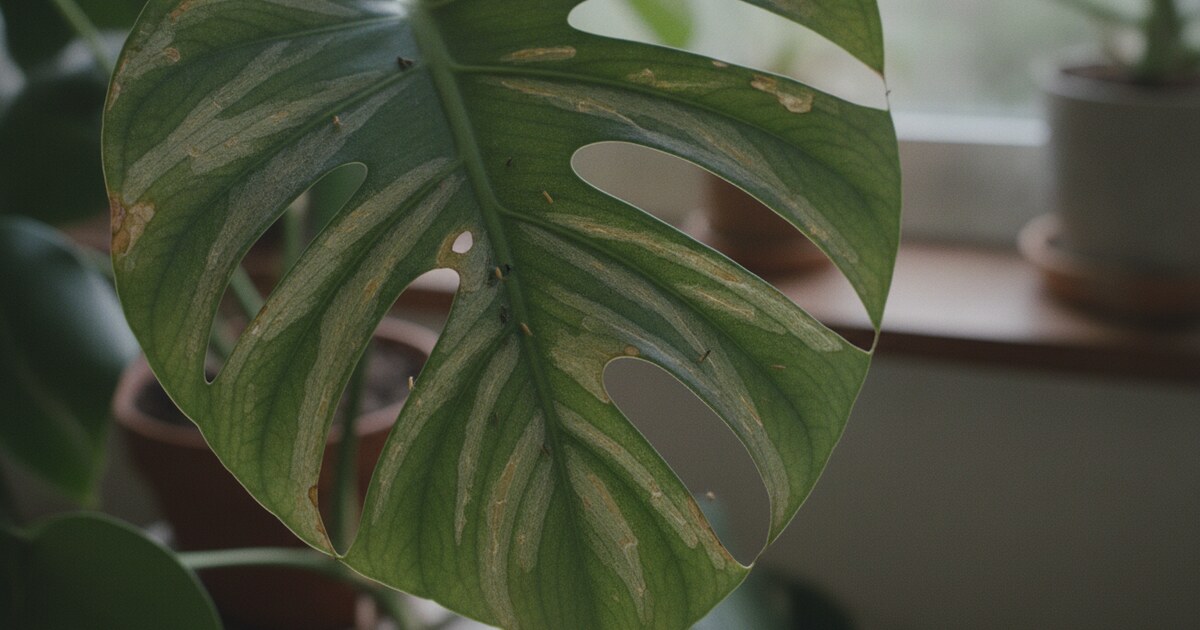
Thrips are barely 1-2mm long, but they leave a trail you can’t miss: silvery streaks along leaves, tiny black specks of frass, and new growth that unfurls twisted and scarred. By the time most people notice, the infestation is weeks old.
The reason they’re so persistent: female thrips reproduce asexually. No mate needed. One female becomes dozens within two weeks. And because their eggs are laid inside leaf tissue, a single spray does almost nothing. The eggs sit there untouched, hatch on schedule, and the cycle starts over.
Getting rid of thrips on houseplants requires hitting three fronts at once: the foliage, the soil, and your quarantine routine. Here’s the full protocol.
To get rid of thrips on houseplants, isolate the plant, rinse the foliage, then spray all leaf surfaces with insecticidal soap or spinosad weekly for 6-8 weeks. Treat the soil with systemic insecticide granules to kill pupating nymphs. Repeat treatments are essential because thrips eggs hide inside leaf tissue and can’t be reached by contact sprays.
What Thrips Look Like (and How to Confirm You Have Them)
Thrips are translucent or straw-colored as nymphs and dark brown to black as adults, with fringed wings. They mostly jump and crawl rather than fly, which makes them harder to spot on plant surfaces.
Look for these signs on your houseplants:
- Silvery or bronze streaking on leaves, especially along the midrib and between veins
- Distorted or curled new growth: thrips feed on young leaves before they fully open, causing permanent deformity
- Tiny black dots (frass) scattered across the leaf surface
- Sticky residue on lower leaves, which can lead to sooty mold
To confirm, hold a sheet of white paper under the plant and tap the stems sharply. Thrips will fall onto the paper and you’ll see them moving. Nymphs can look similar to spider mites at first glance, but thrips are elongated rather than round. If you’re not certain, a photo diagnosis app can confirm the pest before you start treatment.
How to Get Rid of Thrips on Houseplants: Step-by-Step
The five-step protocol below is the minimum effective approach. Skipping steps is why most treatments fail.
Step 1: Isolate the plant immediately. Move it away from every other plant in your home. Thrips spread through direct contact and short-range jumping, and a colony will colonize adjacent plants within days. Keep the plant isolated until you’ve had four consecutive clean weeks.
Step 2: Rinse the foliage. Take the plant to a sink or shower and rinse every leaf surface with a firm stream of water, focusing on leaf undersides where thrips cluster. This dislodges adults and surface-feeding nymphs. Let the plant dry before spraying.
Step 3: Treat the foliage. Spray every leaf surface, tops and undersides, with one of these:
- Insecticidal soap (potassium laurate-based): kills on contact, safe for most houseplants, needs thorough coverage
- Neem oil: disrupts feeding and egg development, best applied at dusk to avoid leaf burn
- Spinosad spray (Captain Jack’s Dead Bug Brew is a common brand): works on contact and stays active on leaf surfaces for approximately 7 days, often preferred for heavy infestations
Repeat every 3-5 days for the first two weeks, then weekly. A single application only kills adults present that day; hatching eggs and new nymphs will be unaffected.
Step 4: Treat the soil. This is the step most people skip, and it’s why infestations return. Thrips nymphs complete part of their lifecycle in soil, dropping down from leaves to pupate before emerging as new adults. If you only treat the foliage, you’re killing one generation while the next hatches below.
Sprinkle systemic insecticide granules (imidacloprid-based products like Bonide Systemic Houseplant Insect Control) into the top layer of soil and water them in. The plant absorbs the insecticide into its tissue over 1-2 weeks, killing nymphs as they hatch and begin feeding. One soil application lasts approximately 4-6 weeks.
Step 5: Clean the surroundings. Wipe down the pot, saucer, and any shelf or surface the plant sat on. Thrips can shelter in crevices and reinfest from there.
Thrips complete their lifecycle from egg to adult in 1-2 weeks under warm conditions (75-85°F), with adults living roughly 7 weeks. Female thrips reproduce through parthenogenesis, meaning a single female establishes a colony with no male required. Eggs are laid inside leaf tissue, which is why contact sprays can’t reach them. Nymphs feed on leaves, then fall to the soil to pupate before emerging as adults. Effective treatment must address all three stages simultaneously: foliage sprays for adults and feeding nymphs, systemic soil treatment for pupating nymphs, and repeated applications over 6-8 weeks to catch successive hatch cycles. Insecticidal soap applied weekly for at least 6 weeks is the minimum to break the cycle. Spinosad remains active on leaf surfaces for about 7 days per application. Systemic imidacloprid granules take 1-2 weeks to reach full foliage concentration and remain effective for 4-6 weeks. Hot, dry conditions (below 50% humidity) accelerate thrips reproduction; maintaining humidity above 60% slows population growth noticeably.
Which Houseplants Get Thrips the Most
Thrips aren’t fussy, but they have preferences. Smooth, large leaves offer easy feeding surfaces. Plants with abundant tender new growth are especially vulnerable because thrips target young leaves before they harden.
Watch these houseplants most closely:
- Monstera and other aroids (pothos, philodendron, ZZ plant): broad leaves, popular targets
- Calathea and prayer plants: soft foliage, frequently affected
- Fiddle leaf fig: the large leaves show silvering damage clearly and early
- Orchids: thrips commonly attack flower buds, causing deformed or discolored blooms
- Rubber plant and ficus: another common target
- Herbs (basil, chives): thrips hitchhike in from outdoors on these
If you keep a collection of aroids grouped closely together, one infested plant can spread thrips through the entire group within a few days. Even plants that don’t show damage yet can be hosting thrips, so inspect the whole collection whenever you find one affected plant.
Why Thrips Keep Coming Back (and How to Stop It)
The most common reason thrips persist: treatment stops too early. The plant looks fine at two weeks, so people stop spraying. Then another hatch cycle completes and the infestation is back.
Other reasons treatment fails:
- Skipping soil treatment: foliage sprays alone don’t address the pupation stage
- Gaps in the spray schedule: missing even one week gives a hatch cycle a window to establish
- A nearby untreated plant: reinfection from a plant you didn’t isolate will restart the cycle
- New plants brought home without quarantine: thrips are one of the most common nursery hitchhikers
Prevention habits that work:
Quarantine every new plant for at least 2 weeks. Keep it in a separate room, tap the leaves over paper on arrival, and inspect twice before introducing it to your collection.
Place yellow sticky traps near susceptible plants. They catch adults before populations build and also give you an early warning system.
Raise humidity around your plants. Thrips thrive in hot, dry conditions. Grouping plants together, using a pebble tray with water, or placing a small humidifier nearby maintains humidity above 60% and slows their reproduction meaningfully.
Inspect regularly. Turn leaves over when you water. Look for the silvery streaking on new growth. Catching an infestation at 20 thrips is far easier than catching it at 2,000.
Thrips on plants near other susceptible species can also produce the sticky residue on lower leaves that often gets confused with scale or mealybug honeydew. If you see both sticky residue and silvery streaking, thrips are the likely cause.
How PlantlyAI Helps With Thrips
Those silvery streaks and distorted leaves could be thrips, but they could also be spider mite feeding damage, sun damage, or early powdery mildew. Getting the diagnosis right matters because the treatments are different.
PlantlyAI diagnoses plant problems from a photo. Snap a picture of the damaged leaves and the app identifies the pest or disease, then gives a step-by-step treatment plan with organic, biological, and chemical options. Free to start with 2 diagnoses a day, no account needed, works on both iOS and Android.
If you’ve already confirmed it’s thrips and you’re also dealing with similar symptoms on another plant in your collection, snapping a photo of each one catches problems you might miss on a visual inspection alone.
Frequently Asked Questions
How long does it take to get rid of thrips on houseplants?
Plan on 6-8 weeks of consistent treatment. Thrips complete their lifecycle in 1-2 weeks, so you need multiple treatment cycles to catch every generation as it hatches. Stopping at 2-3 weeks is the most common reason infestations come back.
Can thrips kill a houseplant?
A severe, untreated infestation can stunt or kill a plant over time, but most houseplants recover if treated within a few weeks of noticing damage. Leaves that are already scarred or silvered won’t heal, but new growth will be clean once the infestation is cleared.
Do I need to throw away the soil?
You don’t need to repot, but you do need to treat the soil with systemic insecticide granules. Thrips nymphs drop into the soil to pupate, and without soil treatment, new adults keep emerging and climbing back up the plant even while you spray the foliage.
Will thrips spread to all my plants?
Yes, thrips spread quickly through direct contact and short-range jumping. Isolate any infested plant immediately. Inspect neighboring plants at least twice a week during treatment, and keep the infested plant separated until you’ve had four consecutive clean weeks with no new damage or thrips visible on the paper test.
Are thrips harmful to humans or pets?
Thrips occasionally bite people, causing a brief, mild itch that fades quickly. They don’t transmit disease and aren’t a health hazard. Some systemic insecticides (particularly imidacloprid) are toxic to bees and should be used only on indoor plants, not flowering plants where pollinators forage. Check product labels for pet safety before use around cats or dogs.
Not sure whether you’re dealing with thrips, spider mites, or something else entirely? Take a photo and get a diagnosis in seconds. PlantlyAI identifies pest problems and gives you a treatment plan tailored to the specific issue: free to try with 2 scans a day, no account needed. Download it on the App Store or Google Play.
Not sure what's wrong? Diagnose your plant free
Upload a photo to our free plant disease identifier and get an instant diagnosis.