Hydrangea Leaves Curling: Causes and How to Fix It
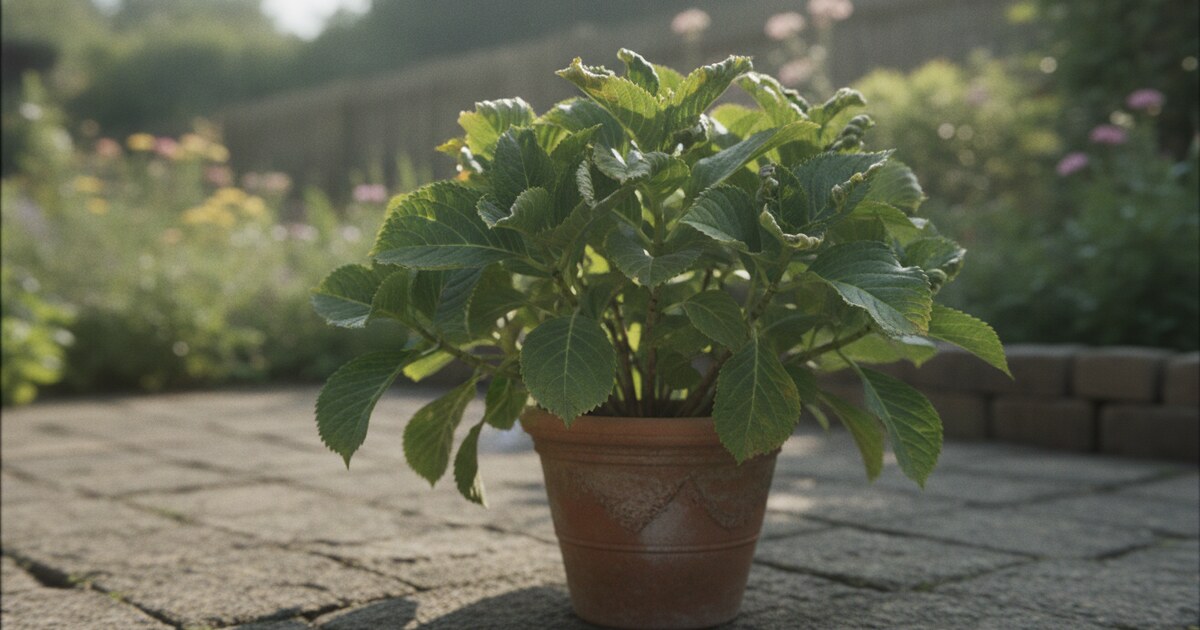
Your hydrangea looked fine last week. Now the leaves are cupping inward, rolling at the edges, and you’re not sure whether to water more, water less, or check for something crawling on the undersides. Hydrangea leaves curling is one of the most common distress signals for this plant, and getting the diagnosis right matters before you do anything. Watering more when the actual problem is overwatering makes things significantly worse.
This guide breaks down each cause by curl pattern so you know exactly what’s happening first.
Hydrangea leaves curl most often from underwatering or heat stress. Upward-cupping leaves that recover overnight point to heat; leaves that stay curled after watering signal root trouble from overwatering. Aphid feeding creates permanent, twisted distortion on young growth. Identifying the curl direction first tells you which fix to apply.
Why Hydrangea Leaves Curl: Reading the Direction
Curl direction is the fastest diagnostic tool you have. Most hydrangea problems announce themselves through a distinct pattern, and skipping straight to treatment without reading that pattern is how gardeners end up making things worse.
Hydrangea leaves curl for several distinct reasons, and the curl direction narrows the diagnosis before you touch the soil. Bigleaf hydrangeas (Hydrangea macrophylla), native to coastal Japan with over 600 cultivars, are the most widely grown species and the most sensitive to water stress. When temperatures climb above 85°F (29°C), leaves cup upward to reduce exposed surface area and cut transpiration losses. The same cupping appears during drought when the root zone can’t replace moisture fast enough. Overwatered roots suffer oxygen deprivation rather than drought, producing leaves that curl downward and yellow from the tips inward. Permanent twisted distortion on young growth points to aphid feeding early in leaf development, a mechanical injury no amount of watering can reverse. Recovery timelines depend on the cause: heat curl resolves in 6–8 hours once temperatures drop; drought curl straightens in 1–3 days after deep watering; root rot recovery takes 2–4 weeks.
Use this quick reference to start:
- Upward cupping, edges rolling inward, soil is moist: Heat stress. Leaves recover overnight.
- Upward cupping, edges rolling inward, soil is dry: Drought. Recovers in 1–3 days after deep watering.
- Downward curl with yellowing tips, soil is wet: Overwatering or root rot. Takes 2–4 weeks to recover.
- Twisted, crinkled, distorted on new growth: Pest feeding (aphids, spider mites). Won’t reverse on affected leaves.
- Leaves silk-wrapped together in a bundle: Hydrangea leaftier caterpillar. Remove manually.
For a broader look at why curling happens across plant types, the guide to why are my plant leaves curling covers the underlying mechanics.
Underwatering and Drought Stress in Hydrangeas
Underwatering is the most common reason hydrangea leaves curl during summer. Hydrangeas have large leaves that lose moisture fast, and bigleaf varieties (H. macrophylla) are more drought-sensitive than panicle (H. paniculata) or oakleaf (H. quercifolia) types.
The signs are straightforward: leaves cup upward along their margins starting in the early afternoon, the soil a few inches down feels dry, and the plant often perks back up overnight when temperatures cool. If you water and see recovery within 24 hours, underwatering was the culprit.
Water deeply at the base at least once a week, aiming for 1 inch of water per session. In heat above 85°F or with sandy soil, twice a week is often necessary. A 2-to-3-inch layer of mulch around the base holds moisture in and keeps the root zone cooler, reducing how often drought stress hits. Morning watering works best: the foliage dries during the day, cutting fungal risk.
Overwatering and Root Problems
Overwatered hydrangeas show leaves that curl downward rather than upward, often alongside yellowing that starts at the tips or along leaf margins. The soil feels consistently wet rather than moist, and the plant may look wilted even with plenty of water.
When the root zone stays waterlogged, roots can’t absorb oxygen and start to decay. Pythium and Phytophthora fungi move in fast on damaged roots, turning them brown and soft. The plant then curls its leaves as the compromised root system struggles to move water up the stem.
Stop irrigation entirely until the top 2 to 3 inches of soil dry out. For container plants, check that drainage holes aren’t blocked. For garden beds with poor drainage, work perlite or coarse grit into the surrounding soil. If root rot has already set in, trim off brown mushy roots with clean shears, dust the cuts with cinnamon as a natural antifungal, and repot or replant into fresh, well-draining soil.
See the full breakdown in our guide to overwatered vs underwatered plants to confirm which side of the line you’re on.
Heat and Sun Stress
Hydrangeas are built for dappled shade, not blazing afternoon sun. When temperatures climb above 85°F, the leaves of most varieties, especially bigleaf types, wilt and cup inward as a self-protective response to cut water loss.
The giveaway is timing: the curl appears in the hottest part of the afternoon and largely resolves by morning. The soil is adequately moist, so there’s no drought to address. Repeated daily episodes stress the plant over time, even if it appears to recover each night.
Hydrangeas do best with morning sun and afternoon shade, sheltered from direct sun after 2 pm in hot climates. If yours sits in full afternoon sun, a shade cloth with a 30-to-40% shade rating works well as a temporary fix during peak heat. Deep watering in the early morning gives roots the moisture reserves they need to handle heat without curling.
Pest Damage: Aphids, Spider Mites, and the Hydrangea Leaftier
Pest-related curling looks completely different from environmental stress. The leaf shape is permanently distorted rather than just rolled along the margins, and the curling won’t improve after watering or moving the plant.
Aphids are the most common pest cause. They feed on soft new growth by piercing cells and extracting sap. When aphids attack a leaf that’s still developing, the mechanical damage locks in as the leaf expands, resulting in twisted or cupped growth that won’t straighten.
Flip affected leaves over and look for small, pear-shaped insects clustered along veins or around new shoots. Aphid feeding also leaves behind sticky honeydew that leads to sooty mold (a black coating on leaves). A strong spray of water knocks off light infestations; heavier ones need neem oil or insecticidal soap applied every 5–7 days for 3–4 weeks. The guide to aphids on hibiscus covers the same neem and soap treatment approach for flowering plants.
Spider mites thrive in hot, dry conditions above 80°F. Affected leaves show fine yellow stippling, feel gritty on the underside from webbing, and curl as tissue damage builds. Neem oil every 7 days and raising humidity around the plant (pebble tray or light misting on leaf undersides) brings them under control.
The hydrangea leaftier (Olethreutes ferriferana) is a specialized pest worth knowing. The leaftier caterpillar binds 2 to 4 leaves together with fine silk threads into a wrapped bundle, then feeds on the flower bud inside. You’ll notice leaves that look glued together and refuse to open naturally. Pull the silk apart, remove the caterpillar inside, and drop it into soapy water. Bacillus thuringiensis (Bt) spray also works if you catch the infestation before the caterpillar retreats deep inside the bundle.
How PlantlyAI Helps Identify Curling Hydrangea Leaves
When you’re staring at a curled leaf and can’t tell whether it’s drought, root rot, or a pest you haven’t encountered before, a fast second opinion helps. PlantlyAI’s AI diagnosis tool lets you snap a photo of the affected leaves and get a specific diagnosis in seconds.
Photograph the curled leaves clearly, including the underside if you suspect pests, and upload it to the app. PlantlyAI identifies the problem and gives a step-by-step treatment plan covering organic, biological, and chemical options, so you can choose what fits your approach. The app works across hydrangeas in containers and garden beds, covering pest identification, fungal disease, and care-related stress symptoms.
You get 2 free diagnoses per day with no account required, so you can start troubleshooting right away.
Frequently Asked Questions
Can curled hydrangea leaves recover?
It depends on the cause. Leaves curled from heat or drought usually straighten within 6–24 hours after the stress is relieved. Overwatering recovery takes 2–4 weeks as roots regrow. Leaves distorted by aphid or spider mite feeding won’t uncurl, but new growth that emerges after treatment will come in normal.
What does the hydrangea leaftier look like?
The leaftier is a small caterpillar about half an inch long, pale green or yellowish, found inside a bundle of 2–4 leaves silk-tied together. The adult is a small brown moth (Olethreutes ferriferana). You’ll usually notice the silk-wrapped bundle of leaves first rather than spotting the insect itself.
Why do hydrangea leaves curl in the morning?
If leaves curl early in the day before heat builds up, the cause is likely underwatering or a root problem rather than heat stress. Heat-related curling shows up in the afternoon and resolves overnight. Morning curling that persists through the day points to a root issue or pest damage.
How often should I water a hydrangea?
Once a week in moderate conditions, twice a week when temperatures exceed 85°F or the soil is sandy. Deep watering (letting water soak 8–10 inches into the soil) works better than frequent shallow watering, which keeps moisture near the surface and encourages roots that struggle in heat.
Does mulch help with hydrangea leaf curling?
Yes. A 2-to-3-inch layer of mulch around the root zone holds soil moisture longer, lowers temperature swings at the root level, and reduces how often drought stress hits. Keep mulch a few inches away from the main stem to avoid moisture buildup against the bark.
If your hydrangea’s leaves are curling and you’re not sure what’s behind it, photograph the affected leaves before you do anything else. Download PlantlyAI on the App Store or Google Play to get a specific diagnosis in seconds and a treatment plan you can act on today.
Not sure what's wrong? Diagnose your plant free
Upload a photo to our free plant disease identifier and get an instant diagnosis.