Prayer Plant Leaves Turning Yellow: Causes and Fixes
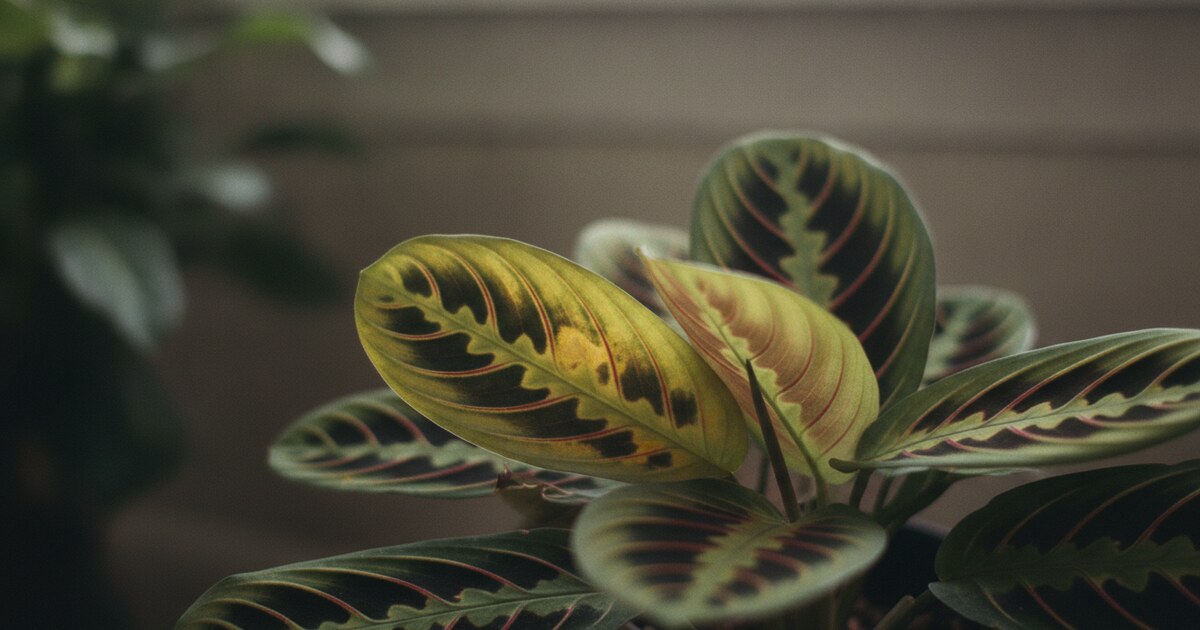
Maranta leuconeura has a reputation for being one of the more visually dramatic houseplants you can keep indoors, folding its leaves up each evening like hands in prayer. When those leaves start turning yellow, it’s easy to panic and reach for whatever feels logical: more water, less water, fertilizer, more light. But the wrong fix makes things worse. The cause determines everything.
This guide covers the 8 most common reasons maranta prayer plant leaves turn yellow, how to distinguish one cause from another by the pattern of yellowing, and what to do about each one.
Maranta prayer plant leaves turning yellow most often from overwatering or root rot, but low humidity, fluoride-heavy tap water, too much direct light, and nutrient deficiency each produce yellowing on their own. The pattern of yellowing (which leaves, how uniform, whether spots are present) is the fastest way to narrow down the cause before taking any action.
Why Prayer Plant Leaves Turn Yellow: Read the Pattern First
Before doing anything, look at where and how the leaves are yellowing.
Uniform pale yellow across the whole plant points to light problems or advanced water stress. Yellow only on the oldest, lowest leaves while new growth looks healthy is usually normal leaf aging. Yellow tissue between the veins while the veins themselves stay green is chlorosis, a sign of iron or magnesium deficiency. Yellow leaves with small brown or black spots, especially at the center of the spots, suggests fungal disease.
Maranta leuconeura is native to the tropical rainforests of Brazil, where it grows on the forest floor under dense canopy. In the wild, it experiences humidity between 60 and 80%, filtered indirect light, consistent warmth between 65 and 85°F (18 and 29°C), and soil that stays moist but never waterlogged. It belongs to the Marantaceae family, which also includes calathea and stromanthe; all of them sensitive plants evolved in the same humid, low-light conditions. Most yellowing problems on a maranta trace back to conditions that have drifted too far from that tropical baseline. Fluoride and chlorine in tap water, afternoon sun through a window, soil that stays wet for days, or humidity below 40% all stress a maranta faster than they’d stress most common houseplants. Catching which condition is off lets you correct it quickly before the plant deteriorates further.
Overwatering and Root Rot
Overwatering is the most common cause of yellow leaves on a prayer plant.
When soil stays wet for more than a week, roots are deprived of oxygen and begin to rot. Rotting roots can’t move water or nutrients into the plant, so leaves yellow, usually starting on lower, older leaves and spreading upward as the problem continues.
The key signs that distinguish overwatering from other causes: yellowing comes with soft or limp stems, a sour or musty smell from the soil, or leaves that feel slightly mushy at the base of the petiole. If you press the soil and water seeps up, it’s waterlogged.
Fix: Pull the plant from its pot and examine the roots. Healthy roots are white or cream-colored and firm. Rotting roots are brown or black and mushy. Cut away the rotted sections with clean scissors or pruning shears, let the root ball air out for 30 to 60 minutes, then repot in fresh, well-draining potting mix. Hold off watering for about a week. Going forward, water only when the top inch of soil has dried out. Stick your finger in to check rather than watering on a schedule.
For help telling an overwatered plant from an underwatered one by the visual signs, the overwatered vs underwatered plant guide breaks down both patterns in detail.
Underwatering
A maranta that’s gone too dry can also yellow, though it looks different from overwatering.
Underwatered leaves go pale, then slightly crispy at the tips and margins before yellowing more broadly. The soil pulls away from the edges of the pot, the plant droops or curls before showing yellow, and leaves may feel thin and papery rather than firm.
Marantas are forest floor plants. They evolved in conditions of consistent moisture and can’t handle prolonged drought the way succulents can. Missing a watering by a few days in summer heat causes stress yellowing faster than you’d expect.
Fix: Water thoroughly until water drains from the bottom of the pot, then empty the saucer within 30 minutes so roots don’t sit in standing water. In spring and summer, most marantas need watering every 5 to 7 days. In fall and winter, stretch that to every 10 to 14 days depending on your home’s humidity and temperature.
Low Humidity and Water Quality
Two distinct problems often get lumped together because they look similar: low ambient humidity and damage from fluoride or chlorine in tap water.
Low humidity causes leaf tips and edges to go brown and crispy, often with a yellow halo behind the browning. Most homes sit at 30 to 50% humidity, well below the 60 to 80% that marantas prefer. Over time, dry air weakens the leaf tissue, and the plant puts energy into fewer, smaller leaves.
Tap water damage looks similar but with a different distribution. Fluoride and chlorine build up in the soil over months, burning leaf cells from the inside out. The yellowing tends to appear at leaf tips and outer margins, sometimes with a distinct line between yellow and green tissue. Cities with heavily fluoridated water (above 1 ppm) cause this damage faster.
Fix for low humidity: Place a pebble tray filled with water beneath the pot (the pot sits on the pebbles, not in the water), mist the leaves in the morning, or run a small humidifier nearby. Grouping tropical plants together also raises local humidity somewhat.
Fix for water quality: Switch to filtered water, rainwater, or let tap water sit uncovered in an open container overnight before using it; this lets most chlorine off-gas. Flush the soil every 3 to 4 months by slowly pouring water through for several minutes to carry out accumulated salt and mineral deposits.
Too Much or Too Little Light
Maranta prayer plants hit a narrow light window.
Direct afternoon sun bleaches and scorches leaves quickly. West-facing window light in summer can yellow and burn irregular patches within a week, leaving a mix of yellow, white, and brown across the affected leaf. The damage tends to appear on leaves closest to the light source.
Too little light is the other extreme. A maranta in a dim corner can’t produce enough chlorophyll to maintain its coloring, and leaves fade to a dull, washed-out yellow-green across the whole plant. Growth slows or stops entirely.
Fix: Bright indirect light is the target. A spot 3 to 6 feet from an east or north window works well for most homes. South or west windows need a sheer curtain to diffuse intensity. If you’re using a grow light, keep it at least 12 inches away and limit it to 12 to 14 hours per day.
Calathea, a close relative in the Marantaceae family, shares the same light sensitivity. The calathea leaves curling article covers how light and humidity stress show up in these tropical plants.
Nutrient Deficiency
Yellow leaves caused by nutrient deficiency have a specific look that sets them apart from watering or light problems.
Nitrogen deficiency shows up as a uniform pale yellowing of older, lower leaves first. Nitrogen is mobile inside the plant: when it’s scarce, the plant pulls nitrogen out of old leaves to feed new growth. The new leaves at the top look fine; only the older ones go yellow.
Iron deficiency (chlorosis) yellows the tissue between veins while the veins themselves stay green. This is most common when soil pH climbs above 7.0, locking iron in the soil even when it’s physically present. Tap water in limestone-heavy areas raises soil pH over time.
Fix: A balanced liquid fertilizer (10-10-10 or similar) applied every 4 weeks during spring and summer covers most deficiencies. For suspected iron chlorosis, a chelated iron supplement works faster than standard fertilizer. Marantas rest in fall and winter and don’t need feeding during those months. Fertilizing when the plant isn’t actively growing risks salt buildup in the soil.
Cold Temperatures and Drafts
A maranta prayer plant exposed to temperatures below 60°F (15°C) shows yellow patches or streaks on affected leaves within days.
Cold drafts from windows, air conditioning vents, or exterior doors cause rapid, localized stress. The yellowing often appears on leaves closest to the cold source and may come with some brown or black spotting. The pattern is irregular rather than uniform across the plant.
Fix: Keep the plant away from exterior walls during winter, air conditioning vents in summer, and drafty windows in any season. If nighttime temperatures in your home drop below 60°F, move the plant toward an interior wall or to a warmer room. Consistent temperature matters more than hitting a precise number.
Normal Leaf Aging
A yellowing lower leaf on a healthy plant is often nothing to worry about.
Marantas drop their oldest leaves as the plant grows. If 1 or 2 lower leaves yellow slowly, go papery, and fall off while the top of the plant produces fresh leaves, that’s the normal lifecycle. Many people mistake routine leaf turnover for a problem and start changing their care routine unnecessarily.
The distinction: normal aging affects just the oldest 1 to 2 leaves at a time, and new growth looks healthy and vigorous. If several leaves across different parts of the plant yellow at once, or if the new growth looks pale or deformed, something environmental is off.
Fungal Disease
Helminthosporium leaf spot is the most common fungal problem on prayer plants.
It starts as small, water-soaked spots that expand and turn yellow, then develop brown centers with a darker border. Yellowing radiates outward from the spots rather than appearing uniformly across the leaf. It spreads via water splash and thrives when humidity is high but airflow is poor.
The why are my plant leaves curling article covers how stress and disease symptoms overlap across tropical houseplants (useful if you’re dealing with multiple symptoms at once).
Fix: Remove affected leaves with clean scissors. Cut back on overhead watering and misting directly onto the foliage. Improve airflow around the plant by spacing it away from neighboring plants. A copper-based fungicide applied per label instructions controls the spread on remaining leaves.
How PlantlyAI Helps Diagnose Yellow Prayer Plant Leaves
Eight causes of yellow leaves, each with a different fix. The wrong fix makes things worse. Watering more often when you actually have root rot accelerates the damage. Fertilizing when the problem is fluoride burn adds more stress.
PlantlyAI diagnoses plant problems from a single photo. Snap a picture of the yellowing leaves, and the app identifies whether you’re dealing with root rot, fluoride damage, chlorosis, fungal disease, or another cause, then gives you a step-by-step treatment plan with organic, biological, and chemical options. You get 2 free diagnoses per day without creating an account.
Download PlantlyAI on the App Store or Google Play and photograph your prayer plant today.
Frequently Asked Questions
Why are the lower leaves on my prayer plant turning yellow? Lower leaf yellowing on its own, with healthy new growth at the top, is usually normal leaf aging. Marantas shed older leaves routinely. If several leaves across the plant yellow at once, or if new growth looks pale, check for overwatering, low humidity, or nutrient deficiency instead.
Can I save a prayer plant with yellow leaves? Yes, in most cases. Yellow leaves from watering issues, light, humidity, or nutrients are fixable once you correct the underlying cause. The leaves already yellowed won’t turn green again, but new growth comes in healthy. Remove fully yellowed leaves with clean scissors to redirect the plant’s energy.
Why do my maranta leaves have yellow tissue but green veins? Yellow tissue with green veins is chlorosis, typically caused by iron or magnesium deficiency or by soil pH above 7.0. A chelated iron supplement or a balanced fertilizer containing micronutrients usually resolves it within 2 to 4 weeks. Check your water source if you’re in a hard-water area.
Should I cut off yellow leaves on my prayer plant? Yes. A fully yellowed leaf won’t recover, and leaving it on the plant diverts energy and can invite fungal growth on dying tissue. Use clean scissors and cut at the base of the petiole, the stem connecting leaf to plant stem. Don’t pull; tugging can damage the stem.
How often should I water my maranta prayer plant? Water every 5 to 7 days in spring and summer when the top inch of soil dries out. In fall and winter, stretch to every 10 to 14 days. Marantas prefer consistently moist soil rather than cycles of wet and bone dry. Check with your finger rather than watering on a fixed schedule.
Not sure what's wrong? Diagnose your plant free
Upload a photo to our free plant disease identifier and get an instant diagnosis.