Monstera Leaves Turning Yellow: 7 Causes and How to Fix Them
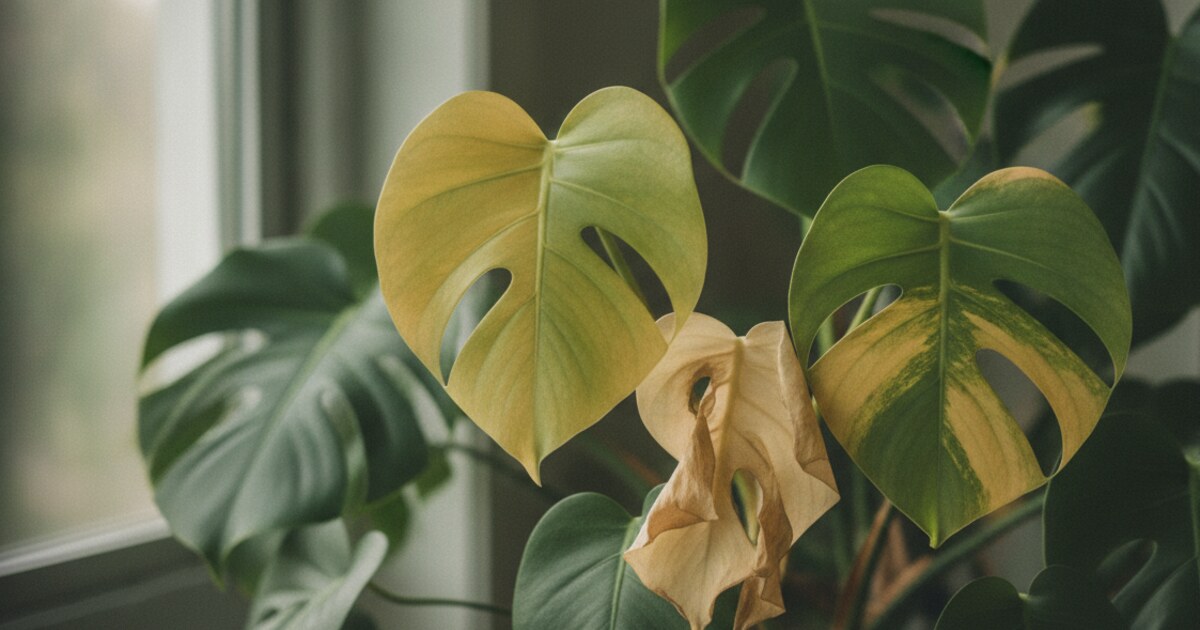
Your monstera is probably one of the most dramatic plants in your house. Big fenestrated leaves, fast growth, that tropical attitude. So when you spot leaves going yellow, it feels like something has gone seriously wrong.
Most of the time, it hasn’t. Monstera leaves turning yellow is one of the most common houseplant complaints, and the causes are almost always fixable. The challenge is figuring out which one you’re dealing with, because overwatering and underwatering produce nearly identical yellow leaves — and fixing the wrong one makes things worse.
This guide walks through the causes in frequency order, shows you how to read the yellowing pattern, and gives you the specific fix for each.
Quick answer: Monstera leaves turn yellow most often from overwatering, which rots the roots and blocks nutrient flow. Other causes include underwatering, low light, nutrient deficiency, cold drafts, and natural aging. The fastest way to identify the cause: check which leaves yellowed first. Old bottom leaves point to overwatering or aging; new top leaves going yellow point to light or nutrient problems.
Why Monstera Leaves Turn Yellow: Reading the Pattern First
Before checking the soil or adjusting care, look at where the yellowing is happening. The location tells you a lot.
Oldest, lowest leaves yellowing: overwatering, root rot, or natural aging. These are the most common patterns by far.
New leaves or upper canopy going yellow: nutrient deficiency or inadequate light. The plant can’t produce enough chlorophyll in developing tissue.
Multiple leaves yellowing at once, all over the plant: cold damage or a sudden environmental shock — a move, a heat vent blast, or a cold draft from a nearby window.
Interveinal yellowing (leaf turns yellow but veins stay green): magnesium or iron deficiency, usually mid-canopy.
Monstera deliciosa belongs to the Araceae family and is native to the tropical rainforests of southern Mexico and Central America, where it grows as a hemi-epiphyte in filtered light before climbing toward the canopy. In home conditions, it thrives between 65-85°F (18-29°C) and prefers humidity of 60-80%. Overwatering is the most common yellowing trigger: Pythium and Phytophthora root pathogens colonize waterlogged, oxygen-depleted soil within 48-72 hours, blocking nutrient and water uptake before any above-ground symptoms appear. Yellowing starts in the oldest leaves first because nitrogen is a mobile nutrient; the plant pulls it from older tissue to feed new growth. Magnesium deficiency shows as interveinal chlorosis starting mid-canopy: leaf centers yellow while veins stay green. Cold damage below 50°F (10°C) causes rapid, widespread yellowing across multiple leaves within 24-48 hours of exposure. Recovery from a simple watering correction takes 1-2 weeks; root rot rescue takes 4-8 weeks.
Overwatering and Root Rot (The Most Common Cause)
Overwatering is behind roughly 70% of monstera yellowing cases. The problem isn’t the water itself — it’s the anaerobic soil conditions that follow. When roots sit in soggy, poorly draining soil, oxygen disappears and root pathogens move in fast.
The first sign is usually a few older leaves going soft and yellow. Not crispy — soft and limp. If you press the soil and it feels wet 2 inches down when it shouldn’t be, that’s your confirmation.
Check it: Lift the pot slightly. If it feels heavier than expected for its size, the soil is holding excess water. Dark, mushy, foul-smelling roots confirm active root rot.
Fix it: Let the soil dry completely before watering again. If roots are rotting, unpot the plant, trim black and brown roots back to healthy tissue, treat cut ends with a 1:2 hydrogen peroxide solution, and repot in fresh, well-draining mix (60% potting soil, 30% perlite, 10% bark chips). For the full step-by-step, see the root rot treatment guide.
Prevent it: Water when the top 2 inches of soil are dry, not on a schedule. During winter, stretch watering to every 2-3 weeks — monsteras slow down significantly in low-light months.
Underwatering, Low Light, and Nutrient Deficiency
Underwatering causes yellowing too, but the texture gives it away. Underwatered yellow leaves feel dry and papery, often with crispy brown edges. The soil will be bone dry and pulling away from the pot edges.
Fix: Soak the pot for 15-20 minutes in a tray of water, let it drain fully, then resume consistent watering. For a side-by-side comparison of both symptoms, the overwatered vs underwatered plant guide covers the key differences.
Low light causes gradual, uniform yellowing — especially in winter when light hours drop. Monsteras need 1,000-2,000 lux of indirect light at minimum. Direct sun above 3,000-4,000 lux causes bleaching and scorch yellowing.
Fix: Move the plant 2-3 feet closer to a bright window, or add a grow light on a 10-12 hour timer.
Nutrient deficiency shows up differently depending on which nutrient is missing. Overall pale, washed-out new growth usually signals nitrogen deficiency. Interveinal chlorosis starting in the middle of the plant is classic magnesium. Yellowing only in the newest leaves, with veins staying green, points to iron.
Fix: A balanced liquid fertilizer (10-10-10 or similar) every 4 weeks from spring through fall handles most deficiencies. Skip fertilizing in winter — the plant’s uptake drops, and salt buildup from unused nutrients causes its own yellowing problems.
Cold Drafts, Pests, and Natural Aging
Cold stress hits fast. Temperatures below 55°F (13°C) stress monstera tissue. Below 50°F (10°C), you’ll see multiple leaves yellowing within 24-48 hours. The main culprits in home settings: air conditioning vents blowing directly on the plant, cold drafts from single-pane windows in winter, or placing the pot near a frequently used exterior door.
Fix: Relocate away from drafts and cold windows. Damaged leaves won’t recover — trim them once yellowing is complete to redirect the plant’s energy.
Pests can drive yellowing too, though less often. Spider mites and scale insects deplete sap from the leaves, causing stippling that progresses to full yellowing. Check the undersides of leaves for fine webbing (spider mites) or small brown waxy bumps (scale). The spider mites on monstera guide has detailed treatment steps if you spot an infestation.
Natural aging is worth understanding before you panic. A healthy monstera sheds 1-2 older leaves every few months as it pushes out new growth. If a single leaf at the very bottom of the plant turns yellow while everything above it looks healthy and new growth is coming in strong, that’s the plant shedding dead weight. No action needed.
How to Treat Yellowing Monstera Leaves
Once you’ve matched the pattern to a cause, the treatment is usually straightforward.
| Cause | Soil feel | Which leaves | Fix |
|---|---|---|---|
| Overwatering | Wet, heavy | Oldest, bottom | Dry out, trim roots if rotted |
| Underwatering | Bone dry | Oldest, bottom | Soak-water, resume schedule |
| Low light | Variable | Uniform, gradual | Move closer to window |
| Nutrient deficiency | Variable | New or mid-canopy | Monthly fertilizer, growing season |
| Cold stress | Variable | Multiple at once | Move away from drafts |
| Pests | Variable | Patchy, stippled | Insecticidal soap, 7-day cycles |
| Natural aging | Normal | 1-2 bottom leaves | Nothing — trim when fully yellow |
One thing that doesn’t work: cutting a yellow leaf off mid-process to stop the yellowing. Yellow leaves are already dying. Removing them doesn’t fix the root cause. Address the underlying problem first, then trim for aesthetics.
Can yellow monstera leaves turn green again? Rarely. Once chlorophyll breaks down in a leaf cell, it doesn’t regenerate. Fixing the cause stops new yellowing from spreading, but existing yellow leaves stay yellow. Trim them once they’re fully yellowed and starting to dry.
If you’re unsure what’s causing the problem, a photo diagnostic app can help. PlantlyAI diagnoses monstera leaf problems from a photo and gives you a step-by-step treatment plan with organic, biological, or chemical options. It’s free to start with 2 diagnoses a day on iOS and Android.
Frequently Asked Questions
What does a stressed Monstera look like? A stressed monstera shows yellowing leaves, brown crispy edges, drooping stems, or stunted new growth. The soil state helps narrow it down: drooping with dry soil points to thirst, drooping with wet soil points to root rot. Multiple stress symptoms appearing at once usually mean the problem has been building for several weeks.
How often should Monsteras be watered? Most monsteras need watering every 1-2 weeks in spring and summer, and every 2-3 weeks in fall and winter. The right frequency depends on pot size, soil mix, and light level rather than a fixed schedule. Check the soil first: when the top 2 inches are dry, water thoroughly until it drains from the bottom.
How do I fix yellow leaves on a Monstera? Identify the cause before treating. Check the soil — wet and compacted points to overwatering; bone dry points to underwatering. Check which leaves yellowed and when you last fertilized. Then address the specific cause. Trimming the yellow leaves is optional and won’t fix anything on its own.
Should I cut yellow leaves off my Monstera? You can, but only once they’re fully yellow. Cutting a leaf that’s still partly green removes active chlorophyll and puts extra stress on the plant. Wait until a leaf is completely yellow and starting to dry, then trim it at the base of the petiole with clean, sharp scissors.
Not sure what's wrong? Diagnose your plant free
Upload a photo to our free plant disease identifier and get an instant diagnosis.