Poinsettia Dropping Leaves: 5 Causes and How to Fix It
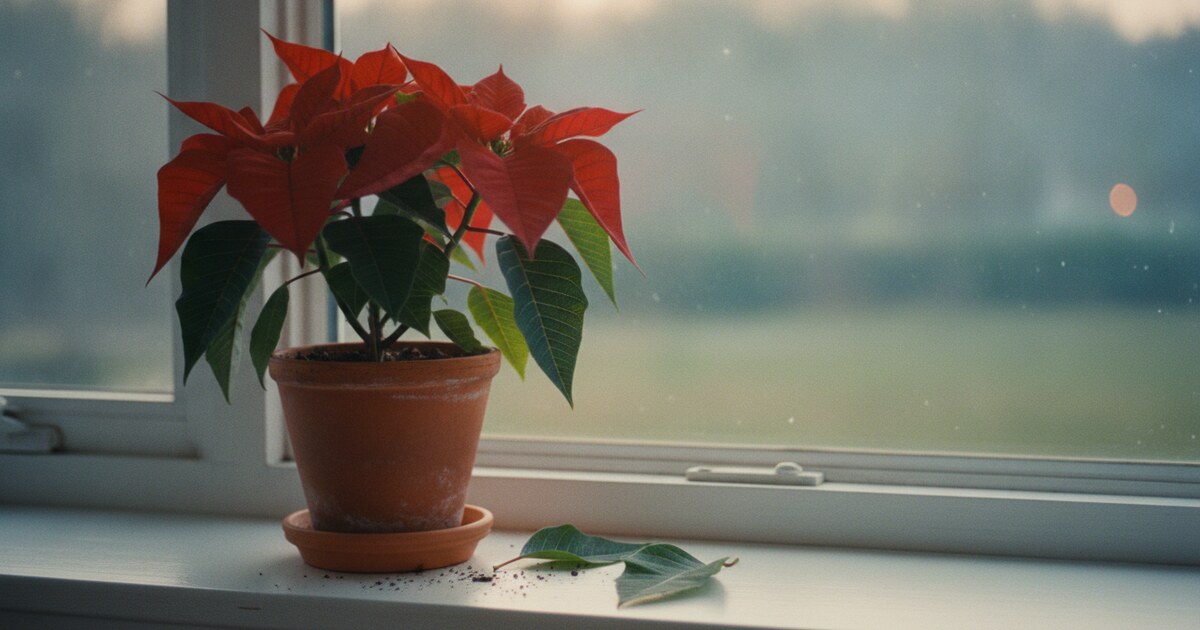
If your poinsettia is dropping leaves days after you brought it home, you’re watching a stressed plant, not a dying one. Most poinsettia leaf drop has a fixable cause, and the pattern of the dropping tells you exactly what’s wrong.
Green leaves falling suddenly mean something different than yellow leaves going soft over time. A plant that sheds everything after a move is dealing with a different problem than one slowly losing leaves in a heated room. Each cause has a different fix, and treating the wrong one wastes time you don’t have during the holiday season.
This guide walks through the five most common reasons poinsettia plants drop leaves, how to read the signs for each one, and what to do to stop it before the plant loses the colored bracts it was bought for.
Quick answer: Poinsettia leaves drop most often from cold shock, overwatering, or dry air. Green leaves falling suddenly point to cold exposure from drafts or cold windows. Yellow leaves falling gradually point to overwatering. Move the plant to a stable spot at 65–75°F, check the soil before watering, and remove any decorative foil wrap trapping moisture at the base.
Why Your Poinsettia Is Dropping Leaves: Reading the Pattern
Not all leaf drop looks the same, and matching the visual pattern to the cause saves you from treating the wrong problem.
Poinsettia (Euphorbia pulcherrima) is native to Mexico and Central America, where it grows as a shrub or small tree in seasonally dry tropical forest. Its natural conditions are 65–75°F (18–24°C) temperatures, filtered canopy light, and 40–60% humidity year-round. Below 50°F (10°C), cell membranes in the leaves begin to rupture. A brief cold draft, a leaky window, or a chilly car ride can trigger mass green-leaf drop within 24–48 hours of the cold exposure. Overwatering is the second major cause: poinsettia roots need to partially dry out between waterings, and a pot kept continuously wet cuts off soil oxygen, leading to root decay and yellow leaves falling over days to weeks. The decorative foil wrapping sold on most retail poinsettias traps standing water around the roots, which turns a normal watering into a slow drowning. Low humidity below 40% causes leaf margins to dry and curl before dropping, usually without any yellowing first.
Use this table to match what you’re seeing to the most likely cause:
| What you see | Most likely cause |
|---|---|
| Green leaves dropping suddenly | Cold shock or draft |
| Yellow, soft leaves dropping gradually | Overwatering or root rot |
| Wilted, dry leaves drooping then dropping | Underwatering |
| Crispy leaf edges curling before drop | Low humidity or heat |
| Mass drop within a week of purchase | Store or transport shock |
| Leaves dropping with sticky residue | Pest infestation |
Cold Shock and Temperature Stress
Cold is the single most common reason store-bought poinsettias drop leaves, and most of the damage happens before the plant ever reaches your home.
A poinsettia sitting in a 35°F delivery truck for 20 minutes, or spending 3 minutes in a cold parking lot during a grocery run, absorbs enough cold to trigger a delayed drop. The leaves look normal for 24–48 hours, then fall all at once with no warning. By the time you see the dropping, the damage is already done.
Once the plant is home, the main cold threats are windows, exterior doors, and climate-control vents. Glass conducts cold even on seemingly warm days; a plant sitting 2 inches from a winter window can experience temperatures 10–15°F below room temperature. Air vents, whether heating or cooling, create air movement that stresses the leaves directly.
To stop temperature-related leaf drop:
- Keep the plant in a stable spot between 65–75°F (18–24°C)
- Position it at least 6 inches away from any window glass
- Keep it away from exterior doors that open to cold air regularly
- If leaves are already falling, trace back every location the plant was in the past 48 hours
A poinsettia that’s moved to a stable warm spot and left there will usually stop dropping within 7–10 days.
Watering Stress: Too Much or Too Little
Both overwatering and underwatering cause poinsettia leaf drop, and they look different enough to distinguish.
Overwatering shows up as yellow, soft leaves that release when you touch them. The soil feels wet or compacted and stays that way for more than 2–3 days after watering. The lower leaves usually go first. This is the more common problem, and it’s often made worse by the decorative foil most retail poinsettias come wrapped in. That foil holds water at the base of the pot and has no drainage, slowly saturating the root ball even when you’re watering at a completely normal frequency. Remove it, or poke several holes through the bottom.
Water only when the top inch of soil feels dry to the touch. Water thoroughly until it drains from the bottom, then wait for the soil to dry again before the next watering.
Underwatering looks different. The leaves wilt and feel dry and papery before they drop, and the soil pulls away from the edges of the pot. The stems may go limp. Water thoroughly, let it drain fully, and check the soil daily until you find a consistent rhythm.
Not sure which is happening? Lift the pot. A pot that still feels heavy 3–4 days after watering has too much moisture retained. A pot that feels light within 24 hours of watering is drying too fast, usually because of heat or a pot that’s too small. The guide on overwatered vs. underwatered plants covers the key differences in detail.
Low Humidity and Dry Air
Poinsettias want 40–60% humidity. Most heated homes in winter run at 20–30%, and the gap widens as the furnace runs more.
When the air is too dry, the plant loses moisture through its leaves faster than the roots can replace it. The tips and edges dry out and curl first, then the leaf drops without turning yellow. This process builds gradually over 2–3 weeks before significant leaf loss appears, so it can look like sudden drop even though it wasn’t.
Ways to raise humidity around the plant:
- Set it on a pebble tray filled with water (the pot sits on the pebbles above the waterline, not in it)
- Run a small humidifier within 3–4 feet of the plant
- Group it with other houseplants to build shared ambient humidity
- Keep it away from heating vents and radiators, which push dry air directly at the leaves
Misting is often recommended but only helps for an hour or two before the moisture evaporates. A pebble tray is cheap and gives consistent passive humidity around the plant.
Low Light and Environmental Shock
Poinsettias need 6 or more hours of bright, indirect light daily. Below that threshold, the plant drops leaves to reduce the surface area it has to maintain.
A south or east-facing window is the ideal placement. Avoid direct afternoon sun from west-facing windows, which can bleach and scorch the colored bracts. If natural light is limited, a grow light running 12 hours on and 12 hours off works well as a substitute through the winter.
Environmental shock is an underappreciated cause that accounts for a lot of early leaf drop. A poinsettia goes through 4–5 distinct environment changes between the greenhouse and your home: greenhouse to delivery truck, truck to store, store to your car, car to your home, and often home to another room when guests visit. Each change is a separate stress event, and the effects stack.
If your plant dropped a significant number of leaves within the first week of purchase, transport shock is almost certainly involved. The fix is to place it in one stable spot and leave it there. Most poinsettias stabilize within 10–14 days when conditions stop changing.
How to Stop Poinsettia Leaf Drop and Help Recovery
Once you’ve identified the cause, here’s how to stabilize the plant:
- Move it to a stable spot with temperature between 65–75°F, bright indirect light, and no drafts.
- Remove the foil wrap or add drainage holes so water can’t pool beneath the roots.
- Check the soil before every watering. The top inch should feel dry before adding water.
- Raise humidity with a pebble tray or humidifier nearby.
- Don’t fertilize. Fertilizing a stressed plant pushes growth the root system can’t support right now.
- Don’t repot. Even moving the root ball to fresh soil triggers more leaf drop before recovery begins.
A stabilized poinsettia will stop dropping new leaves within 5–10 days. It won’t replace the leaves it’s already lost, but the ones remaining will hold and the colored bracts should stay intact through the season.
If the soil smells sour or the lower stems feel soft or mushy near the soil line, root rot has already set in. In that case, the recovery steps are the same as for any overwatered houseplant: remove it from the pot, trim away blackened roots, let the root ball air out for a few hours, then repot in fresh well-draining mix. The peace lily rescue protocol covers the unpot-and-inspect steps in detail, and the same method applies here.
How PlantlyAI Can Help Diagnose the Problem
When you’re looking at a dropping poinsettia and not sure whether the cause is cold, water, or something else entirely, a photo can clear it up quickly.
PlantlyAI identifies plant diseases, pests, and stress symptoms from a photo of your plant. Snap a photo of the dropping leaves, the soil, or any spots or discoloration you see, and the app returns a diagnosis with step-by-step treatment options, including organic, biological, and chemical approaches. It works across houseplants, garden plants, vegetables, and crops.
If you’ve been through the checklist above and still can’t pinpoint the cause, PlantlyAI’s visual diagnosis tool can often identify secondary problems like early-stage root rot or pest activity that aren’t obvious from a visual inspection alone.
Two free scans per day, no account needed, on iOS and Android.
Frequently Asked Questions
What does an overwatered poinsettia look like?
An overwatered poinsettia has yellow, soft leaves that come away easily when touched. The soil feels wet and stays wet for more than 2–3 days after watering. The lower leaves usually go first. In more advanced cases, the stems near the soil line feel soft or mushy. The most common hidden culprit is the decorative foil wrap, which traps standing water at the base of the pot with no drainage.
How do I know if cold shock caused my poinsettia to drop leaves?
Cold shock causes green leaves to drop suddenly, often 24–48 hours after the cold exposure occurred. There’s usually no yellowing or wilting before the drop. If your plant lost a lot of leaves all at once, trace back where it was in the 48 hours before the drop: was it near a window, in a car, in a cold entryway, or next to an air vent? A cold exposure of just a few minutes at temperatures below 50°F can cause the kind of damage that produces mass leaf loss.
Will my poinsettia grow back the leaves it dropped?
Poinsettias won’t regrow leaves that have already fallen. The goal after leaf drop is to stop the shedding, preserve the remaining leaves and colored bracts, and keep the plant stable through the holiday season. If you’ve lost most of the green leaves but the bracts are still intact and firm, the plant is still alive and worth stabilizing.
What is the average lifespan of a poinsettia?
A properly cared-for poinsettia typically lasts 4–6 weeks in most homes during the holidays. With consistent care, including the right temperature, watering rhythm, and humidity, many plants last through spring. With extra effort, poinsettias can be brought back into bloom for the following November by giving the plant complete darkness for 12–14 hours daily for 8–10 weeks starting in late September.
Should I cut off the leaves that have already fallen or browned?
Remove leaves that have already fallen from the soil surface to keep the potting mix clean and reduce fungal risk. Don’t cut healthy green leaves off the plant. Only trim leaves that are already yellow and loose. Cutting firmly attached green leaves causes additional stress and doesn’t speed recovery.
If your poinsettia is dropping leaves and you want to rule out a disease or pest problem quickly, PlantlyAI can identify what’s wrong from a single photo. Snap a picture of the affected leaves, and the app returns a diagnosis and treatment plan in seconds.
Download PlantlyAI on iOS or Android and get 2 free diagnoses a day, no sign-up needed.
Not sure what's wrong? Diagnose your plant free
Upload a photo to our free plant disease identifier and get an instant diagnosis.