Powdery Mildew on Houseplants: 4 Treatments That Work
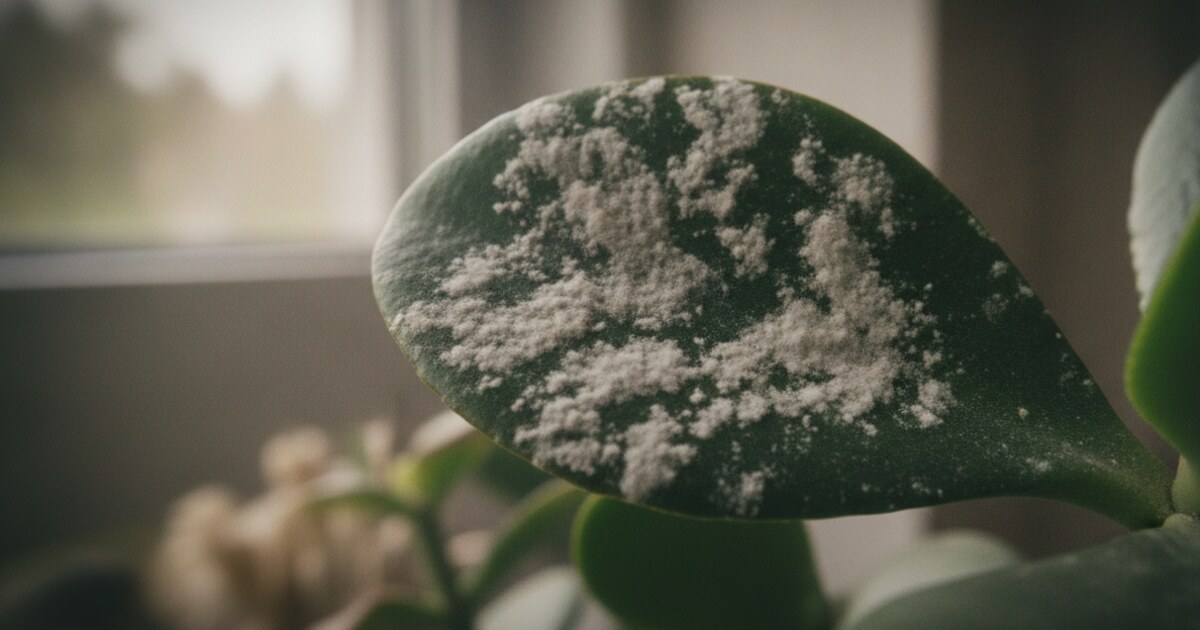
You notice a white, dusty coating spreading across your houseplant’s leaves. It looks almost like someone dusted flour over the surface, and the more you wipe it, the more it seems to spread. That’s powdery mildew, and it’s one of the most common fungal diseases on indoor plants.
Powdery mildew treatment for houseplants is straightforward when you catch it early. Most infections clear up within 2 to 3 weeks using things you probably have at home. The key is acting quickly, before spores spread to the plants nearby.
This guide covers how to identify it correctly (a few look-alikes will steer you wrong), which treatment suits which level of infection, exact spray recipes with measurements, and how to stop it from returning.
Quick answer: To treat powdery mildew on houseplants, isolate the affected plant, remove the worst-infected leaves, and spray all foliage with a baking soda solution (1 teaspoon per litre of water, plus a drop of dish soap). Apply weekly for 3 weeks. Improving airflow with a small fan stops it from spreading to other plants.
What Powdery Mildew Looks Like on Houseplants
The signs are clear. White or light-gray powdery patches appear on leaf surfaces, usually starting on upper leaves before spreading to stems and buds. The coating looks dusty rather than wet, and it spreads in rough circular patches as the fungal colonies grow.
Young leaves and fresh growth are often hit first because their cell walls are softer and easier for the fungus to colonize. As the infection progresses, affected leaves yellow, curl at the edges, and drop early. In severe cases, stems and flower buds show the same white coating.
Powdery mildew is caused by fungi in the order Erysiphales, a group of over 900 obligate parasites that exist only on living plant tissue. Unlike most fungi, it thrives in warm, dry air with moderate humidity (50-60%), not in wet conditions. Spores travel by air and land on leaf surfaces, germinating within hours when temperatures sit between 60-80°F (15-27°C). The fungal hyphae don’t penetrate cell walls deeply; they attach to the outer leaf surface and draw nutrients from epidermal cells. Infected leaves stay attached but lose vigor as the fungus draws their resources. Most ornamental plants are susceptible, but begonias, African violets, kalanchoe, jade plants, cucumbers, and squash are hit hardest indoors. An established infection spreads from plant to plant through the same air currents that carry spores. Spore germination rates rise sharply when relative humidity climbs above 60%, even when the leaf surface itself stays dry.
Is It Powdery Mildew or Something Else?
A few common houseplant problems look similar but need different treatments. Check before you spray.
- Downy mildew: Shows as yellow-brown patches on the upper leaf surface with grayish fuzz on the underside. Downy mildew favors cool, wet conditions; powdery mildew favors warm and dry. Different pathogen, different treatment.
- Gray mold (botrytis): A wet, fuzzy gray-brown mold on damaged stems and overlapping leaves. It develops in damp conditions where leaves touch. See the gray mold on houseplants guide for the full treatment protocol.
- Mealybugs: White waxy tufts in leaf joints and along stems. These are insects, not fungi. They feel cottony and slightly waxy rather than powdery, and they move when disturbed.
- Mineral deposits: White chalky marks from hard water or fertilizer residue. These appear only where liquid has landed and dried. They don’t spread to new leaves and can’t be smeared.
If you’re unsure which one you’re dealing with, PlantlyAI identifies the problem from a photo in seconds, so you’re treating the right issue from the start.
Which Houseplants Get Powdery Mildew Most Often
Some plants are far more susceptible than others. If you grow any of these, check them regularly during warm, dry months:
- Begonias (especially rex and cane begonias)
- African violets
- Kalanchoe
- Jade plants
- Rosemary grown as a houseplant
- Cucumbers and squash in a greenhouse or indoor growing space (see the powdery mildew on zucchini guide for vegetable-specific treatment)
- Dahlias and phlox in indoor pots
Any plant sitting in a corner with still air and moderate indirect light is at elevated risk. Powdery mildew doesn’t need wet soil or high humidity to take hold — a slightly stuffy room and crowded shelves are enough.
Powdery Mildew Treatment for Houseplants: Step-by-Step
Work through these steps in order. Spraying before removing infected material wastes product and leaves the worst spore concentrations in place.
Step 1: Isolate the plant. Move it away from the rest of your collection immediately. Spores travel through air, and a ceiling fan or heating vent blowing past an infected plant can carry them to healthy plants within minutes.
Step 2: Remove infected leaves. Cut off any leaf that’s more than 50% covered. Use clean scissors and wipe the blades with rubbing alcohol before and after. Drop the leaves directly into a plastic bag and dispose of them in general waste — composting them keeps the spores viable and reintroduces the fungus later.
Step 3: Choose your spray and apply it to all foliage, covering both the upper surface and the underside of every remaining leaf. Treat in the morning so leaves dry fully before nightfall. Wet foliage overnight creates conditions that invite secondary fungal problems.
Step 4: Repeat weekly for 3 weeks. One application knocks back the visible colonies, but it doesn’t reach dormant spores. Three consecutive weekly treatments break the full lifecycle.
Step 5: Improve airflow around the plant. A small fan on its lowest setting running 4 to 6 hours a day does more to prevent recurrence than any spray. Moving air disperses spore clouds before they settle and germinate.
Your 4 Powdery Mildew Treatment Options (with Exact Recipes)
All four work on houseplant powdery mildew. Pick based on what you have available and how far the infection has spread.
1. Baking soda spray (most accessible)
Mix 1 teaspoon of baking soda, a quarter teaspoon of liquid dish soap, and 1 litre of water. Shake well and spray the whole plant. The dish soap helps the solution stick to waxy leaf surfaces; the baking soda raises the leaf surface pH to around 7.5-8.0, which the fungus can’t tolerate. Test on one leaf before covering the entire plant — some sensitive plants, including ferns and thin-leaved begonias, can react poorly to concentrated soap.
2. Milk spray (gentlest option, backed by research)
Mix 1 part whole milk with 9 parts water and apply weekly. A Cornell University study (Bettiol, 1999) found that weekly milk sprays reduced powdery mildew infection rates on cucumbers by 20-40% compared to untreated controls, with visible improvement within 7 days. The lactoferrin and lysozyme in milk disrupt fungal growth and appear to activate the plant’s own immune response. Milk spray is the safest option for delicate plants.
3. Neem oil spray (for moderate infections)
Dissolve 2 teaspoons of neem oil and 1 teaspoon of liquid dish soap in 1 litre of warm water. Shake thoroughly before each application and spray every 5 to 7 days. Azadirachtin, the active compound in neem oil, disrupts spore germination and also deters insects that may have weakened the plant in the first place. Keep treated plants out of direct sun for 24 hours after application — neem oil causes leaf burn when sunlight hits wet foliage.
4. Potassium bicarbonate (for stubborn infections)
Mix 1 teaspoon of potassium bicarbonate and a quarter teaspoon of dish soap in 1 litre of water. This is more effective than the baking soda version because potassium bicarbonate disrupts the fungal cell membrane directly, not just surface pH. A USDA greenhouse trial found potassium bicarbonate reduced powdery mildew severity by up to 65% compared to untreated controls. Use this for moderate to severe infections, or when the baking soda spray hasn’t produced visible improvement after 2 weeks.
For cases where 4 to 5 weeks of home remedies haven’t cleared the infection, a commercial fungicide containing myclobutanil or sulfur powder is an option. Follow the label instructions and keep plants out of direct sun for 24 hours after application.
How to Stop Powdery Mildew From Coming Back
Most recurrences happen because the underlying conditions never changed. Clear the infection, then address these:
Space plants out. Keep 15 to 20 cm of clear air between plants so foliage doesn’t overlap. Densely packed shelves are the most common reason powdery mildew keeps returning.
Run a small fan. A USB desk fan on the lowest setting circulating air for a few hours daily is the single most effective prevention measure. Stagnant air lets spore concentrations build to infectious levels; airflow keeps them dispersed.
Keep indoor humidity below 60%. A basic hygrometer costs under $15 and removes the guesswork. Bathrooms and kitchens often run above 60%. Move susceptible plants away from those rooms, or use a small dehumidifier or cracked window to bring the level down.
Water at the base, not on leaves. Wet foliage invites both powdery mildew and other fungal conditions such as leaf spot on indoor plants. Use a watering can with a narrow spout and aim at the soil.
Quarantine new plants. Keep any new houseplant away from the rest of your collection for 2 weeks. Garden centers often keep plants crowded under overhead lights, which are ideal conditions for spreading powdery mildew from one pot to the next.
Clean leaves monthly. Wipe large, smooth leaves with a damp cloth. Dust and dried spore deposits build up and give the fungus a foothold even on a healthy plant.
Using PlantlyAI to Confirm the Diagnosis
Powdery mildew is usually visually distinctive, but the look-alikes above can send you down the wrong treatment path. Treating downy mildew or botrytis with a baking soda spray does nothing, while the real infection spreads.
PlantlyAI identifies plant diseases from a photo. Point the camera at the affected leaves and the app gives you a confirmed diagnosis in seconds, along with step-by-step treatment options covering organic, biological, and chemical choices for your specific plant type.
It works across houseplants, garden plants, and vegetables. You get 2 free diagnoses per day with no account needed to start. Download it on the App Store or Google Play and get your first diagnosis in under a minute.
Frequently Asked Questions
Can powdery mildew kill houseplants?
Powdery mildew rarely kills a houseplant directly, but a severe untreated infection weakens it steadily. The fungus draws nutrients from leaf cells, causing early leaf drop and reduced growth. A heavily infected plant becomes more vulnerable to secondary problems like bacterial infections. Treat it within the first week of noticing it and the plant will almost always recover fully.
Does baking soda actually work on powdery mildew?
Yes, with some limits. The baking soda solution raises the leaf surface pH, which slows fungal growth and stops mild infections from spreading. It’s more effective as an early intervention than as a cure for an established colony. Potassium bicarbonate is the stronger option if the infection has already spread across multiple leaves.
Should I throw away a plant with powdery mildew?
No. Powdery mildew is treatable, and most houseplants recover completely within 3 weeks of consistent treatment. The only situations that might justify disposal are more than 80% leaf coverage, a secondary disease present alongside the mildew, or no improvement after 5 spray applications. Isolate the plant and start treatment before giving up on it.
How long does it take to clear powdery mildew on houseplants?
With weekly spray treatments and improved airflow, most infections visibly improve within 7 to 14 days. New growth comes in clean and old powder fades as infected leaves are pruned. Run the full 3-week treatment cycle even if the plant looks clear after week one — dormant spores can restart the infection if you stop early.
Can powdery mildew spread from one houseplant to another?
Yes. Spores are airborne and will land on any susceptible plant nearby. Isolate the infected plant the moment you spot the problem. Some plants, including most succulents, cacti, and snake plants, are rarely affected. Begonias, African violets, and kalanchoe sitting in the same room as an infected plant are at real risk. Airflow management matters as much as the spray treatment in preventing spread.
Powdery mildew is one of the more manageable houseplant diseases if you act early. Isolate the plant, prune out the worst-affected leaves, and work through 3 weekly spray applications while improving airflow. Most infections are gone within 3 weeks.
If you want a confirmed diagnosis before treating, or if the problem keeps returning, PlantlyAI identifies plant diseases from a single photo and gives you a targeted treatment plan. Download it free on the App Store or Google Play and diagnose your first plant for free.
Not sure what's wrong? Diagnose your plant free
Upload a photo to our free plant disease identifier and get an instant diagnosis.