Prayer Plant Leaves Curling and Brown Tips: Causes & Fixes
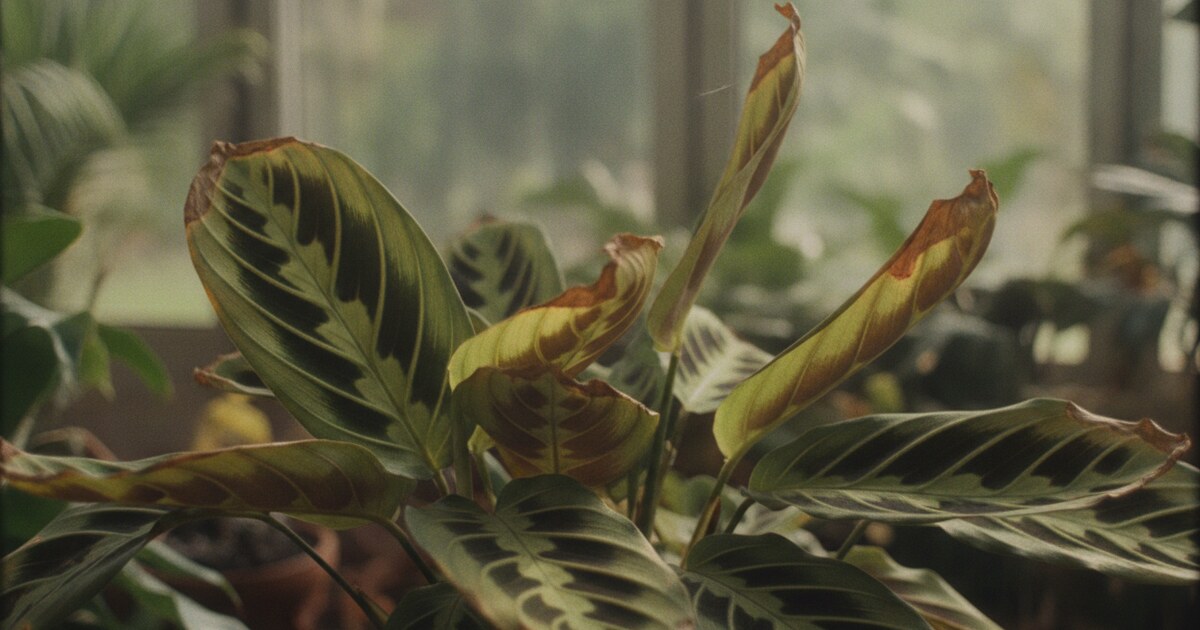
Your prayer plant was growing well, then the leaves started curling inward and the tips went brown. What makes this frustrating is that both symptoms can have different causes — or the same one. Most of the time, prayer plant leaves curl and develop brown tips together because of low humidity and tap water fluoride. Knowing which cause is driving your plant’s symptoms tells you which fix to use, and getting that right saves the plant faster than trying everything at once. This guide covers each cause, how to read the pattern, and the steps to fix it.
Prayer plant leaves curl and develop brown tips most often from low humidity and tap water fluoride. Maranta leuconeura needs 50-60% relative humidity and dislikes the fluoride in municipal water. Both stressors combine to cause curling leaves and crispy brown tips simultaneously. Switching to filtered or distilled water and raising humidity above 50% resolves most cases within 2-3 weeks.
Why Prayer Plant Leaves Curl
Prayer plants (Maranta leuconeura) come from the humid understory of tropical Brazilian forests, where relative humidity stays above 60% and temperatures are consistently warm. Most homes, especially in winter, run at 30-40% relative humidity with fluctuating temperatures — conditions that stress the plant.
Leaves curl as a moisture-conservation response. When the plant loses water faster than the roots replace it, the leaf edges roll inward to shrink the exposed surface area. The direction and timing of the curl help narrow down the cause.
Low humidity is the most common trigger. Prayer plants need 50-60% relative humidity to stay flat. At the typical indoor winter level of 30-40%, leaves roll inward along the edges, especially in the afternoon when heating systems push air to its driest. A small humidifier nearby, a pebble tray of water beneath the pot, or grouping plants together all bring local humidity up.
Underwatering causes curling when the soil dries out too far. The top 2 inches of potting mix should feel slightly moist between waterings. If they’re dry to the touch, the plant is thirsty. Water thoroughly until it drains from the bottom, then check the soil again in 5-7 days.
Heat and direct sun curl leaves quickly. Prayer plants want bright, indirect light. A spot directly in front of a south-facing window in summer can scorch the leaves within a day or two. Moving the plant back 3-4 feet from the window, or filtering the light with a sheer curtain, fixes this fast.
Cold drafts and temperature swings also trigger curling. Prayer plants do best between 65-85°F (18-30°C). Sitting near an air conditioning vent, a drafty window in winter, or anywhere the temperature drops below 60°F stresses the plant enough to make the leaves roll inward.
For a broader look at what causes houseplant leaves to curl across species, the guide to why plant leaves curl covers the shared mechanics in detail.
Why Prayer Plant Leaf Tips Turn Brown
Brown tips on prayer plants are almost always a water quality or humidity problem. This plant is more sensitive to both than most common houseplants, which is why the brown tips keep appearing even when watering looks fine.
Maranta leuconeura evolved in tropical Brazil where rainwater is naturally soft and free of fluoride. Most US municipal tap water is fluoridated to approximately 0.7 mg/L, following the EPA’s recommendation for dental health. Prayer plants are among the most fluoride-sensitive houseplants sold in garden centers, and they accumulate fluoride in leaf tissue over time. The damage appears first at the leaf tips as brown, crispy edges that won’t rehydrate no matter how much you water. Low humidity worsens the effect: prayer plants need 50-60% relative humidity, while the average home in winter runs 30-40%. This combination of fluoridated tap water and dry indoor air is why so many prayer plant owners see curling and brown tips appearing together. Switching to distilled, filtered, or collected rainwater stops new browning within 2-3 weeks. Old brown tips won’t recover, but new growth comes in clean.
Overfertilizing also produces brown tips. Excess fertilizer leaves salt deposits in the soil that accumulate around the roots and reduce water uptake. The damage shows at the leaf margins and tips first. If you’ve been fertilizing through fall or winter, cut back to once a month in spring and summer only. Flush the soil thoroughly with plain water to wash accumulated salts through the drainage holes.
Inconsistent watering puts roots through cycles of drought and flooding. Going too long without water, then soaking the pot to compensate, prevents roots from working steadily. Brown tips appear as roots struggle to maintain consistent water delivery to the leaves.
Prayer plant yellow leaves are a related but separate symptom. If you’re seeing yellowing alongside the brown tips, the prayer plant yellow leaves guide covers those causes in detail.
When Both Symptoms Appear Together
Curling leaves and brown tips at the same time usually point to one or two causes acting together. Here’s how to read the combined pattern:
- Curling leaves with crispy brown tips, no yellowing: Low humidity or tap water fluoride. Check water source first, then humidity.
- Curling leaves with brown tips and yellowing: Underwatering or root stress. Check the soil moisture.
- Curling leaves with soft brown tips and soggy soil: Overwatering. Let the soil dry out and inspect the roots.
- Only the very tips are brown, leaves otherwise healthy: Classic fluoride or fertilizer salt buildup. Switch water sources and skip fertilizer for 6 weeks.
Calathea — prayer plant’s closest relative in the Marantaceae family — shows nearly identical symptoms from the same causes. The calathea leaves curling guide has useful overlap for troubleshooting both plants.
How to Fix Curling Leaves and Brown Tips
Switch your water source. Letting tap water sit overnight removes chlorine but not fluoride. For prayer plants, use filtered water, distilled water, or collected rainwater. This single change stops most new browning within 3-4 weeks. You’ll see the difference in the next leaves that come in.
Raise the humidity. A small humidifier running a few hours a day near the plant is the most reliable approach. A pebble tray also works: fill a shallow tray with pebbles, add water up to just below the pebble surface, and set the pot on top so the base clears the water. As the water evaporates, it lifts humidity directly around the plant.
Water consistently. Check the top 2 inches of soil by pressing a finger in. Moist? Wait. Dry? Water thoroughly until it runs from the drainage holes. Prayer plants are more forgiving of slight underwatering than overwatering. Consistent moisture beats a strict calendar.
Adjust light and temperature. Move the plant to bright, indirect light. An east-facing window works well for this. Keep it away from heating vents, air conditioning units, and drafty windows. Stable temperature between 65-75°F prevents the stress response that triggers curling.
Trim the brown tips. Use clean scissors and cut at a slight angle, following the natural curve of the leaf. Brown tips won’t spread to healthy tissue if you’ve fixed the underlying cause. Trimming is cosmetic but keeps the plant looking healthy while recovery happens over the next few weeks.
How PlantlyAI Can Help
When your prayer plant shows curling leaves and brown tips at the same time, the cause isn’t always obvious from a quick check. Low humidity and fluoride damage look similar at first glance, but the treatments work differently. And if spider mites have moved in — they also cause curling and tip damage — you need to know before applying a humidity fix that won’t touch the infestation.
PlantlyAI lets you photograph the affected leaves and get a diagnosis in seconds. The app identifies the most likely cause based on what the leaf tissue looks like, then walks you through a step-by-step treatment plan with organic and chemical options. You get 2 free diagnoses a day with no account required.
Download PlantlyAI on the App Store or Google Play to diagnose your prayer plant today.
Frequently Asked Questions
Why are my prayer plant leaves curling but not turning brown? Curling without brown tips usually points to low humidity or underwatering. The plant loses moisture faster than the roots can replace it, so the leaves curl inward to reduce surface area. Brown tips appear later if the stress continues. Raise humidity first, then check soil moisture.
Will prayer plant leaves uncurl after I fix the problem? Mildly curled leaves often recover within a week once humidity is raised and watering is corrected. Leaves that have been tightly curled for a long time may not fully flatten out. New growth coming in after you fix the conditions will look normal.
Is it normal for prayer plants to fold leaves at night? Yes. Prayer plants fold their leaves upward at dusk (called nyctinasty) and open them again in the morning. This is completely normal. Curling that happens during the day, or leaves that stay curled in the morning, is a stress response rather than the normal night movement.
Can I cut off the brown tips on my prayer plant? Yes. Trim them with clean scissors at a slight angle to follow the natural leaf shape. Brown tips won’t spread to healthy tissue if the underlying cause is fixed. Trimming is cosmetic; fixing the water quality and humidity is what stops new browning.
Why does my prayer plant get brown tips even though I water it regularly? Regular watering with tap water is often the cause. Fluoride in municipal water accumulates in prayer plant tissue and shows as brown, crispy tips. Switching to filtered or distilled water stops new tips from browning within a few weeks.
Not sure what's wrong? Diagnose your plant free
Upload a photo to our free plant disease identifier and get an instant diagnosis.